Profile: Martyr Tangsiri, IRGC Navy commander who reshaped Iran’s maritime deterrence
By Mina Mosallanejad
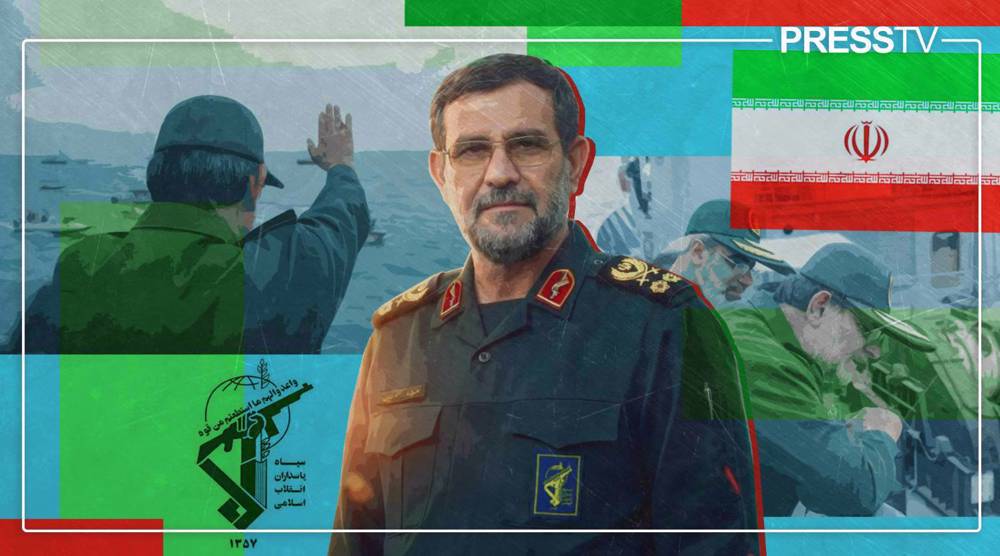
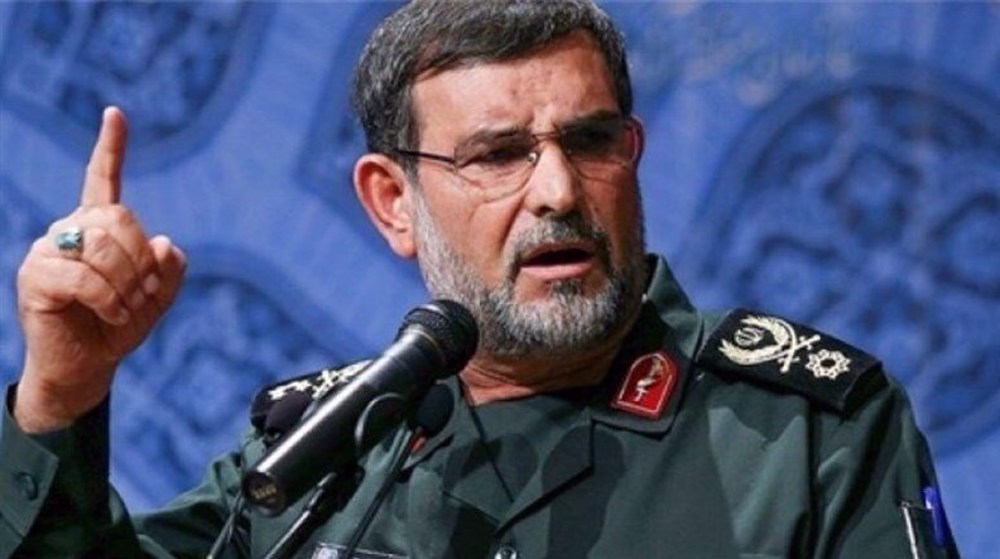
Rear Admiral Alireza Tangsiri, the commander of the Islamic Revolution Guards Corps (IRGC) Navy, whose strategic leadership helped close the Strait of Hormuz to Iran’s enemies and shake their military and economic calculations, was martyred on Monday, days after sustaining injuries in an attack by invading forces.
The Israeli regime and the United States launched the unprovoked war of aggression against Iran on February 28, assassinating the Leader of the Islamic Revolution, Ayatollah Seyyed Ali Khamenei, along with several senior commanders and ordinary civilians.
In response, Iran announced Operation True Promise IV, carrying out over 85 waves of retaliatory missile and drone strikes against the occupied territories as well as American bases and assets across the region.
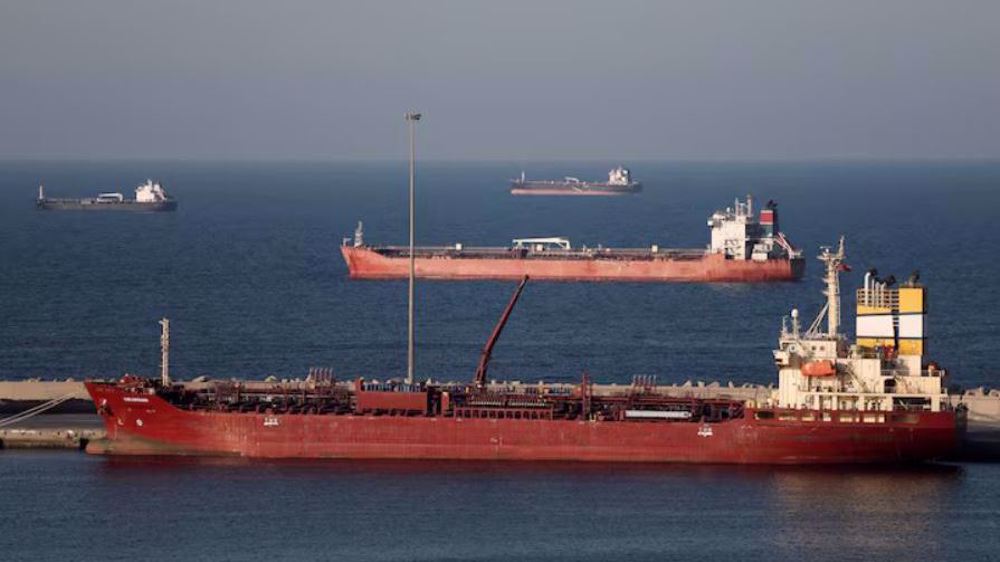
Iran also imposed high economic and political costs on its adversaries by closing the Strait of Hormuz to aggressors and their allies.
Admiral Tangsiri proved that the Strait of Hormuz, a strategic waterway, can be closed to Iran’s enemies by the hands of determined and courageous men.
In a statement mourning Admiral Tangsiri, the IRGC said the Iranian nation knows that the front which did not halt even for a moment after the passing of the greatest legends of human history such as Imam Khomeini, the founder of the Islamic Revolution, and Ayatollah Khamenei, but rather continued its path with even greater strength, will likewise continue forward with authority after the martyrdom of field commanders.
It added that the IRGC Navy’s fighters these days, in the absence of this brave commander from his command position, have demonstrated through crushing blows and decisive management of the Strait of Hormuz that this reality continues.
“This is a force whose record includes shattering the operations of superpowers escorting oil tankers with the most basic weapons and destroying several American warships during the eight-year Sacred Defense," it noted.
"Our people also remember with pride the capture of American and British marines and the seizure of enemy vessels. Every one of its fighters is a Tangsiri, and the coming days and months will reveal what remarkable feats they will achieve."
IRGC Navy Chief Tangsiri martyred after sustaining injuries in US-Israeli aggressionhttps://t.co/XpSGZcO679
— Press TV 🔻 (@PressTV) March 30, 2026
Who was Alireza Tangsiri?
Tangsiri was born in 1962. He was originally from Tangestan County in southern Bushehr province, though he spent much of his youth in Khuzestan province due to his father’s work in the Arvandkenar region.
From 2006 to 2010, he served as commander of the IRGC Navy’s First Naval District in Bandar Abbas, a port city in Hormozgan province.
He then served as deputy commander of the IRGC Navy from June 2010 to September 2018, a position he held for eight years.
In August 2018, the IRGC Navy conducted major naval drills in the Persian Gulf as the United States was preparing to impose new sanctions on Iran.
At the time, Tangsiri was the IRGC Navy’s deputy commander.
Reacting to the exercise, General Joseph Votel, then commander of US Central Command (CENTCOM), acknowledged that the drills carried a clear message about Iran’s military capabilities ahead of the sanctions.
In late August 2018, Tangsiri was appointed the sixth commander of the IRGC Navy, a post he held until his martyrdom on March 30, 2026.
Rear Admiral Tangsiri was regarded as one of the most influential commanders of the IRGC Navy, whose actions and positions on the security of the Persian Gulf drew wide regional and international attention.
IRGC Navy Chief Tangsiri martyred after sustaining injuries in US-Israeli aggressionhttps://t.co/XpSGZcO679
— Press TV 🔻 (@PressTV) March 30, 2026
US and EU sanctions
On June 24, 2019, the US State Department placed Tangsiri and seven other IRGC commanders on its sanctions list, citing their alleged role in Iran’s missile program and incidents involving commercial vessels in international waters.
Later, on July 20, 2023, the European Union sanctioned six Iranian officials, including Tangsiri, over claims related to the transfer of air defense systems to Syria and drones to Russia.
The measures included travel bans, asset freezes, and restrictions on financial dealings with European individuals and companies.
Warnings to the US and its allies
In an interview with Al-Alam television in September 2018, Tangsiri warned that if the Strait of Hormuz were ever rendered unusable for Iran, Tehran would respond decisively.
“If the Strait of Hormuz ever becomes unusable for Iran, then other decisions will be taken. The Islamic Republic has the capability to take any action.”
He said Iran's presence in the Persian Gulf sends a message to foreign powers that the Islamic Republic is ready to confront anyone who seeks to violate the territory of Iran or its interests.
"We will cut off their hand,” he warned at the time.
"If the Americans try to block our interests, they will receive a crushing response. We are a country that, based on the commands of Islam and the Qur’an, will never submit to coercion. If they ever harm our interests anywhere at sea, we will appear elsewhere and, as the Leader has said, we will deliver a strong slap," he said.
He also advised US President Donald Trump "to review history."
Historic moment martyred IRGC Navy Commander Rear Admiral Alireza Tangsiri ordered closure of Strait of Hormuz.
— Press TV 🔻 (@PressTV) March 30, 2026
Follow: https://t.co/mLGcUTSA3Q pic.twitter.com/AgOqn7oyov
Defiant messages during current war
In a post on X on March 21, amid the aggression against Iran, Tangsiri warned the United States and the Israeli regime against any attempt to seize Iranian islands.
“Across all Iranian islands, we have prepared the graves of the child-killing invaders.”
In another message on March 18, he thanked the Iranian people's resolve and determination.
“Your presence in the streets has become our winning card and will reshape the equations of the region from now on,” he wrote.
He also warned that with the updating of Iran’s target bank, “Oil facilities linked to the United States will stand alongside American bases and will be powerfully placed under fire.”
Regarding threats against Kharg Island, Iran’s key oil terminal, he cautioned:
“You once tested Iran through the Strait of Hormuz. If the intelligent control of the Strait has already drawn a new benchmark for oil prices, an attack on Kharg will create another severe and unprecedented equation in global energy prices and distribution.”
Tangsiri’s strategy in the Strait of Hormuz imposed high costs on Iran’s adversaries, including a surge in oil and energy prices and reduced ability for US-allied countries to export oil.
On March 12, referring to remarks by Leader of the Islamic Revolution Seyyed Mojtaba Khamenei about keeping the Strait of Hormuz closed.
"It is illogical that the world can freely use the Strait of Hormuz while Iranian oil shipments are blocked. Tehran will act if its leaders deem it necessary."
— Press TV 🔻 (@PressTV) October 12, 2025
- IRGC Navy Chief Rear Admiral Alireza Tangsiri
Follow: https://t.co/mLGcUTSA3Q pic.twitter.com/2y5FpdtJGZ
“In response to the Commander-in-Chief’s order, and with the strategy of keeping the Strait of Hormuz closed, we will deliver the most severe blows to the invading enemy.”
Following the election of Seyyed Mojtaba Khamenei as the third Leader of the Islamic Revolution, Tangsiri reaffirmed his pledge of allegiance to him in a statement on March 9.
“We, the IRGC Navy’s Guards, with firm faith and hearts full of love for the guardianship of the jurist, renew our pledge to our Leader. A pledge of blood and faith, built upon commitment, insight, and obedience to divine leadership," he wrote.
“We declare that until our last breath we will remain guardians of the ideals of the Islamic Revolution, defenders of the power of the Islamic Republic of Iran, and absolute followers of the commands of the Leader in every field and every moment.”
Just days before the US-Israeli aggression began, Tangsiri said on February 17 that the IRGC Navy was ready to close the Strait of Hormuz if ordered.
“The decision to close the Strait of Hormuz rests with the senior authorities of the system. But as a soldier, I say that we are ready to do it whenever our leaders give the order.”
Iran will not tolerate any hostile activity in Iraq’s Kurdistan: IRGC commander
Iran could take ‘pre-emptive’ action under new ‘offensive’ doctrine: Army spokesman
Hostile media outlets could be military targets, Iran's armed forces warn



VIDEO | Press TV's news headlines
Iran will not tolerate any hostile activity in Iraq’s Kurdistan: IRGC commander
Iran blocks IAEA inspections of attacked nuclear sites until new protocol established
VIDEO | Prophet Mohammed’s birthday arrives in Gaza amid ruins of mosques
Iran could take ‘pre-emptive’ action under new ‘offensive’ doctrine: Army spokesman
New Israeli settlement expansion aims to seize more Palestinian land: Hamas
Hostile media outlets could be military targets, Iran's armed forces warn
Strait of Hormuz won’t reopen unless US accepts Iran’s conditions: IRGC


 PressTV NEWSLETTER
now
PressTV NEWSLETTER
now
 This makes it easy to access the Press TV website
