Iran controls Strait of Hormuz, dictates terms of war and peace as US excursion backfires
By Pravin Sawhney
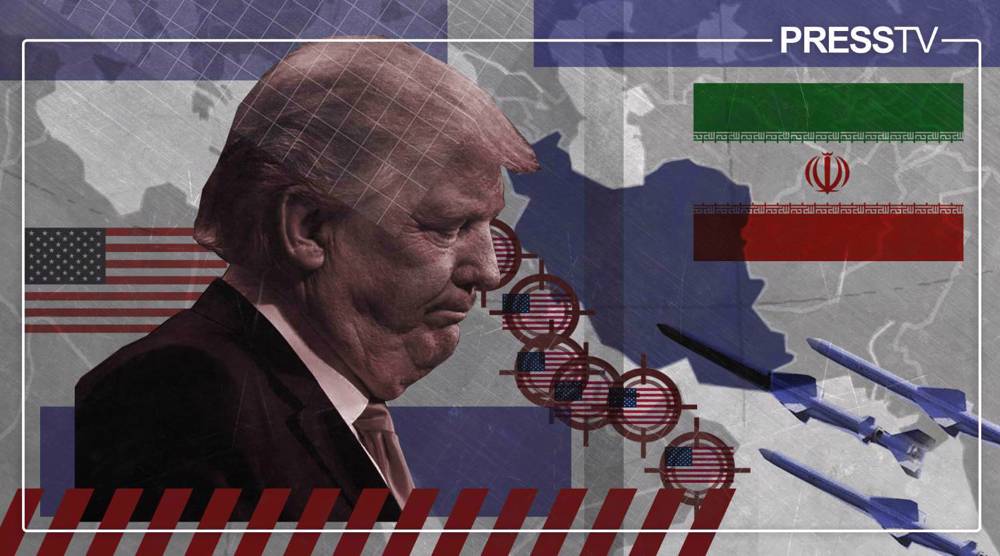
While the US and Israel started the new war in West Asia, it is Israel and Iran who, with clarity on their war objectives, are now pitted against one another.
Given this, two things are likely. One, notwithstanding President Donald Trump’s latest claim of negotiations, the war will not end anytime soon. Instead, it will escalate.
And two, since the world is multipolar, the regional geopolitics will no longer be the same.
Two regional fundamentals would be impacted: the control over the Strait of Hormuz, and the security arrangement between the US and GCC (Persian Gulf Cooperation Council) countries (Saudi Arabia, Kuwait, UAE, Bahrain, Qatar and Oman), which delivered the petro dollars critical for stabilisation of the US economy and its great power status in the world.
Unmindful of the reality that the world is in a once-in-a-century change and that Iran would not bend despite decades of US sanctions, President Trump started this war as ‘an excursion’ as he himself put it. Trump was made to believe by Israeli prime minister Benjamin Netanyahu that, like Venezuela, Iran, with its senior leadership decapitated, would be an open and shut case.
Within, the wily Netanyahu knew that this would not happen, and that the decapitation would lead to a larger war, giving him greater control over the US military to achieve his war objectives, including the so-called “regime change”.
Fully aware that Iran would close the Strait of Hormuz at the beginning of war, Netanyahu publicly gave out the alternative, which, by the land route through Saudi Arabia, would come to Israel and onto Europe through the Mediterranean Sea.
With this approach, only the Asian countries would need to use the Hormuz.
✍️ Viewpoint - Netanyahu lands Trump in a quagmire as ‘Shock and Awe’ strategy boomerangs in Iran
— Press TV 🔻 (@PressTV) March 22, 2026
By Iqbal Jassathttps://t.co/RXNm3LtWIj
To escalate the war, Israel hit Iran’s South Pars gas field, with the retaliation coming on the energy infrastructure of Qatar, UAE, Saudi Arabia and especially the Israeli Haifa oil refinery, whose incapacitation would lead to a shortage of fuel for Israel’s war machinery.
Moreover, once the US and Israel struck Iran’s nuclear facilities, Tehran hit Israel’s Dimona town, which houses its nuclear plant, with the warning that if Iran’s nuclear facilities are hit again, then Iran’s strike would be on Dimona itself.
This was Israel’s red line, since in no war has the Dimona nuclear facility been touched.
Iran’s warning also serves the purpose of testing Israel’s nuclear deterrence. For instance, if Israel decides to hit Iran’s nuclear facilities again, with reprisal coming from Iran, then the region would be watching what Israel would do: would it use its nukes or keep quiet, in which case its nuclear bluff would be called off.
Meanwhile, Iran had been preparing for this war since 1988, when its eight-year war with Iraq ended. This includes building underground missile and drone cities, setting up production lines, and preparing regional allies like Houthis and Hezbollah. Enormous help came from Russia and China for its military preparations.
Moreover, Iran learnt the right lessons from the 12-day war of June 2025. Notable amongst them switching to the Chinese Baidu-3 satellite constellation by abandoning the US’s GPS. This explains why, unlike the 12-day war, this time the targeting of Iranian missiles and drones at long ranges has been accurate.
Special attention was given to the Persian Gulf and the Gulf of Oman, including the Strait of Hormuz. This entire stretch is laced with formidable undersea capabilities comprising anti-ship cruise missiles, different types of naval mines, midget submarines that can fire both missiles and torpedoes, and fast crafts capable of hitting the hull of tankers.
✍️ Viewpoint- Trump’s military gamble against Iran backfires spectacularly with no exit strategy
— Press TV 🔻 (@PressTV) March 15, 2026
By Abbas Ali Abedihttps://t.co/06y6NVI1pC
Because of these, Iran now controls the passage through the Strait of Hormuz. Trump has called upon the NATO nations to help the US Navy break Iran’s stranglehold on the oil and gas lifeline, which these nations, understanding the suicidal nature of the task, have refused.
This has created an unforeseen dilemma for Trump, where, on the one hand, it cannot declare victory and leave the region since Iran, controlling this waterway, is regulating the commercial traffic on its terms.
The latter involves countries that use this chokepoint to trade their cargo in Chinese Yuan instead of the US dollar. This would end the US Petro dollar arrangement with GCC, where they sell oil and gas only in US dollars and get the US security by having their bases on its soil.
On the other hand, with the end of petrodollars, the US will not be able to manage its huge national debt of USD 40 trillion, leading to economic instability in the US and curtailing its ability to sustain some 800 military bases across the globe.
This would be the end of the US as the world’s military hegemon.
To top it all, Iran has refused the American offer of a ceasefire. It instead wants permanent peace in West Asia with a list of demands, the most significant being that the US close down all its military bases in the region.
Moreover, the US is realising that all its threats to blow off Iran’s power grids and services, which impact civilian life, are not working.
Iran has warned that it would retaliate with similar actions against all GCC nations and Israel, where the interceptors to stop the Iranian wave of missiles are not working.
Israel, which instigated this war, is on backfoot and the US’ excursion has backfired with grave consequences to its image as a great power.
As things stand, Iran is dictating the terms of both war and peace in West Asia.
Pravin Sawhney is a New Delhi-based journalist and commentator. He is the editor of FORCE, a magazine focused on national security and defence.
(The views expressed in this article do not necessarily reflect those of Press TV)
Iran will not tolerate any hostile activity in Iraq’s Kurdistan: IRGC commander
Iran could take ‘pre-emptive’ action under new ‘offensive’ doctrine: Army spokesman
Hostile media outlets could be military targets, Iran's armed forces warn



Qalibaf says Iran's partnership with China ‘needs no one's permission’
Iran offers condolences to Pakistan after 14 newborns killed in hospital fire
US sanctions Palestine Action, designates group as 'terrorist organization'
Israel withholding remains of nearly 800 Palestinians since 1967: Monitoring group
VIDEO | Press TV's news headlines
Iran will not tolerate any hostile activity in Iraq’s Kurdistan: IRGC commander
Iran blocks IAEA inspections of attacked nuclear sites until new protocol established
VIDEO | Prophet Mohammed’s birthday arrives in Gaza amid ruins of mosques



 PressTV NEWSLETTER
now
PressTV NEWSLETTER
now
 This makes it easy to access the Press TV website
