Iran’s strategic location and energy resources position it as a key player in BRICS alliance: Analyst
By Press TV Website Staff
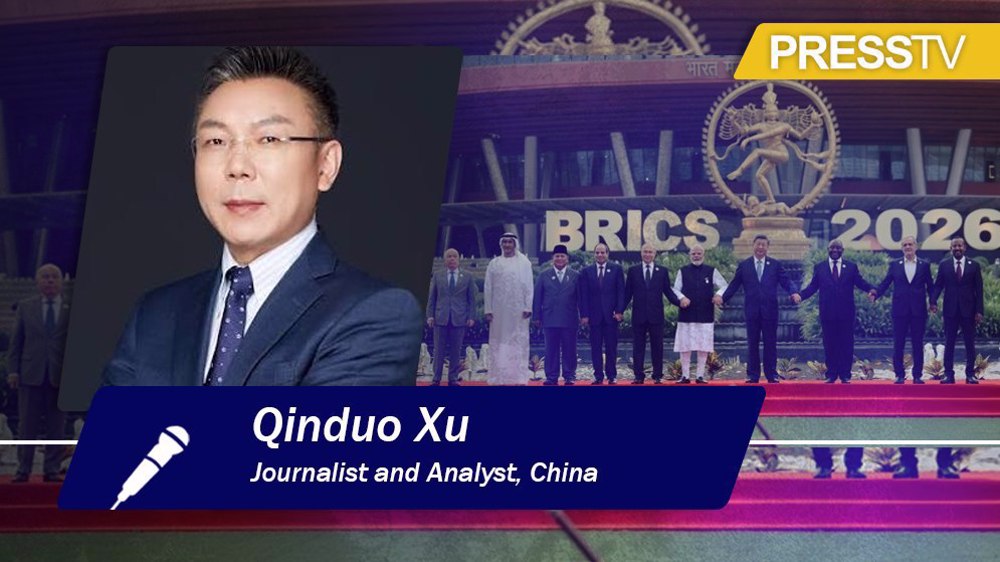
Iran’s strategic location and energy resources position it as a key player in BRICS, offering major potential for trade, connectivity and energy cooperation with emerging economies, according to Chinese journalist and political analyst Qinduo Xu.
Qinduo Xu, a journalist, political analyst and senior fellow at the Pangoal Institution focusing on Chinese foreign policy-making, spoke to Press TV Website about BRICS’ evolution over the past two decades, its efforts to strengthen economic cooperation beyond the US dollar, and the prospects for practical mechanisms to protect legitimate trade amid unilateral sanctions.
He also highlighted Iran’s importance to the grouping because of its geographic position, energy resources, and potential to connect major markets, while highlighting that China-Iran relations are likely to deepen further despite US pressure and sanctions.
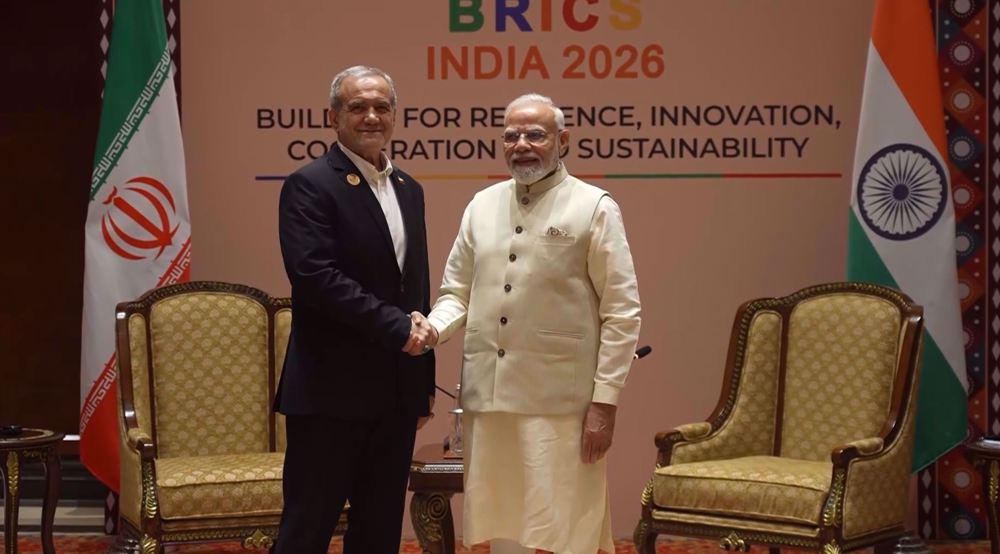
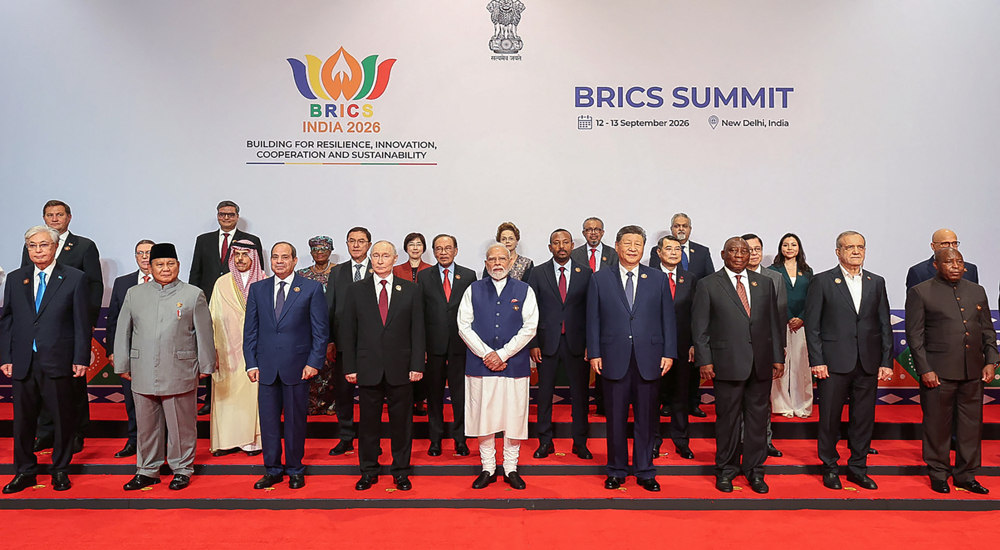
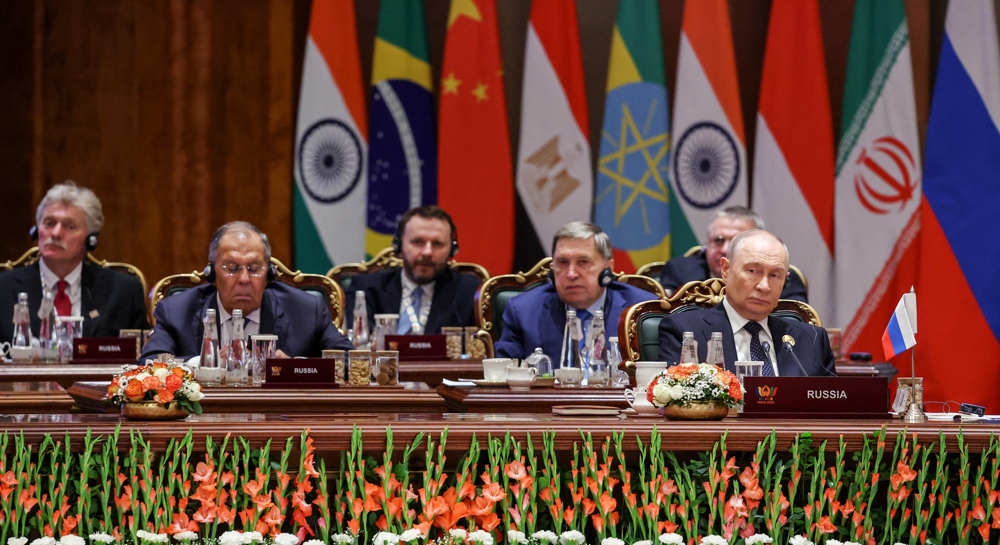
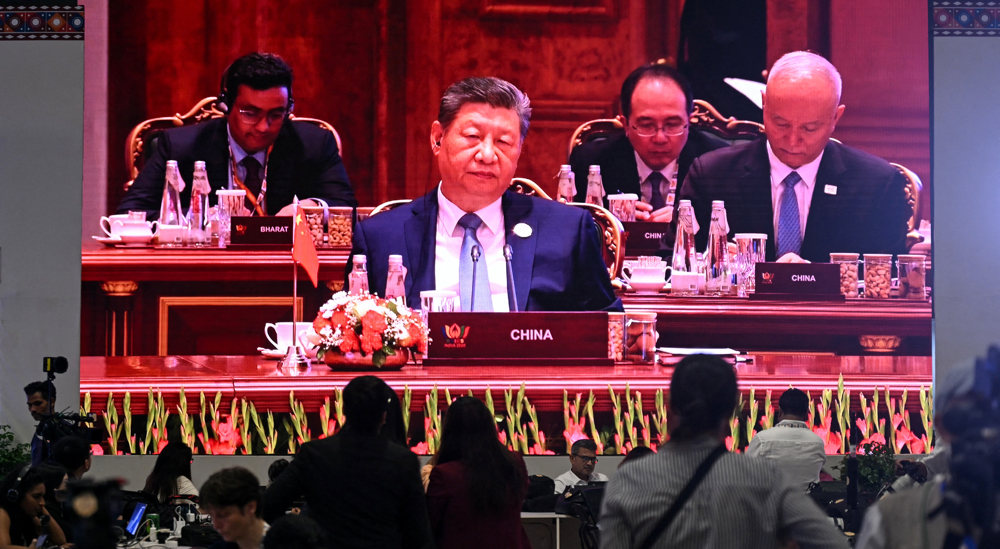
BRICS held its 18th summit in New Delhi on September 12-13 under India’s 2026 presidency, guided by the theme “Building for Resilience, Innovation, Cooperation and Sustainability.”
Originally established in 2006 as a cooperation forum among Brazil, Russia, India and China, the grouping expanded with South Africa’s accession in 2011 and has since broadened its agenda beyond economic issues to areas including development, finance, health, climate action, technology and trade.
BRICS now comprises 11 countries – Brazil, China, Egypt, Ethiopia, India, Indonesia, Iran, Russia, Saudi Arabia, South Africa and the UAE – collectively representing nearly half of the world’s population, around 40 percent of global GDP and 26 percent of global trade.
The grouping has increasingly emerged as a platform for major emerging economies to coordinate economic policies, promote the interests of the Global South and push for greater representation in global governance.
From expansion to global influence
Reflecting on BRICS’ evolution over the past two decades, Xu cited Chinese President Xi Jinping, who said at the New Delhi summit that “the BRICS cooperation mechanism has become the world’s most influential platform for cooperation among emerging markets and developing countries.”
Xu said the grouping’s expansion in recent years demonstrated its appeal to developing countries, noting that the broader BRICS partnership now involves 21 countries.
“The expansion and the partnership include 21 countries, [which] speak volumes of its success over the past two decades,” he said.
Looking ahead, Xu pointed out that BRICS should focus not only on becoming a larger group of developing countries but also on developing its ability to shape global development.
In particular, he said the grouping should contribute to reforming global governance “for better justice and equality,” while “promoting cooperation in innovation-driven development.”
Reducing reliance on the US dollar
BRICS members have increasingly explored the use of national currencies and alternative payment mechanisms as they seek to strengthen economic ties and reduce exposure to the US dollar.
Xu said BRICS countries were already making “solid progress” in protecting their interests by reducing their reliance on the dollar. He pointed to Russia-India trade as one example, saying more than 90 percent of their trade settlements are conducted in the rupee and ruble.
China and Russia also conduct trade using their national currencies, he told Press TV Website.
Xu further pointed to efforts discussed at this year’s summit to establish greater connectivity among central bank digital currencies, saying this could reduce costs and improve the efficiency of trade.
Such practices, he said, could also contribute to reducing the use of the dollar by increasing reliance on national currencies.
“There are common interests [among] developing countries to expand trade and cooperation with themselves,” Xu said, adding that greater cooperation could help developing countries shield themselves from sweeping US tariffs.
“So yes, more cooperation is expected among the developing countries,” he said.
BRICS and the challenge of sanctions
Asked whether BRICS can develop practical mechanisms to help members such as Iran withstand unilateral sanctions and maintain legitimate trade, Xu cautioned that the grouping may not yet have sufficient capacity to prevent US economic coercion in the short term.
“I’m not sure BRICS currently has the capacity to stop the US from resorting to economic coercion at will in the short term,” he told the Press TV website, pointing out that many BRICS members are themselves subject to US punitive measures.
At the same time, Xu highlighted that such policies could ultimately weaken Washington’s own economic position, noting that US economic pressure was “doing a disservice to the US by weakening its own dollar and financial strength.”
According to Xu, BRICS countries are nevertheless working “slowly but firmly” toward reforming the global governance system, intending to promote greater democracy in international relations, justice and equality.
He referred to Xi’s call for BRICS to take the lead in reforming global governance, adding that, with China taking over the BRICS chairmanship, there are grounds to expect greater protection for legitimate trade with Iran.
“As China is taking over the chairship, we have reason to believe that the protection of legitimate trade with Iran will gain more and more support,” he said.
Iran’s energy and connectivity potential
Xu described Iran as an important BRICS member, referring to its population of around 93 million as well as its long history and civilizational significance.
“Iran is an important country with a population of some 93 million people, as well as a time-honored civilization. The size of the country makes it a place of interest for investment, business, trade and cultural exchanges,” he said.
More importantly, Xu pointed to Iran’s geographic position, saying it gives the country “a key position in connecting West Asia with South and East Asia.”
Iran’s role as a major energy producer could further strengthen its importance within BRICS, he said, particularly as emerging economies seek reliable energy supplies.
“At the same time, as one of the energy powers, Iran is poised to become a key player in oil and gas supply to other emerging economies such as China and India,” Xu said.
He also referred to the recent US-Israeli military aggression against Iran, stating that the country had demonstrated significant military capabilities.
“With the recent resistance against the aggression of the US and Israel, Iran also demonstrated its military prowess,” he said, adding that this could be “a plus for the developing world to defend themselves against assault from bullying behaviors from big powers.”

China-Iran ties set to deepen
China and Iran have repeatedly emphasized the importance of expanding bilateral and multilateral cooperation, particularly amid growing US pressure and sanctions.
Xu said the relationship between the two countries is based on their respective interests and is “perfectly in line with international law.”
He noted that China-Iran cooperation “should not be targeted or threatened by any country, including the United States.”
According to Xu, China’s emphasis on sovereignty has enabled it to continue doing business with Iran despite US economic pressure.
“The fact is, China, which values its sovereignty tremendously, continues to do business with Iran, despite the US economic coercion,” he said.
Xu added that there was no reason for Beijing to follow Washington’s restrictions on trade with Tehran.
“There’s no reason for China to somehow follow US restrictions on doing trade with Iran,” he said.
He therefore expects the China-Iran partnership to continue deepening, both bilaterally and within the BRICS framework.
“In that sense, the China-Iran partnership will continue to deepen bilaterally and inside the BRICS grouping,” Xu said.
Yemeni military advance along Red Sea alters balance of power amid Saudi siege, aggression: Analyst

Iran has good reason to bar IAEA inspectors from returning amid US aggression: Author
IAEA report in May 2025 became pretext for US-Israeli attacks against Iran: Ex-IAEA inspector



US military nearing 'breakdown' amid sustained Iranian attacks: US officials
VIDEO | A mother’s grief: Four daughters lost to Israel’s genocide in Gaza
Tribal leaders, scholars condemn assassination of Iranian Sunni cleric
Iran’s nuclear industry will survive war and strikes as knowledge cannot be obliterated by force
Iraqi Kurdistan says will not allow territory to be used to threaten Iran
Discover Iran: Tabriz Grand Bazaar, where centuries of trade, culture and craftsmanship still thrive
Press TV's news headlines
Iranian nation shattered aggressor’s illusions with sustained popular rallies: Parliament speaker


 PressTV NEWSLETTER
now
PressTV NEWSLETTER
now
 This makes it easy to access the Press TV website
