Discover Iran: Tabriz Grand Bazaar, where centuries of trade, culture and craftsmanship still thrive
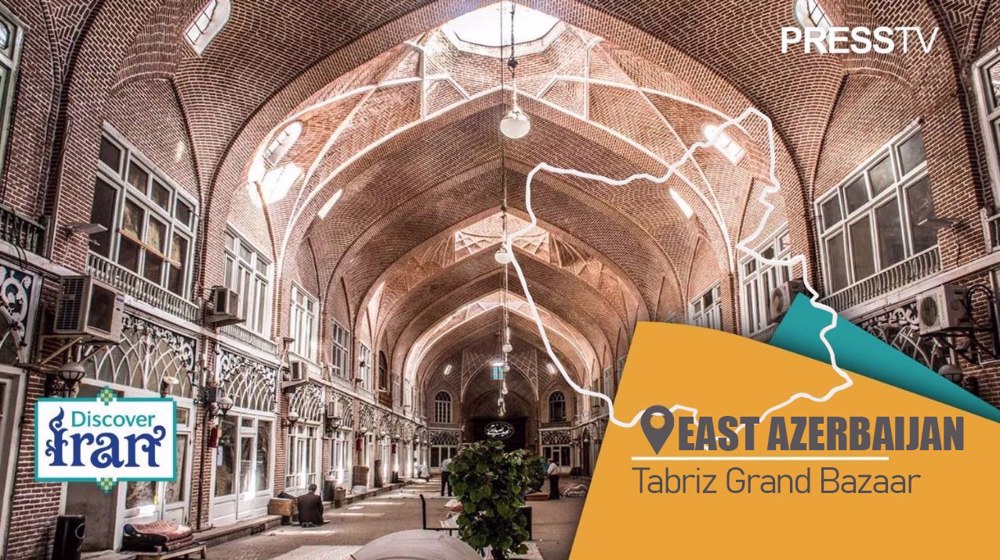
By Ivan Kesic
- Tabriz Bazaar was one of the most important international trade and cultural centres in Asia and the world between the 12th and the 18th centuries, thanks to the centuries-old east-west trade routes, with its great complexity and articulation attesting to the wealth in trade and cultural interaction of Tabriz.
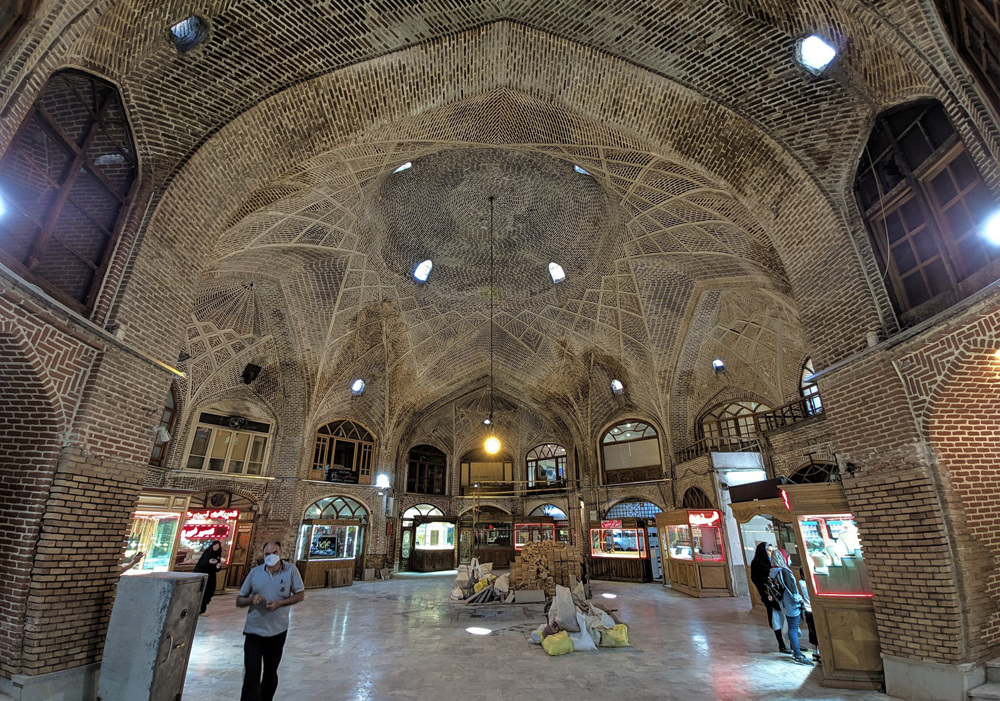
- The bazaar's vaulted ceilings span remarkable distances without columns, using a technique known as karbandi—a complex system of intersecting rib vaults that transforms square or rectangular plans into circular bases for domes, with the most sophisticated examples employing compound karbandis that create dazzling geometric complexity.
- UNESCO's World Heritage Committee recognized Tabriz Historic Bazaar Complex as bearing witness to one of the most complete socio-cultural and commercial complexes among bazaars, having developed over centuries into an exceptional physical, economic, social, political, and religious complex in which specialized architectural structures, functions, professions, and people from different cultures are integrated into a unique living environment.
In the heart of Tabriz, where the ancient routes of the Silk Road once converged, lies a labyrinth of brick and shadow whose commercial traditions stretch back for more than a millennium.
The Tabriz Bazaar Complex is not merely a marketplace; it is a self-contained universe where architecture, commerce, culture, and faith intertwine in a living testament to Iranian urban genius.
Spanning nearly one square kilometer of interconnected covered passages, it stands as one of the largest covered bazaars in Iran and the world, and the first bazaar ever inscribed on the UNESCO World Heritage List.
Within its vaulted corridors, merchants still sell carpets and spices in the same chambers where their ancestors traded when Tabriz was one of the wealthiest cities on Earth.
Iranian bazaar: More than a marketplace
The traditional bazaar occupied a special position in Iranian cities, standing as the largest historical structures in the country. Unlike the modern shopping center, it was rarely an isolated commercial facility.
It was an essential component of urban life, usually connected with the city's main gates and thoroughfares and often positioned close to the congregational mosque, governmental center, or citadel.
These complexes developed organically—much like city streets elsewhere in the world—along a linear path, yet as a vaulted structure.
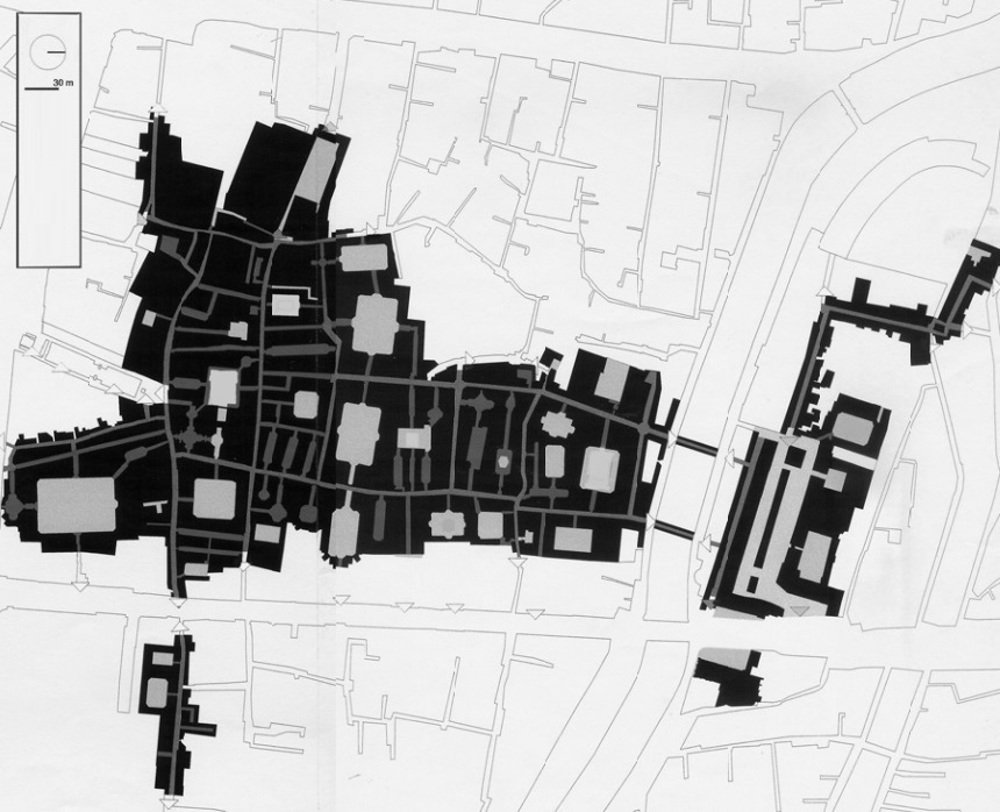
Shops, ancillary facilities, and intersecting bazaar corridors were built alongside this main axis, creating a grid that accommodated other structures such as workshops, warehouses, caravanserais, religious buildings, schools, bathhouses and public spaces.
It served as the economic heart, the social meeting point, the political pulse, and often the religious center of urban life.
The Tabriz Bazaar is often popularly described as the "largest covered bazaar in the world," although this claim may be contested within Iran itself, depending on various criteria.
Among the colossal bazaars of Iran—Arak, Ardabil, Isfahan, Kashan, Kerman, Qazvin, Qom, Shiraz, Tehran, Yazd, Tabriz and Zanjan—each developed distinctive characteristics shaped by geography, history, and local industry. Many of them possesses some record-holding features.
The Tehran bazaar is larger in terms of area and length of corridors, representing a labyrinth of about 10 km of bazaar corridors that stretch over an area of more than a square kilometer, interwoven with both old buildings and modern commercial structures.
The Isfahan Bazaar is a mosaic of corridors stretching across a two-kilometer-long area, from Imam (Naqsh-e Jahan) Square to the Congregational Mosque, impressing with its monumental scale and royal patronage.
The bazaars in Zanjan, Arak, Kerman and Kashan are notable for having the longest preserved covered linear bazaar corridors, all four measuring approximately 750 meters in length.
According to a comparative analysis prepared by Iranian art historians for UNESCO, the historic core of the Tabriz Bazaar, covering 29 hectares, is the largest among all Iranian bazaars; the Tehran Bazaar follows with 27 hectares.
Furthermore, the Tabriz Bazaar features 5.76 kilometers of old covered corridors (rasteh) and 150 historic buildings, whereas the Tehran Bazaar—the second largest—has 4.8 kilometers and 122 buildings.
The Tabriz Bazaar also distinguishes itself from the others in several ways. Its importance lies particularly in the extraordinary integration of its many parts.
It is the largest continuous brick structure of its kind, composed of numerous carefully built individual buildings that are structurally interconnected into a single integrated whole, functioning as an anti-seismic safety system and exemplified by the remarkable bazaar bridge, where a bazaar is built upon a bridge linking the northern and southern parts of the city.
Rather than being remembered primarily for one spectacular square or a single monumental building, the Tabriz complex functions almost like a city within the city.
Its commercial corridors lead into caravanserais and domed trading halls; religious and educational buildings are woven into the commercial fabric; and specialized trades occupy different sections.
Historical studies describe the complex as containing about 20 major market rows, 35 caravanserais and sarays, 25 timchehs, 11 passageways, 12 schools, 30 mosques, five bathhouses and thousands of shops and storage spaces.
In this sense, Tabriz represents one of the clearest expressions of what the Iranian bazaar actually was: not merely a collection of shops, but an economic, social, religious and civic institution. Many later Iranian bazaars imitated this model.
From medieval trade center to modern Tabriz
The commercial importance of Tabriz reaches far back into history. Archaeological evidence indicates human occupation in the region since the Bronze Age, although the continuous development of the city belongs to later periods.
By the ninth century, Tabriz had become an important military center and was developing into an economic and commercial city. Its importance increased dramatically during the medieval period, when it became one of the principal cities of northwestern Iran.
The Mongol destruction of Baghdad in 1258 strengthened Tabriz's position within the international trading system. Under the Ilkhanids, the city became one of the great political and commercial centers of Eurasia.
Between 1316 and 1331, Tabriz experienced an exceptional period of economic and social prosperity. Travelers including Marco Polo and Ibn Battuta described it as an extraordinarily wealthy trading center.
Its location at the intersection of major east-west and southeast routes allowed merchants and commodities to move between the Iranian plateau, Anatolia, the Caucasus and territories farther east.
The bazaar was consequently shaped by international commerce. Silk and textiles were particularly important, but the city's markets also dealt in metalwork, weapons, pottery, leather, copper products and many other manufactured goods.
The presence of merchants from different regions encouraged the development of specialized commercial spaces and institutions.
Tabriz reached another decisive stage in the early sixteenth century, when the Safavid dynasty selected it as its capital. The city became the center of a new Iranian state, and its commercial and cultural importance expanded accordingly.
The Ottoman threat, however, made Tabriz dangerously exposed. After repeated Ottoman campaigns, Shah Tahmasp moved the capital to Qazvin in 1548 and later Shah Abbas established Isfahan as the principal Safavid capital.
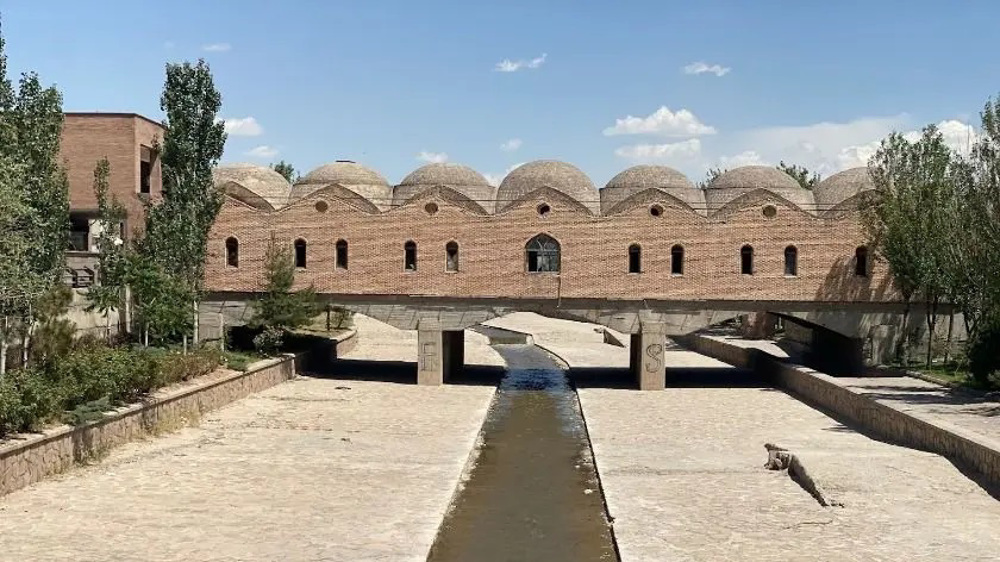
The loss of capital status did not destroy Tabriz's commercial importance. Manufacturing expanded during the sixteenth and seventeenth centuries, including textiles, copperwork, weapons, tiles, leather and other crafts.
The greatest physical rupture came in 1780, when a catastrophic earthquake devastated Tabriz. The earthquake destroyed much of the existing city, including the bazaar. Yet the commercial system did not disappear.
The city and its market were rebuilt, and the physical fabric that visitors see today is largely the product of this reconstruction. Walking through the bazaar today does not mean walking through an untouched medieval marketplace.
Instead, it means walking through a later architectural reconstruction that preserves an exceptionally old urban organization and commercial tradition.
The bazaar suffered further disasters. An earthquake in 1817 caused serious damage, while a major flood in 1871 affected the complex extensively.
It also became a political space. During the Constitutional Revolution of 1906, Tabriz emerged as one of the principal centers of the movement. The bazaar was closed during protests, turning the suspension of commercial activity into a powerful form of political pressure.
Merchants and guild leaders were important participants in the constitutional movement, and the wider Tabriz bazaar community became closely involved in the city's political struggles.
Modernization brought another challenge. During the twentieth century, wide streets were cut through the historic urban fabric, separating some parts of the bazaar from its original core.
Nevertheless, the surviving complex remained economically active rather than becoming merely a museum.
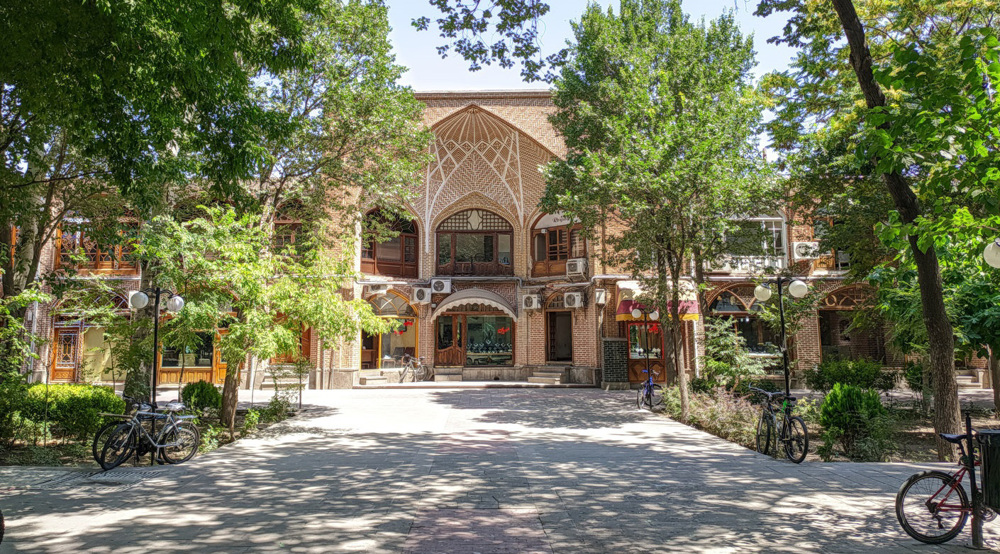
A city beneath brick vaults: Art and architecture
The architectural sophistication of the Tabriz Bazaar represents one of the highest achievements of Iranian building arts. The entire complex is constructed from brick, a material chosen for its structural versatility, thermal properties, and aesthetic potential.
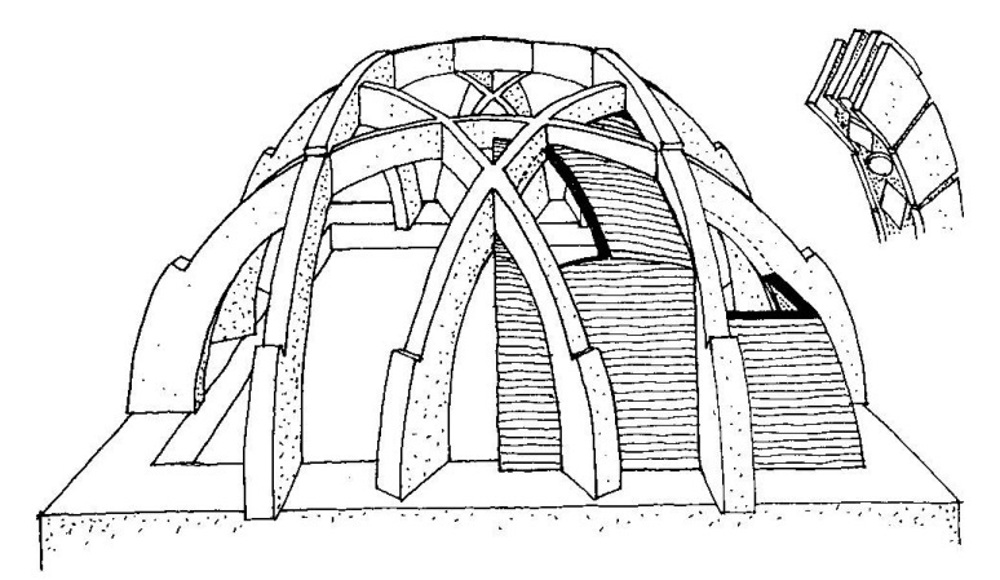
The bazaar's vaulted ceilings span remarkable distances without columns, using a technique known as karbandi—a complex system of intersecting rib vaults that transforms square or rectangular plans into circular bases for domes.
Karbandi is far more than a structural solution; it is an art form. Architects divided the circular plan into multiple equal sectors, connecting points with intersecting chords to create a geometric pattern called a shamseh (sunburst).
In three dimensions, these chords become arches that rotate around the center, forming a self-supporting dome of extraordinary beauty.
The minimum number of divisions for a karbandi is ten, but the most sophisticated examples employ compound karbandis—combinations of two or more simple karbandis—creating dazzling complexity.
The roofs of the bazaar's various sections reflect this geometric mastery. The hojrehs (small shops) typically have barrel vaults, while the timchehs (covered halls), rasteh bazaars (main axes), and dalan (corridors) are crowned with different types of domes and vaults.
The high domes with their intricate karbandi work, the precise proportions of the spaces, and the intelligent design of connecting passages make the Tabriz Bazaar a masterpiece of climate-responsive architecture—cool in summer, warm in winter, and always welcoming.
The result is an environment in which climate, commerce and architecture are closely connected. What truly distinguishes the Tabriz Bazaar is its completeness as an urban environment.
Within its boundaries, one finds not only shops and warehouses but also dozens of mosques and schools, bathhouses, libraries, an icehouse and a zurkhaneh.
This extraordinary concentration of religious, educational, and social facilities reflects the bazaar's role as a complete community, not merely a commercial district.
The bazaar's components include sarays (caravanserais), timcheh (specialized trading halls for luxury goods), chaharsuq (intersections with domed roofs), and rastehs (specialized rows for different trades).
The integration of all these functions made the Tabriz Bazaar a unique form of "environment"—a living organism that regulated itself for centuries.
Tabriz bazaar as a tourist destination
Among the bazaar's countless spaces, two timchehs stand out as architectural jewels. Timcheh Amir is considered one of the most brilliant manifestations of Iranian architectural art.
Built by Mirza Mohammad Khan Amir-Nezam Zanganeh, it features a breathtaking central space and a coherent geometric structure that exemplifies the fusion of aesthetics and economic function in the Qajar period. Its dome is the largest in the bazaar, a soaring testament to the builder's skill.
Timcheh Mozaffariyeh is celebrated as one of the most beautiful sections of the bazaar. Built by the prominent merchant Haj Sheikh Jafar Qazvini in 1888, it was named in honor of the presence of Mozaffar al-Din Mirza, the then crown prince.
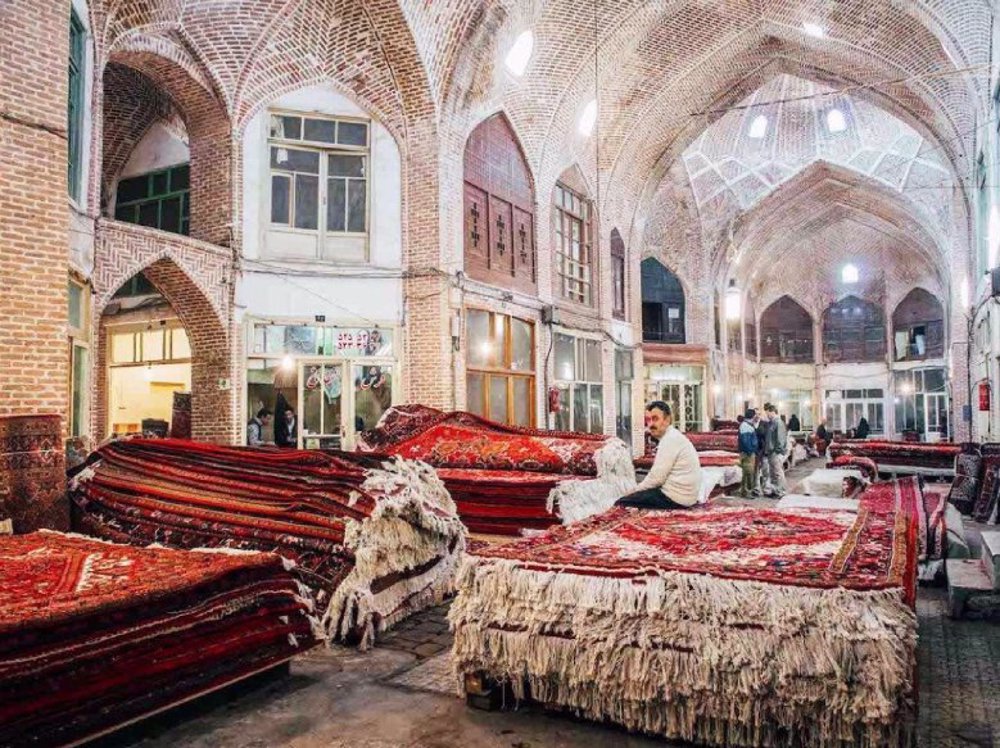
Today, it is a major center for the trade and export of Iranian carpets, with 26 carpet shops on each of its two floors. Its worldwide reputation makes it a destination for carpet buyers and admirers of traditional craftsmanship.
A first-time visitor can easily become lost in Tabriz Bazaar — and that is part of its appeal. The complex is best understood by wandering rather than simply walking toward one monument and leaving.
One of the most rewarding experiences is to follow the specialized market corridors. Different parts of the bazaar historically developed around particular trades, and this specialization remains visible.
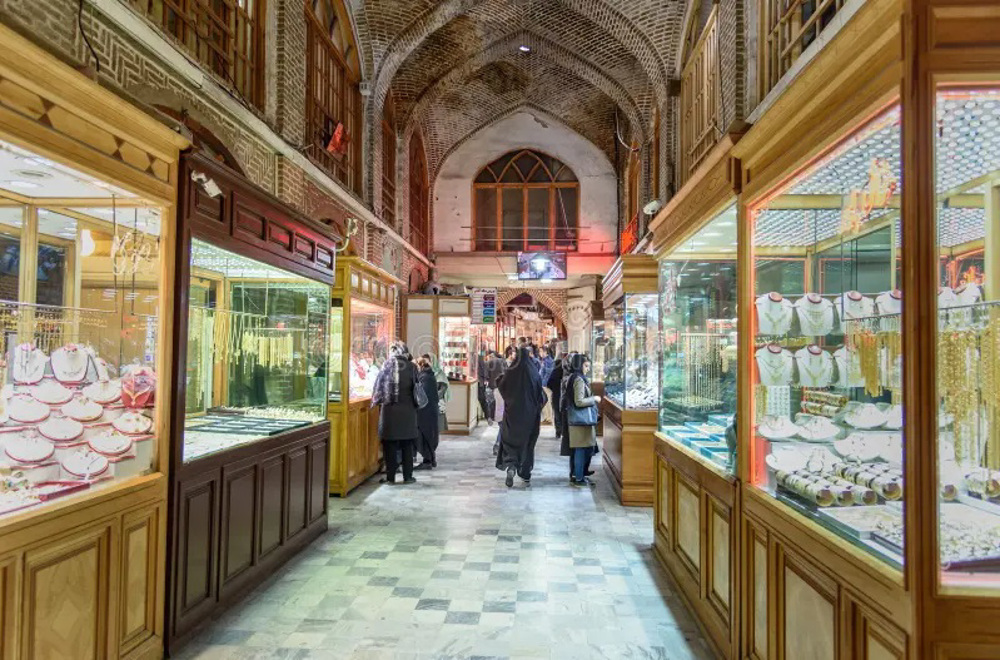
Gold and jewellery, carpets, shoes, textiles and other products have their own areas. The Amir Bazaar is particularly associated with gold and jewellery, while the Mozaffariyeh area is famous for carpets.
The Congregational (Jameh) Mosque is another essential part of the experience. Its relationship with the commercial complex demonstrates something fundamental about traditional Iranian urbanism: commerce and religious life were not spatially isolated.
The mosque was part of the same urban system, and its restoration in the nineteenth century helped reinforce its central relationship with the bazaar.
Other notable structures include the Blue Mosque, renowned for its magnificent mosaic tiles, and the Sorkhab sub-bazaar, one of the oldest in the city.
Visitors should also pay attention to the smaller details: the changes in ceiling height, the transitions between narrow corridors and larger domed spaces, the varying brick patterns, the shop fronts and the way daylight enters through openings above.
The bazaar's character is revealed less by a single spectacular facade than by these transitions.
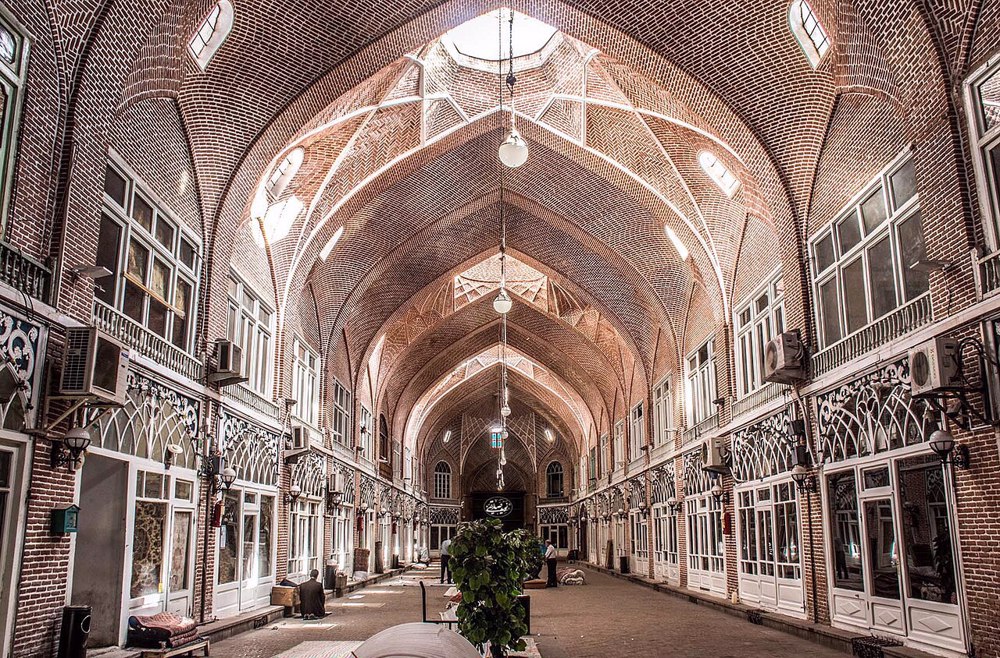
UNESCO recognition and global significance
In July 2010, the Tabriz Historic Bazaar Complex was inscribed on the UNESCO World Heritage List, becoming the first bazaar ever to receive this recognition.
The inscription was based on three criteria. Under Criterion (ii), UNESCO recognized Tabriz's role in international trade and cultural exchange.
From roughly the twelfth to the eighteenth centuries, the city stood on major east-west routes connecting different parts of Asia. Goods, technologies, artistic traditions and commercial practices moved through Tabriz along with merchants. The bazaar is therefore physical evidence of a much larger network of interaction.
Criterion (iii) concerns the bazaar as testimony to a living cultural tradition. This is perhaps the most fascinating aspect of the UNESCO designation.
Tabriz Bazaar is not important merely because it is old. Its significance lies in the fact that the economic, social, religious and professional relationships that created it remain legible — and in many cases remain active.
Specialized trades, commercial organizations and social institutions developed around the bazaar and helped maintain it across generations.
UNESCO consequently described it as one of the most complete socio-cultural and commercial complexes among historic bazaars.
Finally, Criterion (iv) recognizes Tabriz Bazaar as an outstanding example of a multifunctional urban complex. A remarkable number of specialized buildings and spaces are concentrated within a relatively compact area and connected into something approaching a single architectural entity.
The bazaar is therefore not simply a collection of historic buildings. Its significance comes from the relationship between them. ICOMOS was particularly interested in this integrated character.
Its evaluation concluded that the interconnected system of buildings, structures and spaces responded to commercial and social needs so successfully that the architectural and urban structure could not easily be separated from its social and economic functions.
UNESCO also recognized the authenticity and integrity of the surviving complex. Although the physical structure largely reflects reconstruction after the 1780 earthquake, its historical layout and commercial functions remain unusually legible.
The bazaar is still a living economic environment rather than a frozen archaeological site. The bazaar's global significance extends beyond its architecture.
For centuries, it has served as a centre for the exchange of goods associated with the region, including Tabriz carpets, leather products and dried fruits, many of which continue to be traded there today.
The bazaar has also been a center for the dissemination of cultural views, with industries established within its walls conveyed to students and apprentices over generations.
Perhaps the most remarkable thing about Tabriz Grand Bazaar is that it has survived by continuing to change. It has survived earthquakes, floods, political upheavals, changes of dynasties, the movement of Iran's capital from Tabriz to Qazvin and Isfahan, the transformation of international trade routes, the rise of modern streets and the arrival of modern retail.
Each period left traces, but none completely erased the bazaar's fundamental identity. That is why Tabriz should not be understood simply as the "largest covered bazaar in the world," a popular description that emphasizes its physical scale.
Its deeper importance lies elsewhere. It represents an exceptionally complete example of the Iranian bazaar as an urban institution: a place where trade, craftsmanship, religion, education, politics and everyday life were woven together.
The surviving brick vaults are therefore only the visible shell of a much larger historical story.
Beneath them passed silk, carpets, metalwork and countless other goods; merchants negotiated with people from distant countries; craftsmen produced and sold their work; religious scholars taught; political movements were organized; and generations of Tabriz residents used the same spaces as part of their ordinary lives.
Today, the Tabriz Bazaar remains a lively and economically active place, welcoming visitors from across Iran and around the world.
It stands as a bridge between Iran's ancient commercial heritage and its modern identity—a place where the past is not preserved behind glass but continues to breathe, bargain, and thrive.
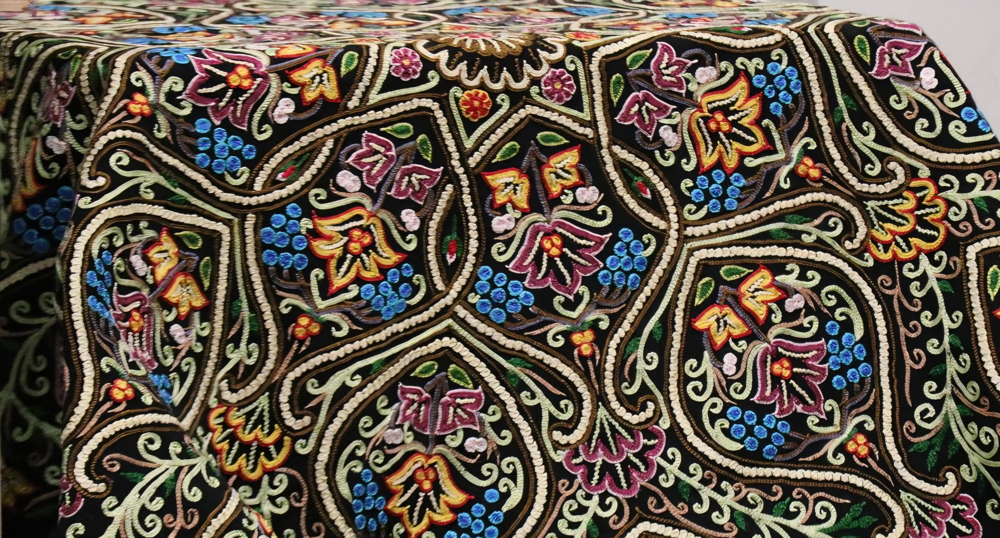
Rashti embroidery showcases Iranian heritage at BRICS summit
Stories Beyond Numbers: A pregnant woman killed alongside 8 family members in US-Israeli strike
Qazvin: Turning heritage into future growth



US assessment warns of inflation, weapons shortages as war against Iran runs up $38-billion bill
VIDEO | Trump's South Korea Hormuz demand causes backlash
VIDEO | Israel’s detention, harassment of journalists an assault on truth: Political analyst
VIDEO | 200 days of resistance
Report shows Trump planning ‘largest bomb transfer in modern US history’ to Israel
Pentagon finally admits Iran struck US F-35 fighter jet
Yemen rejects reports of threat against Mecca amid Saudi escalation
VIDEO | KSA oil bypass backfires



 PressTV NEWSLETTER
now
PressTV NEWSLETTER
now
 This makes it easy to access the Press TV website
