Yemeni military advance along Red Sea coast alters balance of power amid Saudi siege, aggression: Analyst
By Press TV Website Staff
The recent advance by the Ansarullah-led Yemeni Armed Forces along the Red Sea coast has altered the balance of power in Yemen and marked a shift toward an offensive strategy in response to the Saudi-led aggression and siege, says a Yemeni analyst.
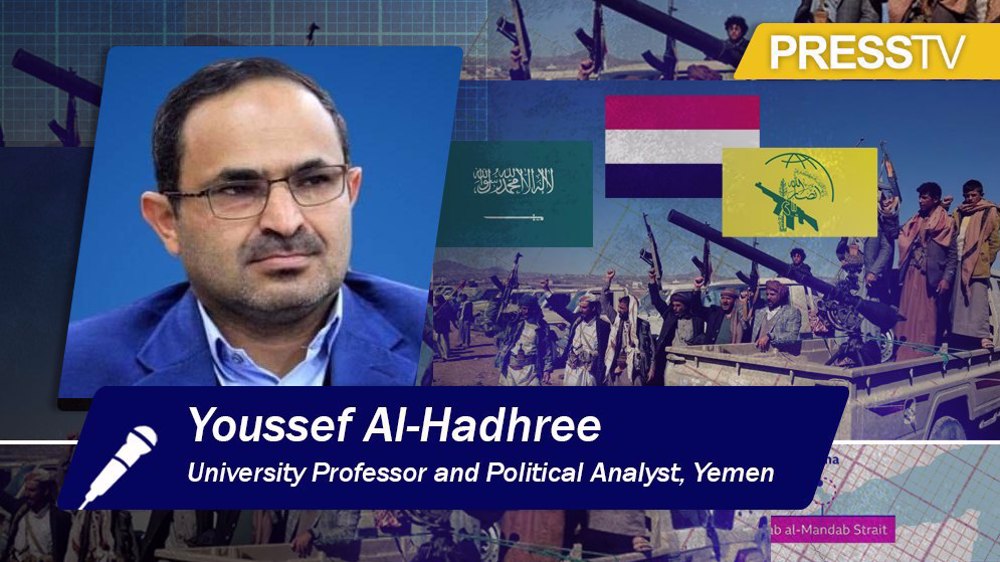
Speaking to the Press TV website, political analyst and university professor Youssef Al-Hadhree said the rapid advance of Yemeni forces in Western coasts marks a shift in the balance of power.
“Today, the balance of power at the domestic, regional and global levels is in favor of Ansarullah, given the developments that have taken place over the past few days on the western coast, and this operation demonstrates Sana’a’s offensive strategy toward the siege,” Al-Hadhree said.
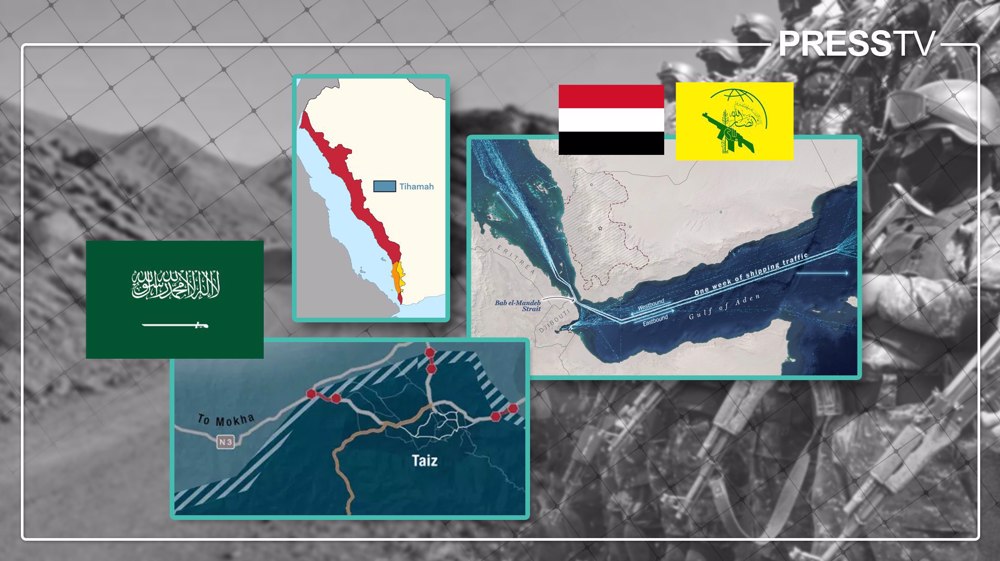
His remarks came after the Yemeni Armed Forces made a stunning advance along the country’s western coastline, capturing key positions overlooking the Bab al-Mandab Strait, including the coastal city of Mokha and strategic islands in and around the waterway.
The seizure of Perim, also known as Mayyun, placed the entire strait under the control of forces operating from Sana’a, according to reports in Yemeni media.
Al-Hadhree said the developments reflected the growing military capabilities of the Ansarullah-led Yemeni Armed Forces, which he said has repeatedly used its weapons and missiles in defense of the Yemeni people, Gaza and oppressed people around the world.
“Ansarullah has today reached a level of military power that has frightened its enemies, and the movement’s missiles have the capability to strike any point on land or at sea, and even moving targets such as ships,” he said.
He added that Ansarullah had sufficient weapons reserves to sustain decades of war against Saudi Arabia, the United States, Israel and their allies, while weapons production was continuing.
Yemeni forces make major military advances against Saudi-backed forces
— Press TV 🔻 (@PressTV) September 11, 2026
Follow Press TV on Telegram: https://t.co/GHI09iA8ru pic.twitter.com/e7DU8lsA1H
The latest advance has given the Yemeni military greater influence over Yemen’s Red Sea coastline and the Bab al-Mandab, a vital maritime passage linking the Red Sea with the Gulf of Aden.
Al-Hadhree said the Yemeni military’s control of the strait would establish genuine security and stability in the region, noting that waterways under the control of the United States or forces and regimes aligned with it had historically remained insecure.
He stressed, however, that Yemeni Armed Forces had previously possessed the ability to target ships in the Bab al-Mandab and the Red Sea, while all branches of Yemen’s leadership — including the Supreme Political Council, government, foreign ministry and armed forces — had emphasized the need to protect maritime trade for all ships except Saudi vessels, which had previously been declared subject to the blockade.
The analyst portrayed the latest developments as part of a broader trajectory in which Ansarullah had first resisted the Saudi-led offensive in 2015, which he said comprised 17 countries, and later confronted Israel in support of Gaza and the United States when Washington sought to lift the blockade on Israel.
He said the recent fighting also thwarted a “Syria project” aimed at Yemen, adding that regional and extra-regional powers and their proxies had sought to ignite a civil war and seize territory controlled by the Yemeni government and its armed forces.
The plan, he said, failed because of the readiness of Yemen’s army and people.
Al-Hadhree said Saudi Arabia’s inability to confront Sana’a was not the result of financial weakness or a shortage of weapons. Rather, he attributed it to Riyadh’s reliance on Washington.
“Saudi Arabia has relied on America, which is a spider web and extremely weak, while we have relied on God Almighty and our internal capabilities, and God Almighty is our helper,” he said.
He also noted that the United States was unlikely to provide direct support to Riyadh because it had already experienced confrontation with Yemen, which had “damaged Washington’s prestige and credibility” in its confrontation with Ansarullah.
He added that the United States was currently engaged in Donald Trump’s war against Iran and that Iran had put Washington in a difficult position.
Against that backdrop, Al-Hadhree described the Yemeni advance along the Red Sea coast as part of a strategy of “siege for siege” and “escalation for escalation.”
Ansarullah forces secure key Red Sea coastline
— Press TV 🔻 (@PressTV) September 11, 2026
Yahya al-Wazir reports from Sana'a.
Follow: https://t.co/oa9JV4ikYQ pic.twitter.com/93xOhHDf4z
He said the advance has challenged Saudi oil exports through the port of Yanbu and warned that continued pressure on Yemen would expose Saudi Arabia to economic disruption, insecurity and attacks on its energy infrastructure.
He said lifting the siege, ending the aggression and stopping harm to the Yemeni people represents the only way out of the crisis. Until then, he said, Sana’a would continue the equations of “siege for siege” and “escalation for escalation.”
Sana’a government has said that maritime navigation remains safe and that the resumption of operations at Mokha port would be accompanied by incentives for shipping companies.
The government also pledged to restore security and public services in areas recently taken from Saudi-backed mercenaries and reaffirmed its commitment to the safety of international navigation through Bab al-Mandab and the Gulf of Aden.
Asked about the possibility of Turkey and Pakistan joining the war against Yemen under the so-called joint defense agreement, Al-Hadhree said both countries, like the United States, were seeking Saudi money.
He said that Turkey and Pakistan understood Saudi Arabia to be an occupier and aggressor whose actions support Israel.
He also warned that any Turkish or Pakistani intervention would be met with resistance, recalling that Yemen had previously confronted the US, Israel and a 17-country coalition.
“We stood against America, Israel and a coalition of 17 countries before and did not bow our heads, and we fear no power except God Almighty,” Al-Hadhree said.

Iran’s strategic location, energy resources position it as a key player in BRICS alliance: Analyst

Iran has good reason to bar IAEA inspectors from returning amid US aggression: Author
IAEA report in May 2025 became pretext for US-Israeli attacks against Iran: Ex-IAEA inspector



No talks until Iran’s conditions are met: SNSC chief
Supertanker explodes after hitting mines on illegal route south of Hormuz: IRGC Navy
VIDEO | Global economy suffers Hormuz closure
War on Iran threatens Persian Gulf states’ $4 trillion commitments to US: Report
Six children among 13 killed as Israel ramps up attacks on south Lebanon
Two civilians killed as Saudi Arabia bombs bridge in southern Yemen
VIDEO | News Review: IAEA politicizing Iran nuclear case under US pressure
VIDEO | Press TV's news headlines




 PressTV NEWSLETTER
now
PressTV NEWSLETTER
now
 This makes it easy to access the Press TV website
