Ansarullah advance along Yemen's Red Sea coast
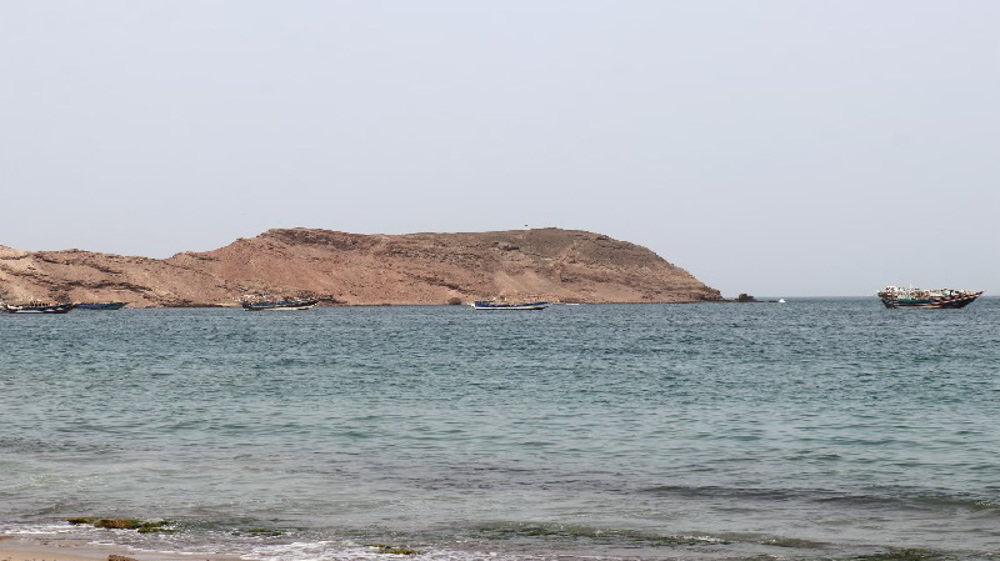
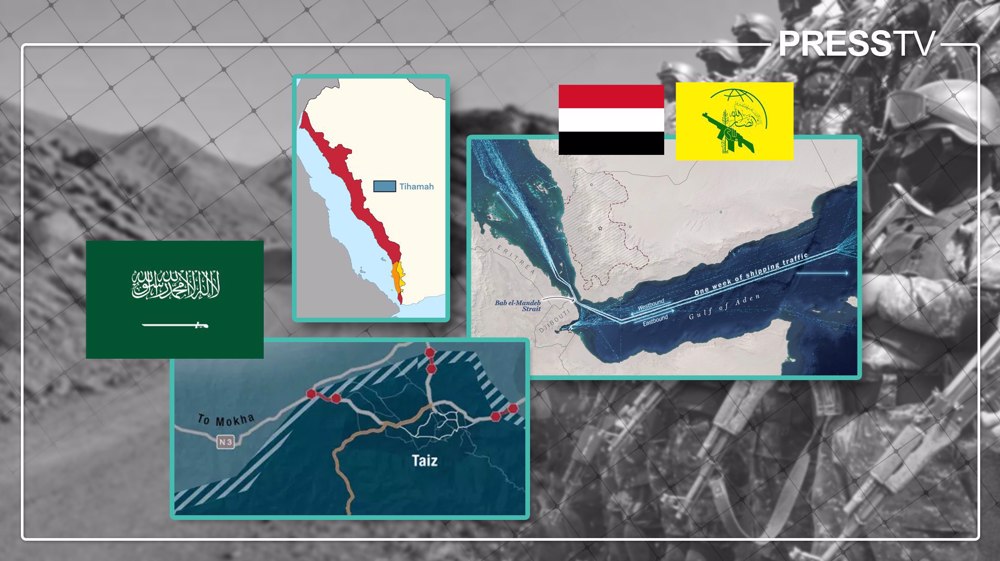
The Yemeni resistance movement Ansarullah has captured the key port city of Mocha and the Hanish Islands; reports indicate its forces have also landed on the strategically located Mayyun Island at the heart of the Bab al-Mandab Strait.
The timing could hardly be more significant, with the Strait of Hormuz already severely disrupted by the US war in Iran; the possibility of Bab al-Mandab coming under greater Yemeni control could restrict shipping via another major artery for global energy and trade.
Could you fill us in on the significance of the capture of Mocha and the Hanish Islands by the Yemeni armed forces, please?
Let me start from one point that every time there is a critical situation for the United States in the region, we can see one of the [Persian] Gulf countries they move their heads up or its head up to support the United States, in order to help the United States or Israel against the resistance alliance.
So, what's going on right now? Let me tell you this. According to my knowledge, that Yemen or Iran right now, and Especially Iran, they are taking an advantage of the American aggression against Iran and the Saudi aggression against Yemen to turn it into opportunities to prove their strength and to limit the other strengths on our region, and I believe this opportunity should be taken up by all means, and that's what Yemen is doing right now.
Because we are talking about Yemen, Yemen is taken right now, and I believe they moved from, I think, Kamaran Island to Hayes to al-Maḵā, and moving so quickly toward Al Bab al-Mandeb area.
This means that Yemen is taking the advantage to change this Saudi aggression against Yemen into a big opportunity to gain back all the Yemeni territory from the hands of the mercenaries and ISIS and the others, which have been supported by United Arab Emirates and Saudi Arabia.
I believe this is a historic step by Al Yemen, and I believe we have to take into consideration also what the outcome will be from the meeting in Saudi Arabia, a military meeting between Pakistan, Turkey, and Saudi Arabia in Saudi Arabia because I think they are in very confined options, they don't have so many options, and I believe if they continue their aggression against Yemen, I believe maybe the opportunity of Ansarullah to reunify Yemen.
Ali Hamie, Lebanese Military & Strategic Affairs Analyst

The Mayyun Island sits directly inside the Bab al-Mandab Strait and divides the Strait into two different channels. If Ansarullah establishes a lasting presence there, what will be the implications?
Obviously, Ansarullah, even before claiming Mocha and all the cities alongside the Red Sea coast line, they had good control over the Red Sea and the Bab al-Mandab, but now this gives them ground level control over the Red Sea, which is very important because before gaining control over these areas.
The Yemeni forces used to use sophisticated weapons to target vessels that are going either to Israel or oil vessels that Saudi used to use to export their oil.
Being very close to the Bab al-Mandab Strait gives Ansarullah a lot of options when it comes to leveraging their military capabilities.
Instead of using vessel missiles right now, they could be using short-range anti-ship cruise missiles. They could use mines, and this puts them directly in line sight within the range of the vessels.
Because, as you know, the Strait is not a very wide strait, at the narrowest point, it's between 18 to 20 miles, so definitely this strengthens their position, when it comes to the control they have over the Red Sea and, which can be used to disrupt the movement of the ships in the Bab al-Mandab.
For now, Sanaa has been very clear, and earlier today they mentioned that Bab al-Mandab and the Red Sea is safe for navigation of vessels, except for ships going to the Eilat port in the occupied Palestinian territories or ships that are used by Saudi Arabia to export their oil.
They also mentioned that they're willing to go back and sit down with the Saudis and continue their negotiations and start implementing the roadmap that they agreed on in 2023.
But I think the pressure, the heavy pressure that Saudis right now are facing from Washington, is hard to neglect (ignore), putting them in a very troubled situation because they don't have a lot of options; either continue this unwilling and losing war, or going against the will of the US, which could cause a lot of friction in the relationship with the US.
Hamza Karim, Yemeni Activist & Political Commentator
Mr. Karim believes that the Kingdom of Saudi Arabia is under a lot of pressure from the US. Would you agree with that assessment? And in your previous response, you mentioned that Saudi Arabia does not have many options. Would you please elaborate on that as well?
In 2015, in order to ... all of it is dictated by United States to Mohammad bin Salman in order to be a crown prince in 2015. The terms and conditions on him is to be all in his hand in Saudi Arabia and to go into war against Yemen, and he did in 2015 in order to be crown prince, I believe there is something going on in Saudi Arabia right now, and he is in need.
Well, this is under the control of United States and by the dictation of United States, dictated by United States, in order to be king, you should go against Yemen again.
And I believe now Saudi Arabia is moving toward putting the crown on the head of Mohammad bin Salman, but he must fulfill all the terms and conditions being imposed by United States and Israel.
If you want to be king, you should go to war against Yemen, because we cannot open two wars in same direction, against Iran and Yemen, simultaneously.
So every country, like the United States, have their own role against Iran.
Saudi Arabia will take care of Yemen, like some kind of destructions and distracting what's going on in Gaza and in Lebanon, and trying to dismantle the situation between Yemen and Iran, between Iraq and Iran, and Israel is also trying to disconnect the relation between Lebanon, Gaza with Iran.
So I believe it's all in the same chain, and I believe everybody is taking its own role; Saudi Arabia has taken a role, and the United States, Israel, and so on.
And one more thing is, I believe that Saudi Arabia also, with the meeting right now, this is a hard proof that Saudi Arabia entered the joint defense agreement between Saudi Arabia, Pakistan, and Turkey, I believe, just to penetrate any unification between Turkey, Iran, and Pakistan, and this is a very satanic move because they are in need, to protect each other.
We have India; we have the war coming again. Well, India against Pakistan. We have Greece and Israel against Turkey, and the United States against Iran. Saudi Arabia is playing the role of the devil right now in the region.
Ali Hamie, Lebanese Military & Strategic Affairs Analyst

On the other side of the Bab al-Mandab Strait, we have the so-called Somaliland area, which was recognized by the Israeli regime, the first entity to do so; where would you say the Israeli footprint is in this conflict?
Yeah, that's a good question. So we recently saw that the authorities that are controlling Somaliland recently normalized relations with Israel, but very quickly after that the government in Sanaa warned Israel that they will be targeting any military sites they start to establish in that area.
Currently, Israel seems have taken the threats from Yemen seriously. I haven't heard of them establishing any military sites there so far, but definitely we should expect the US and Israel to do something about what happened today in Yemen.
It would be very surprising to me to see the US letting this slip without taking any action.
But honestly, if you think about the different options they have, they have very limited options, and the rate of success is very low, because over the past 12 years, both the US and Saudi Arabia, Israel as well, although it might not have been very obvious the role in the war in Yemen, but they have used, maybe not all their cards, but they've used so many of their cards to try to achieve goals in Yemen, and they failed miserably.
And over this time, Yemen was able to develop and advance their military capabilities, which changes the equation of the war now and makes Saudi Arabia, you know, lose a lot if they decide to continue this war, as well as the US, as we've seen when the Yemeni military was targeting the US warships in the Red Sea.
Hamza Karim, Yemeni Activist & Political Commentator
The global economy is in tatters. Brent crude has surged above $107 a barrel; the price of oil is skyrocketing; and the Strait of Bab al-Mandab is controlled by the Yemeni armed forces.
It seems that Yemeni control over the Strait of Bab al-Mandab is increasing because of the conflict that we are seeing.
The Strait of Hormuz is much the same; it is, at the very least, severely disrupted by the Iranian armed forces.
What effect will the oil prices have on this conflict and, reciprocally, this conflict on global oil prices?
It's clear and obvious right now that most of the European countries are out and they take neutral decision about what's going on in the Middle East.
They are not supporting Israel, and there is a sort of diplomatic crisis between Israel and the 12 countries in the European Union and others, plus the United Kingdom.
The only supporters of the Israelis and the Americans are the Gulf States, especially the Emirates and Saudi Arabia, and I believe, right now, the United States is trying to figure out a decent exit for this war, but first of all they have to try their best.
Their best is before taking their weapons and equipment out of West Asia, they must try Saudi Arabia in making a [sic] new conflict in the region, but on the basis of sectarian or religious divisions or whatever.
But the problem is Saudi Arabia is not only playing the role of the last bullet of the United States in the region, they want to try to make war against Yemen.
In case they win, they will prove the United States that they can stay, and Saudi Arabia is supporting them all along. And if they lose, they will bring the European countries to the region under the navigation of the team they created for security (of) navigation in the sea in our area.
So I believe now Saudi Arabia is trying to drag Israel, for the same purpose, to drag the European countries into this war.
When Yemen will close Bab al-Mandab totally, and the Yemenis declare that it's only blocking the Strait of Bab al-Mandab against the Saudi vessels, so, if the Yemenis will block Bab al-Mandab totally, they will ask the Europeans to come into effect on the ground with their military to support them, so this is the game they are playing.
They will say that the Strait of Hormuz, about 40 percent of the global oil flow is coming out of the Strait of Hormuz, more than 12 percent of the world trade passes through Bab al-Mandab, so it will be a very critical economic crisis around the war [sic] and especially against Europe.
Ali Hamie, Lebanese Military & Strategic Affairs Analyst
If Ansarullah consolidates its Red Sea coastlines, gains strategic control over those areas, strengthens its position around Bab al-Mandab Strait, and continues threatening Saudi targets, what exactly can Saudi Arabia do in return?
That's honestly a very tough question for the Saudis to answer because they have two options.
One, go back to the roadmap that they agreed to with the government in Sanaa and start paying for all the damage they have caused in Yemen over the past 10 years.
Solve the humanitarian crisis by starting to end the blockade on the airports and the ports of Yemen, and then just go and implement the milestones they agreed to, which, as I mentioned, they're facing heavy pressure from the US and it seems to be an option that the US will not be okay with.
The second option is just to continue this losing unwinnable war against the Yemenis, which will be very costly for Saudi and their economy.
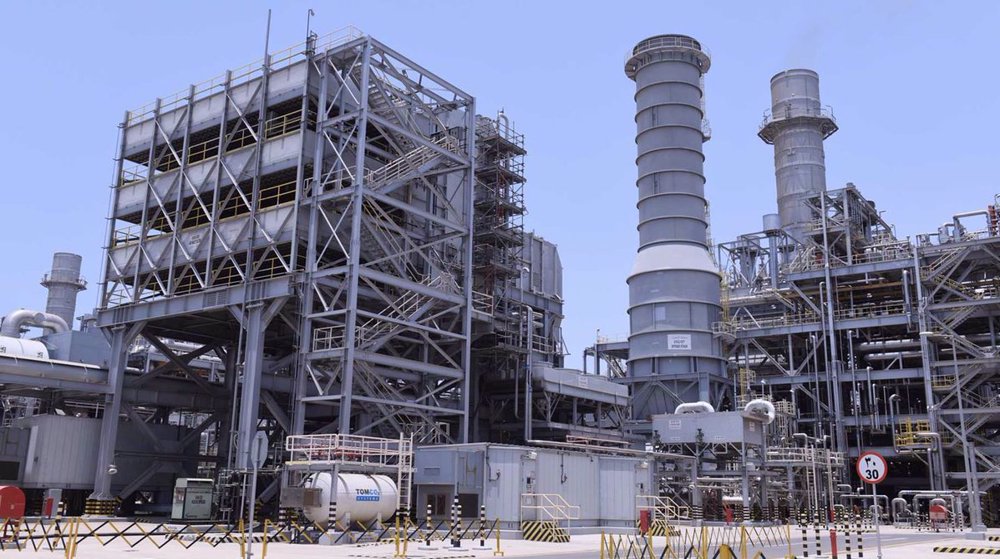
The Saudi leadership seems to be trying to focus on their 2030 vision and to grow their economy and diversify it, but if they decide to continue this war, then it will be very damaging to their economy, especially now that the Yemeni military have capabilities and have proven that they can destroy the oil infrastructure inside of Saudi Arabia, which they did target in the past couple of weeks.
They've targeted the oil refineries in Jazan, in Najran, in Yanbu many times, which is part of why the oil prices is increasing or has been increasing recently.
So a very, very, tough situation for Saudi Arabia; they're in serious trouble, and they need to really think about this wisely and try to convince the US that the war in Yemen is really just making them lose territories in Yemen, and exposing them to risks that could have a really huge impact on their economy.
Hamza Karim, Yemeni Activist & Political Commentator
How would you say the axis of resistance is doing right now?
I believe now, let's say the Ansarullah are moving from remotely controlled to totally grab it with full hand. They are at Bab al-Mandab right now, and they control it, not remotely, but closely.
In Lebanon, still I think we are using the silent war and the static war right now in Lebanon. I believe we never know when it will come into effect. I'm talking about retaliation of Hezbollah against Israel, or because everybody is waiting for the agreements in Islamabad to be imposed, implemented, and I believe Iran is doing well.
Iran is winning the war. Yemen is winning the war, and especially Iran is not only winning the war but upgrading its military action against the United States.
Yesterday Dive LD, and today another boat being destroyed remotely. I'm talking about drone boat, drone destroyed by Iran, and we saw so many, so many footage of 815 plus 810 plus several Black Hawk helicopters being destroyed by Iran yesterday.
Ali Hamie, Lebanese Military & Strategic Affairs Analyst


Implication of Netanyahu's rejection of Palestine peace plan
Qazvin: Turning heritage into future growth
No grand strategy, no military solution: Analyst on US war on Iran



VIDEO | Press TV's news headlines
Yemen reports 58 Saudi attacks in one day, vows decisive response
VIDEO | US failed economic policy on Iran
Swedes head to polls to vote in general elections
Palestinian detainees report severe conditions, medical neglect in Israeli prison
Hamas welcomes BRICS's supportive position on Palestine
Irish, Scottish and Welsh leaders to meet to discuss UK break-up
Yemen taught US Navy ‘a hard lesson’: Ansarullah




 PressTV NEWSLETTER
now
PressTV NEWSLETTER
now
 This makes it easy to access the Press TV website
