Strait of Hormuz closure exposes AI’s hidden helium dependence, putting global chipmaking at risk
By Yousef Ramazani
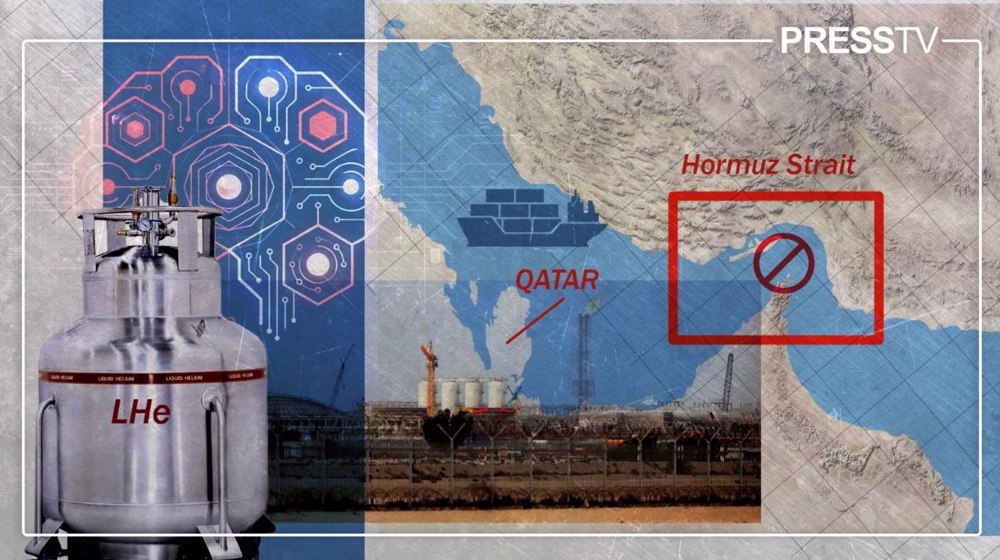
The world’s most advanced artificial intelligence systems, whose capabilities appear to exist beyond physical constraints, ultimately depend on a narrow maritime passage in the Persian Gulf – the Strait of Hormuz – through which much of the helium used to cool the lithography machines that etch the chips powering AI models is transported.
The continued closure of the strategic waterway in the wake of American maritime banditry has exposed how easily the digital revolution can be severed from its physical foundations and the largely invisible vulnerability at the heart of the global artificial intelligence industry.
While the world’s attention has focused on oil markets and energy prices, the disruption of shipping through the narrow waterway has exposed an intricate web of dependencies linking the seemingly ethereal world of algorithms and machine learning to the physical movement of critical industrial materials.
At the center of this vulnerability is helium, an irreplaceable element in semiconductor manufacturing that is produced predominantly as a byproduct of natural gas processing at Qatar’s Ras Laffan facility.
When the US-Israeli war machine carried out an unprovoked and illegal aggression against the Islamic Republic and the Strait of Hormuz became impassable, approximately one-third of global helium production was disrupted, while hundreds of specialized cryogenic containers became stranded, their valuable cargo gradually warming and evaporating.
The convergence of a major production disruption and a maritime blockade has threatened to constrain semiconductor fabrication in Taiwan and South Korea, where some of the world’s most advanced chips are manufactured.
The resulting supply shock could slow the expansion of AI infrastructure and expose the extent to which the digital revolution remains dependent on fragile physical supply chains.
Unlikely link between a narrow strait and advanced algorithms
The Strait of Hormuz, a maritime passage approximately thirty-three kilometers wide at its narrowest point, has long been recognized as one of the world's most consequential energy chokepoints.
Before the US-Israeli aggression against Iran, roughly 20 million barrels of crude oil and refined products passed through it daily, representing approximately one-quarter of all seaborne oil trade.
Yet the strategic significance of this waterway extends far beyond energy markets, reaching into the sophisticated supply chains that underpin the global technology industry.
The disruption of shipping through the strait has exposed a dependency that few had anticipated: the reliance of advanced semiconductor manufacturing on helium. This gas cannot be manufactured when needed and cannot be stockpiled indefinitely.
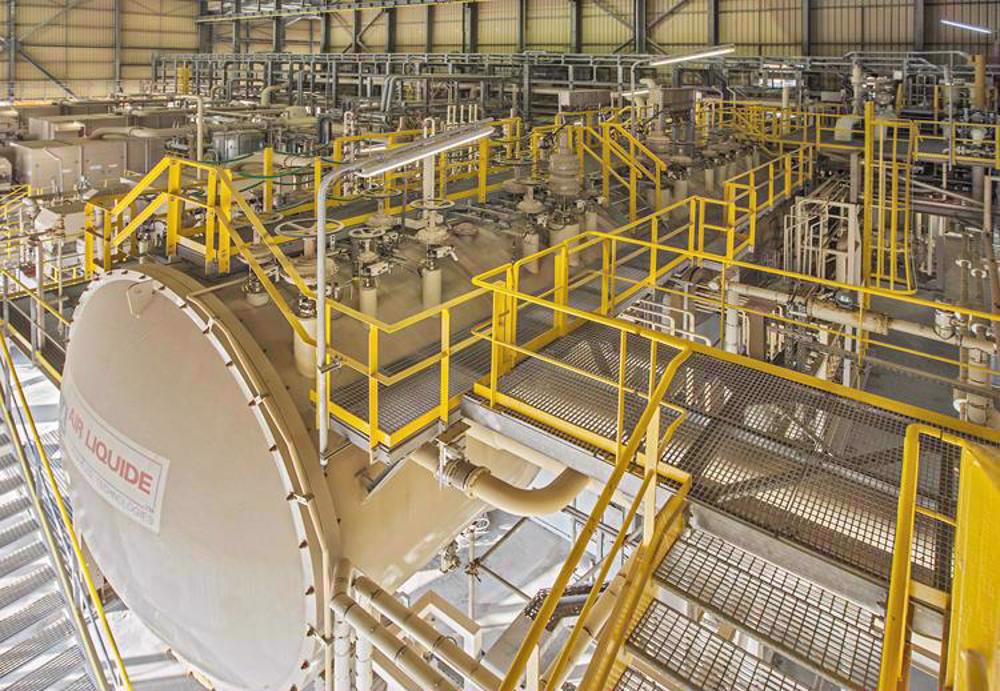
Helium is extracted as a byproduct of liquefied natural gas production through cryogenic distillation, and Qatar sits atop the world's largest single natural gas field, accounting for approximately one-third of global helium supply.
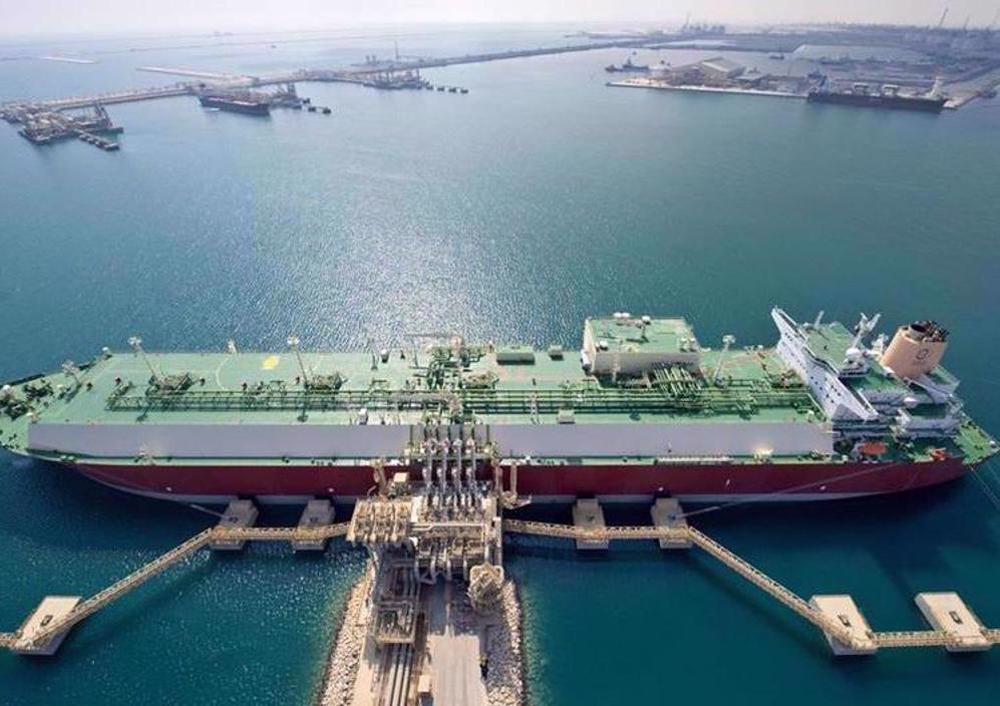
The Ras Laffan Industrial City in an Arab country, home to the world's largest LNG plant, has been the cornerstone of global helium production for years.
When the US aggression and the Iranian retaliation forced the shutdown of this facility in early March 2026, and QatarEnergy subsequently declared force majeure on affected contracts, approximately 5.2 million cubic meters of annual helium production capacity was removed from global markets.
The damage to the facility was so extensive that Qatari officials estimated it would take three to five years for full repairs to be completed.
The simultaneous closure of the Strait of Hormuz meant that even helium that had already been produced and loaded into specialized containers could not reach its customers, creating a production-and-logistics disruption unprecedented in the history of the helium industry.
Helium crisis: Precarious supply chain
The vulnerability of the helium supply chain was immediately apparent to industry experts when the crisis unfolded. Helium industry consultants described the situation in stark terms.
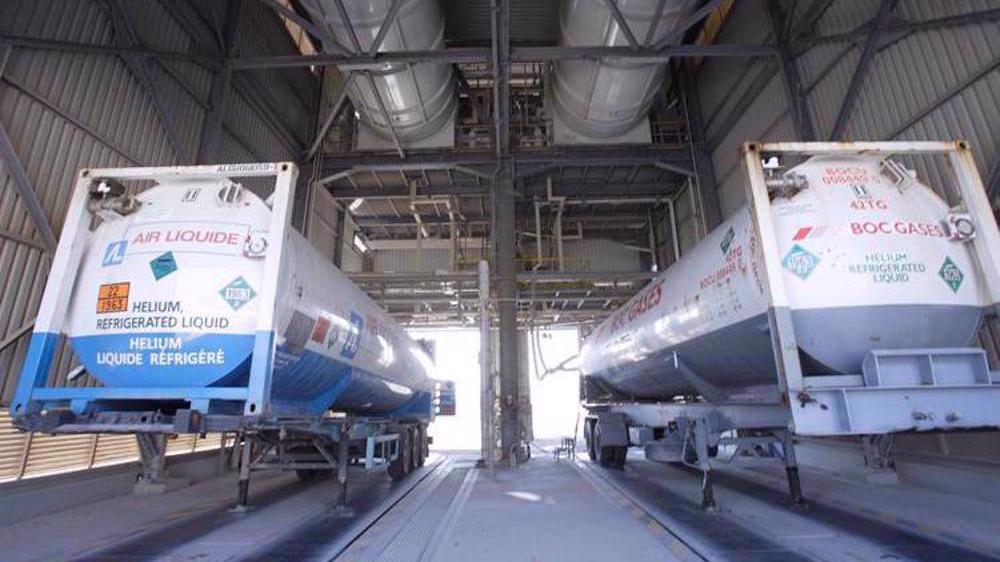
Approximately two hundred specialized cryogenic containers used to transport liquid helium were stranded in West Asia, each worth roughly one million dollars.
These containers are not ordinary freight vessels but sophisticated pieces of equipment designed to maintain helium at temperatures near absolute zero.
Liquid helium has an extremely low boiling point, approximately 4.2 Kelvin at atmospheric pressure, and its storage containers inevitably experience boil-off. The longer a shipment remains in transit, the more difficult it becomes to preserve the original cargo volume.
The containers can store helium for approximately 35-40 days before warming becomes a critical problem, after which the helium transforms into gas and escapes through pressure release valves.
The timing of the disruption could hardly have been worse for the semiconductor industry, which was already operating at maximum capacity to meet surging demand for AI chips.
Semiconductor manufacturing and microchip fabrication are the largest consumers of helium globally, and the gas is irreplaceable for these uses.
Helium's combination of properties, including its extreme thermal conductivity, chemical inertness, and low boiling point, makes it uniquely suitable for wafer temperature management, cooling during extreme ultraviolet lithography, and mass spectrometry leak detection.
No viable alternative exists for these applications. When helium runs short, semiconductor companies tend to outbid every other industry for available supply because the cost of idling a fabrication facility dwarfs any premium on the gas itself.
This has led to price increases that have rippled through the entire technology supply chain.
South Korea and Taiwan: Vulnerability of concentration
The strategic exposure to the helium crisis is particularly acute in East Asia, where the semiconductor industry is predominantly concentrated.
South Korea, home to Samsung Electronics and SK Hynix, which together control nearly 80 percent of the high-bandwidth memory market essential for modern AI clusters, imported roughly 64 percent of its helium from Qatar in 2025.
The country's dependence on Qatari helium made it one of the most vulnerable economies to the disruption, with government officials and industry analysts warning that prolonged shortages could constrain the country's most important growth engine.
The Asia Group, a US-based advisory firm, highlighted this vulnerability in a report that noted continued disruptions in the Strait of Hormuz would affect South Korean chipmakers, which are the world's largest helium consumers.
Taiwan, which accounts for over 60 percent of global foundry revenue and more than 90 percent of leading-edge chip manufacturing, also faced significant exposure to the helium crisis.
Taiwan Semiconductor Manufacturing Company, the world's most advanced semiconductor manufacturer, consumes approximately 10 percent of Taiwan's electricity demand and depends heavily on imported helium for its fabrication processes.
While Taiwanese companies have invested heavily in helium recycling systems that can recapture ninety to 95 percent of the helium used in certain processes, leak-detection helium is essentially unrecoverable, and even a 5 percent loss at high consumption volumes adds up rapidly.
Taiwan Semiconductor Manufacturing Company reportedly held inventory of four to six months and had locked in multiyear helium supply contracts as part of its Arizona fab planning, but the prolonged nature of the disruption raised concerns about the sustainability of these buffers.
Crumbling foundation of the AI Infrastructure
The helium crisis is only one element of a broader vulnerability that runs through nearly every layer of the AI infrastructure buildout.
The International Energy Agency has documented that data centers consumed approximately 415 terawatt-hours of electricity in 2024, with projections suggesting this figure could roughly double by 2030.
The accelerated servers that drive AI workloads are set to grow far faster in electricity use than conventional servers, creating a massive industrial load that depends on stable electricity supplies.
The Strait of Hormuz matters to AI because AI is becoming a massive industrial electricity customer, and the Strait of Hormuz still shapes fuel availability and pricing for several of the Asian economies that power and manufacture the AI stack.
The relationship between the Strait of Hormuz and AI is not direct but operates through multiple layers of dependency. Taiwan and South Korea, the two economies most critical to AI hardware production, are heavily dependent on imported energy that transits through the Strait.
Taiwan, which imports over 95 percent of its energy needs, had relied on Qatar for approximately one-third of its LNG before the war. South Korea relies on the strait for 61 percent of its crude oil imports and 54 percent of its naphtha imports.
When energy supplies are threatened, the entire semiconductor manufacturing ecosystem faces disruption, including the production of the advanced logic chips and high-bandwidth memory that power AI systems.
The New York Federal Reserve has warned that mounting global supply chain strains tied to the recent American wars of aggression in West Asia could hamstring the AI investment boom.
Container bottleneck and the limits of diversification
Efforts to diversify helium supply have been complicated by the physical limitations of the industry. New helium projects under development in Canada, Tanzania, and Minnesota are years away from meaningful production.
The specialized cryogenic containers used to transport helium are in limited supply, and the stranded containers in West Asia represent a significant portion of the global fleet.
Even if production were to resume immediately, repositioning these containers would require a minimum of three months, creating a supply gap that outlasts the war itself.
This logistical bottleneck has been described by industry experts as potentially the worst part of the shortage, as the disruption affects not only the production of helium but also the ability to transport it to customers.
The crisis has accelerated efforts to develop alternatives and improve efficiency. ASML and Applied Materials are designing next-generation tools to use less helium in certain processes, substituting nitrogen for non-critical cooling.
These are incremental improvements measured in percentage points, not a structural fix. Helium recycling systems have become more widespread, with most advanced fabrication companies now operating on-site helium recovery systems capable of recapturing a high percentage of the helium used in certain processes.
However, the fundamental dependence on helium in EUV lithography and other critical processes means that no quick solution is available.
AI industry's new geography
The disruption in the Strait of Hormuz has forced a reconsideration of the physical geography of the AI industry.
Tech companies accounted for around 40 percent of corporate renewable power purchase agreements signed in 2025, and the AI momentum is helping push interest in nuclear, geothermal, batteries, and more flexible data-center designs.
The move toward domestic energy sources reduces dependence on imported fossil fuels and lowers vulnerability to maritime chokepoints.
However, the concentration of advanced semiconductor manufacturing in Taiwan and South Korea means that even US companies remain exposed to the helium supply chain through their dependence on fabrication facilities in these regions.
The economic implications of the disruption extend beyond the immediate cost of helium. Memory chip prices have already risen sharply amid booming AI demand, and any further supply constraint on helium could force chip makers to prioritize high-margin AI silicon over consumer products.
When helium runs short, semiconductor companies tend to outbid every other industry for available supply because the cost of idling a fab dwarfs any premium on the gas itself.
This leaves other helium-dependent sectors, including medical imaging and pharmaceuticals, short of supply, creating a cascade of economic effects that reach far beyond the technology industry.
The disruption has demonstrated that the world's AI revolution ultimately depends not only on GPUs, advanced lithography, and enormous data centers, but also on obscure physical commodities whose supply chains can be disrupted thousands of kilometers away from Silicon Valley.
Long-term implications for global technology
The ongoing crisis triggered by US maritime banditry and military aggression against Iran has served as a stress test for the global technology ecosystem, revealing vulnerabilities that will shape investment and policy decisions for years to come.
The dependence on a single waterway for a third of global helium supply has been identified as a strategic weakness that requires immediate attention.
South Korea's government has launched a review of more than a dozen semiconductor materials and equipment types with high dependence on West Asian sources.
The longer-term response to the crisis will likely involve a combination of diversification, recycling, and redesign, according to experts. New helium production facilities outside Qatar are under development, though they will take years to reach meaningful production.
Helium recycling systems are becoming more sophisticated and widespread, reducing the amount of fresh helium required for semiconductor manufacturing.
Equipment manufacturers are redesigning tools to reduce helium consumption, though the pace of these changes is limited by the complexity of semiconductor fabrication processes.
However, the fundamental challenge remains, which is that helium is irreplaceable for certain critical applications in semiconductor manufacturing, and its supply will remain concentrated for the foreseeable future.
The Strait of Hormuz does not literally determine whether artificial intelligence can continue to develop. The world's AI industry has multiple layers of redundancy, semiconductor inventories, alternative helium suppliers, recycling systems, and geographical diversification.
The crisis has demonstrated that the AI hardware ecosystem has vulnerabilities far removed from the factories where chips are designed and fabricated.
A strategic waterway primarily associated with oil and LNG can also influence the availability of a rare industrial gas used throughout advanced manufacturing.
The lesson is not that AI depends on passing the Strait of Hormuz, but that AI depends on a remarkably long and geographically concentrated chain of energy, gases, chemicals, machinery, semiconductor fabrication, and logistics.
Helium is one of the clearest examples of this hidden dependency.
ECO can play greater role in regional peace, economic integration: Araghchi
Iran says international flights continue despite US sanctions pressure
Iran slams US for blaming Tehran over rising fuel prices, Strait of Hormuz closure



Plans to Judaize occupied al-Quds and al-Aqsa Mosque will fail: Hamas
Saudi attacks on market in Yemen's Ta’iz leave 50 killed, injured
Iran will shape region’s security future as US exits: Top military adviser
Irish goalie’s withdrawal from Israel match turns personal choice into a statement of conscience
Iran Army vows stronger response to any renewed US aggression
IRGC captures second US underwater drone in Strait of Hormuz
Sayyed Hasan Nasrallah: The voice, presence, and legacy that shaped resistance for decades
VIDEO | The cost of conflict


 PressTV NEWSLETTER
now
PressTV NEWSLETTER
now
 This makes it easy to access the Press TV website
