Irish goalie’s withdrawal from Israel match turns personal choice into a powerful statement of conscience
By Mohammad Ali Haqshenas
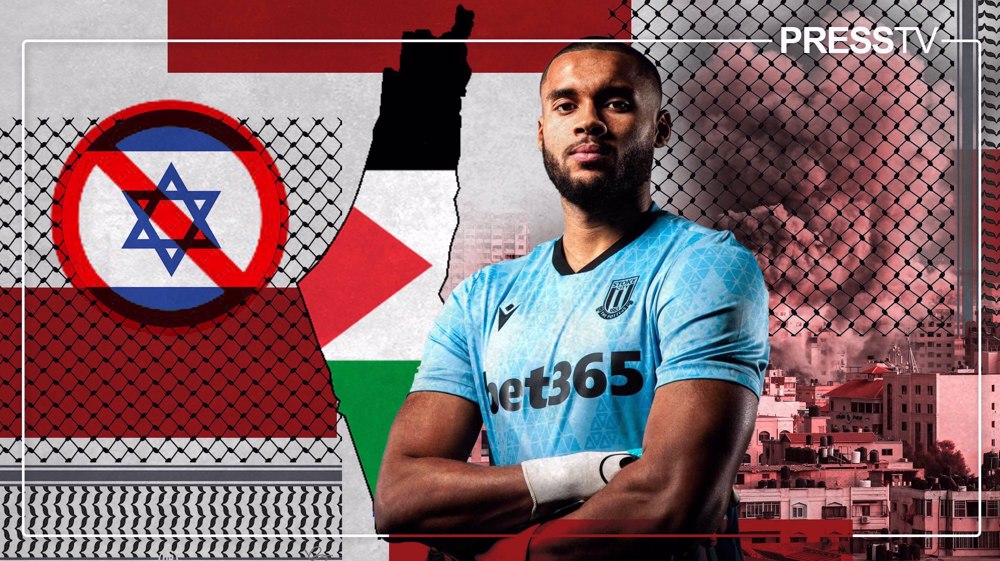
Ireland goalkeeper Gavin Bazunu’s decision to sit out the Republic of Ireland’s Nations League match against Israel has turned a personal choice into a powerful statement of conscience, as his teammates prepare to play while wearing black armbands in memory of Palestinians killed by the Israeli regime in Gaza.
The Bolton goalkeeper confirmed that he would not take part in the Republic of Ireland’s controversial Nations League fixtures against Israel after informing head coach Heimir Hallgrimsson on Saturday of his decision to withdraw from the squad.
The announcement, which was widely welcomed on social media, came amid uncertainty over Ireland’s preparations for Sunday’s match in Debrecen, Hungary.
Players, coaches and Football Association of Ireland (FAI) officials reportedly held an emergency four-hour meeting before voting on whether the fixture should go ahead.
The FAI later said a “significant majority” of players had voted to fulfil the fixtures.
Bazunu, however, chose a different path.
“Representing my country means everything to me. I have the utmost respect for each of my teammates, for the head coach, for his coaching staff, and for the Irish people,” he said in a statement posted on Instagram.
His statement made clear that the decision was not taken lightly, nor was it presented as a rejection of his teammates or his country.
“However, I have made a decision that I have not taken lightly. I am a man of strong faith and I try, as far as possible, to be a person of character and principles.”
For Bazunu, the central issue was the human cost of the Israeli genocide in Gaza.
“Therefore, I believe it would be a mistake to take part in the upcoming matches against Israel. My decision is based exclusively on my personal conviction that killing innocent people is wrong.”
He also took care to distinguish his position from hostility toward Jews, stressed that his stance was not directed against the Jewish people, “but against the atrocities being committed in the region,” referring to the Zionist regime’s war crimes in Palestine, Lebanon, Iran and beyond.
He also explained why, despite the potential consequences for his international career, he felt compelled to take a stand.
“In life, there are few occasions when one has the opportunity to stand up for something more important, and I firmly believe that this is one of them.”
Meanwhile, the players’ vote has also sparked controversy, after former Ireland manager Brian Kerr said Bazunu was not included in the discussion, suggesting that the players already knew how he would vote.
Bazunu’s withdrawal from the squad came against the backdrop of months of pressure on Irish football authorities.
When Ireland and Israel were drawn together in Group B3 of the 2026–27 UEFA Nations League, the fixture immediately became contentious.
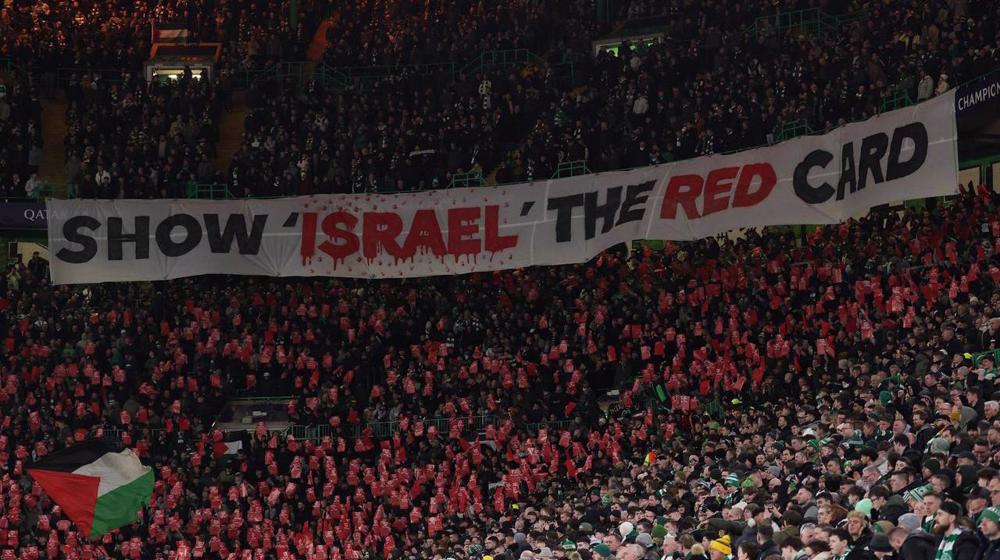
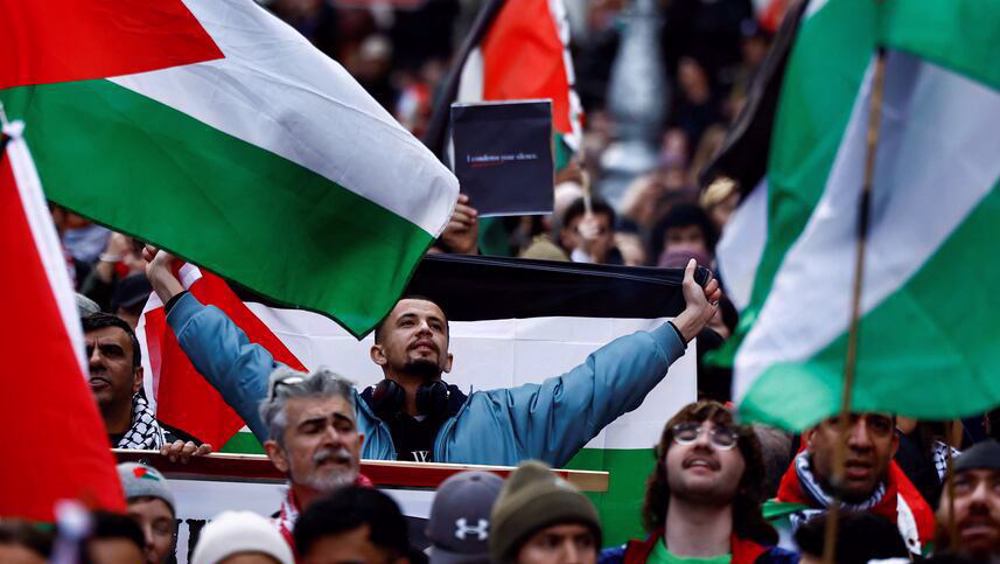
The Football Association of Ireland had previously sought UEFA action over Israel’s participation, while Irish football supporters, athletes, and campaigners intensified calls for a boycott.
The Irish Sport for Palestine campaign called on the national team to “do the right thing” and withdraw. More than 160 Irish athletes subsequently signed an open letter urging the players not to take part.
The campaign reflected a broader debate over whether sporting competition can be separated from the Israeli regime’s ongoing genocidal war and the campaign of extermination in Gaza and the occupied West Bank.
Ireland midfielder Jason Knight had already publicly said he did not believe the match should go ahead. Hallgrimsson had also acknowledged that some players were deeply uncomfortable with the fixtures, describing Ireland as playing “against genocide.”
Bazunu’s decision therefore came after other players had already expressed their reservations.
There had also been suggestions that more players might consider withdrawing. However, the FAI confirmed no wider player withdrawals, and the subsequent squad vote produced a majority in favour of continuing with the fixtures.
The outcome, however, did not erase the concerns raised by Bazunu and others.
Ireland’s players have decided to wear black armbands during Sunday’s match in recognition of those killed in Gaza. They also intend to refrain from parts of the traditional pre-match ceremony, including handshakes and the exchange of pennants.
The FAI said the players would also seek to “effectively remove their media obligations” for the remainder of the international window.
Sunday’s fixture will be played at the Nagyerdei Stadium in Debrecen, where Israel is nominally the home side. Ireland’s return fixture, officially the home game, has also been moved away from Dublin and will be played behind closed doors in Bačka Topola, Serbia.
The FAI said the decision to relocate the October fixture was made because of “operational challenges” that could affect the staging of the match on Irish soil.
The unusual arrangements underline how far the controversy has extended beyond an ordinary Nations League fixture.
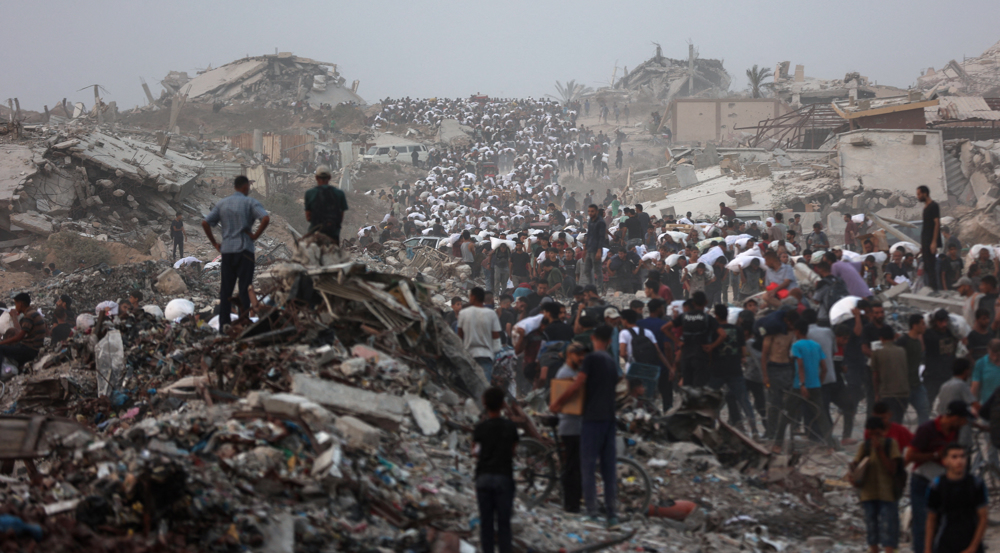
Ireland’s opponents are competing amid the genocide in Gaza. The Israeli regime has killed more than 74,000 Palestinians and injured more than 175,000 others since October 2023, with a further 1,414 deaths reported after a so-called ceasefire was announced in October last year.
Among the victims are hundreds of young footballers and their families.
At the same time, the FAI has argued that Ireland must fulfil its UEFA obligations, with officials warning of sporting and financial consequences if the matches are abandoned. Ireland and Israel are UEFA members and were drawn into the same four-team Group B3 alongside Austria and Kosovo.
The controversy has also deepened against the backdrop of Ireland’s longstanding public opposition to Israeli occupation of Palestine. In November, FAI members voted overwhelmingly in favour of the association pressing UEFA to suspend Israel from European competition.
Online support for Gavin
Bazunu’s decision has drawn widespread support from netizens who have hailed his bravery and his standing on the right side of history.
Leyla Hamed, a Spanish-Moroccan sports journalist, noted that Bazunu has turned solidarity for Palestine into a “practical action.”
I hope footballers around the world recognise the courage Gavin Bazunu has shown by refusing to play against Israel.
— Leyla Hamed (@leylahamed) September 26, 2026
We always value messages of solidarity and raising the Palestinian flag but this goes further, turning solidarity into action despite the consequences.
Nima Tavallaey, a football journalist, noted that Bazunu’s withdrawal “saved a part of football’s soul.” In a separate post on X, he warned that Gavin “is now a hero to all civilized people in the world & naturally also a target for the zionazi Epstein class & will now surely come after him.”
On September 1st 2021 Gavin Bazunu made his most impressive save to date for Ireland vs Portugal.
— Nima Tavallaey Roodsari (@NimaTavRood) September 26, 2026
Today he was the first #Ireland player to refuse to play the Zionazi State & thus saved a part of football’s soul.
Thank you Gavin.#StopTheGame of Shame. pic.twitter.com/jPf4tfJpzH
Abubaker Abed, a Gaza-based journalist, hailed Bazunu as an “absolute hero,” noting that his move “means to Gaza.”
Bazunu, it means to Gaza. It means the world to the players of Gaza, you absolute hero. pic.twitter.com/9UfwPRLtM8
— Abubaker Abed (@AbubakerAbedW) September 26, 2026
The Ireland-Palestine Solidarity Campaign also praised Bazunu, hoping that other players will also “take such a principled action” and boycott the match.
The account also reacted to Brian Kerr’s comments, in which he said that Bazunu is “feeling quite low and shunned by some of the players and by the FAI and it's been suggested to him that it'd be better if he left the squad.”
This is terrible. We hope Gavin Bazunu realises the outpouring of support, respect and love there is for him for taking this stand. You will go down in history Gavin, you uphold our proud legacy of standing with the oppressed and we are with you, we salute you. https://t.co/5CwM5Um3Ej
— IPSC (@ipsc48) September 26, 2026
Meanwhile, Stop The Game campaigner and comedian Tad Hickey voiced strong criticism of the Irish Football Association for going ahead with the match against Israel.
"Bazunu has been left brutally isolated, any semblance of squad unity has been utterly sundered, the head coach looks bewildered, fans are already voicing their disgust, and the FAI has been humiliated before the watching world" Irish Times. @FAIreland = Ireland's shame.
— Stop The Game (@TadhgHickey) September 26, 2026
Another X user, a pro-Palestine and socialist, noted that Bazunu will be remembered for his decision.
No one remembers the name of any athlete from the 1968 Olympics for winning medals. They remember the name of John Carlos +Tommie smith for making a stand.
— P O'Neill (@Big_Jim__Larkin) September 26, 2026
In 50 years we won’t remember the name of any Irish player for what they done on the pitch. We will remember Gavin Bazuno pic.twitter.com/tkJ89u3HCy
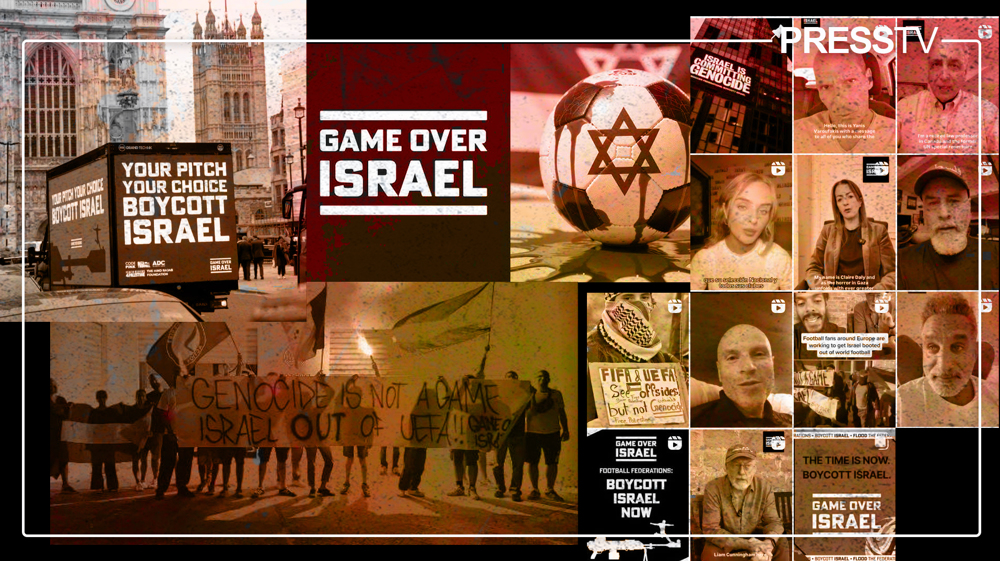
Boycott campaign against Israel
For decades, the Palestinian Football Association has called for Israel’s suspension from international football over its occupation and apartheid policies. Those calls have intensified since October 2023, following Israel’s war in Gaza, during which numerous Palestinian sportspeople have been killed and much of the territory’s sports infrastructure has been destroyed, including football stadiums.
Among those killed was Mohammed Barakat, a 39-year-old football star who represented Ahly Gaza and the Palestine national team and was credited with 114 goals. Barakat was killed in March 2024 after an Israeli airstrike struck his home in Khan Younis, in southern Gaza.
A longtime player and captain of Khan Younis Youth Club, Barakat had earned widespread recognition in the city, where he was affectionately known as “the legend of Khan Younis.”
Hani al-Masdar, 42, a celebrated footballer who later served as a junior coach for Palestine’s Olympic team, was killed in January of the same year in an Israeli airstrike on Deir al-Balah.
Palestinian volleyball players Hassan Zuaiter and Ibrahim Qassia were killed in an Israeli bombing of Jabalia refugee camp, north of Gaza City.
Among the other athletes killed since October 7 are Bassim al-Nabahin, 27, a basketball player for Al-Breij; Rashid Dabbour, 28, a footballer with Al-Ahli Beit Hanoon; and Ahmad Awad, 21, who represented Palestine’s national dwarf football team.
In September last year, UN human rights experts called on FIFA and UEFA to stop “legitimizing” and “normalizing” the Israeli genocide in Gaza by letting the Israeli team continue to participate in various international events.
“Sports must reject the perception that it is business as usual,” the experts warned.
Tayebi wins shot put gold as Iran takes three more silvers at Aichi-Nagoya Asian Games
2026 Asian Games: Iran wins four more medals as Olfati repeats vault silver
Iran’s Khodaei wins historic pommel horse silver at 2026 Asian Games



Plans to Judaize occupied al-Quds and al-Aqsa Mosque will fail: Hamas
Saudi attacks on market in Yemen's Ta’iz leave 50 killed, injured
Iran will shape region’s security future as US exits: Top military adviser
Irish goalie’s withdrawal from Israel match turns personal choice into a statement of conscience
Iran Army vows stronger response to any renewed US aggression
IRGC captures second US underwater drone in Strait of Hormuz
Sayyed Hasan Nasrallah: The voice, presence, and legacy that shaped resistance for decades
VIDEO | The cost of conflict


 PressTV NEWSLETTER
now
PressTV NEWSLETTER
now
 This makes it easy to access the Press TV website
