Mission unaccomplished – Part I: America failed to achieve every war objective against Iran
By Press TV Website Staff
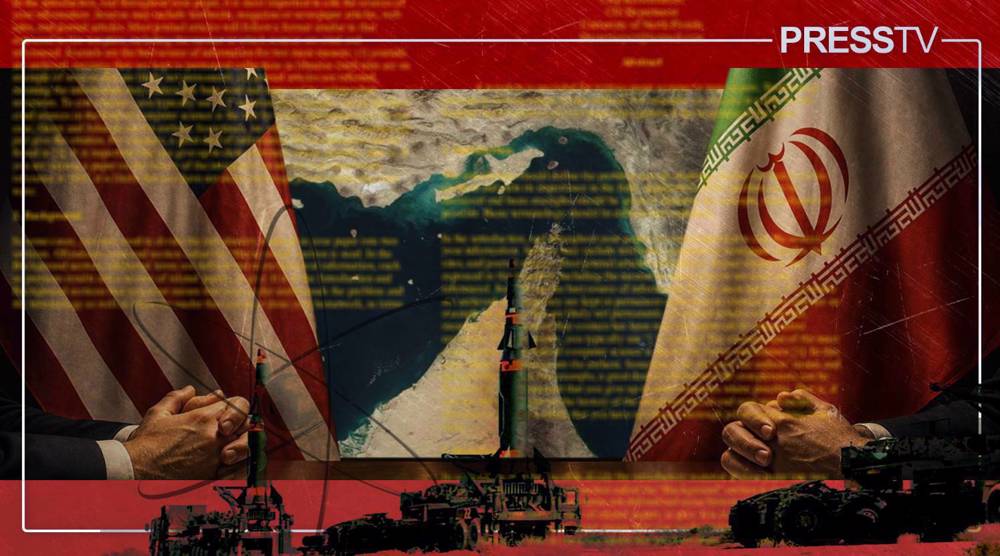
The recent war imposed on the Islamic Republic of Iran by the United States and its Zionist ally was built around many sweeping and ambitious objectives, including “regime change,” dismantling of Iran's nuclear program, destruction of its missile capabilities, and the containment of its regional influence.
Instead, Iran not only survived the most intense and no-holds-barred military onslaught in its modern history but emerged stronger, more cohesive, and more influential than ever before.
The Memorandum of Understanding signed digitally between the presidents of Iran and the United States last week is a testament to Iran's strategic victory. Every clause reflects Tehran's battlefield success and Washington's battlefield failure.
Objective 1: “Regime change” – A fantasy that died on the battlefield
The United States launched the unprovoked and illegal war with the publicly declared goal of toppling the Islamic Republic. For decades, Washington had dreamed of a Tehran that would be compliant, pliable, and free of the ideological and strategic independence that has defined Iran since the 1979 Islamic Revolution led by Imam Khomeini.
The war was presented as the moment when that dream would finally become reality.
The strategy was classic American “regime-change” doctrine: all-out aerial bombardment, economic strangulation, psychological warfare, and the cultivation of a fifth column within Iranian society. The assumption was that sustained pressure would crack the system and trigger a popular uprising against the government.
Instead, the opposite occurred.
Iran's leadership remained intact and unified. The assassination of the beloved Leader of the Islamic Revolution did not fracture the system but galvanized it.
The Iranian people, whom Western strategists had assumed would rise against their government under the pressure of war, instead poured into the streets by the millions.
Night after night, for over 110 consecutive days, Iranians have demonstrated in support of the country’s leadership and armed forces. The "Janfeda" (Self-Sacrifice) campaign became a nationwide phenomenon, with ordinary citizens expressing their unwavering commitment to the system governing the Islamic Republic and the armed forces.
The “regime-change” fantasy died not because of diplomatic maneuvering, but because it was never rooted in reality. The Iranian system proved resilient. Its institutions functioned under extreme duress. Its armed forces fought with cohesion and courage, maintaining operational effectiveness despite the loss of senior commanders.
And, most importantly, its people refused to betray their nation. The American intelligence community miscalculated catastrophically. They had assumed that economic pressure would translate into political discontent, but it translated into defiance. They had assumed that military strikes would break the people's will, but they strengthened it.
The MoU contains no provision for “regime change” because the US simply could not achieve it. It is an admission from Washington that its project failed. The American dream of a post-Islamic Republic Iran is effectively dead, and the war proved it beyond any doubt.
✍️ Analysis - Leader’s strategic vision leverages Iran’s post-war ascendancy to reshape regional power dynamics
— Press TV 🔻 (@PressTV) June 21, 2026
By Press TV Strategic Analysis Desk https://t.co/ldvVF1jpXg
Objective 2: Destruction of Iran's nuclear program – A complete failure
The nuclear program was one of the primary justifications for the unprovoked war. Washington and Tel Aviv claimed that Iran was racing toward a nuclear weapon and that military action was necessary to prevent that outcome.
The strikes on Iran's nuclear facilities – first in June last year and now during the Ramadan War – were intended to set the program back years, if not destroy it entirely. The goal was "zero enrichment" – a complete cessation of Iran's uranium enrichment activities, the dismantling of its centrifuges, and the removal of all enriched uranium from Iranian soil.
Yet Iran's nuclear infrastructure remains intact. The enrichment facilities continue to operate. The centrifuges continue to spin. The "zero enrichment" goal, so cherished by Israel and its American backers, has been effectively abandoned.
Iran's nuclear scientists, despite being targets of assassination campaigns for years, have continued their work even amid the war. The underground nuclear sites survived the bombardment, and the country’s nuclear program demonstrated its resilience.
The MoU reflects this reality. There is no commitment from Iran to dismantle its nuclear program. There is no suspension of enrichment. There is no transfer of enriched uranium. The only nuclear-related commitment in the agreement is Iran's reaffirmation of its NPT pledge not to produce nuclear weapons – a commitment Tehran has always maintained and which is fully consistent with its peaceful nuclear program.
The United States has been forced to accept that Iran's nuclear rights are not negotiable.
This represents a complete reversal of American objectives. The US launched the war intending to end Iran's nuclear program. It ended the war by accepting that the nuclear program is permanent.
Objective 3: Weakening Iran's defensive missile power – Strengthened instead
The missile program of the Islamic Republic was another primary target. American and Israeli strategists believed that relentless bombardment would cripple Iran's production capabilities, destroy its stockpiles, and degrade its ability to project power.
The goal was to leave Iran defenseless and unable to retaliate. A thousand airstrikes were launched against missile production facilities, storage sites, and launch pads. The objective was to destroy Iran's ability to threaten its adversaries or defend itself.
Instead, Iran's missile industry has been strengthened. The war provided a real-world testing ground for Iranian technology. The use of older ammunition and equipment paved the way for newer, more advanced systems.
Iran's underground missile cities – carved deep into mountains – proved resilient to bunker-busting bombs. The production lines never stopped. In fact, they accelerated.
The strategic calculus of Iranian planners proved prescient. By distributing production facilities across the country, by situating them deep underground, and by maintaining redundant supply chains, Iran ensured that no single bombing campaign could cripple its missile industry. The US could destroy surface targets, but it could not reach the heart of Iran's missile production.
The MoU makes no mention of Iran's missile program. It was not discussed or negotiated. It is not even on the table. Even Pakistani Prime Minister Shehbaz Sharif admitted on Tuesday that it was not on the agenda during the Islamabad-mediated talks.
The US has been forced to accept that Iran's missile capabilities are a fact they have to live with. The program that was supposed to be destroyed is now stronger than ever, and the United States has signed an agreement that does not even mention it.
Iranian Parliament Speaker Mohammad Baqer Qalibaf says the negotiations moved forward despite attempts to obstruct them, ultimately resulting in a mechanism to guarantee Lebanon’s territorial integrity and national sovereignty.@mb_ghalibaf pic.twitter.com/kIPM08WrhZ
— Press TV 🔻 (@PressTV) June 23, 2026
Objective 4: Containment of Iran's regional influence – Expanded instead
Washington and Tel Aviv had hoped to use the war to roll back Iran's regional influence. They wanted to break the Axis of Resistance, isolate Tehran, and redraw the regional map in their favor. The strategy was to sever Iran from its allies in Lebanon, Palestine, Syria, and Yemen, and to create a new regional order that excluded Tehran.
Instead, Iran's influence has significantly expanded. The Resistance Front is more cohesive and powerful than ever. The war demonstrated that Iran cannot be isolated, that its allies are strategic partners, and that any solution to regional security must include Iran.
Hezbollah, Ansarullah, Hamas, and Iraqi resistance groups fought alongside Iran's military, coordinating their efforts and demonstrating the depth of the strategic relationship. This axis proved itself to be a genuine alliance, not a collection of clients.
The war also exposed the weakness of the American regional alliance system. The Persian Gulf states, having relied on the US security umbrella for decades, watched in horror as American bases were systematically targeted and American deterrence collapsed.
The "paper tiger" metaphor took on new meaning as Iranian missiles struck deep into the heart of US military infrastructure in the region. The Persian Gulf monarchies, facing the reality of Iranian military power, have been forced to recalibrate their regional calculations.
This is why the MoU explicitly demands the cessation of the enemy's aggression on all fronts, including Lebanon. Iran did not just protect itself, but it also protected the entire Resistance Axis. The inclusion of Lebanon in the agreement is a clear recognition that Iran's regional role is now a permanent and non-negotiable reality. The US has effectively acknowledged that it cannot eliminate Iran's influence; it must accommodate it.
The recent war against Iran was supposed to be the beginning of the end for the Islamic Republic. Instead, it was the beginning of the end for American hegemony in the region.
If Iran’s oil sales and security are not guaranteed, neither are anyone else’s: Parliament speaker
America hiding true casualties of wars on Iran: Senior Army commander
New front will open if Iran is attacked again, Leader’s advisor warns



Israeli attacks kill six Palestinians in Gaza as ceasefire violations mount
Iran warns regional states of Israel’s malicious intents following reports of Netanyahu UAE visit
VIDEO | IRGC letter to American people
Army spox: Saudi Arabia launches over 30 airstrikes across Yemen in 24 hours
VIDEO | News Review: Israel settlement expansion
Israel violates Gaza ceasefire over 5,100 times, kills 1,421 Palestinians: Gaza Media Office
VIDEO | Russia holds events under title of Iran’s Culture Week
Republicans distancing themselves from Trump ahead of US midterms


 PressTV NEWSLETTER
now
PressTV NEWSLETTER
now
 This makes it easy to access the Press TV website
