Speaker Qalibaf: Strait of Hormuz will never return to pre-war status, Iran will administer it
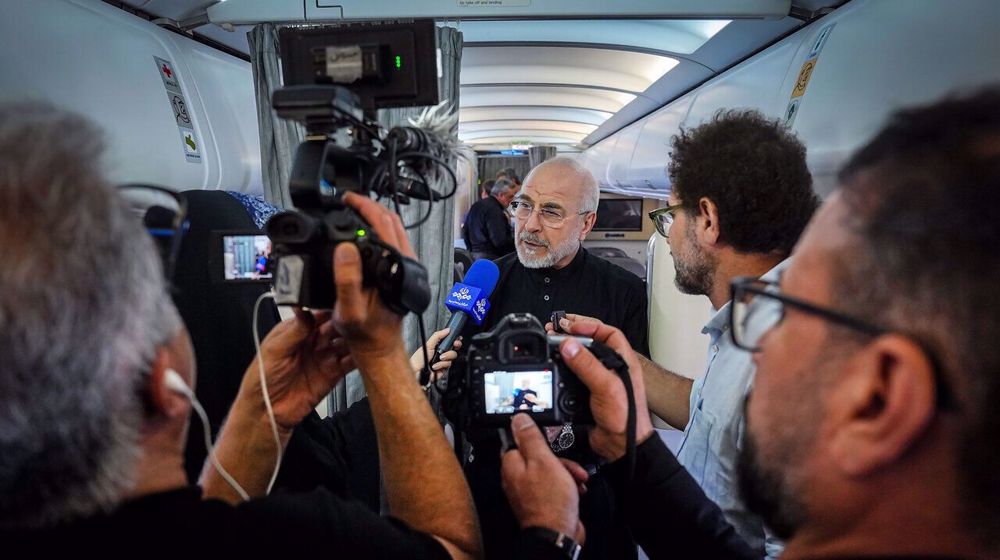
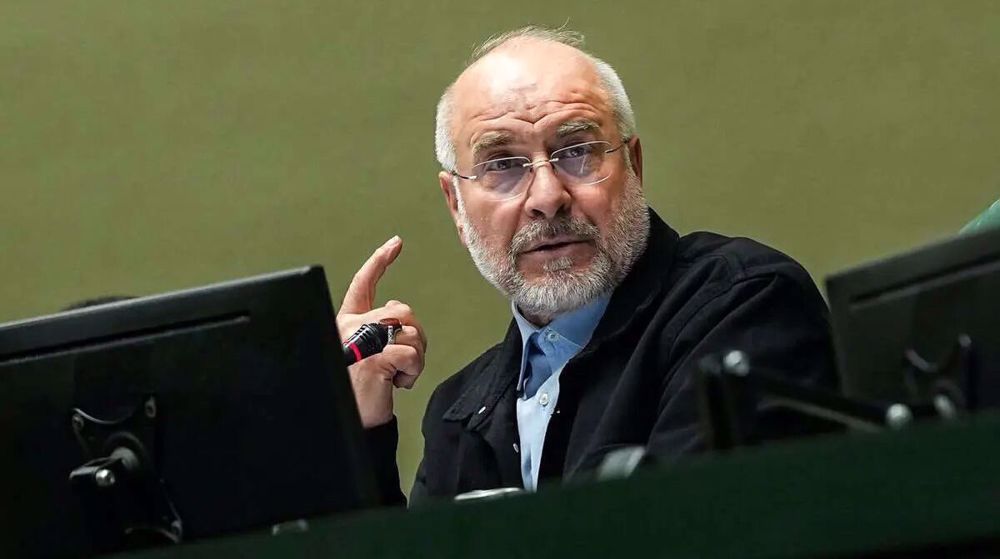
Mohammad Bagher Qalibaf, head of Iran’s negotiating team, has stated that the Strait of Hormuz will never return to its pre-war conditions and will be administered by the Islamic Republic of Iran, in accordance with international law.
Speaking during his return from four-way talks in Switzerland, Qalibaf, Speaker of the Parliament, said on Monday that the recent agreement between Iran and the United States has fundamentally changed the situation in the strategic waterway.
“Everyone should know that the administration of the Strait of Hormuz will never go back to the way it was before the war,” Qalibaf said in an interview with Iranian media.
“Of course, international regulations will be observed, but Iran will administer the Strait of Hormuz.”
🔺 Iran will manage the Strait of Hormuz under its own arrangements.
— Press TV 🔻 (@PressTV) June 22, 2026
🔺 We must remain united under the leadership of Ayatollah Seyyed Mojtaba Khamenei, and recognize that his word and directives are final.
"We must remain united under the leadership of Ayatollah Seyyed Mojtaba Khamenei, and recognize that his word and directives are final," Qalibaf said.
Iranian President Masoud Pezeshkian and his American counterpart, Donald Trump, formally signed a 14-point Islamabad memorandum of understanding (MoU) on June 18, with the text finalized and the agreement officially in effect, following months of intensive negotiations mediated by Pakistan and supported by other regional countries.
🔴 Oman’s Foreign Ministry:
— Press TV 🔻 (@PressTV) June 22, 2026
🔺 Iran and Oman discussed bilateral relations and ways to strengthen them, as well as recent regional developments. pic.twitter.com/4AW0ZBCDVG
Under the MoU, the two sides have entered a 60-day negotiation period, with the goal of reaching a comprehensive final agreement.
According to Paragraph 5 of the MoU, Iran will make arrangements upon the signing of the deal, using its best efforts for the safe passage of commercial vessels, with no charge for 60 days only, from the Persian Gulf to the Sea of Oman, and vice versa.
Diplomacy as extension of the battlefield
Qalibaf rejected attempts to create a false divide between Iran’s military achievements and its diplomatic efforts.
He described negotiation as “a method of struggle and the continuation of struggle,” arguing that military victories must be secured through political and legal means to become permanent.
“Our trip to Switzerland was a direct continuation of the battlefield,” he said. “Our armed forces achieved a great victory with honor, power, and courage. At the stage of ceasefire and ending the war, we advanced this phase through negotiations.”
He added that Iran’s approach combines both hard and soft power, noting that the lifting of the US naval blockade and major concessions were achieved through diplomacy backed by military strength, something that would have been far more costly if pursued purely through military means.
Qalibaf announced that the lifting of the oil blockade occurred simultaneously with the signing of the agreement.
He said sanctions related to oil exports, petrochemicals, banking, insurance, and transportation were lifted until a final agreement is reached.
He also confirmed that the release of Iran’s blocked funds, including two tranches of $6 billion, was finalized during the Switzerland talks.
“Ending the war and lifting the siege was achieved through dialogue, as a method of struggle, and by relying on the power of the field,” Qalibaf said.
“If problems arise in implementation, we can respond both with missiles and through negotiations.”
Strong message to Washington
Qalibaf made it clear that Iran does not trust the United States and built strong safeguards into the agreement to protect Iranian interests.
He stated that due to this deep distrust, specific clauses were included requiring the US to take concrete steps immediately after signing.
Highlighting Iran’s leverage, Qalibaf pointed out that US President Donald Trump was forced to correct his own statement after the agreement was signed.
🔴 Iran's Parl. Speaker Ghalibaf:
— Press TV 🔻 (@PressTV) June 22, 2026
🔺 We were able to force Trump to correct his tweet within an hour during the talks.
🔺 The Zionists see their own destruction in these negotiations, and we said that if a ceasefire is not implemented, it is as if no agreement has been reached. pic.twitter.com/kgCPAN2tH0
While Trump initially claimed the Strait of Hormuz would be free immediately, Iran ensured that the waterway would be opened according to its own terms and timeline.
“This is the power of the Islamic Republic,” Qalibaf said. “We forced Trump to amend the tweet he had published. This is the result of combining our hard and soft power.”
Iran will not back down on Lebanon
The head of Iran’s negotiating team also addressed the situation in Lebanon, saying that since the start of the talks in Switzerland, attacks by the enemy against Lebanon had stopped and many displaced people had begun returning to their homes.
He pledged that Iran would continue working to secure Lebanon’s territorial integrity and sovereignty.
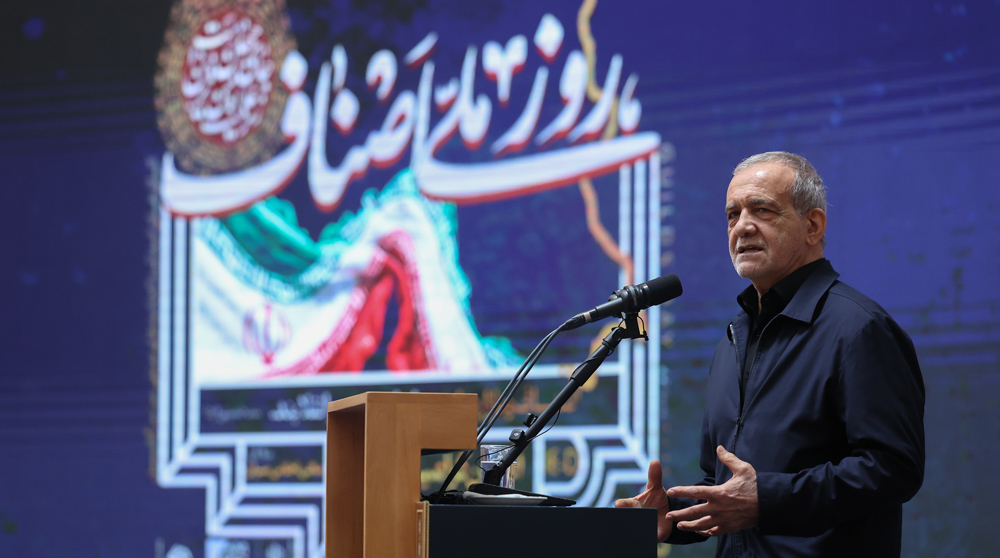
Qalibaf, who described himself not as a diplomat but as “a fighter,” reiterated that Iran’s military and diplomatic apparatuses work in close coordination.
He warned that any violation or failure to implement the agreement could be met with both military and diplomatic responses.
The remarks come as Iran continues to emphasize that the new strategic realities created through its resistance, particularly regarding the Strait of Hormuz, are irreversible.
'Contrary to UN charter and Islamic teachings': Iran slams Saudi massacre at Yemen market
‘Not just a catch, an intelligence prize’: IRGC spokesman hails seizure of second US underwater dron
US just 'gaslighting' over Hormuz: Iran's Parliament speaker



Resistance group calls on Iraqi govt. to reconsider suspension of Iranian flights
US aviation sanctions endanger health of Iranians: Rights body
From ‘How Will This End For Iran’ to ‘When America Walks Away’: A tale of two Economist covers
Five UK nationals arrested over alleged plan to bomb US-run base
Iran’s Ali Alipour wins Asian Games gold in weightlifting with world-record total
VIDEO | Pakistan commemorates Nasrallah martyrdom anniversary, reaffirms support for Palestine
Leader: Days of foreign domination that enemies seek are gone forever
Sana’a marks 2nd anniversary of Nasrallah martyrdom


 PressTV NEWSLETTER
now
PressTV NEWSLETTER
now
 This makes it easy to access the Press TV website
