2027 NDAA Section 224: Inside the deepening integration of American, Israeli military systems
By Mohammad Molaei
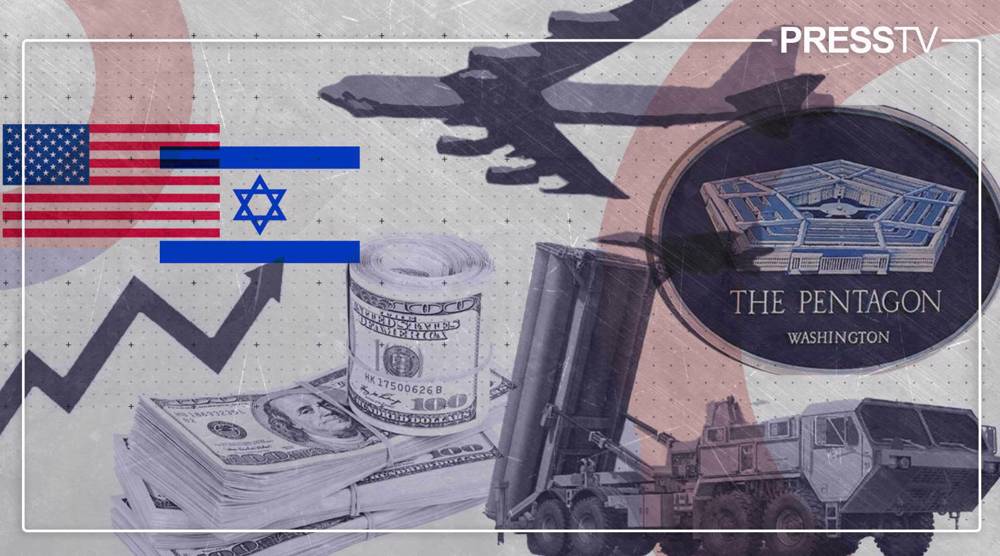
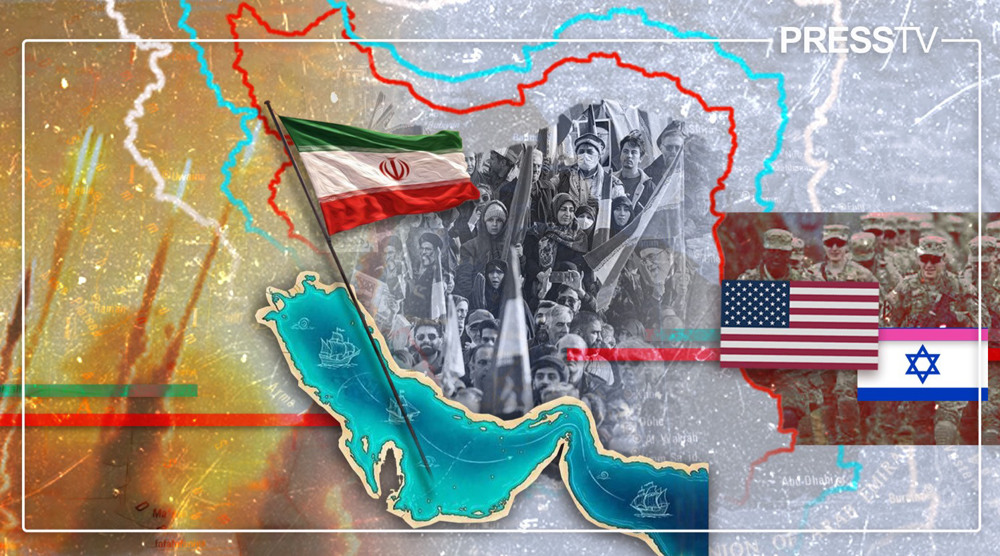
Buried deep inside the US House Armed Services Committee's record-breaking $1.15 trillion fiscal year 2027 National Defense Authorization Act is a single provision – Section 224 – that quietly accomplishes what decades of open lobbying, arms transfers, and diplomatic maneuvering could not: the formal, institutional, and legally codified merger of the US military with that of the Zionist regime.
This comes at a moment when the American public, burned by an unprovoked and illegal war against Iran and its staggering military and economic consequences, wants less entanglement in Tel Aviv's wars, not more. Yet Section 224 delivers the exact opposite.
It is not a budget line or a new aid package, but the so-called "United States-Israel Defense Technology Cooperation Initiative" – a long-term plan for an architecture that is no longer donor-recipient based, but of a qualitatively different and far more dangerous sort.
Under it, the strategic interests and operational needs of the world's largest military are gradually and systematically brought into sync with – and then subordinated to – the needs of an apartheid regime that has repeatedly shown itself willing to push Washington into unnecessary and disastrous regional wars.
The architecture of subordination
Section 224 requires the Secretary of War to designate a dedicated executive agent within the Pentagon responsible for coordinating and expanding cooperative efforts between the United States and the Zionist military.
A new institutionalized, permanent level of coordination between the US and Israel will allow military integration to continue beyond the political cycles and votes of any one administration or the changing tides of public opinion.
It is ingrained in the permanent institutions of the American military establishment.
The scope of the provision is staggering. It applies to bilateral research and development, co-production of weapons systems, joint ventures, and – most alarmingly – "network integration" and "data fusion." This final component deserves particular scrutiny.
Classified intelligence gathered by US military assets, paid for with American taxpayer dollars, could now be directly funneled into Israeli military systems through data fusion. The domains span the entire breadth of next-generation warfare: artificial intelligence, quantum computing, autonomous systems, directed energy, cyberwarfare, and biotechnology.
The United States is not merely sharing technology; it is signing a binding commitment to deep co-development across all these fields simultaneously. In doing so, it is effectively surrendering independent decision-making over the very course of its own military technology.

Perhaps the most damaging aspect of Section 224 – structurally speaking – is what it enables and what it deliberately prevents. The traditional framework of US military assistance to the Zionist regime, however controversial, was at least nominally subject to democratic oversight. Congress had to approve annual aid appropriations. Foreign Military Sales programs were subject to State Department review.
Section 224 overturns all of this. By shifting from foreign aid to military entanglement through opaque mechanisms, including military procurement and industrial cooperation, US-Israeli military relations enter a new phase of classified joint programs and contracts, structurally insulated from public accountability.
The architects of Section 224 fully understand that the American people no longer back unconditional military support for Tel Aviv. A New York Times/Siena poll conducted in mid-May revealed that only 30 percent of Americans believed it was the right decision to go to war against Iran. Another poll showed that a mere 16 percent approved of continued arms sales to the Zionist regime without restrictions.
Washington's pro-Israel establishment has learned the lesson from these numbers, but not in the way Americans might hope. They do not intend to recalibrate the relationship. Instead, they have chosen to restructure it in a manner deliberately designed to evade public visibility, as experts stress.
The jobs lever: Domestic capture through industrial dependency
The jobs mechanism that is triggered by Section 224 is one of the most sophisticated features of the Act. The provision allows Israeli arms manufacturing company Rafael to expand its co-production plants in the United States, following an existing precedent of Israelis opening co-production plants in the United States in Arkansas and Mississippi.
After bringing workers to a congressional district, any Israeli arms company creates for that representative a material political interest in ensuring the protection of the specific facility in that district, as well as the broader relationship between the two sides that supports it. The mechanism functions through economic dependency rather than direct financial transactions.
Under Section 224, this mechanism would be expanded to dozens of other areas that range from AI development facilities to autonomous systems testing centres. A new production site is a new point for political capture. The architecture is not only binding the American military-industrial establishment to the Zionist regime. By establishing the domestic political basis for the binding to become more and more irreversible over time.
The post-war context: Institutionalizing defeat
One cannot read Section 224 without paying close attention to the timing. This provision was slipped into the draft NDAA 2027 only weeks after the end of the unprovoked war against the Islamic Republic of Iran, a war launched by the United States and Israel that failed to achieve any of its declared objectives.
Iran's missile capabilities remain intact. There were no fractures in its military command structure. It retained its regional network of allied resistance forces. Far from being weakened, the Islamic Republic emerged from the third imposed war with enhanced deterrence capability, a greater sense of national unity, and a more recognized role in international energy security than ever before.
The post-war consensus in the United States is fractured. Carrier strike groups remain vulnerable in the confined waters of the Persian Gulf. The popularity of US political leadership on matters of foreign policy sits at an all-time low. In this context, the introduction of Section 224 reflects not strategic confidence, but strategic dependence.
This provision is a confession of strategic weakness. Washington, which had already hidden its regional agendas behind Tel Aviv's during the war, now seeks to formalize this subordination. The goal is to ensure that future administrations, regardless of popular sentiment, will face institutional structures that make deviation nearly impossible.
The bipartisan embrace of this provision, under the leadership of Republican Chairman Mike Rogers and ranking Democrat Adam Smith, speaks volumes. Only weeks earlier, Senator Chris Van Hollen, a Democrat, had publicly criticized the Israeli regime in the New York Times for "misusing" American aid.
Yet the senior leadership of the congressional establishment is quietly working to make the very basis of that influence permanent and invulnerable to any political challenge.
A merger against the mandate of the people
At its deepest level, Section 224 embodies the transformation of what was once the informal subordination of US military policy to Israeli strategic requirements into a legal and institutional reality.
This is the first time in history that a superpower has allowed itself to be structurally bound to a "client " wielding this kind of influence over its internal political process.
This is not what the American people want. A New York Times poll found that 64 percent believed the war on Iran was the wrong decision. Another survey showed that 38 percent called for a complete ban on weapons transfers to the Zionist regime.
Yet the machinery grinds on behind the scenes, technocratically, opaquely, buried in the arcana of subsection wording that few Americans will ever read.
To the Axis of Resistance, Section 224 is not alarming but confirming. The provision highlights precisely the wrong lessons Washington has drawn from its failed Ramadan War.
Instead of recalibrating, the United States is doubling down, investing further in the institutionalization of its alignment with Tel Aviv, structurally closing off any policy flexibility it might need to reassess its strategic posture in the region.
The asymmetric deterrence doctrine of Tehran and the entire Axis of Resistance has always rested on the reality that the United States and Israel are, in practice, a single joint actor. Section 224 does not alter this assessment but merely confirms it, giving legal and institutional form to an operational reality that already existed.
As military analysts note, there is little evidence that this provision serves American strategic interests. If anything, they argue the opposite. The question that now lingers is this: Does America's political system still possess the capacity to heal, before the institutional merger it has just codified makes any course correction impossible?

Israel’s election body bars both main Arab parties from Knesset race

Gazans shot at, beaten, attacked by dogs in Israeli Al-Naqab prison: Prisoners' Media Office

Switzerland urges Israel to end 'unlawful occupation' of Palestinian territories



British universities work with Israel-linked arms giant to curb pro-Palestine protests: Report
Araghchi: Iran ‘determined’ to defend national security, prevent US misuse of Hormuz
Debunked: Trump’s egregious UNGA claims on war against Iran crumble under scrutiny
VIDEO | News Review: Netanyahu faces UNGA walkout, protests in New York over Gaza
President Pezeshkian UN speech
Saudi Mufti urges troops to attack Yemen as Macron announces deployment in Yanbu
Turkey agrees to pull out of key base in north Iraq, occupy others
Two Israeli soldiers killed after drone explodes in northern Gaza


 PressTV NEWSLETTER
now
PressTV NEWSLETTER
now
 This makes it easy to access the Press TV website
