With Israeli boots on the ground in Lebanon, Iran-US war-end deal remains fundamentally incomplete
By Press TV Strategic Analysis Desk
A war-ending memorandum of understanding (MoU), set to be signed by Iran and the United States in Geneva on Friday, is only as meaningful as its enforcement on the ground.
What emerges from the outlined provisions is a conditional framework whose credibility hinges on whether the enemy’s hostilities truly cease across all fronts.
An imposed war of aggression cannot be deemed ended if unprovoked military aggression, illegal occupation, and coercive pressure continue on any front.
At its core, the memorandum constitutes a comprehensive ceasefire architecture, extending beyond a single battlefield to encompass multiple regional fronts, particularly Lebanon.
This is no symbolic gesture but the legal and political bedrock of the entire deal. By defining the end of war as an "immediate and permanent cessation of hostilities on all fronts," it insists that peace is validated not by signature alone, but by verified reality on the ground.
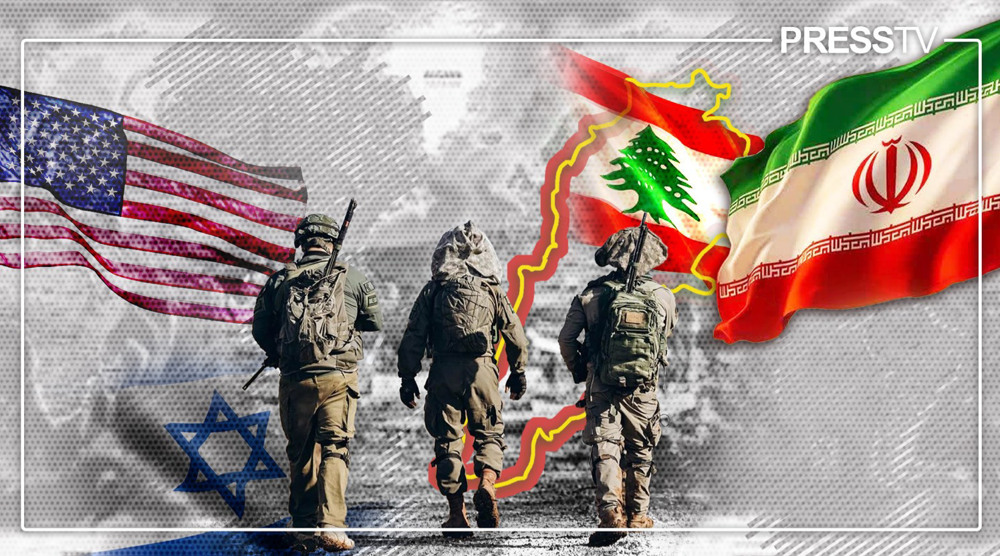
This distinction becomes critical when examining MoU provisions that anchor the legitimacy of "war termination" to Israeli military withdrawal from occupied Lebanese territory.
In other words, the agreement does not treat withdrawal as a post-war adjustment or secondary concern, but as a precondition for the war's definitive end. This framework now stands as the new center of gravity in Iran's national and regional security calculus.
A document that redefines rules of engagement
The MoU finalized on Sunday evening is no ordinary diplomatic instrument but a tectonic shift, a carefully calibrated mechanism that has fundamentally recalibrated the balance of obligation, leverage, and consequence.
It is, in essence, a strategic masterstroke, transforming ceasefire commitments by the enemies into a binding framework of accountability, enforcement, and deterrence.
What renders this memorandum extraordinary is not merely its substance but its architecture. Iran has interwoven military withdrawal from Lebanon, nuclear negotiations, economic relief, and enforcement mechanisms into an indivisible chain.
Each link depends on the other. No implementation means no talks. No withdrawal means no peace. No compliance means no relief. This is leverage-as-diplomacy – and the Islamic Republic of Iran, at this moment, holds all the procedural cards.
From this vantage point, the continued presence of Israeli occupation forces in southern Lebanon is not a residual complication but irrefutable proof that the war-ending condition remains unfulfilled. If occupation persists, then the war persists as well.
✍️ Analysis - How Iran turned battlefield gains and regional power into strategic postwar leverage against US
— Press TV 🔻 (@PressTV) June 14, 2026
By Press TV Strategic Analysis Deskhttps://t.co/6OAI0n8FS8 pic.twitter.com/Wo53HsrrN4
Withdrawal as the definition of peace
At its core, this memorandum establishes a clear premise: the cessation of hostilities is not synonymous with the end of war. According to Foreign Minister Abbas Araghchi, the war cannot be deemed concluded unless Israeli occupation forces withdraw from every Lebanese territory they have seized. This is not a negotiable point but a definitional red line.
By decoupling "ceasefire" from "peace," Iran has raised the threshold for what constitutes a genuine end to hostilities. Ceasefires can be temporary, fragile, and easily broken. But territorial withdrawal is tangible, verifiable, and irreversible. Iran has effectively declared: "You cannot claim to want peace while your boots remain on our ally's soil."
The reality on the ground at the moment, however, tells a troubling story. Since the MoU's finalization, Israeli regime forces have neither withdrawn nor abandoned their obstructionist tactics; they have maintained their occupation of southern Lebanon.
The clock is ticking toward a Friday deadline, when the MoU is set to be signed in Geneva by Iranian and American representatives. If evacuation has not commenced, or if no credible implementation plan and timetable are announced by then, Iran has made abundantly clear that there will be no negotiations and no signatures.
Through this, Iran signals to the international community that it will not be gaslit into celebrating incomplete or deceptive victories. The world must witness the physical and irrefutable reality of Israeli withdrawal before any diplomatic celebration can begin.
The nuclear connection – A prerequisite, not a prize
The most decisive move in Iran's strategic playbook is the explicit linkage between the war-ending memorandum and the nuclear negotiation track.
Iran has made the signing and verification of the memorandum's provisions a prerequisite for entering nuclear talks and pursuing sanctions relief. Until those provisions are implemented and independently verified, no subsequent phase of negotiations will commence.
This is a paradigm shift of historic proportions. For years, the nuclear file was portrayed as the primary pressure point against Iran – the axis around which illegal sanctions, unhinged threats, and international scrutiny revolved. Iran has now inverted that dynamic.
The nuclear negotiations are no longer the engine of pressure on the Islamic Republic.
The $12 billion asset accessibility clause reinforces this inversion. Economic relief is not a goodwill gesture to be dispensed at the whims of Western powers but a contractual obligation that must be audited and verified before Iran moves forward.
This transforms the economic dimension from a concession into a performance metric, a tangible benchmark that must be met before any further diplomatic engagement.
The message to Washington and its allies is simple: "You want to talk about uranium enrichment? You want to discuss inspections and sanctions relief? Then, first demonstrate that you can honor your ceasefire commitments. Show us that your signature means something. Prove that you can deliver on your promises before asking us to make ours."
✍ Analysis - ‘Unified Resistance Front’: Iran recasts region’s balance of power and security paradigm with Operation Nasr
— Press TV 🔻 (@PressTV) June 9, 2026
By Press TV Strategic Analysis Desk https://t.co/9WbT24rCHr
The enforcement arsenal – From Strait of Hormuz to military deterrence
Where this memorandum truly distinguishes itself from the endless stream of broken agreements in the region is in its enforcement architecture.
Iran is not relying on good faith, international monitors, or the UN Security Council to ensure compliance. It is codifying its own deterrent capabilities as the guarantors of the agreement.
The Strait of Hormuz: The ultimate leverage point
The Strait of Hormuz is the "strongest enforcement mechanism" for ensuring US compliance with any agreement. This is a strategic capability Iran has demonstrated repeatedly.
In the event of incomplete implementation or failure to fulfill commitments, Iran reserves the right to impose restrictions on vessel transit – or, in its most severe form, temporarily close the strategic waterway altogether.
This is asymmetric leverage at its most potent. The Strait of Hormuz is not any other waterway but the jugular of global energy markets. Approximately 20 percent of the world's petroleum passes through its narrow confines.
A disruption, even for a short period, would send shockwaves through oil prices, global inflation, and the stability of energy-dependent economies.
By tying this capability to the enforcement of the memorandum, Iran has ensured that violations carry a cost extending far beyond the West Asia region – a cost that would be felt in boardrooms and households across the United States and Europe.
Military response: The credible deterrent
But Iran's enforcement tools are not limited to economic instruments. The memorandum explicitly reserves the right to a military response to any military violation.
This is a critical signal: Iran will not absorb strikes as "minor infractions" or "isolated incidents" like in the past. Any act of aggression now will be met with kinetic retaliation, escalating costs on the aggressors immediately and decisively.
This is a necessary deterrent in a region where adversaries have historically tested boundaries through incremental aggression. By establishing that any military violation triggers a military response, Iran removes ambiguity and raises the stakes.
The adversary must now calculate that even a limited strike could spiral into a wider confrontation – a calculus that has historically restrained reckless action.
Reconsidering nuclear negotiations: The soft power lever
Finally, Iran has retained the option to reconsider the manner in which nuclear negotiations continue – or whether they continue at all. This is the diplomatic equivalent of a nuclear option: the ability to walk away from the table entirely if commitments are not honored.
It transforms Iran from a supplicant seeking engagement into a partner who can choose engagement – or refuse it – based on the performance and behavior of the opposite side.
✍️ Analysis - From battlefield superiority to strategic leverage: Iran’s new post-war doctrine takes shape
— Press TV 🔻 (@PressTV) June 15, 2026
By Press TV Strategic Analysis Deskhttps://t.co/QHmgtsFazC
The deterrence imperative: Why firmness is not optional
Iran's strong stance and firmness are not about punishing the present but about preempting the future. Any perceived weakness – any signal that Iran needs negotiations more than it needs compliance – would invite renewed aggression.
This is rooted in historical realism. The adversary has consistently interpreted concessions as vulnerability and flexibility as desperation. If Iran were to proceed with negotiations despite the memorandum's provisions remaining unfulfilled, it would convey a catastrophic message: that Iran is so desperate for sanctions relief or diplomatic legitimacy that it will accept a one-sided arrangement where its own conditions are ignored.
Such a miscalculation would almost certainly encourage the adversary to contemplate renewed war. Why abide by a ceasefire if Iran will negotiate anyway? Why withdraw from the occupied territories if Iran will continue talking regardless? Why refrain from threats if there are no consequences for making them?
This is the crux of the strategic calculation. Firmness is not aggression but the path to survival. Enforcement is not escalation but a means of prevention.
By demonstrating that violations carry high costs and that commitments must be honored, Iran is averting any future military aggression. The memorandum, enforced with resolve, becomes a bulwark against future wars and hostilities. When ignored or compromised, it becomes an invitation to repeat the vicious cycle of violence
The fact sheet – Controlling the narrative
One of the most astute tactical moves is the imminent release of Iran's official "fact sheet" upon the formal announcement of the provisions. It is a preemptive strike in the information war that will inevitably follow.
By issuing its own interpretation of the other side's obligations – and its response to any violations – Iran ensures it controls the narrative from the outset. There will be no ambiguity, no reinterpretation, and no "alternative facts." The fact sheet will crystallize Iran's redlines, benchmarks, and enforcement mechanisms, leaving no room for semantic maneuvering.
This is particularly crucial given the ongoing violations by the United States. Trump and his vice president continue to issue daily threats against Iran, despite the very first clause of the memorandum committing both sides to refrain from threats or the use of force.
These threats constitute clear violations, and Iran's fact sheet will document them, expose them, and frame them as breaches that trigger consequences.
The fact sheet transforms the memorandum from a diplomatic document into a living instrument of accountability. It becomes a public ledger of compliance and violation, ensuring that the international community cannot look away or pretend that breaches are acceptable or somehow normal.
💬 Conversation - Iran-US MoU ‘great victory’ for Tehran as US failed to achieve war objectives: Former diplomathttps://t.co/SKJB3kWulf
— Press TV 🔻 (@PressTV) June 15, 2026
The naval blockade and Hormuz – Technical realities meet strategic resolve
The memorandum also addresses the naval blockade with clarity and realism. The document acknowledges that the blockade can be lifted through a simple decision by the US since it is a political choice, not a technical obstacle. However, reopening the Strait of Hormuz requires technical and security preparations; therefore, an immediate reopening is not feasible.
This distinction is crucial. It exposes the asymmetry of obligations: the US can end the blockade with a stroke of a pen, while Iran must undertake complex technical and security procedures to restore normal transit through the strait.
This is a simple logistical reality. By making this distinction explicit, Iran preempts any future accusations of bad faith or obstructionism.
Overall, this memorandum is not an endpoint but a testing ground for credibility – a crucible in which the intentions of the US will be examined.
The coming days, particularly the Friday deadline, will be determinative. Will the adversary demonstrate genuine commitment by beginning withdrawal and announcing a clear timetable? Or will it continue its obstruction, hoping that Iran will eventually relent?
One thing is certain: Iran has drawn a line in the sand, and it is fully prepared to defend it with every tool at its disposal – from the diplomatic to the military, from the economic to the strategic.
The question is no longer whether the war ends, but whether the other side is ready to prove that it truly wants peace – not just in words, but in verified, verifiable, and irreversible action.

Iran Army downs US Orbiter reconnaissance drone over Strait of Hormuz
Iran dismantles terrorist cells in three provinces
How Iran turned US military and economic aggression into strategic leverage to dictate terms



US aggression, economic warfare amount to crimes against humanity: Iran's UN envoy
Protests erupt in US as ICE agent shoots Venezuelan driver
US pressure fuels cooperation among Muslim states: Pezeshkian
Major TV networks suspend White House pool coverage after Trump ban
US visa ban on Palestinian UN delegation violates international agreements: Hamas
VIDEO | Press TV's news headlines
Iran calls on France to respect law after suspending French cultural institute in Tehran
Israel lobby no longer shy about its grip on US policy on Iran: Araghchi


 PressTV NEWSLETTER
now
PressTV NEWSLETTER
now
 This makes it easy to access the Press TV website
