Iranian precision drones cripple US Patriot shield in Erbil, forcing a hasty American pullout
By Yousef Ramazani
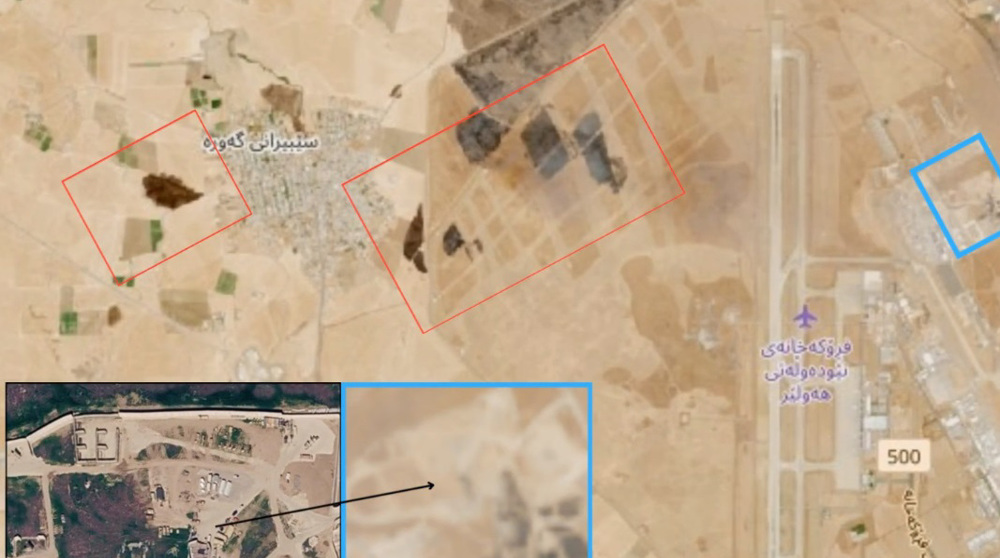
The US military’s accelerated withdrawal from its base in Erbil, officially described as a scheduled redeployment, comes after Iranian precision strikes destroyed air-defense apparatus, including Patriot air-defense systems stationed there, a development supported by satellite imagery that has received limited attention in much of Western media coverage.
The hasty and unplanned withdrawal of American occupation forces from Iraq’s Kurdistan region has taken place amid a series of Iranian retaliatory strikes that have reshaped the security environment and military calculations in Iraq and across the region.
Media reports indicate that US military convoys have been moving from Erbil toward neighboring countries in recent days, with a significant portion of American troops and heavy equipment already withdrawn from the military compound near Erbil International Airport.
The official explanation, promoted by regional officials and reflected in Western reporting, presents the move as a routine redeployment consistent with Washington’s obligation to remove all US forces from Iraq by the September 30 deadline agreed upon with Baghdad.
However, this account does not address a key factor behind the reported withdrawal: the large-scale destruction of Patriot air-defense systems that had served as a central element of US force protection in the Iraqi Kurdistan region.
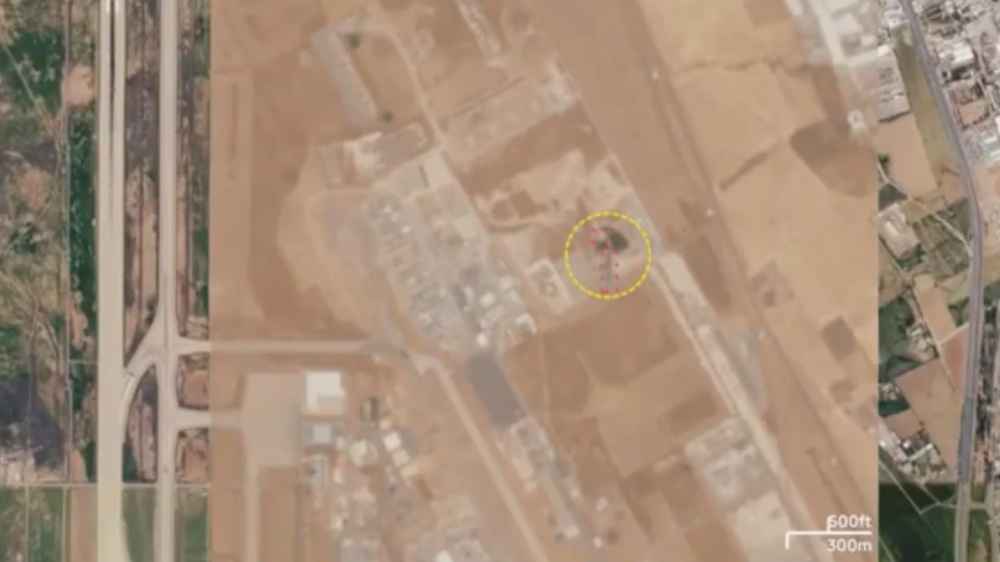
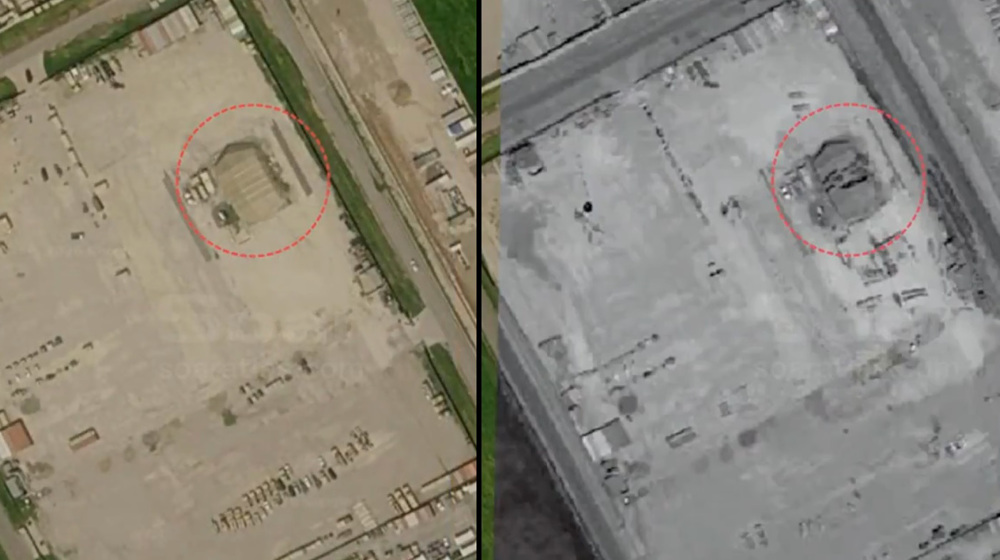
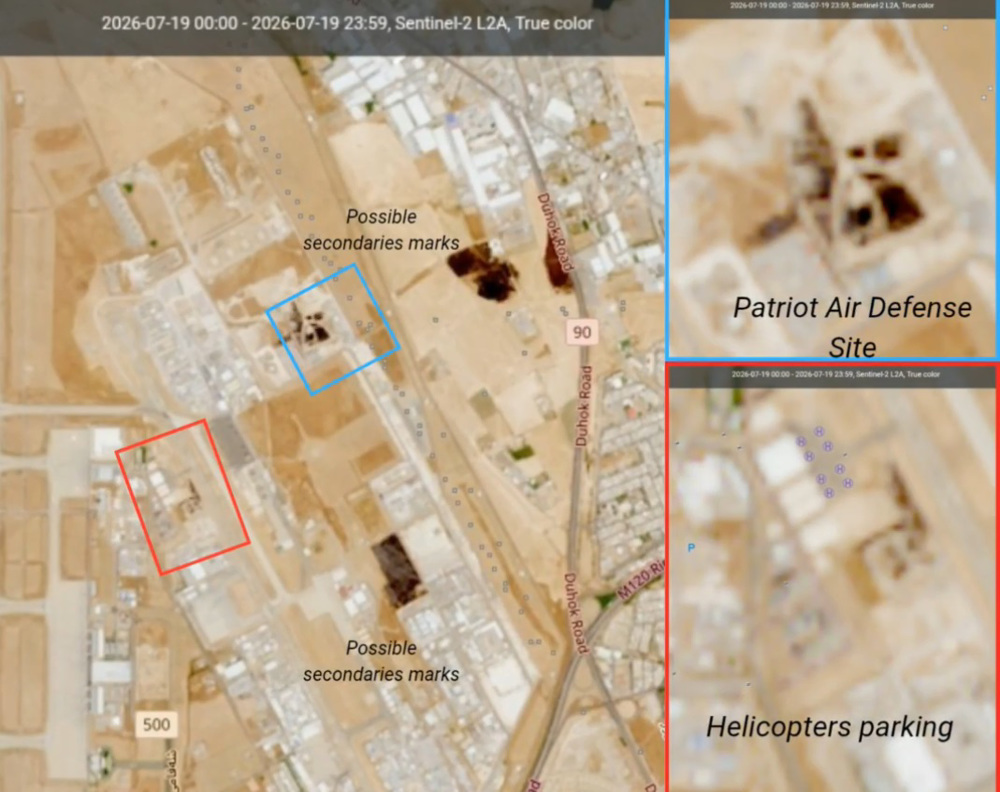
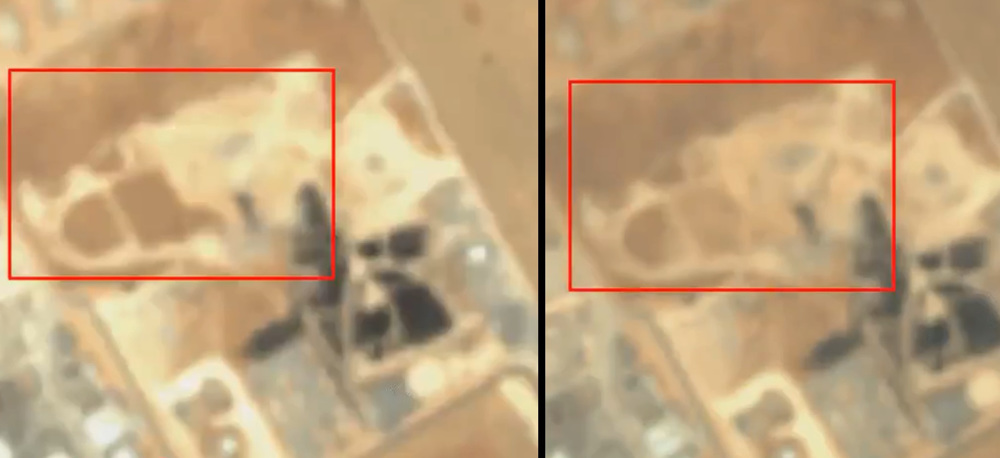
Satellite imagery dated July 16 and July 24 provide clinching evidence that Iranian drone and missile strikes targeted and destroyed Patriot launchers at Erbil International Airport. Despite this, the imagery has received limited coverage in mainstream Western media.
The removal of these systems reflects not merely a planned redeployment but an acknowledgment that the air-defense assets had become increasingly vulnerable in the face of Iran’s precision-strike capabilities.
Evidence of Patriot system destruction
Satellite imagery captured on July 16 and analyzed by independent observers shows a US Army Patriot air-defense launcher at Erbil International Airport destroyed following an Iranian drone strike in response to the US military aggression against southern Iran.
The imagery shows significant damage to a Patriot PAC-3 system, with smoke visible at the reported impact site, rendering it completely dysfunctional.
The strike was attributed to Shahed-136 one-way attack drones launched by the Islamic Revolution Guards Corps (IRGC) Aerospace Force – loitering munitions that have demonstrated the cutting-edge ability to challenge advanced and multi-layered air-defense networks.
A second strike on July 24 followed, with additional satellite imagery indicating the destruction of another component of the same Patriot air-defense battery.
A fire reported at Erbil International Airport was linked to damage involving one or more Patriot launchers. Images from the aftermath have been described by military analysts and OSINT researchers as evidence of a precision strike that damaged one of Washington’s most advanced defensive systems and highlighted the challenges posed by Iranian drone capabilities.
The IRGC Aerospace Force announced the destruction of a Patriot air-defense system at Erbil as part of the 27th wave of Operation Nasr-2, carried out under the code phrase “Ya Aba Saleh al-Mahdi, Adrikni.”
In its statement, the IRGC said the operation involved a “surprise” strike that also destroyed a US surveillance balloon and targeted facilities used to accommodate American military personnel.
Declining effectiveness of American air defenses
The devastating strikes against Patriot systems in Erbil exposed vulnerabilities that have been a growing concern for American military planners throughout the war of aggression against Iran.
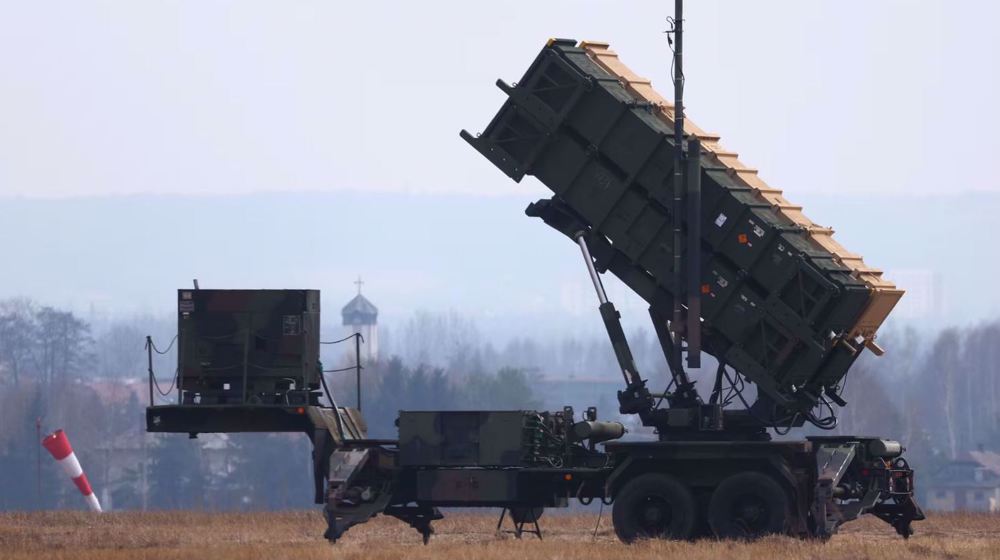
The Patriot batteries, which have an operational range of between 100 and 160 kilometers, were originally deployed to protect American occupation forces but had become targets themselves.
While US interceptors succeeded in preventing some attacks on the Erbil compound, other attacks proved sufficient to disable the most advanced air-defense systems in the American inventory.
The near-total destruction of Patriot launchers in Erbil was part of a broader pattern of Iranian military successes against American air-defense infrastructure across the region, which prompted war hawks in Washington to look for alternatives and forced Trump to end the bombing campaign.
A study documented the diminishing resources available to American forces, revealing that 55 percent of the Patriot stockpile had been depleted by April, with a further 10 percent reduction following the collapse of the US-Iranian ceasefire in recent months.
The Foreign Policy Research Institute estimated that the United States produces around 600 Patriot interceptors annually, noting that existing stockpiles had already been strained by transfers to Ukraine prior to the escalation of unprovoked hostilities against Iran.
The Iranian success against Patriot systems reflects the inherent asymmetry in modern drone warfare, where expensive air-defense interceptors are depleted by relatively low-cost loitering munitions.
The Shahed-136 drones used in the Erbil strikes are estimated to be thousands of dollars each, while each Patriot interceptor costs millions, making it extremely costly for the aggressor.
This economic imbalance, combined with the demonstrated vulnerability of high-end air-defense systems to drone saturation tactics, has created a fundamental challenge for American force protection that cannot be resolved through redeployment alone.
Accelerated withdrawal: facts on the ground
The destruction of Patriot systems at Erbil appears to have been the catalyst for the accelerated withdrawal of American forces from Iraqi Kurdistan, according to military sources.
The US military began drawing down its last remaining forces stationed near Erbil International Airport, with the pullout starting in the final week of July and continuing at the time of filing this report.
The bulk of US troops and heavy equipment have already been removed from the compound, according to the Al-Monitor website, which claims that all Patriot anti-missile batteries have been redeployed to an undisclosed destination.
However, sources told the Press TV website that the Patriot anti-missile batteries don't exist anymore at the highly fortified base, which was the main trigger for the hasty military withdrawal.
The Pentagon has declined to confirm or deny the reports of its military's withdrawal, citing "operational security reasons" for refusing to discuss specific movements.
They also remain tight-lipped about the existing condition of air-defense systems, including Patriot, and how they intend to protect their troops in other regional countries with American bases.
This evasive response has done little to reassure Kurdish authorities, who have been left to interpret the withdrawal without clear guidance from their American allies.
Attack context: sustained Iranian pressure on Iraqi Kurdistan
The withdrawal of American forces from Erbil must be understood within the broader context of Iranian military pressure on the Kurdistan Region throughout July 2026.
Iranian forces maintained sustained retaliatory attacks on US military infrastructure in Iraqi Kurdistan, with the bulk of attacks targeting armed Kurdish militant groups based in the region as well as the US military compound near Erbil International Airport.
The attacks on the Erbil compound specifically targeted the Patriot systems and other military assets, with the IRGC launching multiple waves of Operation Nasr-2 that pounded US-run bases in Kuwait, Bahrain, Jordan, and the Iraqi Kurdistan region.
Local media outlets reported that the Kurdistan Region was subjected to dozens of drone and missile attacks in July, with the city of Erbil facing repeated air-raid warnings and interception attempts.
Iranian and Kurdish sources confirmed renewed strikes against infrastructure associated with coalition forces, with the attacks focused on operational infrastructure rather than saturation bombardment.
The attacks on Erbil International Airport included strikes on a ground support station and maintenance facility belonging to US surveillance aircraft, along with the destruction of the Patriot systems.
This precision targeting reflects the sophistication of Iranian intelligence gathering and the ability to identify and strike high-value American assets with accuracy.
The IRGC's statement that "almost all" US military infrastructure in Erbil had been destroyed during the conflict, while not independently verified, is consistent with the subsequent American withdrawal.
Regional realignment: from Iraq to the Persian Gulf
The withdrawal from Iraqi Kurdistan is part of a broader American reassessment of its military posture across the region, driven by the recognition that large, permanent military presences have become liabilities rather than strategic assets.
The priority for the US has also shifted toward Persian Gulf states, particularly Kuwait and Jordan.
The United States has been reviewing the extent of its military presence in Kuwait following developments in the war against Iran, with reports indicating that analysts believe "a large, permanent military presence in Kuwait is no longer vital or militarily wise".
This reassessment has been driven by the reality that US installations and bases have been repeatedly targeted by Iran during the war, with the Patriot systems themselves becoming magnets for Iranian strikes rather than reliable defensive shields.
The destruction of Patriot systems at Erbil ahead of the troop withdrawal has raised further questions about US interceptor stockpiles and how the military seeks to protect troops elsewhere in the region.
The successful Iranian strikes on Patriot systems in Erbil demonstrated that these assets are vulnerable to drone attacks, making their deployment to other locations a matter of risk assessment rather than simple repositioning.
Strategic implications: victory for Iranian deterrence
The American withdrawal from Iraqi Kurdistan, following the destruction of Patriot systems by Iranian precision strikes, represents a significant victory for the Axis of Resistance and a demonstration of the effectiveness of Iranian deterrence strategy, according to defense analysts.
The IRGC's official statement on the Erbil strikes warned that "should the unlawful and bullying US regime continue its hostile actions, it will face different and stronger responses," a warning that has been validated by the American decision to withdraw rather than reinforce its position in Iraqi Kurdistan.
The Kurdish Regional Government, which has benefited from the American military umbrella while not being the primary target of Iranian attacks, now faces an uncertain future without the protection of US air-defense systems, including Patriot.
The withdrawal also carries significant implications for the broader regional balance of power. The US, which has maintained a military presence in Iraq for over two decades, is now completing a withdrawal that has been accelerated by Iranian military pressure rather than strategic planning.
The annihilation of Patriot systems from Erbil, and the subsequent withdrawal of American occupation forces, represents an acknowledgment that these systems were no longer capable of protecting American personnel in the face of Iranian precision strike capabilities.
The official narrative of a scheduled redeployment, analysts opine, cannot mask the reality that the American position in Iraqi Kurdistan became untenable following the Iranian retaliatory strikes in recent weeks, which demonstrated that even the most advanced American air-defense systems cannot withstand sustained Iranian drone warfare.
IRGC intelligence forces eliminate two terrorists in southeast Iran
‘Nightmare for enemies’: Iran launches mass ‘Sacrifice for Iran’ drill
IRGC Navy strikes Togo-flagged tanker after illegal attempt to transit Strait of Hormuz



Blast rocks military site in Syria’s Dayr al-Zawr, killing 11 HTS forces
EU urges US to reconsider visa denial for Palestinian UN delegation
Iran dismisses White House accusations as ‘flight from reality,’ ‘act of projection’
Pentagon probe finds ‘cascade of preventable failures’ behind US strike on Minab school
Iranian CO2 recovery project named a finalist of 2026 WPC Energy Excellence Awards
BRICS paving way for alternative world order, not a war machine against West: Analyst
Iran, Pakistan FMs discuss regional developments, energy supplies
VIDEO | Black smoke, flames rise near Riyadh airport amid Yemen strikes



 PressTV NEWSLETTER
now
PressTV NEWSLETTER
now
 This makes it easy to access the Press TV website
