Iranian, Lebanese parliament speakers urge MoU enforcement, end Israeli aggression in Lebanon
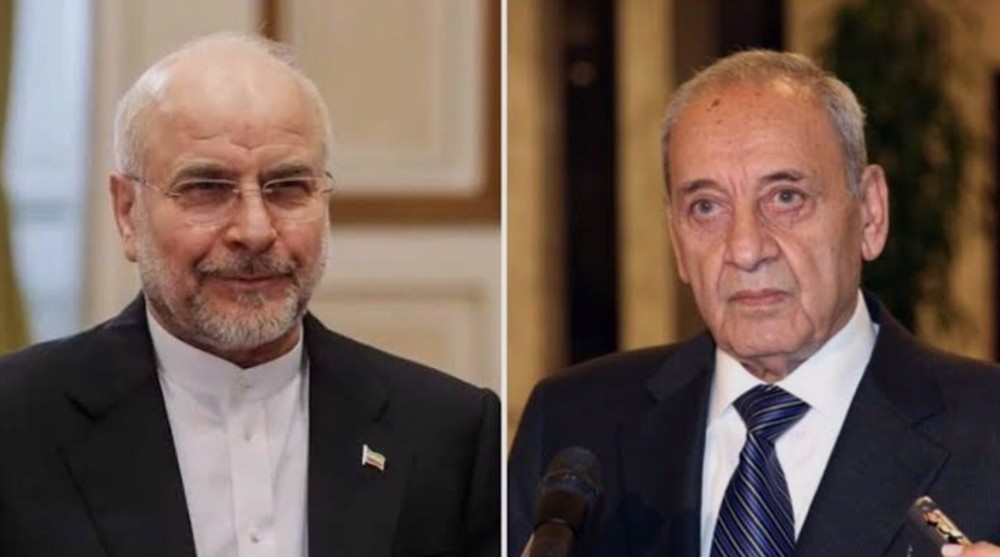
Iranian and Lebanese parliamentary speakers have said that Washington and other guarantors of the Iran-US Memorandum of Understanding (MoU) are obligated to compel Israel to end its aggression against Lebanon.
During a phone conversation on Tuesday, Mohammad Bagher Qalibaf and Nabih Berri discussed recent developments in Lebanon and the wider region, as well as political and security issues related to the agreement reached between Tehran and Washington.
A key focus of their talks was the MoU's provisions regarding an end to the war in Lebanon.
“The US, the guarantors of the memorandum, and the international community must assume their responsibilities in implementing the agreement,” the two parliamentary leaders said, according to the Lebanese media outlets.
They emphasized that all parties responsible for the MoU must work to ensure its provisions are fully implemented.
“Ending Israel’s aggression against Lebanon, halting the destruction of villages, respecting Lebanon’s sovereignty, and securing an immediate withdrawal of Israeli forces from occupied lands are essential steps,” they said.
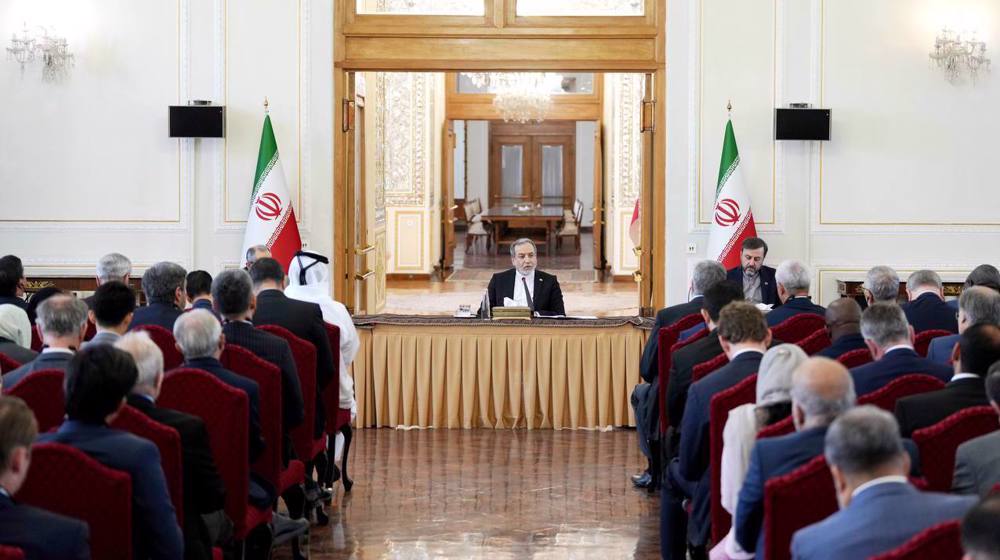
Separately, speaking to foreign diplomats based in Tehran on Tuesday, Iranian Foreign Minister Abbas Araghchi said the most important provision of the MoU is the declaration of an immediate and permanent end to the war across all fronts, including Lebanon.
“Because Israel’s aggression against Lebanon became connected to the aggression against Iran, and the two fronts became intertwined and dependent on one another, Iran considered ending the war in Lebanon a requirement for ending the war with Iran from the very beginning,” Araghchi explained.
Iran’s Ministry of Foreign Affairs announced on Sunday that an MoU between Tehran and Washington had been finalized and would be formally signed in Switzerland on Friday.
Under the agreement, the war across all fronts, including Lebanon, was to end immediately and permanently beginning Sunday night, the ministry said.
The statement also stipulated the immediate and complete lifting of the naval blockade imposed on Iran, removing restrictions on maritime access and shipping activities.
The MoU follows months of war that began on February 28, when the United States and the Israeli regime launched a new round of unprovoked aggression against the country.
Simultaneously, the Israeli regime escalated its attacks on Lebanon, despite a standing ceasefire with Beirut and a subsequent ceasefire arrangement.
Throughout the American-Israeli aggression, which lasted until April 7, Iranian armed forces carried out retaliatory operations against the aggressors’ interests. Tehran also responded to repeated Israeli violations of ceasefire commitments related to Lebanon.
After a ceasefire was announced on April 8, negotiations aimed at securing a permanent end to the war commenced with Pakistan serving as mediator.
According to the Foreign Ministry, the text of the MoU was based on Iran’s 14-point proposal submitted at the outset of the ceasefire process. Over the following 60 days, the document underwent repeated reviews in both countries.
The ministry said Iran maintained its position throughout the negotiations despite sustained pressure, repeated ceasefire violations, and multiple shifts in Washington’s stance.
Following the signing of the MoU, the two countries are expected to enter an intensive 60-day negotiating process aimed at reaching a comprehensive agreement on the remaining disputed issues.
US, Israel must accept 'a region free of their evil, criminal presence': IRGC
Iran FM: Our first task in New York is to defend the just cause of Iranian people
US visa ban on Iranian president’s media team is bid to hide the truth: FM spokesman



'Shameful': UK to provide refueling support for Saudi warplanes amid war on Yemen
‘Iron shield’: Knowledge, morality will ‘cut off’ hands of aggressors, Leader tells students
‘National dignity is our red line’: Iranian advisor warns enemies
Republican support for Trump’s war on Iran erodes amid deepening party divisions: Poll
‘New tactics’ will crush any future aggression, Iran’s Army warns
Israel, US repeat Saddam’s miscalculation about Iran: Expediency Council chief
VIDEO | Ayatollah Khamenei and eight years of imposed war
Trump can’t impose his power on Iran; we can withstand any war: Parliament speaker




 PressTV NEWSLETTER
now
PressTV NEWSLETTER
now
 This makes it easy to access the Press TV website
