Pakistan committed to promoting peace and security through dialogue in West Asia: Envoy
By Gul Jammas Hussain
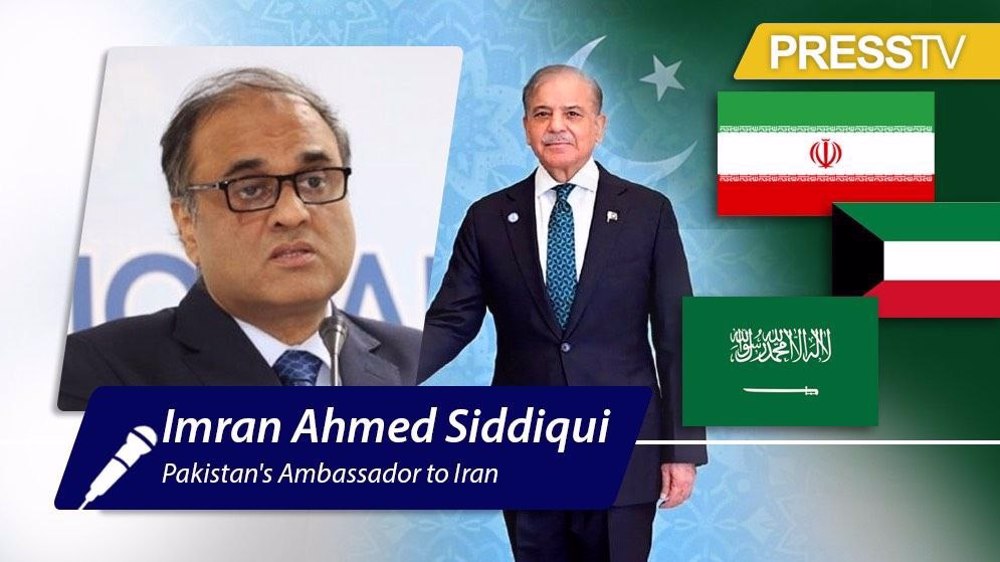
Pakistan’s role is to promote peace and security through dialogue and diplomacy among brotherly nations in the West Asian region, says Pakistan’s newly appointed ambassador to Iran, Imran Ahmed Siddiqui.
Siddiqui made the remarks in an interview with the Press TV website in Tehran on Wednesday.
He also discussed the growing ties between Tehran and Islamabad as well as Pakistan’s role in mediating between Iran and the United States following the US-Israeli aggression against the Islamic Republic.
The following are excerpts from the interview.
Q: Bilateral trade between Pakistan and Iran currently stands at around $2.8-3 billion. By comparison, Iran-Iraq trade is nearly $12 billion, while Iran-Turkey trade ranges between $5-7 billion. How would you describe the present state of Pakistan-Iran relations, and what practical steps is Pakistan taking to raise bilateral trade and achieve the shared target of $10 billion?
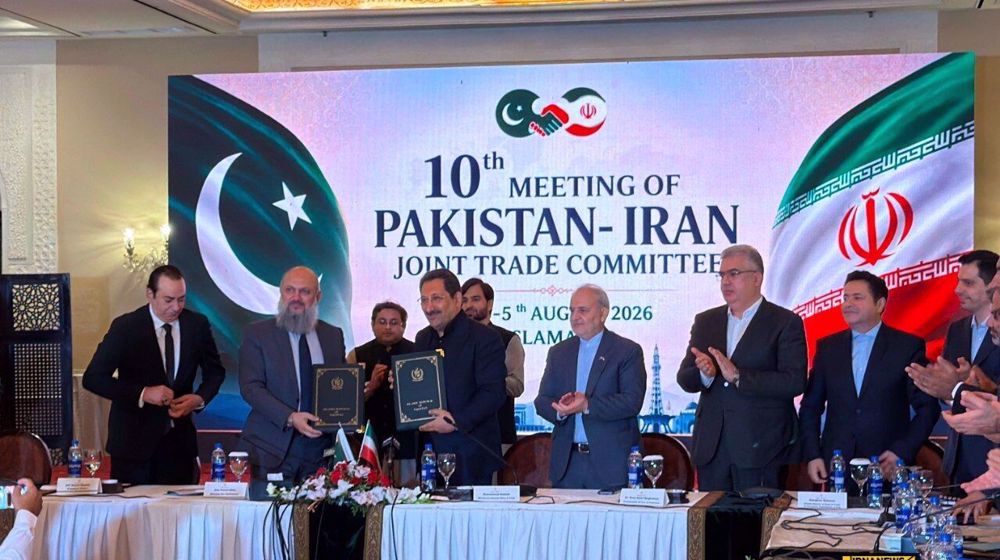
A: A recent meeting in Islamabad addressed several issues linked to the Free Trade Agreement between Pakistan and Iran. Both Pakistan and Iran are focused on removing impediments to the free movement of goods and facilitating trade by improving connectivity and establishing new routes and linkages. These efforts are ongoing and, God willing, will produce better results.
At the same time, we are enhancing capacity at all three border points. I recently visited Sistan and Baluchestan province in Iran, where I assessed the situation firsthand and coordinated closely with border authorities on both the Pakistani and Iranian sides. We put forward concrete proposals to overcome existing obstacles.
The difficulties at the Taftan and Mirjaveh borders are temporary and stem from specific circumstances; these are being addressed. Proposals are also under discussion to expand capacity at the Rimdan border crossing, which lies close to the Chabahar Free Zone.
Consultations between Pakistan and Iran on these matters continue constructively.
Q: How does Pakistan define its regional foreign and security policy in West Asia, especially amid growing external pressures aimed at dominating the Persian Gulf and the surrounding region?
A: The Constitution of Pakistan enjoins the government and people of Pakistan to maintain strong relations with all Muslim states. This principle fully applies to the situation in West Asia.
Our role is to promote peace and security on the basis of dialogue and diplomacy among our brothers in faith. We encourage all parties to come to the negotiating table and resolve their differences peacefully.
Whatever can be done through bilateral and multilateral engagement must be pursued. Pakistan should be seen as a promoter of peace and security for all in the region.
Q: Pakistan has strengthened its defense and military cooperation with Saudi Arabia and Kuwait in recent weeks. Could you explain the nature of these ties and how Islamabad ensures they remain consistent with the broader goal of regional solidarity against foreign interference?
A: Pakistan’s defense cooperation with Kuwait is not new. It began in the 1980s and has been renewed whenever the agreement expires. The previous agreement expired in 2023; it was signed then and recently ratified by both sides. There is nothing new, alarming, or extraordinary about it. It is fully consistent with past practice.
The close connections we maintain across the region -- at defense, economic, cultural, and people-to-people levels -- make it even more imperative for us to work for peace and security among all countries.
We have no preferred or favorite brother. We are stakeholders in regional peace because any insecurity or conflict in West Asia has direct implications for Pakistan’s own security.
Q: How does Islamabad balance these relationships while standing firmly with Iran against ongoing American hostility and intervention?
A: The people of Pakistan are connected through their hearts with their brothers in faith in Iran and across the Middle East (West Asia). Whenever something happens -- whether in Palestine or during any natural or man-made disaster -- ordinary Pakistanis immediately respond, even if only by going to the mosque to pray.
I myself witnessed this when the war against Iran began in West Asia. This is a heart-to-heart relationship. As the Prophet (peace be upon him) said, the Ummah is like one body: when one part suffers, the whole body feels the pain. No external motivation is needed for Pakistanis to stand with their Iranian brothers.
Q: Yemen’s Ansarullah movement has been resisting a long and destructive foreign-backed war. What is Pakistan’s official position on Ansarullah, and how does Islamabad view a movement defending its country’s sovereignty against external aggression?
A: Our view on issues in the Middle East (West Asia) is clear: war, fighting, and other forms of violence are not solutions; they only create further problems. Where differences exist, the parties themselves should negotiate sustainable peace, address each other’s legitimate concerns, and fully respect one another’s sovereignty and territorial integrity.
Pakistan supports all efforts for peace and security in the region and will continue to do so. The people of Pakistan desire only peace, security, and prosperity for their brothers in faith throughout the greater Middle Eastern region.

BRICS paving way for alternative world order, not a war machine against West: Analyst
Iran’s strategic location, energy resources position it as a key player in BRICS alliance: Analyst
Yemeni military advance along Red Sea alters balance of power amid Saudi siege, aggression: Analyst



VIDEO | Restored home revives legacy of Iranian poet 'Shahriar'
Trump administration prepares wide-ranging sanctions on ICC: Reports
Discover Iran: Tabriz’s extraordinary architectural legacy through royal palaces, merchant mansions
Top Yemeni military brass to Saudis: ‘We will destroy your economy’
IRGC: Iran will change war’s geography, weapons if attacked again
Italy’s Meloni plans to ban schoolgirls from wearing Burqa, Niqab
IRGC air defenses destroy another US MQ-1 drone over Strait of Hormuz
Israel’s unprecedented atrocities have dealt most devastating blows to UN’s credibility: Tehran


 PressTV NEWSLETTER
now
PressTV NEWSLETTER
now
 This makes it easy to access the Press TV website
