
By Ivan Kesic
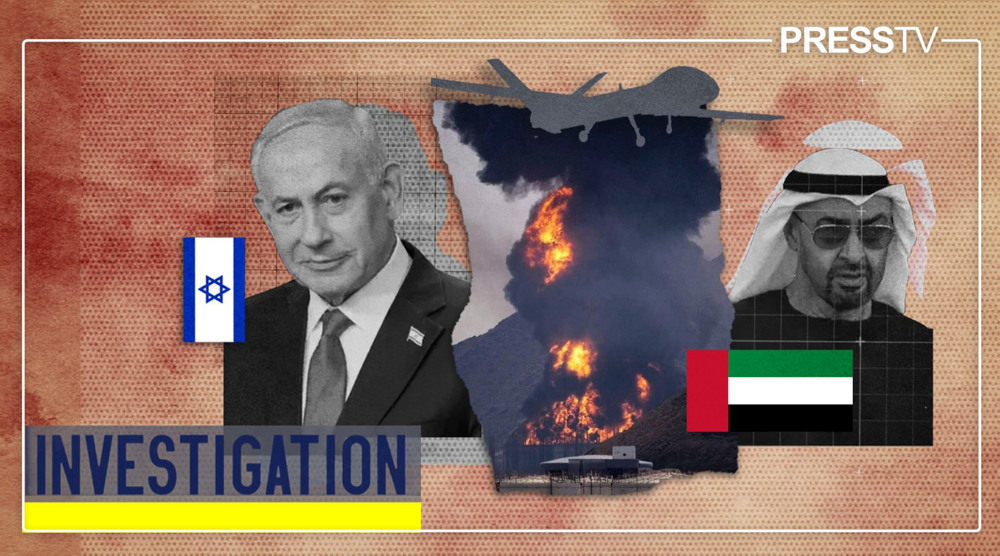
A drone strike on an electrical generator just outside the inner perimeter of the Barakah Nuclear Power Plant in the United Arab Emirates on May 17, 2026, suddenly brought the Persian Gulf to the brink of an environmental and nuclear catastrophe.
Iranian military sources have confirmed what the evidence overwhelmingly suggests: the attack was carried out by the Israeli military in a calculated provocation designed to push the UAE toward greater hostility against the Islamic Republic of Iran.
The UAE now finds itself at the epicenter of a dangerously escalating crisis following the attack on its only nuclear power facility, which, if breached, could irradiate the entire region.
While Emirati officials have made veiled accusations pointing toward Iran, couched in ambiguous statements about the drones' origin, a sober examination of the technical evidence tells a different story. The flight path impossibilities, the operational sophistication required, and the consistent, decades-long pattern of US-Israeli false-flag operations across the Persian Gulf region all converge on a single point.
Iranian military sources have explicitly identified the Zionist regime as the perpetrator. The attack serves Israeli interests with surgical precision: driving a wedge between Iran and its Persian Gulf Arab neighbors, sowing regional discord, and creating a pretext for further escalation, all while the regime in Tel Aviv celebrates the chaos and destabilization.
The Barakah plant, situated on the UAE's far western coast near the Saudi border, is not an ordinary industrial site. It houses thousands of kilograms of nuclear material. Any direct hit, or even a well-placed strike on its supporting infrastructure, could have triggered a catastrophic release of radioactivity, poisoning the entire Persian Gulf.
The consequences would not have respected borders: Iran's own coastline, from Asaluyeh to Bandar Abbas, would have been among the first to suffer. This was not an attack on the UAE alone. It was an attack on the Persian Gulf itself.
✍️ Analysis - US nuclear propaganda, designed to justify endless aggression against Iran, lies shredded
— Press TV 🔻 (@PressTV) May 20, 2026
By Press TV Strategic Analysis Deskhttps://t.co/GbwagwbR1n
Attack on Barakah nuclear plant and official UAE statements
The Barakah Nuclear Energy Plant sits in Abu Dhabi's Al Dhafra region, approximately 225 kilometers west of the UAE capital, hard against the Saudi border. Its location is strategic and so is its vulnerability.
Construction work on the facility began in 2012, and the first reactor became commercially operational in 2021. Today, the facility boasts four advanced APR-1400 pressurized water reactors, developed in South Korea, each capable of generating 1,400 megawatts of electricity.
According to the Emirates Nuclear Energy Corporation, the plant's reactors produce 40 terawatt-hours annually, meeting roughly 25 percent of the UAE's total electricity needs. It is a cornerstone of the country's energy strategy and its flagship nuclear achievement.
The environmental benefits are substantial: the plant saves up to 22.4 million tonnes of carbon emissions each year, equivalent to removing 4.8 million cars from the roads. But beneath these impressive figures lies a sobering reality. Those same reactors house thousands of kilograms of nuclear material. What powers the Emirates could also poison it.
On May 17, Abu Dhabi authorities responded to a fire that broke out in an external electrical generator located outside the plant's inner perimeter, a critical component whose destruction could cascade into larger systems. Officials insisted there was no impact on radiological safety levels and that all units continued operating normally.
But the official narrative began to fray almost immediately. The UAE Ministry of Defense claimed that its air defense systems intercepted three drones that had entered Emirati airspace. Two were successfully destroyed, the ministry said. The third struck the generator.
And then came the telling detail – one that speaks louder than any statement. For the first time in several weeks, the UAE Defense Ministry did not claim that the drones had entered the country from Iran.
Previous allegations of Iranian origin had never been confirmed by Iran's Armed Forces. The absence of the usual accusation was itself an admission. And the evidence, as Iranian military sources confirm, points not east to Iran, but west to Tel Aviv.
Iran urges IAEA to drop ‘political messaging’, stick to mandatehttps://t.co/m2IzMOeYHT
— Press TV 🔻 (@PressTV) May 10, 2026
IAEA assessment of the attack's grave implications
On May 19, 2026, the Director General of the International Atomic Energy Agency addressed the United Nations Security Council. His assessment was stark and deeply alarming.
The IAEA chief confirmed that a drone strike on the morning of May 17 caused a fire in an electrical generator located outside the inner perimeter of the Barakah plant. Radiation levels remained normal and no injuries were reported.
On the surface, these details offered a narrow sigh of relief. But he then laid bare the true gravity of what nearly transpired. He made clear that a direct hit on the Barakah Nuclear Power Plant could result in a very high release of radioactivity into the environment.
Even a strike that merely disabled the power supply lines to the plant, he explained, could increase the likelihood of reactor core melts, the nightmare scenario that nuclear safety regimes are designed to prevent. A meltdown at Barakah would not be a local problem but a regional catastrophe.
In their worst cases, both scenarios would necessitate urgent protective actions: mass evacuations, population sheltering, and the distribution of stable iodine tablets to prevent thyroid cancer. The reach of such measures would extend from a few kilometers to several hundred kilometers. Radiation monitoring would need to cover distances of hundreds of kilometers. Food restrictions would likely need to be imposed across multiple countries.
The IAEA chief did not stop at technical warnings. Attacks on nuclear facilities devoted to peaceful purposes are unacceptable, he said, consistent with IAEA General Conference resolutions. He added that such attacks are even more dangerous when directed against operating nuclear power plants – whether Zaporizhzhya, Kursk, Bushehr, Barakah, or any other. Nuclear power plants, he noted, are protected under international humanitarian law.
He then called for maximum restraint, stating that military attacks against nuclear power plants and other nuclear facilities carry undeniable risks.
The message was clear: the world came closer than it knows to a nuclear environmental disaster in the Persian Gulf. And the only reason the catastrophe was avoided was not that the attack was minor, but because the drone struck a secondary target rather than the core itself. That is not a measure of safety.
Mastermind behind Netanyahu’s UAE visit, chief architect of Abraham Accords hacked: Handalahttps://t.co/EnY8vSQgdg
— Press TV 🔻 (@PressTV) May 15, 2026
Iranian military sources identify Israeli responsibility
An informed Iranian military source has delivered a decisive and informed assessment of the May 17 drone attack on the UAE's Barakah nuclear facility: it was the handiwork of Israel.
The source, cited by a local news agency, said the Zionist regime is deliberately seeking to push the UAE toward deeper, more negative involvement in the region – against Iran and other Islamic nations. It is an operational reading of enemy intent.
He further noted that the UAE has engaged in various malicious actions over the past three months, while Iran, for its part, has clearly announced the operations it has carried out against the UAE for its direct and indirect involvement in the recent war against Iran.
Transparency, in this context, is a form of warning. The same cannot be said of Tel Aviv. Some of the attacks targeting the UAE, the source emphasized, were also conducted by the Israeli regime – operating in the shadows, using proxies and false flags, always to maximize regional chaos while minimizing its own exposure.
The military source then delivered a blunt strategic advice to Abu Dhabi. The UAE should realize – more clearly than ever before – that friendship with the child-killing Israeli regime brings neither security nor economic benefit. Instead, it inflicts severe damage on the Arab country's security, economy, and regional reputation.
The source further reaffirmed Iran's consistent position: the Islamic Republic harbors no hostility toward any country in the region. On the contrary, Iran has repeatedly called on regional states to collectively ensure the security of this strategic part of the world and to utilize their abundant resources for the welfare of their peoples, rather than squandering them on imported wars and foreign-backed adventurism.
This assessment is not new. It aligns with earlier Iranian diplomatic communications. On May 15, 2026, just two days before the drone strike, Iranian Foreign Minister Abbas Araghchi stated during a BRICS meeting that the UAE had stood alongside the United States and the Israeli regime during the recent aggression against Iran.
He added that he had personally advised the UAE representative that neither the Zionist regime nor the United States can bring security to the Emirates.
Russia slams UN double standards on Iran after UAE attack, says US, Israel responsiblehttps://t.co/vrw17EAEDH
— Press TV 🔻 (@PressTV) May 20, 2026
Technical contradictions in Emirati claims
The UAE Ministry of Defense did not directly accuse any regional actor of responsibility for the attack. Instead, it offered two pieces of information: first, that the drone struck the power plant from the western border; second, that it was launched from Iraqi territory, along with the two other alleged downed drones.
This constitutes a subtle, indirect accusation against Iran, channeled through its allies in the Iraqi Axis of Resistance.
There is a problem, however. The second official Emirati claim is inconsistent with the first. And both are technically unfounded, as the assessment reveals.
The Barakah nuclear power plant is located on the far western coast of the UAE, relatively close to Saudi Arabia and Qatar. Any drone targeting the facility would have followed one of two possible flight paths: either over the Persian Gulf from the north, or over the Saudi mainland from the west and south.
Consider the first option. An attack launched from Iranian soil would require the drone to arrive over the sea from the north. Yet Emirati officials themselves have denied this scenario, explicitly citing the western border as the point of origin. In other words, not from Iran – from Saudi Arabia, a country conspicuously absent from the ministry's announcement.
Now consider the second option, combined with the claim that the drone's flight originated in Iraq. This represents a serious and unspoken indictment of Riyadh. It would mean that the drone flew over at least 800 kilometers of the Saudi mainland, traversing the more densely populated and energy-critical eastern coastline, a region blanketed by radar systems, without triggering any reaction from Saudi air defenses or the Royal Saudi Air Force.
Kamikaze drones are indeed difficult to detect by radar due to their small cross-section and low-altitude flight, but that very difficulty cuts against the Emirati claim.
If the drone was so hard to track, then tracing its origin to Iraq – a distance of approximately 1,000 kilometers – becomes virtually impossible. The UAE cannot simultaneously argue that its radars identified the launch point and that the drone was too stealthy to be intercepted along a 1,000-kilometer path.
The UAE operates several layers of air-defense radars with vastly different ranges. That layered architecture is designed precisely to prevent such ambiguities. Yet the official narrative leaves more questions than answers, however indirectly, toward uncomfortable truths about regional airspace, complicity, and the real actors behind the attack.
Abetting Israel against Iran 'unforgivable,' FM warns after Netanyahu reveals wartime UAE visithttps://t.co/HaSwQWWc40
— Press TV 🔻 (@PressTV) May 14, 2026
The UAE's long-range AN/TPY-2 radar, integrated with the THAAD missile-defense system, can reportedly detect ballistic missiles at roughly 1,000 to 2,000 kilometers under optimal conditions. General air-surveillance radars like the Ground Master 400 typically track aircraft out to about 470 to 515 kilometers.
Patriot system radars, used for engagement and fire control, usually operate in the 150 to 300-plus kilometer range, depending on target type and altitude.
None of these radars can detect the launch or low-altitude flight of a small kamikaze drone originating in Iraq. That is a technical fact, not a matter of interpretation.
Even if the Emiratis possessed precise intelligence from Iraq about the exact time and location of the drone's launch, a highly unlikely scenario given the operational security of such attacks, a more fundamental question remains.
Why would Abu Dhabi not inform its Saudi neighbors that a hostile drone would be traversing at least 800 kilometers of the Saudi mainland, flying freely for up to five hours, without any reaction from Saudi air defenses? The absence of such notification is telling.
What can be determined with certainty is this: the drone attack was indeed carried out from the western border and over Saudi territory. And, there is no evidence – technical or otherwise – to support the claim that it was launched from Iraq.
Now consider Iran's position. The Islamic Republic operates its own nuclear power plant, Bushehr, on the Persian Gulf coast. Both Bushehr and Barakah are used exclusively for electricity production. Both operate under IAEA supervision. Both incorporate international management – Russian at Bushehr, South Korean at Barakah. Neither can be diverted for military purposes. Tehran has consistently denounced US-Israeli attacks on the Bushehr nuclear complex and has never labeled the Emirati Barakah plant as a hostile target.
The strategic logic is irrefutable. Radiation from a damaged Barakah nuclear power plant would not respect borders. It would affect every country in the Persian Gulf region – including Iran itself. The plant sits on the coast at the widest part of the Persian Gulf, between Iran, the UAE, and Qatar, where sea currents move counterclockwise.
That means radioactive contamination would particularly affect the Iranian coast between Asaluyeh and Bandar Abbas, the country's most important energy, transport, natural, and tourist coastal zone.
Tehran has no conceivable interest in attacking a facility whose destruction would directly poison its own shores. The only parties with both the capability and the incentive to carry out such a strike are those who would remain untouched by its radiological consequences and who stand to benefit from the regional chaos that would follow.
✍️ Feature - US-Israel-Ukraine axis deploys replica Shahed drones to drag Iran’s neighbors into warhttps://t.co/wBTdBBqCJa
— Press TV 🔻 (@PressTV) March 28, 2026
US-Israeli false flag campaign using cloned Iranian drones
Since the launch of the American-Israeli military aggression against Iran on February 28, a parallel shadow war has emerged across the Persian Gulf, one fought not with conventional arsenals but with cloned weapons designed to deceive.
As Iranian armed forces continued to conduct retaliatory strikes against American and Israeli strategic and military assets, a sophisticated network involving the United States, the Israeli regime, and Ukraine deployed hundreds of replica Shahed-136 attack drones against the infrastructure of Persian Gulf states.
These attacks, confirmed by multiple Iranian military sources and documented through recovered wreckage, represent a calculated strategy with a single purpose: to fracture regional unity and draw Iran's neighbors into direct confrontation with the Islamic Republic.
The central objective of the US-Israeli false-flag campaign is as simple as it is destructive. Convince the Arab states of the Persian Gulf that Iran is attacking their sovereign territory.
Provoke military retaliation and transform the current US-Israeli aggression against Iran into a full-scale regional war, exactly what the enemy could not achieve through direct military confrontation. Iranian military authorities have documented this strategy with increasing specificity, noting that the enemy, having failed to achieve its stated objectives on the battlefield, has resorted to trickery and deception.
From a distance, the cloned drones are visually and audibly indistinguishable from Iran's original Shahed-136 loitering munitions. They share the distinctive delta-wing configuration. They emit the same characteristic pusher propeller engine sound. They fly the same low-altitude profile that has become familiar across conflict zones from Ukraine to the Persian Gulf. To the naked eye and ear, they are identical.
But Iranian military intelligence has identified a crucial distinction. These drones are not Iranian. They are produced under the designation Lucas by American arms contractors.
Spektre Works unveiled this Shahed replica at a Pentagon event as early as summer 2025, months before the current aggression began. The Lucas drone was explicitly designed to emulate the Iranian model at a comparable cost point of approximately $35,000. That price point is not accidental. It is sufficient to create plausible deniability when debris fields are examined by non-specialists, while low enough to enable mass deployment.
It leverages the very success of Iran's indigenous drone program against the Islamic Republic itself. The Shahed's reputation as a battle-proven, cost-effective weapon has been turned into a weapon of confusion. The more effective the original, the more plausible the counterfeit. And the more regional states misattribute the attacks.
US-made copy of Shahed drone used to stage false-flag attacks on region: Iran Armed Forceshttps://t.co/K9S16Ia7Dv
— Press TV 🔻 (@PressTV) March 15, 2026
Ukrainian arms manufacturers have spent years reverse-engineering captured Shahed-136 airframes. By early 2026, the Ukrainian industry had developed the capability to produce Shahed-compatible drones using authentic Iranian components harvested from battlefields.
The Batyar drone – Ukraine's domestically produced Shahed copy – shares the same delta-wing configuration, engine type, and flight characteristics as the original Iranian system. But the real deception lies deeper. Harvested components from captured Shahed-136 airframes, including engines, flight control modules, and navigation systems, complete with authentic Iranian manufacturing marks, are incorporated into new airframes.
This component re-use means that even when debris is recovered, the presence of Iranian-manufactured parts appears to confirm Iranian origin. Only comprehensive forensic analysis – which includes examining serial number ranges, component wear patterns, and firmware signatures – can reveal the deception. And such analysis takes time, expertise, and political will that is rarely available in the immediate aftermath of an attack.
False-flag attacks and sinister objectives
The pattern of attacks falsely attributed to Iran escalated sharply in early March 2026, coinciding precisely with the onset of US-Israeli aggression against Iranian territory.
Saudi Arabia reported multiple drone incursions, including the interdiction of thirteen drones over Riyadh and the Eastern Province. The Islamic Revolution Guards Corps (IRGC) issued a categorical denial of any connection to these strikes.
Drone strikes targeted fuel storage tanks at the port of Salalah in Oman. The Iranian Embassy responded through social media to refute claims of Iranian responsibility, calling it a false-flag operation. The response was swift, public, and unambiguous.
Kuwait has also been targeted. An attack on Kuwait International Airport's radar system represented a particularly dangerous escalation. Civilian aviation infrastructure is not – and has never been – a legitimate target for Iranian military operations.
The Barakah attack fits seamlessly into this established pattern of US-Israeli false-flag attacks. The objective is consistent: turn regional opinion against Iran while the Zionist regime's hands remain hidden.
 This makes it easy to access the Press TV website