With strategic upper hand, Iran conditions nuclear talks on war's definitive end – on its terms
By Press TV Strategic Analysis Desk
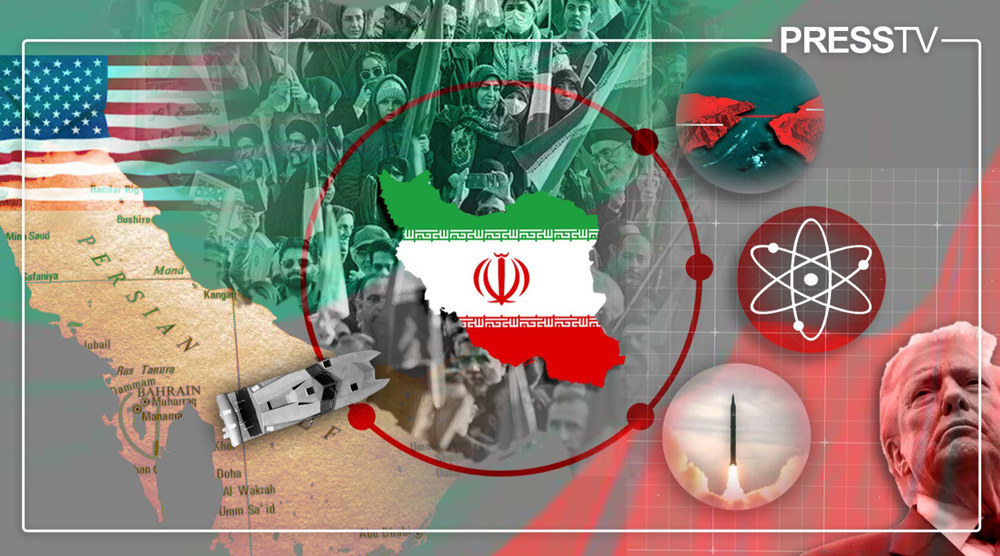
In the long shadow of asymmetric warfare, where military might meets strategic patience, a singular truth has emerged from the latest confrontation between Iran and the US, triggered by the unprovoked military aggression against the Islamic Republic.
The battlefield has spoken unequivocally and decisively. The diplomacy of threats has failed spectacularly. And now, as the world holds its breath for what comes next, Tehran has drawn a line in the sand that is as clear as it is unyielding: there will be no discussion of the nuclear issue, no negotiation over national sovereignty, and no reordering of regional power until the war is officially, verifiably, and definitively ended – on Iran’s conditions.
This is not a tactical posture but a strategic paradigm shift. For decades, the United States and its allies have operated under a deeply flawed assumption that military pressure could be leveraged into diplomatic concessions. The logic was brutal in its simplicity: bomb, sanction, threaten, and then negotiate from a position of imposed weakness.
Iran has just proven, over 40 days of relentless, no-holds-barred military aggression, that this assumption is not only false but dangerously obsolete. The end of the war that was illegally imposed on the Iranian people is no longer a prelude to American-led bargaining. It is the prize itself, and it belongs exclusively to the side that proved its superiority on the field.
The diplomatic masterstroke: War first, then talk
Iran has executed a diplomatic masterstroke of rare strategic intelligence. By formally and categorically linking any future dialogue on the nuclear issue to the definitive and permanent end of the war, Tehran has stripped the enemy of its most powerful weapon: the threat of continued or renewed military aggression.
In doing so, Iran has transformed what the enemy intended as leverage into irrelevance.
The message to Washington, Tel Aviv, and the world is clear. You do not get to sit across the table and discuss Iran's peaceful nuclear program while your aircraft remain in Iranian skies and your navy patrols the Persian Gulf. You do not get to demand concessions while the smoke of war still rises from Iranian soil.
This is not obstinacy. It is self-respect – hard-earned and proven through battlefield gains. And it is rooted in a cold, precise, and unflinching reading of the balance of power. The war's end, and the specific conditions under which it occurs, will shape the strategic contours of the region for generations to come. Every clause of the ceasefire, every verification mechanism, every symbolic acknowledgment, is a brick in the foundation of the future.
Whoever defines the endpoint defines the new normal. Iran has understood what its adversaries have not: the coordinates of the ceasefire – the timing, the terms, the monitoring arrangements, and the diplomatic symbolism – are not technical minutiae. They are the very architecture of the post-war order. And that architecture must be built on Iranian terms, because Iran has earned the right to build it.
What makes this position unassailable is that it has already been tested in fire. During the recent imposed war, Iran did not blink, retreat, or surrender. Against an enemy armed with the most advanced weaponry on earth, against a coalition that openly declared its goals as the destruction of the Islamic Republic, the dismemberment of the Iranian nation, and the plunder of its oil and wealth, Iran did not collapse. It did not capitulate.
The Islamic Republic also did not send secret emissaries offering concessions, like many would have expected. It endured and struck back with full might. It emerged from the inferno not merely intact but strategically dominant. The world watched as Iranian resilience crystallized into Iranian superiority.
That superiority is no longer a talking point. It is a lived reality – written in the enemy's failure, written in the ceasefire's terms, and written indelibly into the region's new balance of power.
✍️ Analysis - US nuclear propaganda, designed to justify endless aggression against Iran, lies shredded
— Press TV 🔻 (@PressTV) May 20, 2026
By Press TV Strategic Analysis Deskhttps://t.co/GbwagwbR1n
Why conditions of victory matter more than victory itself
It is not simply enough to end a war. Wars end all the time – in stalemates, in fragile truces, in bitter draws that plant the seeds of the next war. What matters are the conditions of the end. Who is standing when the guns fall silent? Whose narrative prevails? Whose terms are written into the ceasefire agreement?
These are not abstract questions, but concrete determinants of whether the peace that follows will be lasting or merely a prelude to renewed aggression and bloodshed.
Iran has grasped something that its adversaries have not. The natural state of a post-war environment is not neutrality or a blank slate. It is the formalization of the pre-war balance of power, plus the consequences of the war itself. War is not an interruption of the strategic order but a mechanism that reveals and reinforces who holds power.
If a nation endures an existential assault and comes out stronger and then agrees to negotiate its core assets – its missile program, its nuclear enrichment, its regional influence – as if nothing had happened, then it has sent a disastrous signal.
The signal would be this: war works and aggression pays. And the enemy, having learned this lesson, would return with even greater demands, expecting even greater concessions, because the nation would have proven that violence is a path to the negotiating table rather than a barrier to it.
That is precisely what Iran refuses to allow. The end of this war must be different. It must be seen, felt, and recorded as a decisive Iranian victory. Not a symbolic victory of flags and rhetoric, but a substantive victory of facts and force. A victory in which the enemy's failure is explicit, a victory in which the enemy's inability to impose its will through military means is acknowledged in every clause of every agreement, a victory in which the phrase "Iran's conditions" ceases to be a negotiating position and becomes a simple statement of fact.
This is the deeper rationale behind Iran's refusal to discuss the nuclear file before the definitive end of this third imposed war. The nuclear issue is not a bargaining chip to be traded away. It is not a vulnerability to be exploited by adversaries. It is a national achievement, developed internally by Iranian scientists and engineers through decades of unshakable resolve, often in the face of sabotage, assassination, and relentless pressure.
It was not imported from abroad, and it will not be exported in a transaction for sanctions relief or diplomatic normalcy. It is woven into the fabric of Iran's identity and sovereignty.
To treat the nuclear program as a subject of negotiation while the war is still ongoing would be to admit that the enemy’s unprovoked and illegal violence has purchase. It would be to validate the logic of armed blackmail. And once that logic is validated, the enemy will return, again and again, each time demanding more, each time threatening more.
That is the future Iran is determined to prevent – by winning this war not only on the battlefield but at the negotiating table, by ensuring that the terms of peace reflect the reality on the ground, which is Iranian deterrence and superiority.
The sacred and the non-negotiable
There is a deeper principle at work here, one that transcends strategy and enters the realm of national identity. Iran regards its territorial integrity, political sovereignty, and major national assets – including its nuclear industry, its defensive capabilities, and its scientific and industrial achievements – as sacred. These are not commodities to be auctioned but elements that have become woven into the very fabric of Iranian nationhood. They are not policy preferences subject to revision but existential red lines, because a nation that trades away its core assets has surrendered its future regardless of what any treaty says.
This is not merely a strategic calculation but a constitutional and moral commitment. It explains why Iran has not and will not make the nuclear issue a subject of negotiation under the shadow of the sword. To do so would be to turn a national right into a foreign concession, to signal to every future aggressor that Iran's most precious achievements are not protected by its power but vulnerable to a simple formula: drop enough bombs, and the conference table will open. That formula would guarantee endless wars.
The recent war has proven the opposite. Iran’s resilience under fire demonstrated definitively that the nation’s assets are immune to military pressure. The enemy deployed its most advanced capabilities, mobilized regional allies, and waged a full-spectrum assault. Yet after nearly forty days, Iran's nuclear facilities stood untouched, its missile forces remained operational, its scientific infrastructure continued functioning. The enemy achieved none of its stated objectives. That is not a close call, but a decisive, undeniable failure.
And yet, some voices – inside and outside the region – still suggest that the post-war period should include negotiations on the very issues the war failed to resolve. This is not diplomacy but delusion dressed in diplomatic language. It attempts through talk what could not be achieved through terror. Iran's response is as firm as it is logical: if the enemy could have extracted concessions by force, it would never have requested a ceasefire. The request for talks is itself an admission of weakness. And weakness does not dictate terms.
✍️ Analysis - The geometry of power: Trump’s repeated retreats prove US systemic paralysis, Iran’s strategic ascent
— Press TV 🔻 (@PressTV) May 19, 2026
By Press TV Strategic Analysis Deskhttps://t.co/UnwD4fPA0U pic.twitter.com/FSqXwtMg9w
Preventing the next war by winning the current one
There is another dimension to this strategic clarity, one often overlooked. Iran's insistence on ending the war before any nuclear dialogue is not merely about the present, but about the future as well. It is about ensuring that the next generation of Iranian children does not grow up under the shadow of yet another American-backed war of choice.
Every war creates a precedent. If Iran were to enter nuclear negotiations before the end of this war, or before its conditions are met, that precedent would be catastrophic. The enemy would learn a lesson: launching a war – even a failed war – is a profitable business.
It would learn that the mere act of initiation creates diplomatic leverage. It would learn that Iran's red lines are permeable, its resolve situational, and that sustained violence eventually yields concessions. That lesson would not remain confined to the nuclear file. It would metastasize, applying to Iran's conventional military capabilities, its regional alliances, its economic infrastructure, and ultimately its political independence as well. Once the enemy believes war pays, every aspect of Iranian sovereignty becomes a target.
The only way to prevent that lesson from being learned is to ensure that the end of this war teaches its inverse. The lesson must be clear: aggression against Iran carries no reward, but punishment. Military pressure yields no concessions. And the sole path to any dialogue, on any subject, is through the full, formal, verifiable end of aggression on Iran's terms. This is not maximalism or rhetorical excess, but the basic, elemental logic of deterrence – the same logic that has kept great powers from direct confrontation for generations.
Iran has already sacrificed enormously to prove this point. The nation has shown extraordinary patience and resilience, absorbing blows that would have shattered many other nation-states. It has emerged not broken but stronger. To squander that hard-won capital in a premature negotiation would be a betrayal of every sacrifice made – from the soldiers on the front lines to the civilians who have been on the streets every night.
Iran's diplomats and military strategists understand this clearly. They know that any agreement reached before the war's conditions are settled would be interpreted not as peacemaking but as validation of the enemy's tactics. It would open a Pandora's box of future wars, each one designed to extract yet another piece of Iran's sovereignty, until nothing remains worth defending. That is the future Iran is fighting to foreclose.
The world is already acknowledging Iran’s superiority
And here is the most compelling evidence that Iran's position is correct: the world itself is beginning to acknowledge that Iran has already won. Consider the situation in the Strait of Hormuz. In a quiet but seismic shift, commercial vessels of multiple nationalities are now coordinating their passage through the strait under Iran's framework. They are paying tolls. They are following protocols. This is not happening because Iran demonstrated, in real time and under fire, that it controls the world's most strategic waterway.
The international rules governing maritime transit emerged from the crucible of power. And now, a new reality is crystallizing: Iran's sovereignty over the Strait of Hormuz is being recognized de facto by the global economy, without a single treaty or diplomatic conference.
The markets have noticed it as well. When American leaders make belligerent statements, global markets barely flinch. But when Iran takes a position, when Iran signals its intentions, the markets react immediately and powerfully. This asymmetry is not accidental.
The financial world is a ruthless arbiter of power that does not reward weakness or bet on losers. The fact that markets are more sensitive to Iran's moves than to America's threats is a quiet, devastating admission: the world economy is beginning to internalize what the battlefield has already proven. Iran has emerged as the superior force.
This is the new reality. And as Iran's official stance makes clear, this reality does not require negotiation. It does not need Washington's ratification or a seal of approval from international bodies. It is a fact on the ground, a fact on the water, and a fact in the algorithms of every major shipping line and commodities trader.
The end of the ongoing war, when it comes, will be accompanied by this reality – not as a subject of discussion but as an immutable starting point. It will not be negotiated away, traded for promises of investment, or exchanged for vague diplomatic recognition. And the enemy, like the markets, will have no choice but to accept and adapt.
✍️ Analysis - Empire in freefall: Desperate sabre-rattling against Iran shows US has completely lost the plot
— Press TV 🔻 (@PressTV) May 17, 2026
By Press TV Strategic Analysis Deskhttps://t.co/hhkUOHAneK pic.twitter.com/UaGwwEgeuw
No end without Iranian conditions
The message from Tehran is therefore unambiguous. The war will end, as all wars do, but it will end on Iran's terms, or it will not end at all.
The nuclear issue is not a bargaining chip to be traded for a ceasefire. It is a national asset, developed through indigenous effort, protected through immense sacrifice, and now validated through battlefield superiority. The enemy's only remaining choice is to accept a singular, undeniable reality: the war has failed, and the post-war order will be shaped not by the aggressor but by the side that proved its endurance and unbreakable will under fire.
It is a promise rooted in the most resilient kind of power – the power of a nation that has learned, through decades of imposed war and crushing sanctions, that its survival depends on no foreign patron, no temporary deal, and no enemy's goodwill.
Iran has already won the war that mattered most: the war of endurance, the war of patience, the war that breaks weaker nations. Now it will win the peace, not by accepting a pause before the next war, but by ensuring that the end of this one becomes a permanent reordering of the balance of power in favor of resistance and justice.
The world should pay close attention. Because when the permanent ceasefire comes, and when the terms are written, they will not reflect what the enemy wanted. They will not be a product of American pressure or Zionist intimidation. They will reflect what Iran has already earned – on the battlefield, in the strait, and in the quiet calculations of global markets.
That is the only foundation upon which a lasting, dignified, and stable peace can be built.
‘Borders are Iran’s red lines’: Army Ground Forces commander warns Takfiris, hostile groups
IRGC: Iran’s missile capability remains intact, production continues
Iranians ready to fight for next 20 generations to defend homeland: Army chief warns enemies



Iran’s parliament speaker scoffs at US treasury secretary’s contradictory ‘Economic D-Day’ remarks
VIDEO | Backlash against US economic war
Iran details temporary Hormuz arrangement with Oman; vows reopening tied to fulfillment of demands
Canada announces retaliatory tariffs on more than 700 US products
IRIB World Service chief mourns Palestinian painter Mansour
VIDEO | Press TV's news headlines
Iran, Iraq to play decisive role in emerging regional order as US hegemony fails: Qalibaf
'War crime': Israeli forces raid, seize UNRWA training center in al-Quds



 PressTV NEWSLETTER
now
PressTV NEWSLETTER
now
 This makes it easy to access the Press TV website
