How Iran's air defenses destroyed over 170 US-Israeli drones – and rewrote drone warfare doctrine
By Yousef Ramazani
By the time the ceasefire took hold on April 8, 2026 – bringing to a halt nearly 40 days of joint US-Israeli aggression – Iran’s integrated air defense network had accomplished what military analysts once dismissed as impossible.
Forged in the crucible of decades-long sanctions and sustained by a culture of technological self-reliance, the Islamic Republic’s layered defensive umbrella systematically dismantled the aggressors’ unmanned aerial fleet. This was no ragtag swarm, but one of the most sophisticated collections of surveillance and strike drones ever assembled.
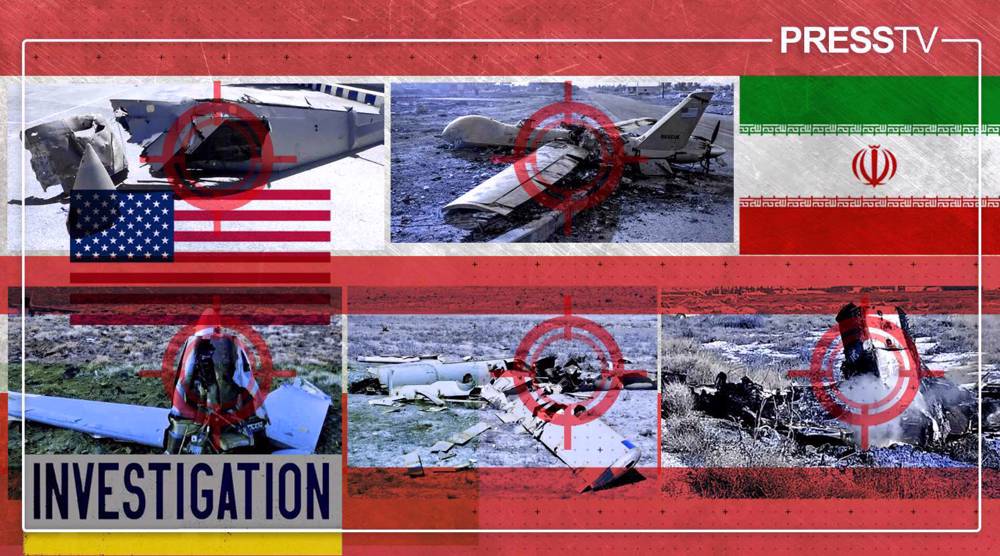
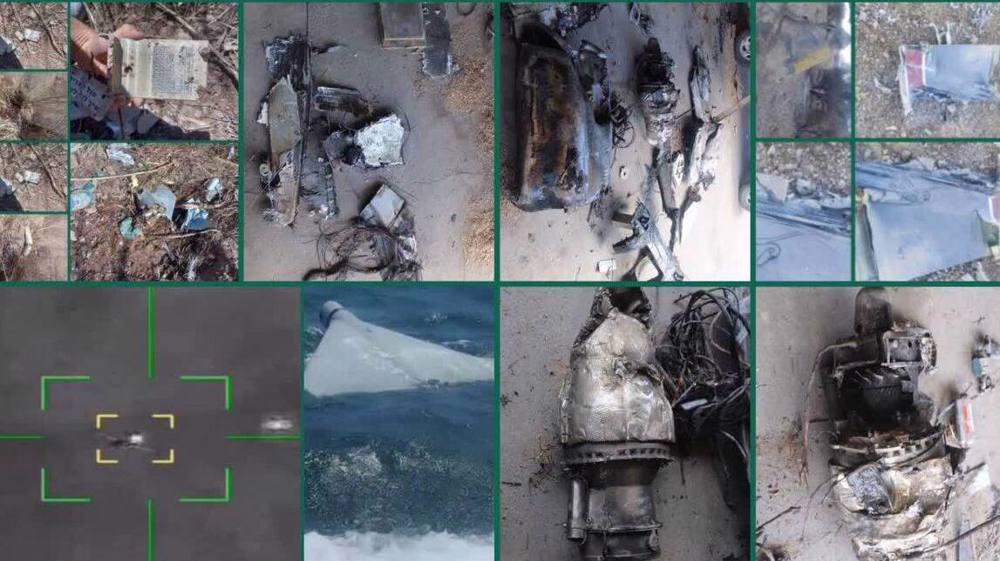
According to official Iranian military statistics, which is corroborated by visual evidence and open-source intelligence data, more than 170 American and Israeli drones were downed, destroyed, or crippled over the course of the conflict.
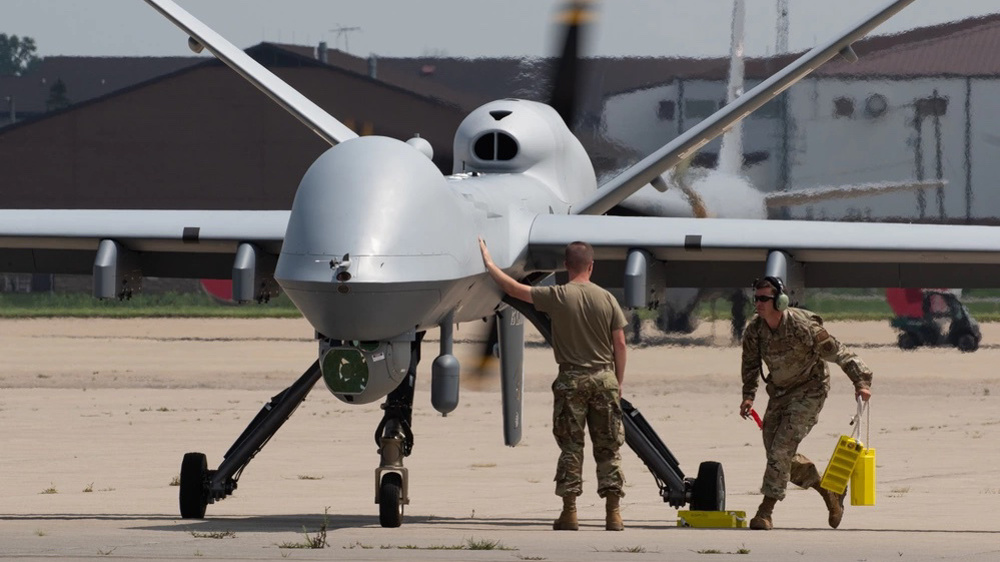
Among the wreckage: at least 24 MQ-9 Reapers, the workhorses of US Air Force unmanned operations; four Hermes-900 and three Heron TP platforms, which together formed a critical pillar of Israel’s long-endurance reconnaissance; and the crown jewel of American maritime surveillance – the MQ-4C Triton, a single unit carrying a price tag of $618 million.
The staggering attrition has forced both nations into a fundamental reassessment of their drone warfare doctrine. What stands revealed is a stark truth: even the most advanced unmanned systems are vulnerable when confronted by a determined, homegrown air defense – one built not in spite of isolation, but because of it.
Iran downed 170 US and Israeli drones during war: commanderhttps://t.co/snTun5ecEF
— Press TV 🔻 (@PressTV) April 18, 2026
Asymmetric air battle of the 2026 aggression
The joint US-Israeli aggression against Iran, launched on February 28, 2026, was no ordinary military operation. It was an unprecedented aerial campaign, meticulously choreographed to cripple the Islamic Republic's political and military infrastructure.
Wave after wave, hundreds of manned and unmanned aircraft struck at the heart of Iran's air defense networks, missile sites, and command hubs.
The aggressors' strategic logic was ruthless and clear: overwhelm Iran's defenses with technological supremacy and sheer numerical weight. Unmanned systems would serve as expendable pawns, probing defensive perimeters, pinpointing radar positions, and shadowing mobile targets with relentless surveillance.
But that calculus miscalculated one essential variable: the very quality that has long defined Iran's military doctrine – technological self-reliance, forged not by choice but by necessity.
Years of unjust and illegal sanctions and multiple waves of foreign aggression had left the Islamic Republic with no alternative but to build its own defenses.
The result was a layered and advanced air defense network, uniquely optimized to counter precisely the kind of threat it now faced: medium-altitude, long-endurance UAVs.
What the aggressors intended as a low-risk, high-reward campaign of attrition against Iranian defenses turned, instead, into a costly lesson – a vivid testament to the quiet, remarkable power of indigenous innovation.
Over a dozen US Reaper drones valued at $330 million destroyed by Iran: Reporthttps://t.co/Ck0L4bQskn
— Press TV 🔻 (@PressTV) March 18, 2026
American UAV losses: Reapers, Tritons, and the Task Force Scorpion toll
The US military threw its full unmanned arsenal into the no-holds-barred fight. Conventional drone assets, including MQ-9B Reapers, MQ-9A Reapers, and the crown jewel of maritime surveillance, the MQ-4C Triton, operated alongside Task Force Scorpion, a separate fleet of one-way attack drones designed for expendable strike missions.
But the skies over Iran proved merciless.
According to American media reports citing official sources, the US Air Force lost at least 24 MQ-9 Reapers in direct confrontation with Iranian air defense systems. Those figures align perfectly with official Iranian tallies, which individually documented the downing of between 25 and 30 Reapers over the course of the aggression.
The losses were not scattered. They concentrated like blood in water around the strategic cities of Isfahan, Shiraz, and Kish – zones where Iranian defenses had quietly established especially effective kill zones.
The MQ-9 Reaper, valued at roughly $30 million per unit, is no expendable trinket. It is the backbone of American unmanned surveillance and strike operations worldwide.
Each platform carries sophisticated sensors, laser-guided munitions, and air-to-ground missiles, a formidable asset for both intelligence gathering and direct engagement.
Losing two dozen of them represents not merely a $720 million financial blow, but a significant degradation of CENTCOM's persistent surveillance capability over the Persian Gulf and Iranian territory.
Yet the Reapers were only part of the big story that the Iranian air defenses scripted.
The majority of the 170 downed drones – likely over a hundred in total – were American kamikaze drones, including the LUCAS, a reverse-engineered copy of Iran's own battle‑proven Shahed‑136. In a strange twist of technological justice, the weapon Iran had perfected returned to haunt its copyists.
But the most spectacular American loss came on April 9, 2026 – just one day after the ceasefire took hold.
An MQ-4C Triton, a high‑altitude surveillance drone and the maritime successor to the RQ‑4 Global Hawk, transmitted an emergency signal and then vanished from radar off Iran's Bushehr coastline.
The Triton represents the absolute pinnacle of American unmanned surveillance technology, with revised estimates placing its value at $618 million per unit, nearly the cost of four F‑35 fighter jets.
Iranian air defense units promptly announced they had engaged and neutralized the intruder after it violated Iranian airspace. In doing so, they repeated a feat first accomplished in June 2019, when the 3 Khordad missile system downed a sister RQ‑4A Global Hawk over the very same waters.
Iran's Islamic Revolution Guards Corps (IRGC) has announced that an intruding Hermes 900 drone was intercepted and shot down over the Iranian town of Lar, Fars Province.
— Press TV 🔻 (@PressTV) April 8, 2026
Follow Press TV on Telegram: https://t.co/LWoNSpkc2J pic.twitter.com/jlWqdQgzCo
Israeli drone losses: Hermes-900 and Heron TP catastrophe
The Israeli Air Force brought its own fleet of advanced unmanned systems to the fight – and left with wounds that military analysts have described as potentially catastrophic for its long-endurance reconnaissance capability.
According to Israeli media reports, as of the second week of March 2026, eight Israeli UAVs had been confirmed destroyed. The list included three IAI Eitan (Heron TP) drones, four Elbit Hermes‑900 systems, and one unidentified platform.
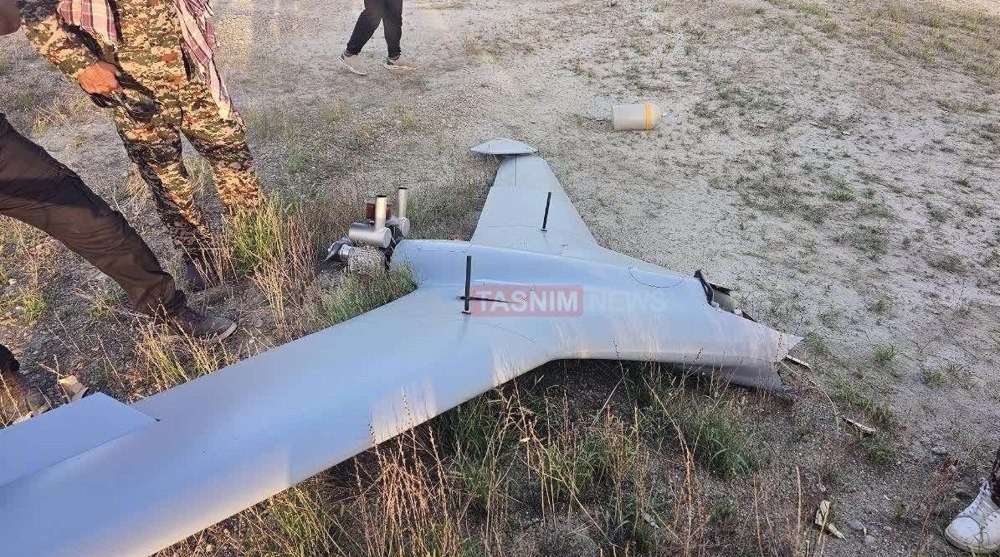
But Iranian military reports tell a far more staggering story. According to individual Iranian tallies, at least 20 Hermes‑900 drones were shot down during the 40-day war of aggression.
The Hermes‑900 Kochav is no ordinary drone. Designed as a medium‑altitude, long‑endurance armed reconnaissance and strike UAV, it has long been Israel's workhorse for deep‑penetration missions requiring persistent observation of mobile targets.
Yet its very strength is also its vulnerability: prolonged loitering over target areas increases exposure time within radar and missile engagement zones, making it a prime target for Iran's layered air‑defense network.
No official figure exists for how many Hermes‑900 units Israel originally possessed, but estimates place the number in the "dozens" – somewhere between 25 and 50.
If those estimates are accurate, the attrition rate for the Hermes‑900 fleet may have exceeded 80 percent during the war. The blow was so severe that the Israeli Air Force reportedly avoided deploying its remaining units over Iran for extended periods.
Yet even more concerning for Israeli war planners was not merely the number of losses, but their nature.
In at least one instance, Iranian forces successfully landed – or crash‑landed – a Hermes‑900 UAV with its full weapon and sensor load intact. The capture echoed previous Iranian operations in which American drones were seized and reverse‑engineered.
This time, however, the prize was even richer: invaluable intelligence on Israeli sensor technology, communication protocols, and operational procedures – delivered, quite literally, into Tehran's hands.
✍️ Analysis - How Iran’s air defence network turned April 3 into 'blackest day' in US military aviation history
— Press TV 🔻 (@PressTV) April 7, 2026
By Yousef Ramazanihttps://t.co/3dXmRUFOPH pic.twitter.com/Qo9Qkn3sA1
Cumulative totals: Dozens of UAVs neutralized
According to official statistics released by the Islamic Revolution Guards Corps (IRGC) and the Iranian Army, the total number of American and Israeli drones destroyed by Iranian defenses during the 2026 aggression has surpassed 170.
This figure is drawn from multiple, cross-referenced sources: official Iranian media releases, visual confirmation of wreckage scattered across several provinces, and even American media reports citing American military sources.
The confirmed breakdown reads like a high-tech graveyard inventory:
- At least 24 MQ-9 Reaper drones
- One MQ-4C Triton
- Approximately 20 Hermes-900 drones
- Several Heron TP UAVs
- Dozens of additional unmanned systems of various types
Yet as impressive as these numbers are, they may tell only part of the story.
Both Washington and Tel Aviv maintain "strict censorship" over military loss information, refusing to disclose details of their casualties and equipment losses. The result is a fog of war through which only partial truths emerge.
The persistent gap between Iranian figures and Israeli admissions suggests a sobering possibility: the true scale of drone losses may be even higher than what has been officially acknowledged. What has been counted may be merely what could not be hidden.
Mohsen Rezaei, former-IRGC commander, says "They said they had destroyed Iran's air defence. As always, they lied. Perhaps it would have been better if Trump had dismissed himself instead of his military commanders."
— Press TV 🔻 (@PressTV) April 4, 2026
Follow Press TV on Telegram: https://t.co/LWoNSpkc2J pic.twitter.com/fdug2OItvX
Fleet ratios: Strategic degradation of aggressor capabilities
The losses suffered by American and Israeli forces are not merely numbers on a ledger. They represent a significant percentage of their total unmanned fleets – a hemorrhage that military analysts describe as unprecedented since these platforms first took to the skies.
The US Air Force's MQ-9 Reaper fleet, while numbering in the hundreds, has never experienced attrition like this.
The loss of 24 Reapers constitutes a substantial reduction in CENTCOM's available intelligence, surveillance, and reconnaissance (ISR) assets. Commanders now face a cruel choice: accept degraded coverage over a volatile region, or risk sending additional platforms into increasingly contested airspace where the odds of survival grow thinner by the day.
For the Israeli regime, the blow is proportionally far greater and severe.
Israel's Hermes-900 fleet is considerably smaller than America's Reaper armada. If reports suggesting that more than 80 percent of these platforms may have been destroyed are accurate, and the evidence is chillingly consistent, then Israel faces nothing less than an existential threat to its long‑endurance unmanned reconnaissance capability. Unlike the Americans, Israel cannot simply absorb such losses and move on.
But fleet attrition tells only half the story. Israeli losses are far worse than American losses for another reason: Iranian ballistic strikes did not stop at shooting down drones. They also destroyed multiple drone manufacturing factories on Israeli soil. The production lines themselves went up in smoke.
Even under the most generous estimates, assuming the Israeli regime had acquired as many as 50 Hermes‑900 drones, the losses still represent a significant degradation of the Israeli Air Force's ability to conduct deep‑penetration surveillance over Iranian territory.
What remains of the fleet may be too precious to risk.
And then there is the MQ-4C Triton.
The loss of this single platform is particularly devastating given its rarity. Due to production cuts, only approximately 27 aircraft have ever been built. The destruction of one Triton, therefore, represents roughly 3.7 percent of the entire US fleet – a staggering proportional loss for a single engagement.
The Triton's unique high‑altitude maritime surveillance capability cannot be easily replaced by other assets. Its absence creates a critical gap in American naval intelligence coverage over the Persian Gulf, a gap that no existing platform is designed to fill.
In the cold arithmetic of modern warfare, percentages matter as much as raw numbers. And by that measure, both aggressors are bleeding in ways their military planners never anticipated.
✍️ Feature - $618mn up in smoke: How Iran took out MQ-4C Triton, America's most advanced drone over Persian Gulf
— Press TV 🔻 (@PressTV) April 19, 2026
By @kesic_ivan https://t.co/9sAbIpnruL
Operational impact: Forced reassessment of drone doctrine
The sheer scale of UAV losses has forced both the United States and the Israeli regime to do something no military power does lightly: fundamentally reassess their operational doctrine regarding unmanned systems.
Israeli military officials have acknowledged the loss of more than a dozen drones of various types, describing them as an "anticipated cost" of operations – a calculated price paid to avoid exposing manned aircraft to the same threat envelope.
That admission reveals a critical vulnerability: the aggressors have been forced to accept drone attrition as a routine expense, essentially treating unmanned platforms as expendable assets in order to preserve pilot lives.
But acceptance does not equal immunity. The Israeli Air Force's reported decision to avoid deploying its remaining Hermes-900 drones over Iran for extended periods signals a significant shift in operational risk tolerance. The inability to maintain persistent surveillance coverage creates gaps, which Iranian forces can exploit for mobile missile launches, naval deployments, and other tactical operations.
American planners face similar constraints. Despite the larger size of the US UAV fleet, the continuing loss of MQ-9 Reapers to Iranian air defenses has demonstrated a sobering truth: MALE-class drones (medium-altitude, long-endurance) remain dangerously vulnerable when forced to operate within the engagement envelope of modern surface-to-air missile systems.
Operationally, the Reaper's inadequacies have become a critical problem precisely because the platform remains the backbone of American persistent ISR efforts.
The degradation of the Reaper fleet directly limits US surveillance coverage over the Persian Gulf and Iranian territory, reduces targeting capability for follow-on strikes, and increases reliance on other assets – satellite imagery and manned aircraft chief among them – each with its own limitations and vulnerabilities.
The numbers tell a stark story. Reaper losses were disproportionate to the overall fleet size, representing over 60 percent of total American air losses during the aggression. Consequently, the US intelligence, surveillance, and reconnaissance network has been significantly degraded as a result.
What makes this degradation particularly troubling is its persistence. The fact that UAV losses continued throughout the course of the imposed war suggests that American suppression of enemy air defense (SEAD) efforts – backed by countless cruise missiles and electronic warfare sorties – failed to fully neutralize Iran's defensive network.
And then there is the question of replacement.
Replenishing the Reaper fleet will not be easy or expedient. Indeed, replacing unmanned platforms is certainly easier than replacing the dozens of Tomahawk cruise missiles expended during the aggression, a notoriously slow and expensive process. But that comparison sets an exceptionally low bar.
The production timeline for a single MQ-9 Reaper spans two to three years from order to delivery, constrained by supply chain bottlenecks, specialized component manufacturing, and a reduced procurement tempo. American military contractors have already shifted focus toward next-generation platforms, platforms still years from operational readiness.
In the short term, military analysts expect the Air Force to scrape together solutions: draw from reserve fleets, cannibalize training units, or accept reduced operational tempos across multiple theaters.
None of these solutions, however, addresses the fundamental reality that Iran's air defenses have proven capable of attriting America's most valuable unmanned assets at an unsustainable rate. The ledger has been written not in ink, but in wreckage.
✍️Feature - Silence of the stealth: How Iran shattered the 'invincibility' of US fighter jet F-35
— Press TV 🔻 (@PressTV) April 3, 2026
By Yousef Ramazanihttps://t.co/TVRx3GDXip pic.twitter.com/HGegmOj6Jn
Iranian air defense systems: the technology behind the triumph
The success of Iran's air defense forces against such a formidable array of advanced unmanned platforms is no accident. It flows from a multi-layered, indigenous approach to aerial warfare, one built from the ground up in defiance of sanctions and foreign predation.
At the heart of this network lies the 3 Khordad missile system, the same system that famously downed an American RQ-4 Global Hawk in 2019.
Armed with a phased array radar, the 3 Khordad can launch eight missiles while tracking four targets simultaneously. Its Sayyad-2 missiles reach out to 75 kilometers and climb to an altitude of 30 kilometers—a lethal envelope that has only grown more precise with time.
But the 3 Khordad is merely the opening act.
More advanced systems have since woven a defensive umbrella of remarkable depth. The Bavar-373, Iran's indigenous rival to the Russian S-300, provides long-range coverage against high-altitude threats.
The Majid infrared-guided system achieved the unprecedented feat of engaging an F-35 stealth fighter, proving that even fifth-generation aircraft are not invincible.
Together, these platforms create a seamless shield that extends from low-altitude, short-range engagements to high-altitude intercepts exceeding 30 kilometers.
Yet missiles alone do not tell the full story.
The Iranian military has long pursued an audacious approach to technology development, including the successful reverse-engineering of captured enemy drones. That expertise has produced electronic warfare and cyber capabilities that complement kinetic air defense systems with devastating effect.
The result is an integrated approach: radar-guided missiles to shoot, electronic jamming to blind, and cyber takeovers to capture. Together, these layers have created a defensive network capable of engaging every class of unmanned threat encountered during the aggression, from low-end kamikaze drones to the crown jewels of American and Israeli aviation.
In the skies over Iran, no unmanned platform has proven beyond reach.

IRGC vows to teach US an ‘unforgettable lesson’
Iran’s crushing strike on US base in Jordan signals capability and will to impose costs on aggressor

Strait of Hormuz as strategic fulcrum: Iran’s credible deterrence and the limits of US coercion



‘We don’t fear martyrdom’, says new Hamas chief in first message
VIDEO | U.S. bases in West Asia can no longer be used as launch pads against Iran
Iran will respond to any aggression, avenge blood of martyred Leader: Commander
VIDEO | Press TV's news headlines
VIDEO | Pakistan-Kuwait defence talks spark debate over regional security balance
VIDEO | Iran makes history at IMO 2026 as all six team members win medals despite challenges
Germany represses dissent
Commander: Yemen ready to enforce new deterrence against Saudi Arabia



 PressTV NEWSLETTER
now
PressTV NEWSLETTER
now
 This makes it easy to access the Press TV website
