Hybrid warfare after military defeat: Iran and resistance axis united against enemy plots – including psy-ops
By Press TV Strategic Analysis Desk
Every failed and costly military campaign reaches a moment when the aggressor realizes that firepower alone cannot break a resilient and courageous people. That moment has arrived.
After suffering clear and crushing military defeat against Iran and the Axis of Resistance – on the battlefield, in the streets, and in the skies – the enemy has quietly and desperately pivoted. Tanks and airstrikes have failed to force the Iranian nation into surrender. Devastating munitions have not broken the will of the resistance. So the enemy has intensified its psychological warfare to manufacture despair.
The enemy now admits, through its own actions, that it cannot win a conventional war. What follows is a hybrid war – a fusion of field pressure, economic strangulation, and cognitive deception – at two specific targets: the resilience of the people, and the decision-making calculations of the country's officials.
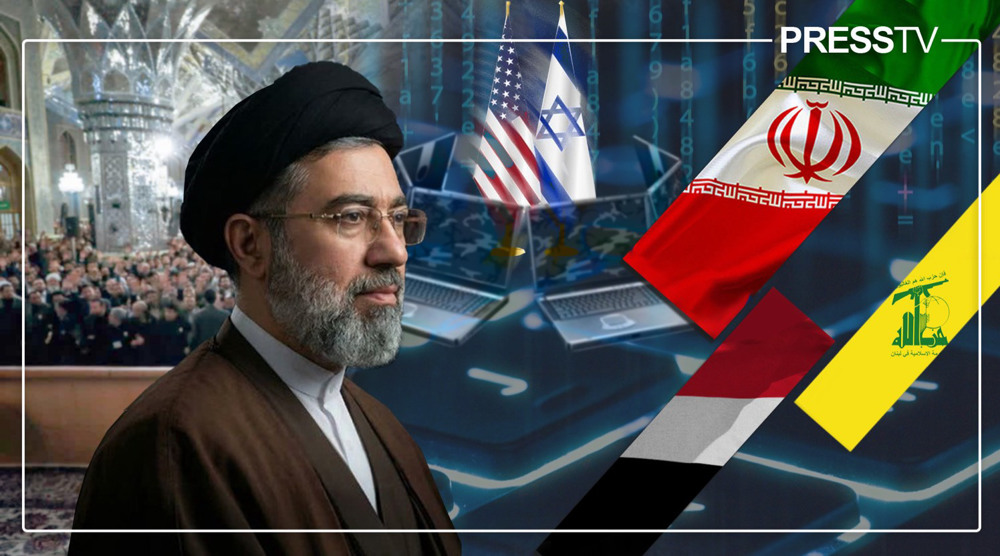
But as the Leader of the Islamic Revolution, Ayatollah Seyyed Mojtaba Khamenei emphasized in his Thursday remarks, the enemy's sinister plot will be neutralized through steadfastness, clarity, unity, mutual trust, and the refusal to echo the aggressor's narrative.
His remarks underscored a critical truth: the enemy, having discovered that Iran's military deterrence is real and unbreakable, that the Resistance Front remains operational, and that the people did not abandon the battlefield and streets despite extraordinary pressure, has now entered a new phase of hybrid warfare.
Two pillars of the enemy’s hybrid warfare
The enemy's current strategy rests on two interdependent objectives. Neither is new in theory, but their coordinated application against Iran and the resistance front represents a sophisticated evolution of hybrid warfare.
Objective 1: Breaking people's resilience
The enemy understands that a society which endures is a society which eventually wins. Public resilience is not abstract – it is the daily refusal to panic, to hoard, to betray, or to surrender.
It is the mother who sends her only son to the front line. The baker who reopens after a strike. The neighborhood that organizes its own line of defense. The enemy has studied this extraordinary resilience for decades and has concluded that it must be systematically dismantled in order to achieve its goals.
To achieve this, the enemy employs two parallel tracks:
· Field operations: Intensified pressure through continued maritime piracy and banditry, naval blockades, harassment in the Strait of Hormuz, and attempts to cut Iran's alternative sanction-circumvention routes. These are designed to strangle the economy, create real shortages, and then weaponize those shortages psychologically.
✍️ Analysis - End of 'tit-for-tat' era: Iran’s broad, asymmetric response to US attacks redraws the deterrence equation
— Press TV 🔻 (@PressTV) June 3, 2026
By Press TV Strategic Analysis Deskhttps://t.co/MVDp8qqOZQ
· Cognitive deception operations: Spreading baseless rumors and exaggerating shortages of essential goods (food, water, electricity, gas), provoking specific social groups into protests and then escalating those protests into riots, fabricating false reports of divisions among officials, amplifying unnecessary priorities, and paralyzing the decision-making apparatus so that efforts to manage livelihoods are undermined.
The goal is simple: make the people believe that resistance is futile and fruitless, that the government has abandoned them, and that surrender is the only rational choice.
Objective 2: Creating a miscalculation among officials
The enemy knows that even the most resilient population cannot sustain itself indefinitely if its leadership misreads the battlefield.
Therefore, the second objective is to distort the cost-benefit calculations of Iran's decision-makers. The enemy wants Iranian officials to treat major concessions as trivial and to magnify the enemy's insignificant commitments as critical breakthroughs in the process.
The tools for this are extensive:
· Psychological warfare statements from Trump, the war secretary, the treasury secretary, CENTCOM commanders, each designed to threaten, tempt, exaggerate, minimize, distort, or lie.
· Deliberately biased or flawed advice presented to officials as objective analysis.
· False information and distorted portrayals of social realities in domestic media.
· Institutionalized infiltration by elements linked to or aligned with the enemy.
When officials begin to doubt their own intelligence, when they hesitate, when they overestimate the enemy's strength and underestimate their own, the enemy has won without firing a shot. That is the enemy's goal.
Why the enemy will fail to break people’s resilience
The enemy's psychological warfare assumes that humans are rational calculators of pain and reward. But societies built and sustained on the concept of resistance do not operate on that logic. They operate on memory, dignity, and justice.
First, the enemy has no new horror script to offer. Iranians have lived under crippling and illegal sanctions, assassination campaigns, economic warfare, and regional aggression for over four decades. The threat of more pressure, more shortages, more fear is not a novelty. They are the baseline. The enemy cannot introduce a shock that the population has not already absorbed and survived.
Second, the enemy's credibility is zero after what it has done and faced in the past year. The same navy that imposes a blockade claims to respect international law. The same officials who speak of "negotiations" authorize the assassination of scientists and commanders. The same media that warns of "Iranian aggression" cheers the bombing of hospitals in Gaza and Lebanon.
After a certain threshold of lies, the population no longer distinguishes between propaganda and information. All enemy statements are treated as what they are: weapons.
Third, the resistance has learned counter-psychological operations. Community networks, which include mosques, neighborhood councils, civil defense teams, and even informal social media chains, act as filters. They verify, rebut, and reframe.
✍️ Analysis: Israeli escalation in Lebanon and US adventurism in Persian Gulf test Iran's ceasefire red lines
— Press TV 🔻 (@PressTV) June 1, 2026
By Press TV Strategic Analysis Deskhttps://t.co/StXHpttO4C pic.twitter.com/KHsbbkfYMl
When the enemy broadcasts a rumor of shortages, the neighborhood committee already has a distribution plan. When the enemy fabricates a split among officials, the public sees those same officials standing together at a funeral or a briefing. The enemy's narrative is constantly preempted and neutralized.
Fourth, promoting despair and hopelessness always backfires. When officials speak of deadlock, when the media amplifies enemy claims without rebuttal, when the suggestion is made that "there is no path other than compromise and surrender," the enemy celebrates.
But the Iranian people have consistently rejected that deceptive framing. They have seen what compromise without withdrawal produces: more sanctions, more assassinations, more occupation. Resistance, even at a higher cost, is still less costly than surrender.
The enemy's psychological campaign is energy-intensive. It requires constant messaging, constant adjustment, and constant funding. And when the feedback loop shows no increase in desertions, no collapse in morale, no popular uprising against the government, the campaign becomes a farce.
The enemy ends up demoralizing its own home front, which begins to question why, if Iran is on the verge of collapse, the war is not already won, or why the losses are so staggering.
Preventing miscalculation – The responsibility of officials
Public resilience alone is insufficient. It must be matched by clear-eyed, accurate decision-making at the highest levels. The enemy's cognitive operations are designed to create exactly the opposite: confusion, hesitation, and fatal errors in cost-benefit analysis.
To prevent this, officials must adhere to several clear disciplines.
First, reject the enemy's false framing. When the enemy describes a concession as "small" or a commitment as "historic," officials must conduct their own independent analysis.
The history of negotiations with the American side over the past decade is littered with examples where Iran conceded significant strategic assets in exchange for promises that were never kept.
The JCPOA, also known as the Iran nuclear deal, is the clearest case: Iran verifiably downgraded parts of its nuclear program, and in return received not relief but more sanctions and assassination. Any new negotiation must be measured against that bitter precedent.
Second, resist the pressure of artificial urgency. The enemy will create crises, real or fabricated, and demand immediate decisions. "Sign now, or the military option remains on the table." "Agree to these terms, or the blockade intensifies."
Officials must recognize that urgency is itself a psychological weapon. Time is clearly on the side of the resistance. Every day the enemy fails to break public resilience and resolve is a day the enemy's own political position weakens.
✍️ Analysis - Beirut retreat: Credible Iranian deterrence ends US-Israeli impunity to escalate unchecked
— Press TV 🔻 (@PressTV) June 2, 2026
By Press TV Strategic Analysis Deskhttps://t.co/S154GN9KYJ
Third, maintain mutual trust between people and officials. Nothing serves the enemy more than division. When officials appear passive, hopeless, or uncoordinated, the people will inevitably become even more despairing. They will feel abandoned. That feeling is the precursor to collapse. Conversely, when officials communicate clearly, act decisively, and share both the burdens and the sacrifices, public resilience is reinforced. Trust is not a soft value but a strategic asset.
Fourth, correct perceptions through accurate analysis. Institutions responsible for producing knowledge, thought, and belief must work in two directions simultaneously: organizing measures to overcome enemy-imposed obstacles, and correcting the perceptions of decision-makers through real-time analysis of both enemy conditions and domestic realities.
The battlefield is a function of these two pillars. If either public resilience or sound decision-making is disrupted, the enemy will achieve in hybrid warfare what it disastrously failed to achieve in direct military confrontation. But if both pillars stand, the enemy's psychological campaign is doomed to collapse under its own weight.
Resistance Front advances – Withdrawal as the only exit
While the enemy wages psychological war, the resistance front is not standing still. On the contrary, it is advancing with each passing day.
The new phase began after the enemy's clear and humiliating retreat in the face of Iran's credible threat to target occupied territories in response to any attack on Beirut.
That threat was demonstrated operationally, with missile and drone strikes by Iran's armed forces against enemy targets, vessels, and bases across five countries in the Persian Gulf region.
The message was loud and clear: Iran's deterrent power is real, it is operational, and it is not limited to one front. If its patience is tested and red lines are breached, it will hit back on multiple fronts.
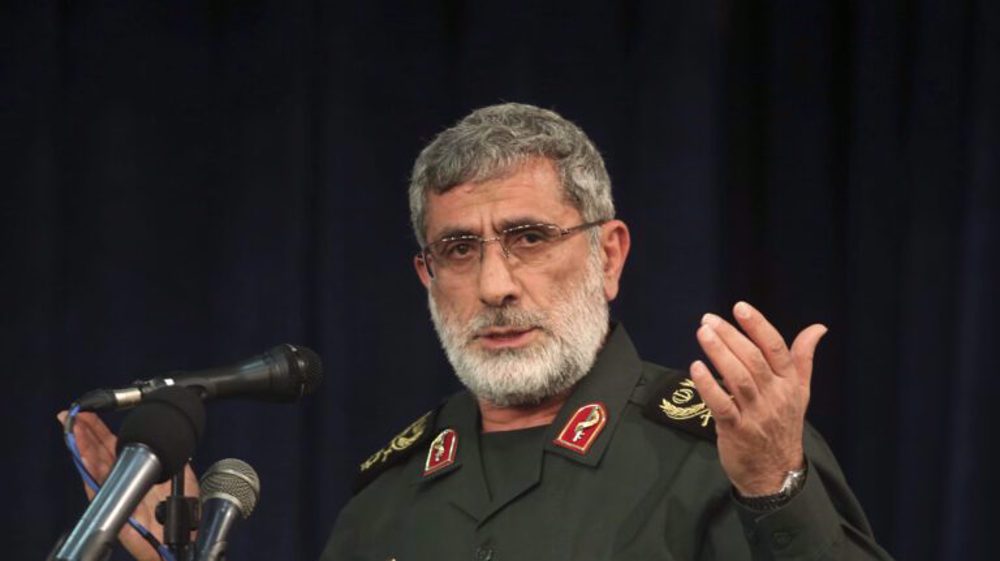
Now, the next phase has been launched. The Yemeni army has entered the equation, threatening armed sovereignty over the Bab al-Mandab Strait. Brigadier General Esmaeil Qaani, commander of the IRGC Quds Force, has warned of the opening of new fronts.
The emphasis is now on forcing the Zionist enemy to withdraw to the pre-war lines that existed before the recent 40-day imposed war. This is a coordinated, battle-tested, and credible threat backed by Iran's armed forces on one side, and the Yemeni army and Hezbollah inside Lebanon on the other.
The enemy understands the geometry of this new battlefield. It cannot fight on all fronts simultaneously. Its supply lines, its naval routes, its economic lifelines – all are exposed to the weaponry of the unified resistance front.
The most critical component of this unified front is the Islamic Republic of Iran itself. Reports indicate that Iran is approaching the finalization of a war-ending agreement with the US. In this context, the careful calculation of strategic costs and benefits is paramount.
✍️ Analysis - Iran’s growing leverage exposes emptiness of Trump’s psychological warfare in high-stakes standoff
— Press TV 🔻 (@PressTV) May 31, 2026
By Press TV Strategic Analysis Desk
Read more: https://t.co/TRT3NhW9tV pic.twitter.com/gaEyOaeqlk
Iran's diplomacy must achieve two simultaneous goals: removing the shadow of war from the country, while ensuring the strength and security of the unified resistance front as a permanent deterrent against future enemy threats.
The optimal option for Iran is clear: calculate long-term strategic gains from consolidating Iran's power, while weighing the material and moral losses that could result from miscalculations similar to past negotiating experiences.
Iran must clearly and decisively announce its strategic commitment to defending the Lebanese resistance before any agreement to end the war is reached. And by "defense," the meaning is explicit: compelling the enemy to withdraw from its occupation of southern Lebanon through coordinated action with all components of the resistance front, especially Yemen.
No agreement that leaves a single Israeli soldier on Lebanese soil is acceptable. No ceasefire that allows continued overflights, assassinations, or maritime incursions is sustainable.
The enemy has tried every variation of "calm for calm," every buffer zone, every temporary arrangement. Each has failed because each has left the occupation intact. The only durable and logical end to this hybrid war is a complete, verifiable, and total Israeli military withdrawal from South Lebanon, coupled with a permanent halt to all aggressive acts.
On that basis, the resistance can stand down. On any other basis, the war continues, not because the resistance seeks war, but because occupation, by its very nature, produces resistance.
IRGC intelligence forces eliminate two terrorists in southeast Iran
‘Nightmare for enemies’: Iran launches mass ‘Sacrifice for Iran’ drill
IRGC Navy strikes Togo-flagged tanker after illegal attempt to transit Strait of Hormuz



VIDEO | Intl. Nuclear Medicine Congress wraps up in Tabriz
Man convicted of spying for Israel, providing information on missile sites executed in Iran
ICRC: Palestinians in Gaza experience ‘death, destruction’ on daily basis
Trump announces ‘security’ agreement on Greenland after threatening to annex it
CPJ slams Israel’s abduction of Press TV journalist, demands her immediate release
‘Stop your crocodile tears’: Araghchi hits back at French FM over human rights allegations
Trump bars CNN, MS NOW and Politico from White House as they question his pro-war policies
Discover Iran: Tabriz, where Iran’s Silk Road legacy meets industry, trade and a new economic future


 PressTV NEWSLETTER
now
PressTV NEWSLETTER
now
 This makes it easy to access the Press TV website
