Iran's homegrown aerospace industry takes wing with Simorgh
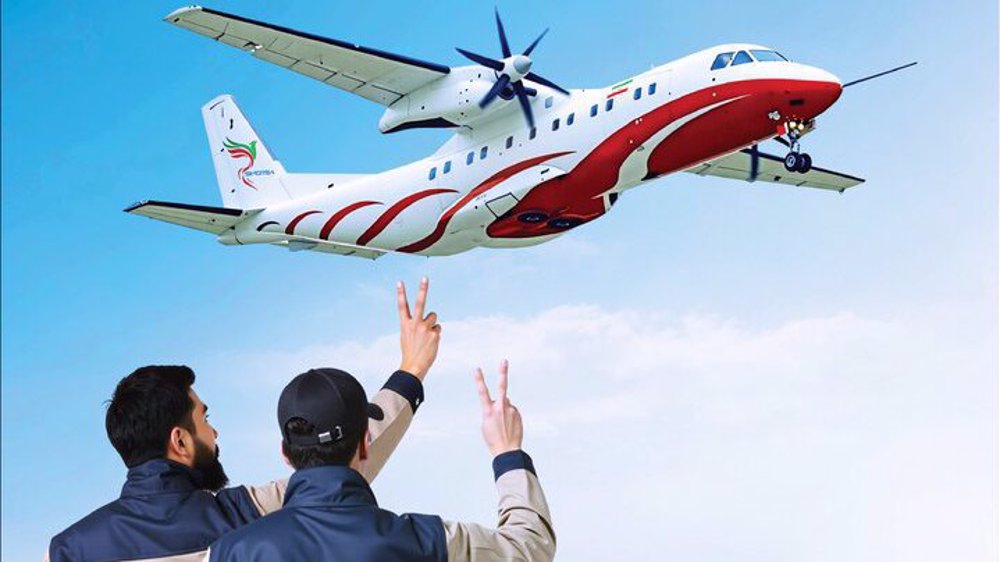
On Tuesday, Iran announced what officials described as a milestone for the country's aviation industry. The Iranian-built Simorgh transport aircraft has entered the standardization phase and is undergoing its final certification process.
If those procedures are completed as planned, authorities say the aircraft could enter commercial service by 2027.
The announcement comes at a pivotal moment. After nearly five decades of sanctions, Iran's commercial aviation sector operates one of the world's oldest fleets, as mounting maintenance costs and persistent shortages of aircraft and spare parts continue to strain both the industry's finances and its safety record.
The effort, however, raises a broader question of why Iran would pursue the costly and technically demanding business of aircraft manufacturing rather than continue relying on imports.
The answer lies in the country's long history of aviation sanctions, its geography, and the strategic calculation that dependence on foreign suppliers has repeatedly left its aviation sector vulnerable to political developments beyond its control.
The modern history of sanctions against Iran's aviation industry began shortly after the 1979 Islamic Revolution.
Ten days after the seizure of the US Embassy in Tehran, President Jimmy Carter issued an executive order, freezing roughly $8.1 billion in Iranian assets and prohibiting exports of American goods, including aircraft and aviation components.
Although many of those restrictions were lifted after a 1981 agreement, a new chapter opened in 1984, when the Reagan administration designated Iran a state sponsor of terrorism, sharply limiting access to American aviation technology and parts.
The restrictions expanded over the following decades. In 1999, President Bill Clinton signed another executive order, prohibiting the re-export of US-origin goods to Iran, including aviation equipment.
Beginning in 2006, successive administrations added increasingly comprehensive financial sanctions, while Congress imposed measures affecting petroleum exports, including aviation fuel
The 2015 Joint Comprehensive Plan of Action briefly transformed expectations. With nuclear-related sanctions suspended, Iran secured authorization to purchase commercial aircraft and certified spare parts for the first time in decades.
Airbus agreed to sell 118 aircraft in a deal valued at roughly $27 billion; Boeing announced an agreement for 80 aircraft worth approximately $25 billion; and additional contracts were signed with ATR and other manufacturers. Combined, the announced agreements exceeded $58 billion.
Those plans unraveled after the United States withdrew from the nuclear agreement in May 2018. The Treasury Department revoked licenses authorizing aircraft sales to Iran, effectively freezing nearly every major order.
Only three Airbus aircraft and thirteen ATR turboprops delivered before the US withdrawal ultimately entered Iran's fleet.
For Iranian policymakers, the episode reinforced a lesson that continues to shape industrial policy. Reliance on foreign aircraft purchases remains vulnerable to geopolitical shifts beyond Tehran's control.
Recent American criticism of the country's aviation sector underscores the strategic importance of domestic production.
In May, US Treasury Secretary Scott Bessent called for tighter restrictions on Iranian airlines, with Iranian officials describing them as evidence of frustration over the industry's continued recovery despite years of sanctions.
Civil aviation has become a symbol of industrial resilience, representing not only transportation but also the broader pursuit of technological self-sufficiency.
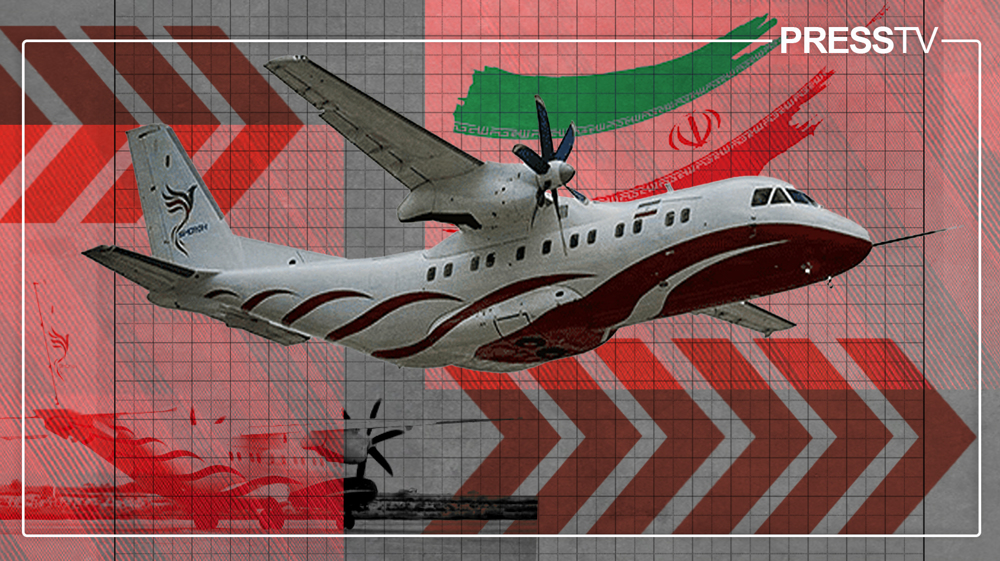
Iran's geography makes aviation more than a luxury. Covering roughly 1.65 million square kilometers, an area comparable to Western Europe, the country depends heavily on air transportation to connect distant regions separated by mountains, deserts and long travel distances.
Yet its commercial fleet remains among the oldest in operation. The average aircraft is approximately 28 years old and Aviation accidents over the past four decades have claimed the lives of more than 1,700 passengers.
Against that backdrop, relying exclusively on imported aircraft has become increasingly difficult.
Meanwhile, the number of Iranian airlines has expanded to roughly 27 carriers despite the limited availability of operational aircraft, a mismatch that illustrates the widening gap between transportation demand and fleet capacity.
The Simorgh was designed with precisely those domestic needs in mind.
With a maximum takeoff weight of 21.5 metric tons, a payload capacity of six tons and a range approaching 3,900 kilometers, the aircraft is intended primarily for regional transport and logistics.
Perhaps the least visible aspect of the Simorgh program is the ecosystem supporting it.
Rather than relying on a single manufacturer, the project draws on a network of domestic companies responsible for components, subsystems, testing, technical documentation, certification support and manufacturing technologies.
According to Iran's Civil Aviation Organization, roughly 450 knowledge-based companies are active in the country's aviation sector, working on aircraft components, engines, landing gear, radar systems and navigation equipment.
Iran's domestic airline industry generates roughly $1 billion annually in ticket revenue, resources that advocates say could help finance broader technological development if directed toward domestic suppliers.
Preliminary estimates suggest that manufacturing costs of the Simorgh could be roughly half those of comparable imported aircraft. Iranian officials also estimate that production of each aircraft could support around 1,000 direct and indirect jobs.
In an industry whose global supply chains remain dominated by Western manufacturers, producing a domestically certified aircraft even in the medium transport category carries strategic importance as well as industrial symbolism.
The Simorgh represents the foundation of a longer industrial strategy. Appropriately, the aircraft bears the name of the mythical Persian Simorgh, the legendary bird associated with endurance, wisdom and rebirth.
After nearly half a century of sanctions, Iran's aviation sector has increasingly concluded that technological independence is a strategic necessity.
The Simorgh is the first step in a broader effort to build a domestically sustained aerospace industry capable of producing future generations of transport aircraft, passenger planes and specialized military platforms.
Iranian engineers develop indigenous engine control units, advancing automotive electronics
Understanding Iran’s tourism momentum amid war and sanctions

BRICS paving way for alternative world order, not a war machine against West: Analyst



Iran parliamentary commission approves penalties for violators of Hormuz laws
VIDEO | Trump’s war disrupts the world
Araghchi urges world to hold US accountable for ‘war crimes’ at UNGA
VIDEO | Press TV's news headlines
US F-16 fighter jet crashes at air base in Germany
Iran warns US against new attack, says Washington will gain ‘nothing but failure’
'Shameful': UK to provide refueling support for Saudi warplanes amid war on Yemen
‘Iron shield’: Knowledge, morality will ‘cut off’ hands of aggressors, Leader tells students


 PressTV NEWSLETTER
now
PressTV NEWSLETTER
now
 This makes it easy to access the Press TV website
