BRICS paving way for alternative world order, not a war machine against West: Analyst

By M. Salimi
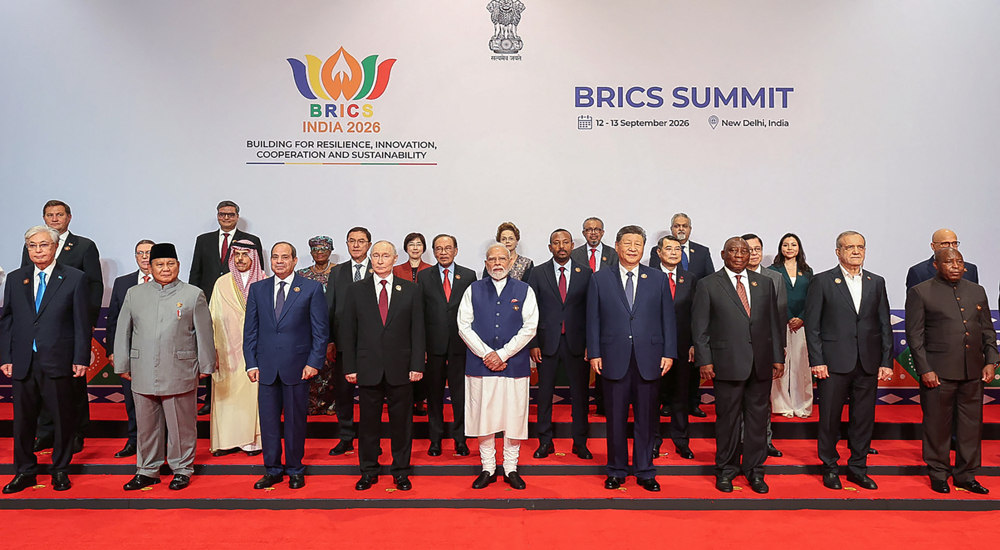
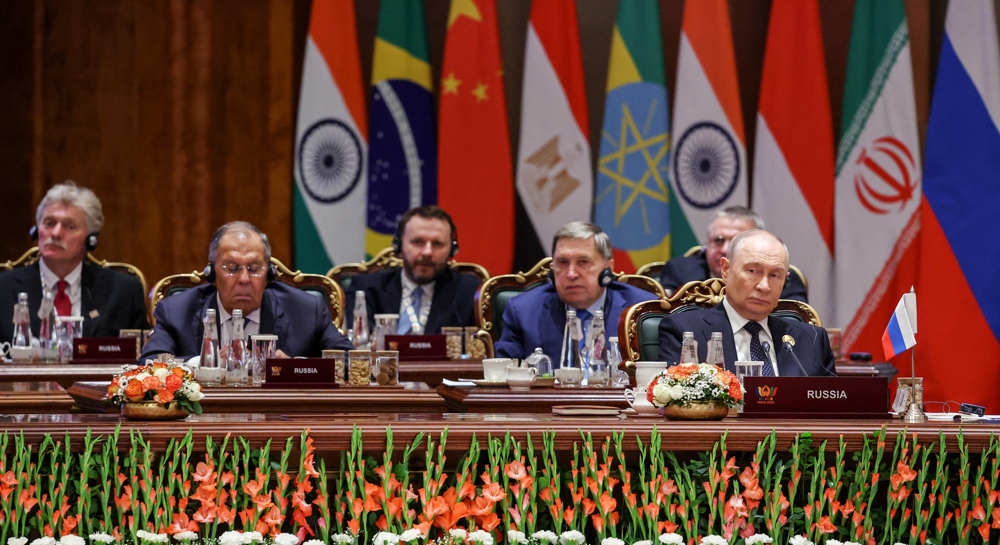
The recent BRICS summit in New Delhi demonstrated that the bloc is not a "post-Western order" in waiting, nor an "ineffective talking shop," but a transitional alliance that is "paving the way for an alternative order" while keeping options open in payment, financing, security and diplomacy, according to an analyst.
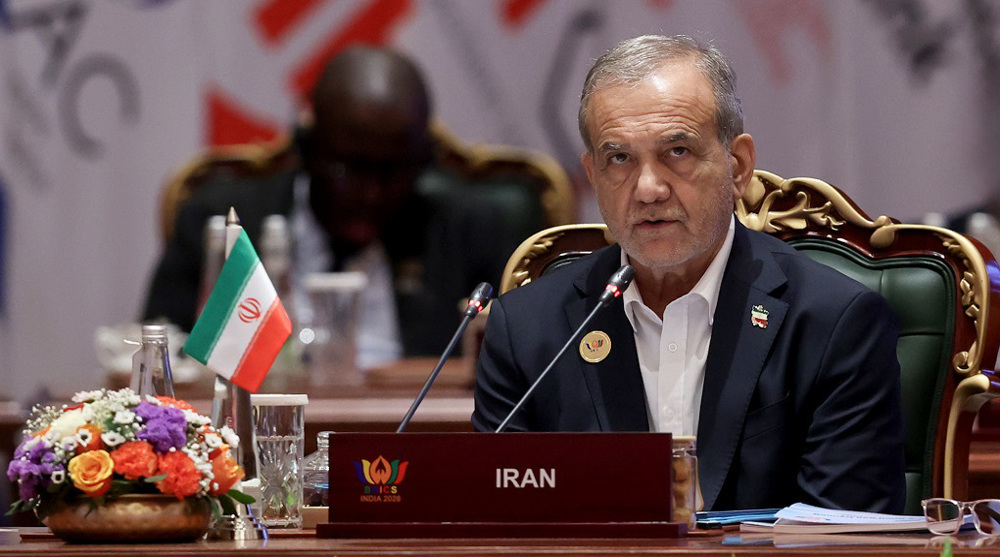
Speaking to the Press TV website, Professor Lorenzo Maria Pacini, an Italian geopolitical analyst and professor of political philosophy, said the true significance of the New Delhi summit lies not in the decisions made, but in the fact that Tehran chose a multilateral forum to speak about the recent wars imposed on it and that the other alliance members allowed it to speak without being drawn into its positions.
"It is a revealing balance, and it is worth examining it closely rather than reducing it to a headline," Pacini said.
He noted that the BRICS countries today account for about half of the world's population and 40 percent of global GDP.
"When a bloc of this size hosts, in the midst of a crisis, the head of a state under attack, the gesture itself matters, regardless of the text that will be signed."
A method, not a failure
On the question of cohesion within an expanded bloc that now includes Iran, Saudi Arabia and the UAE – three countries with sharply differing positions on the war launched by the US and Israel against the Islamic Republic – Pacini stated that BRICS unity does not stem from agreement on the most contentious issues, but from the ability to work around them.
"The proof lies in the very text of the declaration issued at the conclusion of the New Delhi Summit: in paragraph 28, regarding West Asia, the declaration expresses 'deep concern,' calls for 'maximum restraint' and the protection of sovereignty, but does not mention the Strait of Hormuz, does not assign blame to anyone and uses the phrase 'recalling our respective national positions,'" he said.
"That clause is an admission: it says that there is no consensus and that the group has chosen to acknowledge the disagreement rather than force it. It is not a failure; it is the method."
Pacini acknowledged that this method has its limits, noting that at the ministerial meeting in Moscow, BRICS failed to adopt any joint document on Western Asia. In New Delhi, a compromise was reached at the cost of ambiguity, what he described as "very honest political pragmatism" that seeks to advance a mission greater than individual problems.
"A group that includes both Iran and the (Persian) Gulf states that have attacked Iran cannot say anything definitive about that war without splitting apart," he stressed. "The joint statement is 'significant' precisely because it exists despite this: its substance is not what it says about the conflict, but the fact that eleven such divided countries still wanted to sign something together."
In a special joint program by @PressTV and @WIONews, national security expert Tara Kartha emphasized that BRICS must deliver tangible benefits to everyday people while fostering resilience, innovation, and renewed trust in the international system. pic.twitter.com/jXUt67VOkS
— Press TV 🔻 (@PressTV) September 13, 2026
Opportunities, not stabilization
On the Persian Gulf developments triggered by the US-Israeli war on Iran, which analysts have described as the "central fault line" testing BRICS cohesion, Pacini was candid about the bloc's limitations.
"BRICS is not yet a security actor in the technical sense of the term: it has no joint military force, no mandate for mediation and does not conduct major operations. It would be illusory to expect it to 'resolve' the crisis in the Strait of Hormuz," he said.
What BRICS can do – and has done – is offer a platform, resources and expertise, he said. The most concrete outcome of the summit on this front was not in the communiqué, but on the sidelines: the meeting between President Masoud Pezeshkian and Emirati Prince Khaled bin Mohamed, the first known public contact between Tehran and Abu Dhabi since the 40-day war was imposed on the Iranian nation.
"This is the bloc's realistic role: not stabilization, but the creation of opportunities," Pacini said. "In a multilateral forum, two leaders who could not meet bilaterally find themselves in the same room and a channel reopens. It is little compared to expectations and it is a great deal compared to the alternative, which is silence."
He also revealed that BRICS countries are preparing to establish a joint task force – under terms not yet specified – to ensure the success of certain counterterrorism operations, describing it as "the first step toward cooperation between BRICS and the SCO," two partnerships that share many member countries.
"All of Asia, and beyond, must be strong and protected from the aggression of the collective West, which, as the facts demonstrate, shows no sign of halting its expansionist and imperialist ambitions," he told the Press TV website.
Sovereignty under construction
On economic sovereignty and de-dollarization, Pacini described the mechanisms outlined in the New Delhi Declaration – the Payment Task Force for cross-border payments, guarantee mechanisms and the New Development Bank – as "viable as a direction, but not yet as a replacement."
"For a country under comprehensive sanctions like Iran, they offer a breath of fresh air, not a lifeline," he said. "Iranian analysts themselves acknowledge that, as long as international sanctions remain in place, BRICS members cannot fully replace the West as economic partners."
The structural obstacle, he explained, is secondary sanctions. "To provide competitive financing, the New Development Bank needs access to international capital markets, and those markets remain dollar-denominated. As long as lending to Tehran exposes the bank to the risk of being cut off from the dollar system, de-dollarization will remain more of a political goal than an operational tool."
Pacini characterized the current state of affairs as "sovereignty under construction: a work in progress, with solid foundations and a completion date that no one can set."
He added: "What is certain – and what is now known to everyone – is that the 'new global economy' is no longer Western-led, bears no dollar stamp, and will not be dictated by the West, which is dying under the weight of its own arrogance – an arrogance that has caused poverty and destruction in numerous countries in a parasitic and systemically unsustainable manner."
India's balancing act
Pacini identified India's multi-alignment strategy as "the real key to understanding the summit, more so than any statement." New Delhi hosted Iran – which had been attacked – without breaking ties with Israel or irritating Washington, achieving this by toning down the text.
"The caution reflected in paragraph 28 is, first and foremost, an Indian choice. India did not want a communiqué that would force it to take sides, and it used its position as host to avoid that. It is sophisticated diplomacy, and it worked," he said.
But he noted this also reveals the bloc's limitations. "If the country chairing the summit prioritizes not taking sides, then BRICS cannot become the unified anti-hegemonic force that some would like it to be. The very flexibility that allows the group to expand and hold incompatible members together prevents it from speaking with one voice against the West."
As long as India remains central, Pacini argued that BRICS "will resemble insurance against unipolarity more than a war machine against it."
A multipolarism of civilizations
Beyond the economic and security agendas, Pacini highlighted the civilizational significance of the summit, noting that the New Delhi Declaration cites the UN resolution on the "International Day of Dialogue among Civilizations" and invokes the spirit of Bandung.
"It is a detail in the text, but it is its philosophical key: economic and institutional multipolarism ultimately rests on a multipolarism of civilizations," he said.
"Bringing Iran, China, Russia, India, and the nations of the South together in the same room means physically staging this plurality: millennia-old traditions, each with its own conception of order, time, and community, which mutually recognize one another as legitimate without claiming to merge."
He described this as "something more radical and more understated" than an ideological alliance: "the assertion that history has no single center and that no single civilization is authorized to speak for all. This – and not GDP – is what the West finds most difficult to accept about the BRICS phenomenon."
The Empire of Lies
Turning to Western media coverage of the summit, Pacini referred to two narrative tracks: downplaying the summit as "just talk, no binding decisions, a club of autocrats posing for photos together," and alarmism about an "anti-Western axis, new hostile bloc."
"These are two mirror-image oversimplifications, and they serve the same purpose: to prevent us from seeing the phenomenon for what it is," he said. "Internal disagreement over the conflict in Western Asia will be used as proof of the group's irrelevance, when in fact it is proof of its nature – a consortium of sovereign states, not an alliance."
He called on independent media to "read the documents instead of the press releases," to "distinguish between what the bloc can do and what it cannot," and to "report the truth not as an exception, but as the rule."
"The truth, sooner or later, prevails anyway; it cannot be denied," he said. "One of the central characteristics of Western infowarfare is the propagation of lies. The West is the Empire of Lies."
Even regarding BRICS, he added, independent media must be ready to report "concrete facts – sometimes critical and hard to swallow, but necessary to understand what is truly happening."
"The BRICS (members) are a tool for transition; they are not paradise. They are a tool, a phase in history, not the ultimate goal. But they are the path that many countries have chosen to change the course of human history, in this particularly delicate and dangerous phase."
Chabahar Port and the path forward
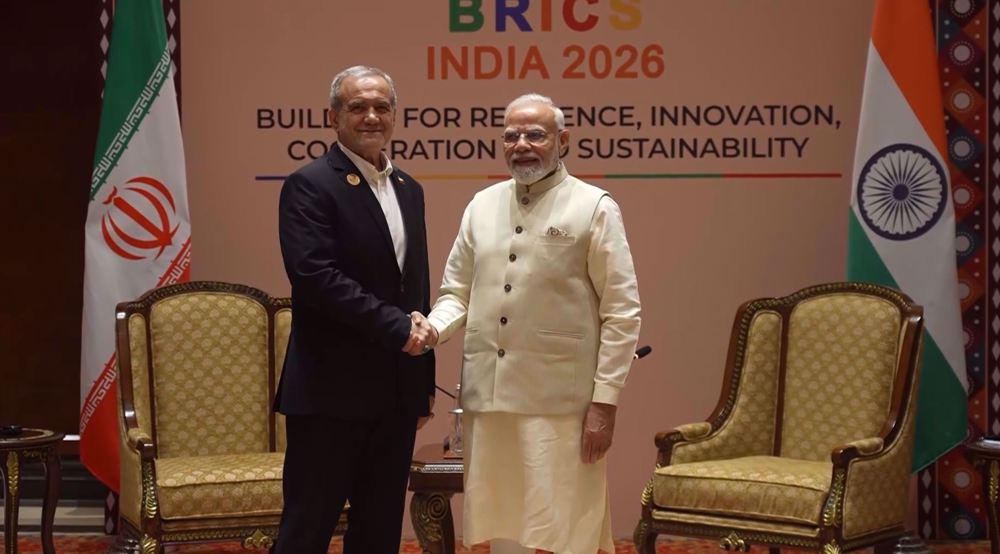
On Iran-India bilateral relations, Pacini pointed to Chabahar Port as the tangible manifestation of cooperation that "survives political fluctuations because it serves enduring interests."
"President Pezeshkian's reference to the shared Persian-Indian heritage is not cultural nostalgia: it is the framework within which a relationship, one with ancient roots and highly relevant utility today, is being negotiated," he told the Press TV website.
He noted, however, that India's strategic balance calls for caution, as every step toward Tehran is closely monitored in Washington.
"The summit provided the right framework: under the multilateral umbrella, a bilateral Modi-Pezeshkian meeting carries less political weight than a state visit and allows the channel to remain open without overexposing India."
Consolidation without rupture
Characterizing the bloc's trajectory, Pacini rejected both the "post-Western order" label as promising too much and the "ineffective talking shop" label as conceding too little.
"The actual trajectory lies somewhere in between, and it is the most interesting to observe: the BRICS are paving the way for an alternative order. They are keeping options open – in payment, financing, security, and diplomacy – that the Western architecture struggles to even comprehend," he said.
"New Delhi points to a clear direction: consolidation without rupture. The bloc is growing, establishing procedures, and overcoming its internal divisions, but it is not rushing things or transforming into an alliance. It is the trajectory of those who hedge against the future, not of those who force it. And in a world where unipolarity is showing cracks but has not collapsed, hedging against the future is already a strategy."
A call for clarity
In his message to the global audience, particularly in the West, Pacini emphasized that BRICS is "not 'against' the West; they are against its monopoly, and they are a tool for building something that is 'other' than the West."
"Brussels and Washington struggle to grasp this distinction, because for thirty years 'international order' and 'Western order' have been synonymous, and anyone who called for a change in the balance of power was viewed as an enemy," he said. "But asking that half of humanity have a voice proportional to its weight is not hostility; it is a call for fairness that the West itself, in its founding documents, claims to uphold," he stated.
Iran's role in New Delhi, he said, illustrates this point well.
"A country that has been attacked sought not revenge but recognition; not a joint military force but a platform and a reopened channel of communication with a hostile neighbor. If the West could interpret this gesture for what it is, it would understand that multipolarity is not the threat it fears, but the reality with which it must learn to coexist."
Pacini concluded with a call for clarity, urging to “stop choosing between contempt and fear, and to begin doing the hardest thing of all: understanding.”
“The world emerging from summits like this one does not ask the West to disappear; it asks the West to no longer be the sole center – not least because Eastern countries, it must be remembered, are not warlike nations; they are not civilizations founded on destruction, oppression, and imperialism, but rather on the construction of a prosperous, shared, peaceful, and successful future," he stressed.
"It is far less than what propaganda leads us to fear," he said, "and it is far more than the West is yet ready to accept."
Iran’s strategic location, energy resources position it as a key player in BRICS alliance: Analyst
Yemeni military advance along Red Sea alters balance of power amid Saudi siege, aggression: Analyst
Iran has good reason to bar IAEA inspectors from returning amid US aggression: Author



Persian Gulf markets plunge as Yemeni forces strike Riyadh
VIDEO | Iran war will break America
Iran Open RoboCup brings together 700 teams and around 2,000 young robotics innovators
VIDEO | News Review: Trump’s move to ban several media outlets from WH draws condemnation
VIDEO | US uses threat of drug cartels to justify Venezuela invasion: Commentator
VIDEO | Police clash with far-right protesters in The Hague
How Iran turned US military and economic aggression into strategic leverage to dictate terms
‘No restraint’ against any aggression: Iran's top military command warns US, its regional allies


 PressTV NEWSLETTER
now
PressTV NEWSLETTER
now
 This makes it easy to access the Press TV website
