Yemeni naval blockade forces six vessels to turn back
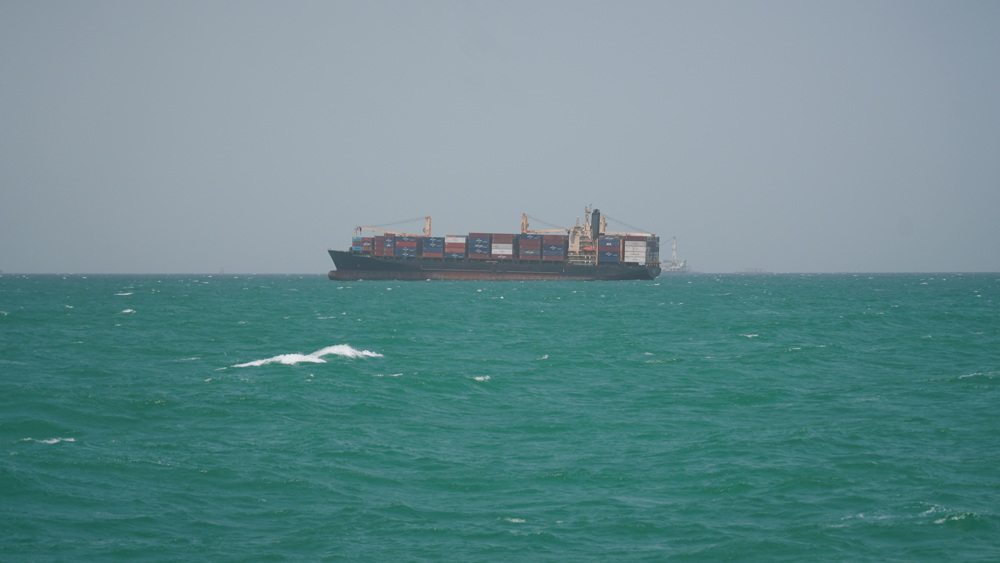
Six ships have turned back in the past 24 hours after Yemen's armed forces imposed a maritime ban on Saudi vessels, a military source confirmed to the Yemeni News Agency (Saba), as the "blockade for blockade" strategy against Riyadh takes effect.
The move came after Yemen's Humanitarian Operations Coordination Center sent a warning to shipping companies, stating that vessels are banned from loading or discharging cargo at any Saudi ports and that violators "may be subject to targeting in any location within the operational reach of the Yemeni Armed Forces."
Shipping data from LSEG confirmed that at least two oil tankers carrying Saudi crude to China and India have been forced to make U-turns in the Red Sea.
The Xin Long Yang, a Very Large Crude Carrier carrying 2 million barrels of Saudi crude loaded at Yanbu, reversed course and headed toward the Suez Canal rather than risk transiting the Bab el-Mandeb Strait.
The smaller tanker Rodos, carrying about 700,000 barrels of Saudi crude for India, also made a U-turn for Suez.
With the Strait of Hormuz transit blocked amid the illegal US's war on Iran, Saudi Arabia's Red Sea port of Yanbu has become the main alternative route for West Asian oil, allowing exports of millions of barrels per day.
The Yemeni armed forces announced the naval blockade on Saudi Arabia on July 20, in response to the kingdom's 12-year siege and aggression against Yemen.
"Vessels calling at Saudi Arabian ports are advised to reconsider transiting the Red Sea and to consider implementing enhanced mitigation measures," British maritime security company Ambrey said, adding that it assessed vessels calling at Saudi ports "were at high risk."
War risk insurance costs have already ticked higher in the past 24 hours, with risk assessments for Saudi ports being re-evaluated, insurance industry sources said.

In recent months, an average of 10 crude tankers have sailed through the Bab el-Mandeb daily.
The Yemeni blockade comes after more than a decade of Saudi-led aggression against Yemen.
Since March 2015, a Saudi-led coalition has imposed an air, land, and sea blockade on Yemen, strangling the country's access to food, fuel, and medicine.
The coalition has conducted over a quarter of a million airstrikes across Yemen, causing widespread devastation and killing tens of thousands of civilians.
The United States has provided critical support throughout the war, including intelligence sharing, logistical assistance, target identification, in-flight refueling of coalition warplanes, and arms sales, making Washington a direct partner in the coalition's actions.
The war has devastated Yemeni society. By 2026, millions faced acute food insecurity, with aid deliveries severely restricted and the healthcare system in collapse.
Despite the immense suffering, the coalition has maintained its chokehold, closing border crossings, grounding humanitarian flights, and ordering ships away from Yemeni ports.

Yemen warns Saudi airstrikes will not go unanswered
Ansarullah rejects Trump’s claim it asked US ‘not to go after them’

Iraqi resistance denies involvement in attacks on Saudi oil infrastructure



VIDEO | News Review: Yemen’s Armed Forces make rapid coastal advance
Yemen stages large-scale missile-and-drone strikes against Saudi base in retaliation for aggression
BRICS declaration reflects Iran’s principled positions on major intl. issues: Senior diplomat
VIDEO | BRICS Summit: No to unilateralism, sanctions
Israeli police officer found dead on Haifa beach
Yemen warns Saudi airstrikes will not go unanswered
Israeli forces raid West Bank communities as settler attacks intensify
VIDEO | Press TV's news headlines






 PressTV NEWSLETTER
now
PressTV NEWSLETTER
now
 This makes it easy to access the Press TV website
