
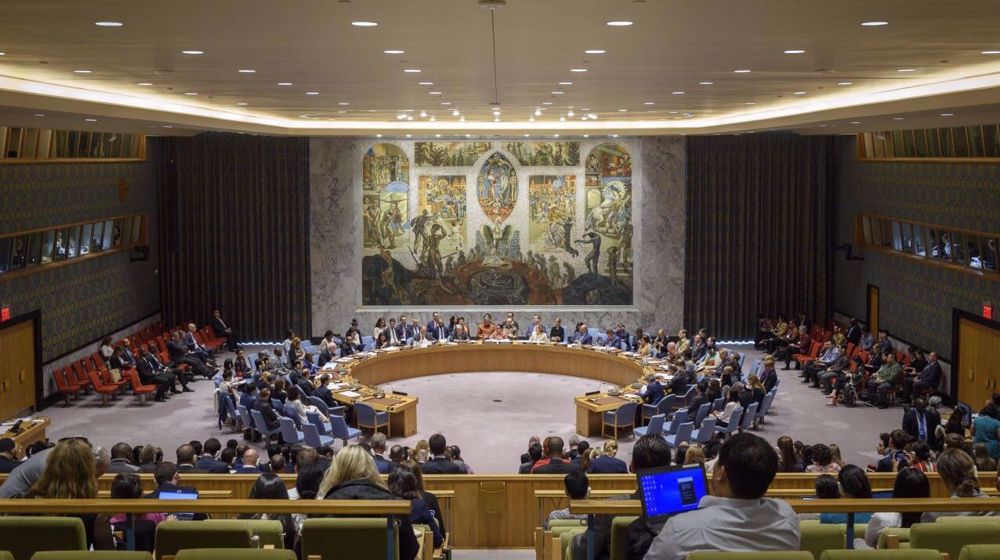
Iran's ambassador to the UN has sharply criticized an emergency Security Council session convened at Bahrain's request, urging the 15-member body to avoid actions that could undermine fragile diplomatic efforts with Washington and warning that Persian Gulf states hosting American bases had made themselves vulnerable targets.
Iran's Permanent Representative to the UN Amir Saeid Iravani told the emergency meeting on Thursday that the council should refrain from convening a session that "risks undermining" ongoing technical talks focused on implementing the Islamabad MoU.
"At a time when technical talks, facilitated by our Pakistani and Qatari brothers, are focused on implementing the Islamabad Memorandum of Understanding, the Council is expected to refrain from convening a meeting that risks undermining these ongoing efforts."
The emergency session was requested by Bahrain following Iranian strikes on US military assets in the kingdom and Kuwait. Bahrain, which hosts the US Navy's Fifth Fleet, has served as a critical launchpad for American aggression against Iran throughout the war.
Bahrain's Foreign Minister Abdullatif bin Rashid Al Zayani told the Council that the kingdom had been subjected to hundreds of attacks since February, which he claimed deliberately targeted civilian infrastructure.
Iravani dismissed the accusations and turned the focus on the root cause of the crisis, namely the US and Israeli military aggression against Iran. He cited UN General Assembly Resolution 3314, which defines as an act of aggression.
"The action of a State in allowing its territory, which it has placed at the disposal of another State, to be used by that other State for perpetrating an act of aggression against a third State," he said.
"There is no doubt that certain regional countries, including Bahrain, facilitated this aggression by allowing their territory and airspace to be used by aggressors; their international responsibility, alongside that of the United States and the Israeli regime, is clear and undeniable," Iravani added.
He warned neighboring Persian Gulf states that "the presence of American bases and forces in their countries not only does not bring security to their countries but also makes those countries vulnerable".
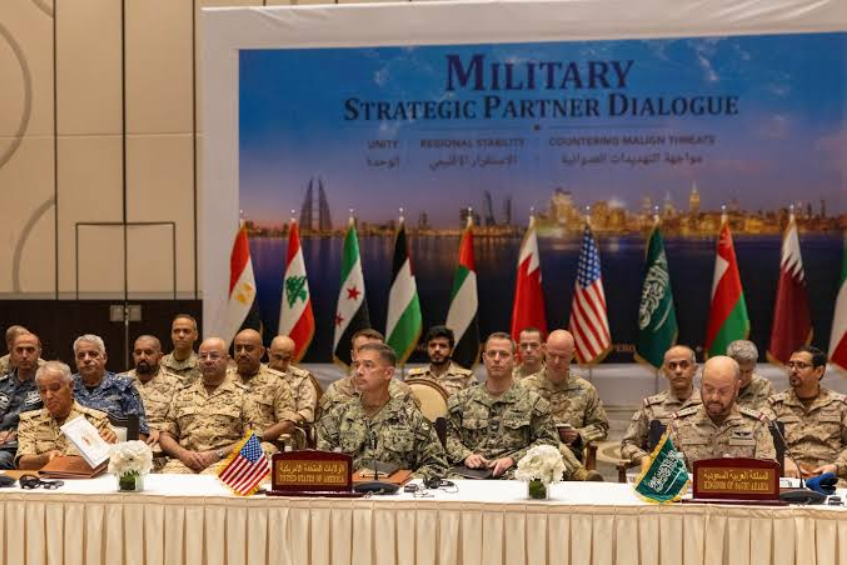
The Security Council session came one day after US Central Command hosted a regional security dialogue in Bahrain, bringing together senior military officials from 12 nations, including Saudi Arabia, the UAE, Qatar, Kuwait, and for the first time, Syria and Lebanon.
Iravani dismissed such gatherings as provocations, stating that the US has "no coastal border in our region. It is not their waters. It is not their neighborhood".
“Defining and concluding a security regime for our region is the exclusive joint responsibility of the neighboring countries, and the US and others, rather than a destructive military presence or interference, need to support regional countries to fulfil such responsibility.”
Despite deep mistrust toward the US caused by its repeated violations and "betrayal of diplomacy," Iravani said Iran engaged in diplomacy in good faith through negotiations facilitated by Pakistan and supported by Qatar, Türkiye, Saudi Arabia, Egypt, China, and Russia, resulting in the signing of the MoU on June 17, 2026.
Iravani reiterated Iran's commitment to implementing the MoU, including provisions concerning the Strait of Hormuz, provided that the United States faithfully fulfills its own obligations.
"Responsibility for the management of maritime navigation through the Strait of Hormuz, including its reopening and all necessary demining operations, rests exclusively with Iran," he said.
He called on all states, particularly the United States, to "respect in good faith the letter and spirit of the MoU and refrain from reinterpreting its content or actions that interfere with its implementation."
Iravani reiterated that the priority must be the full implementation of the MoU and the continuation of negotiations toward a comprehensive deal.
"The Security Council should support this process, encourage full compliance with the MoU, and refrain from provocative actions that could undermine diplomacy or further escalate tensions," he said.
Prior to the conclusion of the session, the representatives of Bahrain and the United States took the floor to make additional statements, accusing Tehran of halting shipping through the Strait of Hormuz and holding the world’s economy hostage.
In response to the United States, Iravani asked: "You were at war with Iran. Why did you prevent international vessels from reaching Iranian ports? You cannot deny the fact."
"The fact is that 70% of Americans and taxpayers oppose your administration's war policy toward Iran," he added.
"In Iran, the reality of the nation-state relationship is also evident in the funeral of the Supreme Leader, which will take place next week. You can close your eyes and ears, but you cannot change the truth."
 This makes it easy to access the Press TV website