

Iran’s Secretary of the Supreme National Security Council (SNSC), Major General Mohsen Rezaei, says the United States will have no role in the future of West Asia, emphasizing that regional nations are now taking charge of their own destinies.
Speaking during a high-level meeting in Tehran with Faeq Zaidan, the Head of Iraq’s Supreme Judicial Council, Rezaei underscored the deep historical and cultural ties between the two nations.
He reiterated Tehran’s steadfast support for a sovereign, strong, and independent Iraq, while asserting a definitive shift in the region's geopolitical landscape.
"The United States will have no place in the future of the region, and the countries of the region will make decisions about their own future," Rezaei stated.
Addressing mutual security concerns, the Iranian security chief stressed the urgent need to clarify the status of and dismantle anti-Iranian militant groups operating along the shared borders of the two countries.
He noted that neutralizing these elements is essential for maintaining long-term stability and safeguarding the interests of both nations.
In response, Zaidan expressed deep appreciation for the Islamic Republic’s continuous political and strategic support for Iraq.
He conveyed warm greetings from Iraqi officials to the Supreme Leader of the Islamic Revolution and paid solemn tribute to the memories of the late Lieutenant General Qasem Soleimani and Abu Mahdi al-Muhandis, the revered architects of Iran-Iraq strategic unity.
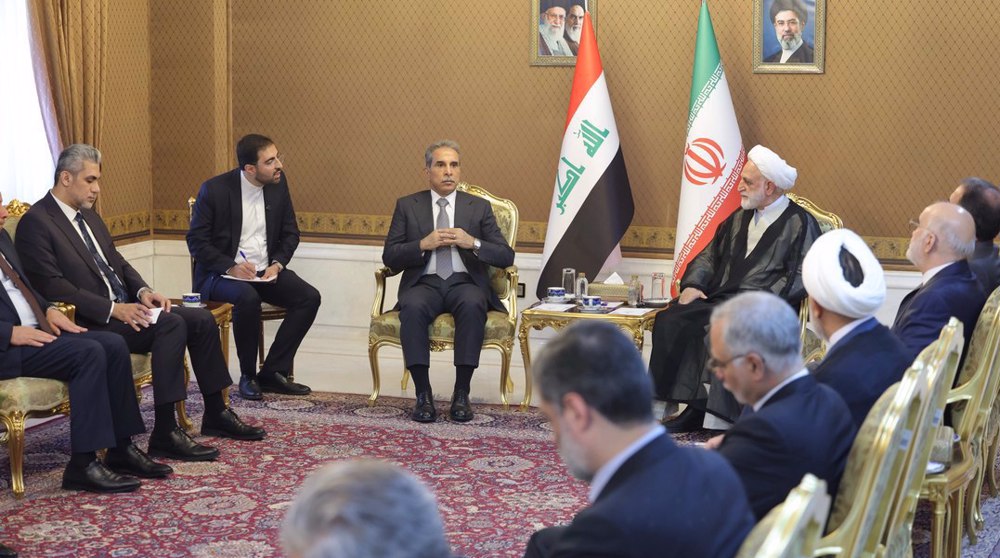
Zaidan also emphasized the mutual commitment to enhancing regional cooperation and ensuring robust, coordinated security measures along the shared borders to prevent any cross-border threats.
The high-level meeting highlights a broader trend of expanding bilateral relations between Tehran and Baghdad.
Earlier on Tuesday, the Head of Iran’s Judiciary, Hojjat al-Islam Gholam Hossein Ejei, told Zaidan in a meeting that cooperation between the two neighboring countries has deepened across all sectors and dimensions.
He highlighted that legal and judicial ties, in particular, have seen significant growth and institutionalization through the signing and active implementation of various bilateral agreements and memorandums of understanding.
 This makes it easy to access the Press TV website