
By Press TV Strategic Analysis Desk
Twelve days after the signing of the Iran-US memorandum of understanding (MoU) to formally end the imposed war, a troubling reality has become increasingly difficult to ignore: none of the principal provisions that were intended to serve as the foundation for negotiations on a final agreement have been implemented.
The result is that the diplomatic process now risks becoming trapped not by disagreements over the substance of a future deal, but by a more fundamental problem, which is the unwillingness of the other side to fulfill the commitments it has already undertaken.
At the heart of this impasse lies Clause 1 of the understanding, arguably the most consequential provision in the entire document.
It was intended to create the minimum strategic conditions necessary for meaningful negotiations by ending the illegal war against Iran and its allies and restoring regional stability. Instead, twelve days later, virtually every essential requirement contained within that clause remains unmet.
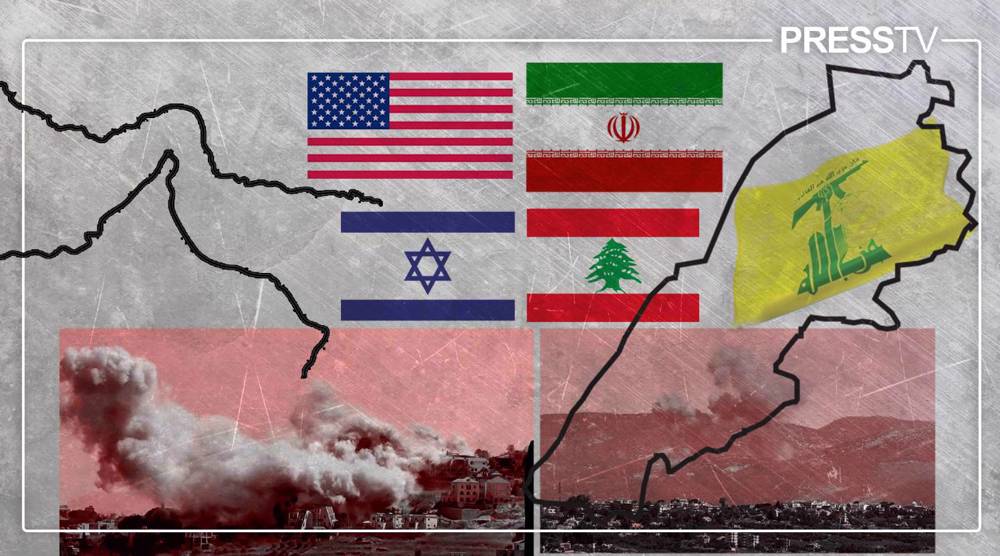
The first and most obvious failure concerns the cessation of US-Israeli military offensives. Clause 1 envisioned an immediate end to all such hostilities on all fronts, from Iran to Lebanon. Yet the attacks continue, and Lebanon remains partially occupied.
Even more significant than the occupation itself is the political messaging accompanying it. Israeli regime officials have repeatedly insisted that their illegal military presence in southern Lebanon will continue for an extended period, signaling that withdrawal is not even under serious consideration at this stage.
This transforms the issue from a temporary delay into a structural obstacle. As long as the occupation of Lebanese territory continues, one of the central political and security conditions underpinning the Iran-US understanding remains fundamentally unfulfilled.
The second failure concerns the continued reliance on coercion. Clause 1 was not limited to ending active military attacks, but it also sought to eliminate the threat or use of force as a tool of political pressure. Yet Washington has continued to employ threatening rhetoric toward Iran while simultaneously carrying out aerial military strikes against Iranian territory.
Such actions undermine the very logic upon which negotiations are supposed to proceed. Diplomacy cannot function as an extension of military pressure while simultaneously claiming to replace it.
✍ Analysis - US saber-rattling and Israeli occupation, aggression in Lebanon hollow out war-ending deal
— Press TV 🔻 (@PressTV) June 17, 2026
By Press TV Strategic Analysis Deskhttps://t.co/JUqDhvrzby
This contradiction raises an increasingly important strategic question: if the commitments required before negotiations have even begun are not being honored, what confidence can exist regarding commitments contained within any future comprehensive agreement?
The enemy's reluctance to honor its commitments is not a byproduct of bureaucratic inertia, but a deliberate tactical choice, one that serves multiple objectives: buying time to rebuild military capabilities, navigating domestic political challenges such as the upcoming US midterm elections and the FIFA World Cup hosting, and fundamentally altering the balance of leverage before substantive negotiations on a final agreement even begin.
President Donald Trump's stated willingness to extend the understanding's 60-day deadline should be read not as flexibility but as a signal that the enemy perceives its interests as better served by prolongation than by implementation.
Iran’s entry into Lebanon's political equation
Perhaps the most strategically significant development since the signing of the MoU has been the creation of the “Lebanon De-escalation Committee” and Iran’s formal membership in it. It is a mechanism that represents one of the most important geopolitical consequences of the recent war and the changing regional power architecture.
For years, Arab countries exercised influence through economic leverage, while Western powers and the United States secured their foothold through military, political, and international pressure. Iran's entry into this club is rooted in regional strategic power.
Iran's formal participation in the committee fundamentally changes the regional equation. For the first time, Iran has acquired an officially recognized political role in shaping Lebanon's future, not because of financial leverage or external sponsorship, but because of the strategic realities produced by the recent war.
In many respects, this represents the institutional recognition of a new regional balance of power, and this development carries implications extending far beyond Lebanon itself.
History demonstrates that regional influence is not granted voluntarily by competitors. It is earned through political credibility, military capability, strategic endurance, and the ability to impose new realities that other actors are ultimately forced to acknowledge.
It also reinforces a broader lesson emerging from the recent war: sustainable regional influence depends upon preserving the very sources of national power that created it. Diplomatic recognition without strategic leverage rarely produces lasting political outcomes.
✍️ Analysis - US carrot-and-stick gambit backfires as Iran asserts Hormuz sovereignty and asymmetric deterrence
— Press TV 🔻 (@PressTV) June 28, 2026
By Press TV Strategic Analysis Deskhttps://t.co/21ieu8mrDi
However, this new role carries immense responsibility as well as risk. Mere membership in the committee, without the active employment of power instruments, would be worse than useless. It would transform Iran from the Resistance Front's principal ally into a channel through which enemy pressure flows.
The philosophy behind Iran's presence on this committee is to defend the rights of the Resistance Front and secure its objectives. If Iranian diplomacy operates without the backing of other strategic instruments, it risks becoming a mechanism for imposing the enemy's conditions, with Iran itself becoming the conduit for that pressure.
This explains why the implementation of Clause 1 cannot depend solely upon negotiations inside committee rooms. It requires the continued availability of broader instruments of national power capable of altering the calculations of the opposing side.
The Strait of Hormuz as the fulcrum of leverage
This is precisely why Iran's principal priorities at present are very prudently chosen. The focus on two objectives – consolidating permanent and effective sovereignty over the Strait of Hormuz and compelling the Zionist regime to accept Iran's equation regarding Lebanon – are not separate goals but complementary elements of a single strategic vision.
If the US expects negotiations on sanctions relief and the nuclear issue to advance, it must first ensure that its Zionist proxy fulfills the obligations already embedded within Clause 1 of the Tehran-Washington understanding. Otherwise, the diplomatic process risks becoming disconnected from the regional realities that made the MoU possible in the first place.
The Strait of Hormuz is the instrument that makes this equation enforceable. Iran's decisive military response to the regime following the attack on the southern suburbs of Beirut (Dahiyeh) demonstrated that the only viable way to consolidate the authority gained from the recent war is through the use of strategic instruments such as the Strait of Hormuz, combined with decisive and effective military action.
The closure of the Strait during the war created leverage that gave the Islamic Republic significant power. It will not hesitate to consider closing it again if it deems it necessary.
Iran's ability to influence maritime traffic through the strategic chokepoint provides leverage that no amount of diplomatic maneuvering can replicate. It is the material basis for Iran's claim to a seat at the table of regional superpowers, and it is the instrument through which Iran can compel the enemy to take its demands seriously.
A reciprocal strategy of delay
The enemy's lack of urgency and seriousness in implementing Clause 1 of the memorandum demands a proportionate response. Iran possesses many instruments with which to pressure the enemy into fulfilling the conditions underlined in the MoU.
These range from setting deadlines for specific actions, such as initiating the process of withdrawing from the Nuclear Non-Proliferation Treaty (NPT), to making Iran's own commitments under the understanding contingent upon reciprocal action.
✍️ Analysis - Unity of arenas: Clause 1 of Iran-US MoU and future of Iran’s regional deterrence architecture
— Press TV 🔻 (@PressTV) June 24, 2026
By Press TV Strategic Analysis Deskhttps://t.co/iD63wuczOU
One option is adopting a policy of reciprocal action in the sense of delay in response to delay. For as long as the Zionist regime delays withdrawing from Lebanon, Iran will likewise suspend or restrict its own measures regarding maritime traffic through the Strait of Hormuz.
This is not merely tit-for-tat tactics but a strategic communication that the enemy's time-buying tactics have a cost, and that Iran's patience is not infinite. Such an approach would mirror the pace of compliance rather than allowing asymmetrical implementation to emerge.
The proposed agreement already includes provisions allowing Iran to withdraw if commitments are not met, including breaches of the ceasefire, failure to provide access to Iranian frozen funds, or failure to lift the illegal maritime blockade.
Iran’s Foreign Minister Abbas Araghchi has been explicit in saying that if the provisions of the memorandum are not fulfilled, Iran will refuse to proceed with a final agreement. The 60-day window is not a grace period for the enemy to continue its delaying tactics but a compliance test, and Iran will block any loopholes for non-compliance.
The deeper strategic logic
Ultimately, Iran's ability to compel Israel to withdraw from southern Lebanon will serve as the principal indicator and benchmark for the continuation of the strategic contest between Iran and the United States. This is not merely a Lebanese issue but fundamentally an Iranian issue that reflects the country’s growing power and authority, and it is critically important for safeguarding Iran's rights and consolidating its strategic victory.
The enemy's calculation that the benefits of prolongation of the MoU’s implementation exceed the costs must be changed. Iran's effective performance in its new regional role can continue only by relying on its strategic power and its constituent elements.
The philosophy behind Iran's membership in the Lebanon De-escalation Committee is to defend the rights of the Resistance Front, which won’t happen through membership alone, but through the credible employment of all instruments of its power.
The next phase will be decisive. The enemy is testing whether Iran's new regional role is substantive or symbolic, whether its strategic power is real or rhetorical. Iran's response will determine not only the fate of the understanding and the final agreement but the entire trajectory of regional power dynamics for the coming decade.
 This makes it easy to access the Press TV website