Strategic miscalculation: How US violations of MoU bolster Iran's Hormuz leverage and regional deterrence
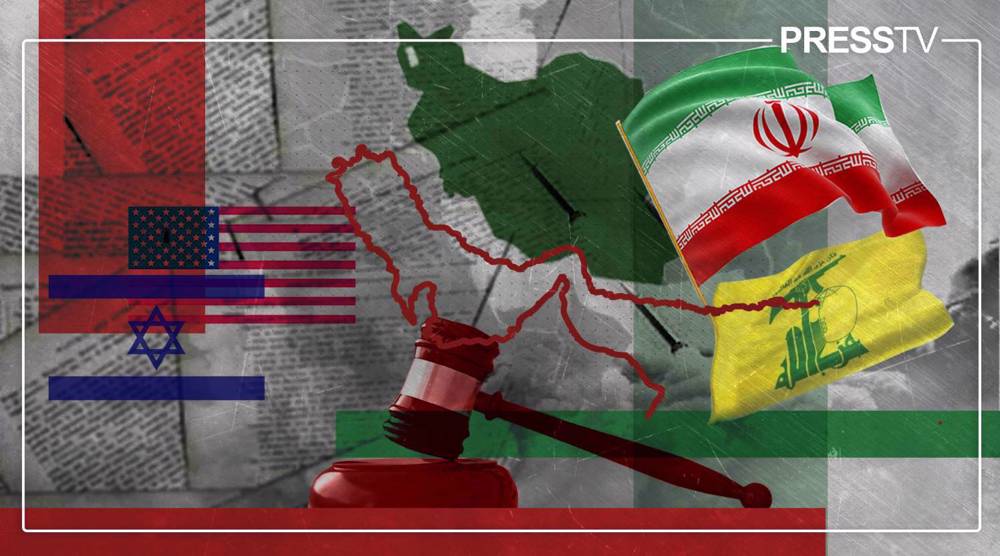
By Press TV Strategic Analysis Desk
Barely weeks after affixing its signature to a war-ending memorandum of understanding (MoU) with Tehran, Washington carried out another act of unprovoked military aggression on Iranian soil on Friday night, in flagrant violation of the provisions of the understanding.
The attack, which targeted Sirik Island in southern Hormozgan province, is the latest in a series of provocative military actions that drew swift and decisive Iranian retaliation.
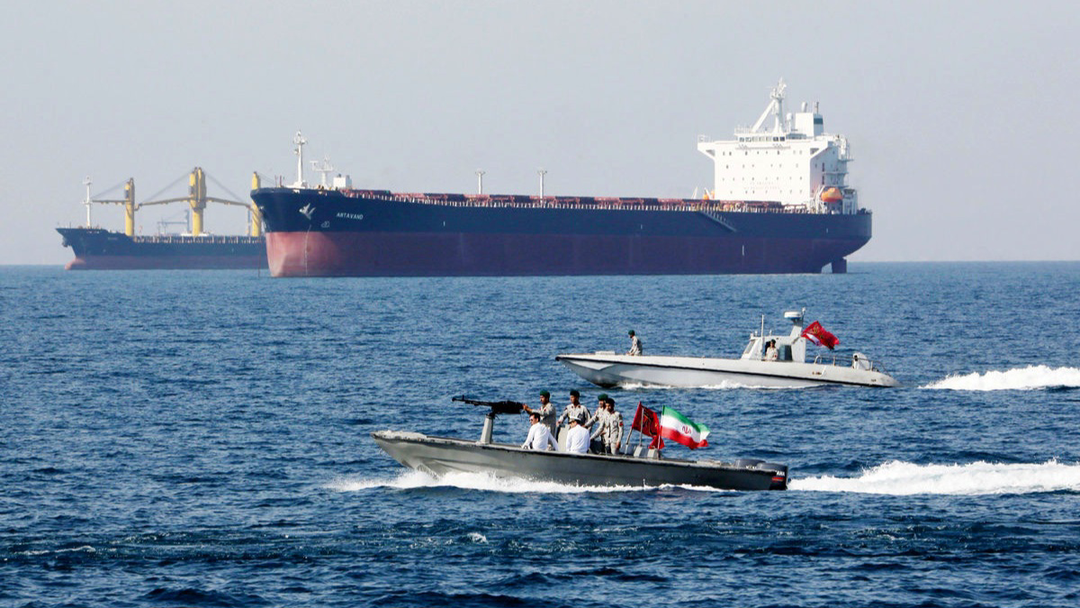
The pretext for the latest aggression was to mount a challenge to Iran's lawful enforcement of sovereignty over the Strait of Hormuz, particularly as US naval forces continue their dangerous pattern of maritime banditry in regional waters.
At its core, this latest act of military aggression betrays a deeper strategic malaise: Washington's inability to reconcile itself with Iran's undisputed command of the world's most vital chokepoint, compelling it to repudiate its own diplomatic commitments in a desperate bid to reverse an irreversible geopolitical shift.
Strait of Hormuz: Iran's strategic trump card
For decades, the Strait of Hormuz was seen as a vulnerability for Iran. Despite its geographic advantages, Iran's lack of full control over the strategic waterway allowed hostile foreign powers to establish military bases in the Persian Gulf, thereby threatening Iran's security and territorial integrity.
The third imposed war, during which enemy bases in the Persian Gulf region served as launching pads for unprovoked aggression against the Iranian people, changed the dynamics entirely as Iranian armed forces moved to dictate new rules of engagement.
Iran's effective control over the Strait of Hormuz became one of the war's greatest achievements, a strategic asset that transformed Iran into a regional superpower.
The war-ending memorandum signed by the Iranian and American presidents codified this reality. Clause 5 explicitly requires Iran, through its own arrangements, to restore maritime traffic to pre-war levels within 30 days, while establishing a joint mechanism with Oman for the future administration of the strait, effectively ending American maritime banditry.
For Iran, the Strait is not merely a waterway but the best instrument for guaranteeing the other side's fulfillment of its commitments. Without effective control over the Strait, Iran's leverage in any future negotiations would be severely diminished.
It also serves as a guarantee of Iran's long-term security. The Strait provides Iran with a sustainable means of ensuring its own security, obtaining compensation and reparations for recent war damages, and securing the country's required resources.
Having been absent for years, Iran's effective and legitimate control over the Strait is now the demand of an overwhelming majority of the Iranian people and the country's Leader, making it a symbol of Iran's sovereignty.
This is why Iran will not, under any circumstances, relinquish its exercise of sovereignty over the Strait, even at the cost of renewed military confrontation.
✍ Analysis - Iran-US war-ending MoU codifies Tehran's strategic leverage, cementing its status as regional superpower
— Press TV 🔻 (@PressTV) June 18, 2026
By Press TV Strategic Analysis Deskhttps://t.co/wCg8Z2Z8Um
Last night's attack: A dangerous violation of the MoU by Americans
The US attack on Iranian coastal areas on Friday night was not a defensive measure, as the American president would have the world believe. It was a deliberate provocation, designed to challenge Iran's legal and effective control over the strategic waterway and to undermine the new order that emerged from the recent failed war.
The chain of events is clear:
Oman's unilateral action: Under US pressure, Oman sought to open a route alongside its own coastline, allowing vessels to pass free of tolls in direct contravention of Clause 5 of the Iran-US memorandum, which requires a joint mechanism with Iran.
Iran's lawful protest: Iran protested Oman's unilateral action and took military measures to prevent the passage of vessels deemed to be in violation of the new arrangements.
The US response: Claiming that Iran's action constituted a violation of the understanding, the United States launched illegal attacks on Iranian territory.
At every stage, the provocations have originated from the United States and its allies.
Washington is struggling to accept Iran's exercise of sovereignty over the Strait and seeks to disrupt the new balance of power and new rules of engagement. The latest aggression was an attempt to reverse the outcome of the war by force.
Iran's legal and strategic position is unassailable
Iran's interpretation of Clause 5 of the MoU has now become evident in practice. Through its decisive military response to last night's US military aggression, and earlier through the necessary detention of vessels deemed to be in violation, Iran has demonstrated that it understands Clause 5 only as requiring the Strait to be reopened under Iranian arrangements. Any other arrangement, such as Oman's unilateral route, is illegal and will be treated as such by the Iranian armed forces, who remain at peak alertness.
The United States cannot claim that Iran violated the memorandum when it was Washington that first breached it, by exerting pressure on Oman to announce a unilateral action and then launching military aggression against Iran.
Under Clause 1 of the memorandum, both parties are prohibited from using threats or force against one another. Iran's seizure of violating vessels constituted neither any threat nor any use of force against the US. The attack, therefore, has no legal or strategic justification.
✍️ Analysis - From battlefield superiority to strategic leverage: Iran’s new post-war doctrine takes shape
— Press TV 🔻 (@PressTV) June 15, 2026
By Press TV Strategic Analysis Deskhttps://t.co/QHmgtsFazC
The parallel track: Lebanon, Hezbollah, and the Resistance Front
Parallel to the Iran-US war-ending MoU, the United States pursued a separate track: negotiating directly with the Israeli regime and the deeply unpopular Lebanese government to disarm Hezbollah and legitimize Israel's continued occupation of southern Lebanon.
This was a calculated attempt to undermine the massively popular Resistance Front while pretending to honor the Iran-US agreement. Under Clause 1 of the MoU, both parties are obligated to guarantee Lebanon's territorial integrity and sovereignty.
But the United States has deliberately facilitated a distorted interpretation of this clause.
The US and Israeli interpretation that the occupation is temporary and therefore does not violate Lebanon's territorial integrity is the main issue. Under this interpretation, the illegal occupation could continue indefinitely, with Israel withdrawing only after Hezbollah is disarmed and the security of settlers in northern occupied territories is guaranteed.
Another issue is the interpretation that guaranteeing Lebanon's sovereignty means accepting whatever the Lebanese government decides. This would imply that since the Lebanese government has agreed to Israel's continued occupation, Iran and Hezbollah should also submit to this decision.
Both deviations are false. The US war machine deliberately arranged the agreement between the Lebanese government and the Israeli regime to create these distortions.
The unified Resistance Front: A strategic necessity
The equation of the unified Resistance Front is one of Iran's most valuable strategic assets. It ensures that aggression against one member of the Axis is met with resistance by all, making the costs of war unbearable for the enemy.
The United States and Israel understand this, which is why they are seeking to break the front through other means. Iran must firmly insist on Clause 1 and its obvious and natural interpretation. Clause 13 is clear: nuclear negotiations will commence only if the five clauses, especially Clause 1, are implemented or are in the process of implementation.
Iran must use this leverage to obtain from the US a timetable for Israel's withdrawal from southern Lebanon and adjust the various stages of the negotiations accordingly.
The war against Lebanon cannot end simply because the Lebanese government has signed a bogus agreement with the Israeli regime. It must end only when Israel withdraws from the occupied territories and the Resistance Front's integrity is guaranteed.
This is not merely a diplomatic demand but a strategic necessity. Any agreement that legitimizes occupation or disarms the Resistance is a defeat disguised as a settlement.
✍ Analysis - ‘Unified Resistance Front’: Iran recasts region’s balance of power and security paradigm with Operation Nasr
— Press TV 🔻 (@PressTV) June 9, 2026
By Press TV Strategic Analysis Desk https://t.co/9WbT24rCHr
The way forward: Resolute, decisive and uncompromising
The events of the past twenty-four hours have once again clarified the high stakes. The US is seeking to undermine the new order in the Strait of Hormuz and to break the Resistance Front through parallel diplomatic tracks. Iran must respond with clarity and firmness.
Iran must continue, more seriously and more decisively than before, its strict supervision of traffic through the Strait of Hormuz and prevent any violations with full force. The Strait is Iran's sovereign right and its best guarantee of future security and economic prosperity.
No US pressure, no threats, and no attacks will change that.
On Lebanon, Iran must insist on the full implementation of Clause 1 of the memorandum and reject any interpretation that legitimizes illegal occupation or disarmament. The unity of the Resistance Front is not negotiable at any cost.
Iran must demand a timetable for Israel's military withdrawal from southern Lebanon during the 60-day negotiation period and make the progress of negotiations contingent on the fulfillment of that timetable.
Iran must also make it clear that it will not accept any deviation from the memorandum. Americans cannot violate Clause 1 while claiming to honor the MoU.
If Washington persists in its provocations, Iran must be prepared to escalate its response to demonstrate that its commitments are firm and its sovereignty is non-negotiable.
New front will open if Iran is attacked again, Leader’s advisor warns
Iran, resistance forces to deliver ‘devastating’ response to any threat: Top cmdr.
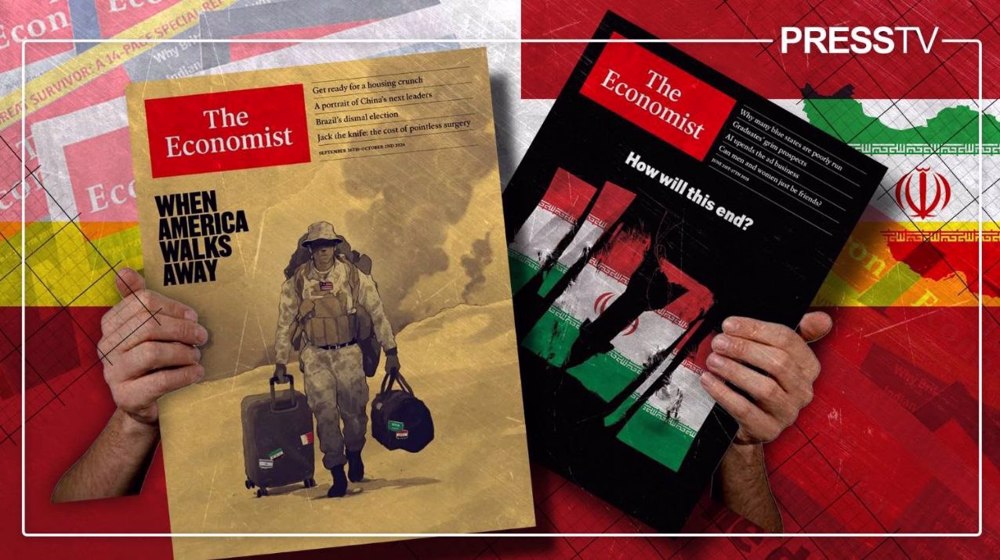
From ‘How Will This End For Iran’ to ‘When America Walks Away’: A tale of two Economist covers



VIDEO | Yemenis rally behind Ansarullah amid recent military gains
VIDEO | ‘Attrition, low morale deepen strain on US troops amid war on Iran,’ analyst says
Iraqi resistance group rejects disarmament, vows to maintain support for Lebanon
Israeli attacks kill six Palestinians in Gaza as ceasefire violations mount
Iran warns regional states of Israel’s malicious intents following reports of Netanyahu UAE visit
VIDEO | IRGC letter to American people
Army spox: Saudi Arabia launches over 30 airstrikes across Yemen in 24 hours
VIDEO | News Review: Israel settlement expansion



 PressTV NEWSLETTER
now
PressTV NEWSLETTER
now
 This makes it easy to access the Press TV website
