
By Mina Mosallanejad
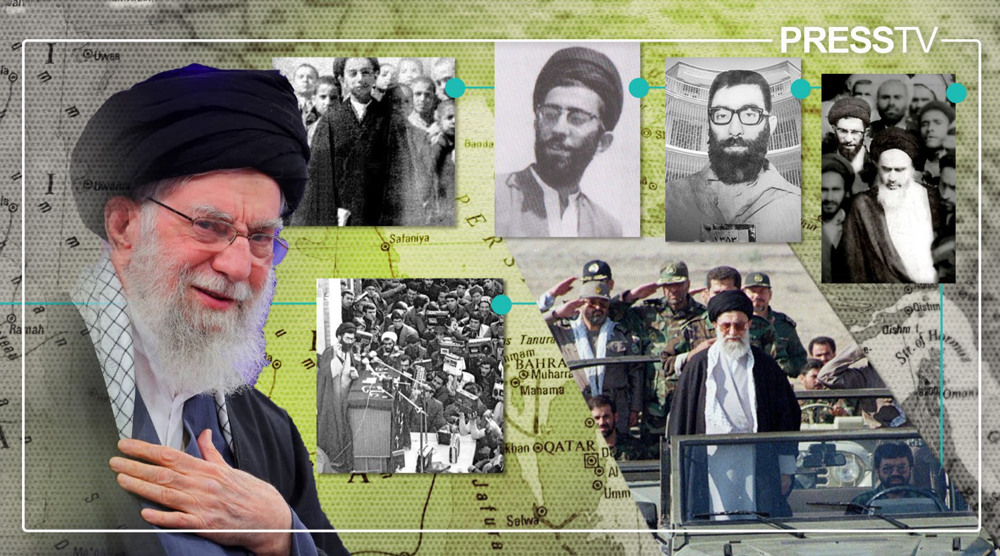
Imam Seyyed Ali Khamenei, the martyred Leader of the Islamic Revolution, was one of the most influential and distinguished figures in the contemporary Muslim world, whose life, leadership, and enduring legacy secured him an immortal place in history.
His life encompassed some of the most defining chapters of modern Iranian and Islamic history, from the formative years of the Islamic Revolution and the establishment of the post-revolution Islamic Republic to the eight-year Imposed War and nearly four decades of leadership during a period marked by profound political, economic, scientific, cultural, and regional transformation.
Born into a family of eminent religious scholars in the holy city of Mashhad, he pursued traditional Islamic education from an early age while cultivating a deep passion for literature, history, poetry, and intellectual thought. These scholarly and cultural foundations would later shape both his political vision and his approach to the country’s leadership.
During the 1960s and 1970s, he emerged as an active participant in the revolutionary movement led by Imam Khomeini, the late founder of the Islamic Revolution, against the West-backed unpopular Pahlavi monarchy, which resulted in repeated arrests, imprisonment, interrogation, and periods of internal exile before the victory of the Islamic Revolution in 1979.
Following the establishment of the Islamic Republic, Ayatollah Khamenei assumed a series of senior leadership positions, including membership of the Islamic Revolutionary Council, Friday Prayer Leader of Tehran, Representative of Imam Khomeini on the Supreme Defense Council, and two consecutive terms as President of Iran during the 1980s Imposed War, playing a central role in guiding the country through one of the most challenging periods in its modern history.
In June 1989, following the passing of Imam Khomeini, he was elected by the Assembly of Experts as the new Leader of the Islamic Republic of Iran, a position he held for nearly four decades. Throughout his period, he presided over a period of far-reaching developments across multiple fields while shaping Iran's domestic trajectory and regional and global role.
He was martyred on February 28, 2026, following an unprovoked and illegal military aggression by the Israeli regime and the United States, bringing to a close a lifetime dedicated to the ideals of the Islamic Revolution and the pursuit of independence, dignity, and progress of the great Iranian nation.
This biography traces the major stages of his remarkable life – from his childhood and religious education to his revolutionary activism, public service, and decades of national leadership – highlighting the principal events, responsibilities, milestones, and achievements documented in the official account of his illustrious life, a life of purpose.
Childhood and family background
Imam Khamenei was born in April 1939 in the holy city of Mashhad, in northeastern Iran.
He was the second son of Hojjat al-Islam Sayyed Javad Hosseini Khamenei, a respected and distinguished scholar of Islamic jurisprudence who devoted his life to teaching, religious guidance, and scholarship.
Despite his esteemed position within the community, Sayyed Javad Khamenei consistently chose a life of modesty and deliberately avoided material comfort. Even after the Islamic Revolution, when members of his family assumed senior public office, he continued to live with the same simplicity that had defined his earlier years.
Imam Khomeini once referred to him as “a pious and committed scholar.”
Raised in modest circumstances, Imam Khamenei spent his early childhood in one of Mashhad's traditional neighborhoods, where his family's financial circumstances reflected the humble lifestyle commonly associated with many religious scholars of the time.
Those formative experiences left a lasting impression on him and profoundly shaped his outlook throughout his life.
Recalling those years, he once said, “My father was a well-known cleric, yet we lived in great simplicity. There were nights when there was no dinner at home, and my mother would prepare whatever little she could. Sometimes all we had was bread and raisins.”
Describing the family's first home, he remembered, “Until I was four or five years old, we lived in a small house with only one room and a dark basement. Whenever guests came to see my father, our family would move downstairs until they left. Later, the neighboring property was purchased, and the house was expanded to three rooms.”

These recollections remained among his most frequently cited reflections on the virtues of simplicity, perseverance, contentment, and gratitude, values that would continue to shape both his personal life and public leadership.
His mother, Banu Mirdamadi, played an equally significant role in his upbringing. Well educated in Qur'anic studies, Islamic traditions, Persian literature, and history, she cultivated a deep appreciation for learning within the family and actively encouraged her children's intellectual and spiritual development.
Imam Khamenei has spoken warmly of her, “My mother was highly educated, well-read, fond of poetry and literature, and deeply familiar with both the Qur’an and Hafez. When we were children, she would gather us around her, recite the Qur’an beautifully, and explain the stories of the prophets. The first time I learned about Prophet Moses, Prophet Abraham, and many other prophets was from my mother.”
She also stood steadfastly alongside her sons, particularly Imam Khamenei, in the struggle against the Pahlavi regime, sharing the hardships and sacrifices that accompanied their revolutionary activities.
Throughout his life, the martyred Leader always credited both of his parents with shaping his religious education, moral character, intellectual curiosity, and lifelong commitment to scholarship, faith, and service.
Education and intellectual formation
Imam Khamenei began learning and memorizing the Holy Qur'an at the tender age of four before entering primary school in the city of Mashhad.
Alongside his formal education, he pursued traditional Islamic studies under the guidance of his scholar father, gradually advancing through the disciplines of Arabic literature, Islamic jurisprudence, logic, philosophy, and theology.
His early scholarly training laid the intellectual foundations for a lifelong engagement with Islamic thought and religious scholarship that defines one part of his legacy.
Seeking higher religious education, he later continued his studies in the seminaries of Najaf and, more extensively, in Qom, where he attended the lectures of several of the most eminent scholars of the era. Among his most influential teachers were Imam Khomeini, Grand Ayatollah Hossein Borujerdi, and Allameh Mohammad Hossein Tabataba'i, whose teachings played a significant role in shaping his intellectual and religious outlook.
In the mid-1960s, he returned to Mashhad to care for his aging father while continuing his advanced studies, teaching, and scholarly activities. His Qur'anic interpretation sessions soon attracted large audiences, particularly students and young intellectuals, who were drawn to an approach that combined the depth of traditional Islamic scholarship with thoughtful engagement with contemporary social, political, and intellectual questions.
Drawing directly from the verses of the Holy Qur'an, he extracted and articulated the fundamental intellectual principles of Islam and Islamic thought, presenting them as a comprehensive framework for understanding society, governance, and the responsibilities of the Muslim community.
Through these lessons, he sought to strengthen the ideological foundations of the struggle against the tyrannical West-backed Pahlavi regime by demonstrating that Islam offered not merely a religious creed but a complete and practical system for public life. Participants in his classes were naturally led to the conclusion that an Islamic government founded upon the teachings and values of Islam was both necessary and inevitable.
One of the principal aims of these sessions was to communicate the intellectual and ideological foundations of the Islamic Revolution to society while cultivating a generation of students equipped to understand and advance its principles.
In 1968, he also began offering specialized Qur'anic courses for seminarians. These lectures continued until 1977, when they were interrupted by his arrest and subsequent exile to Iranshahr. His Qur'anic interpretation sessions resumed during part of his presidency and continued in the years that followed, remaining one of the defining features of his scholarly and intellectual contributions.

Literary interests
Alongside his religious studies, Imam Khamenei developed a deep and lifelong passion for literature and intellectual inquiry. From an early age, he immersed himself in both the masterpieces of classical Persian poetry and the works of modern literature, developing a wide-ranging interest in history, literary criticism, philosophy, and world literature.
His deep appreciation for literary culture led him to become a regular participant in literary gatherings, where he maintained close relationships with many of Iran's leading poets, writers, and intellectuals. He also composed poetry under the pen name “Amin,” reflecting a creative dimension that complemented his scholarly and religious pursuits.
His intellectual interests extended well beyond poetry to encompass translation, authorship, and the dissemination of Islamic thought through other written works. Before the Islamic Revolution, he authored and translated several important works and wrote extensively on Islamic thought, culture, and contemporary social and political issues, contributing to the broader intellectual discourse of the time.
In the years that followed, many of his speeches, lectures, sermons, interviews, and written works were compiled into books and translated into numerous languages, extending the reach of his ideas to audiences across the Muslim world and beyond.
His body of work is so vast and diverse that a dedicated department within his office is devoted exclusively to preserving, publishing, and managing his literary legacy, encompassing books he authored, works he translated, and hundreds of speeches, lectures, and writings compiled into books in Persian and numerous other languages.
For Imam Khamenei, literature was never merely an artistic pursuit. Rather, he regarded it as an indispensable instrument for preserving cultural identity, nurturing intellectual and spiritual growth, enriching the life of society, and conveying enduring ideas and values across generations.
The beginning of political activism
Imam Khamenei's political consciousness began to take shape during his formative years of religious study, influenced both by his family's scholarly background and by the rapidly evolving political climate in Iran at the time.
Among the figures who left a lasting impression on him in Mashhad was Sayyed Mojtaba Navvab Safavi, whose passionate speeches against the Pahlavi dictatorship and unwavering commitment to Islamic ideals inspired many young seminarians of the era.
Imam Khamenei later recalled that his first meeting with Navvab Safavi marked a turning point in his life, awakening his interest in political and social affairs and deepening his sense of responsibility toward the future of the Muslim community.
His acquaintance with Imam Khomeini in the late 1950s proved even more consequential. As Imam Khomeini's opposition to the Pahlavi monarchy gathered momentum in the early 1960s, Imam Khamenei emerged as one of the young and energetic clerics who actively supported and promoted the revolutionary movement.
The launch of the Islamic Movement in 1962 marked the beginning of his lifelong involvement in revolutionary activism. From that point onward, religious scholarship and political engagement became inseparable dimensions of his public life, each reinforcing the other in pursuit of what he regarded as the Islamic responsibilities of scholars and society.
He took an active role in religious and political activities aimed at raising public awareness, mobilizing support for the anti-Pahlavi movement, and conveying Imam Khomeini's message to people and communities across the country, laying the foundations for the revolutionary role he would play in the years and decades that followed.

Imprisonment, surveillance, and exile
Imam Khamenei's growing political and religious activities soon attracted the attention of the dictatorial Pahlavi regime's notorious security apparatus.
In 1963, shortly before the historic uprising of 15 Khordad, Imam Khomeini entrusted him with delivering messages to leading scholars and religious figures across Khorasan, encouraging them to inform the public about the regime's draconian pro-West policies and mobilize support for the Islamic Movement.
While carrying out this mission, he traveled to Birjand, where he delivered a series of speeches criticizing the monarchy and condemning the regime's attack on the Feyzieh Seminary. He was arrested shortly afterward, marking the first of several periods of imprisonment that would shape the next fifteen years of his life.
His incarceration did not diminish his resolve in any way. Returning to Mashhad, he resumed teaching, preaching, and organizing religious gatherings while maintaining close contact with other supporters of Imam Khomeini and continuing his efforts to advance the movement.
Throughout the 1960s and 1970s, he was repeatedly arrested, interrogated, imprisoned, and placed under constant surveillance. With each successive detention, the restrictions imposed upon him became increasingly severe, yet they failed to halt his activities.
Whenever released, he returned to delivering lectures, organizing educational programs, and encouraging greater public participation in the Islamic Movement, demonstrating an unwavering commitment despite mounting pressure from the authorities.
His longest and most gruelling imprisonment came in the mid-1970s, when he spent months in solitary confinement and was denied contact with his family. Reflecting on those years, he later described them as among the most difficult experiences of his life, recalling the hardships of prolonged isolation and the pressures imposed by the regime.
Following his release, the authorities prohibited him from delivering sermons, leading prayers, teaching, or even holding Qur'anic interpretation sessions in his own home.
Nevertheless, he continued many of these activities discreetly, preserving his close ties with supporters of Imam Khomeini and ensuring that his religious, educational, and revolutionary work continued despite the regime's efforts to silence him.
Organizing the Islamic Movement
Beyond his public speeches and educational activities, Imam Khamenei played an active role in the organizational efforts that sustained the Islamic Movement following Imam Khomeini's exile.
He participated in the formation of one of the earliest coordinated clerical groups in the holy city of Qom, later known as the “Group of Eleven,” which was established to preserve communication among revolutionary scholars and ensure the continuity of the movement despite intensifying government repression.
The organization sought to strengthen cooperation among leading religious figures while providing a structured framework for political, religious, and intellectual activities.
Its members believed that an organized structure was essential to safeguarding the movement from being dismantled by the regime's military apparatus.
As such, the group is widely regarded as one of the first clandestine organizations to emerge within the Qom seminary, laying important organizational foundations for the revolutionary movement in the years that followed.
He also took part in early initiatives that later contributed to the establishment of the Society of Seminary Teachers of Qom, reflecting his conviction that the religious seminaries should play an active and constructive role in addressing the country's political, social, and cultural challenges rather than remaining confined solely to religious instruction.
🔸The Leader's Story 🔸
— Press TV Documentary (@presstvdoc) July 2, 2026
The Spark That Changed Everything
From resisting Reza Shah's forced cultural reforms to a life-changing meeting with Nawab Safavi, this chapter explores how a young seminarian embraced revolutionary activism. pic.twitter.com/xFpPyR18r4
At the same time, his Qur'anic interpretation sessions in Mashhad attracted steadily growing audiences, particularly university students, young intellectuals, seminarians, and members of the emerging revolutionary generation, many of whom were drawn to his ability to connect classical Islamic teachings with contemporary political and social realities.
Throughout the late 1960s and early 1970s, Imam Khamenei continued to travel extensively across Iran despite repeated arrests, constant surveillance, and increasingly restrictive government measures. His lectures at prominent religious and cultural centers, including Hosseiniyeh Ershad and Al-Javad Mosque in Tehran, as well as at numerous seminaries throughout the country, addressed both religious and political issues, resonating especially with students and younger audiences seeking intellectual and ideological direction.
Throughout these activities, he worked to strengthen the intellectual foundations of the Islamic Movement while opposing both Marxist materialism and liberal political currents, maintaining that Islamic thought should provide the principal intellectual framework for social, political, and cultural transformation.
His efforts extended well beyond political activism alone. Equally important was his commitment to educating, mentoring, and organizing a new generation of revolutionary scholars, students, and activists who would play an influential role in the Islamic Movement and the developments that followed.
The final years before the revolution
As opposition to the Pahlavi monarchy intensified during the late 1970s, Imam Khamenei further expanded his revolutionary activities despite continued surveillance, repeated restrictions, and persistent pressure from the authorities.
In late 1977, the regime sentenced him to three years of internal exile in Iranshahr, in southeastern Sistan and Baluchestan Province, hoping to isolate him from the growing revolutionary movement. Instead, he established close relations with both Sunni and Shia communities there, earning respect and admiration among local residents through his religious scholarship, public engagement, and commitment to serving the community.
He used this period of exile to continue explaining the objectives and principles of the Islamic Movement while organizing a range of social and humanitarian initiatives, including relief efforts following devastating floods that struck the region.
Rather than diminishing his influence, the exile broadened his connections and further strengthened his standing and popularity among the local population.
Concerned by his growing popularity and expanding influence, the authorities transferred him to the more remote city of Jiroft in Kerman Province, where he remained under close observation. Even there, however, he continued delivering speeches critical of the monarchy and maintained regular contact with prominent revolutionary scholars and activists throughout the country, ensuring that his role within the movement remained undiminished.
By 1978, as nationwide protests entered a decisive phase and the authoritarian Pahlavi regime showed increasing signs of weakness, Imam Khamenei returned to Mashhad, where he resumed organizing demonstrations, addressing large public gatherings, and coordinating revolutionary activities with renewed vigor.
At the same time, he remained in constant contact and consultation with Imam Khomeini's office and other leading figures of the revolutionary movement, contributing to the coordination of activities during the final and most critical stages of the struggle.

Imam Khamenei was among the clerics who addressed a large gathering of educators at Saadabad Stadium in Mashhad, where he called for Imam Khomeini's return from exile and advocated the establishment of an Islamic government.
His increasingly influential role in Mashhad prompted the Pahlavi regime's spy apparatus to intensify its watch on him. SAVAK, the so-called "secret police" of the Pahlavi regime, identified him as one of the Revolution's most prominent standard-bearers in Khorasan, underscoring the extent of his influence within the rapidly expanding movement.
During the historic demonstrations of Tasu'a and Ashura in December 1978, he delivered the traditional Ashura sermon at the shrine of Imam Reza (AS) in the name of Imam Khomeini. This unprecedented act broke one of the Pahlavi regime's long-established political conventions, under which the ceremony had previously been conducted as a state ritual featuring prayers in the name of Mohammad Reza Pahlavi, the then-Shah of Iran.
As the revolutionary movement approached victory, Imam Khomeini appointed Imam Khamenei to the Islamic Revolutionary Council, entrusting him with important responsibilities related to the Revolution's final stages and the establishment of the new political order that would emerge following the collapse of the monarchy.
The victory of the Islamic Revolution
The final months preceding the victory of the Islamic Revolution saw Imam Khamenei assume an increasingly prominent role among the movement's organizers and leading figures, as revolutionary activities intensified across the country.
When the Shah's regime closed Iran's airports in an attempt to prevent Imam Khomeini's return from exile, he played an active role in organizing the nationwide sit-in at the University of Tehran, helping coordinate public statements, mobilize support, and oversee activities calling for the immediate reopening of the country's airspace to facilitate Imam Khomeini's return.
Following Imam Khomeini's historic return to Iran on February 1, 1979, Imam Khamenei continued working closely with the Islamic Revolutionary Council as the Revolution entered its decisive and final stage, contributing to efforts aimed at coordinating the transition from the monarchy to the emerging revolutionary order.
With the collapse of the Pahlavi monarchy on February 11, 1979, he joined other revolutionary leaders in laying the institutional foundations of the newly established Islamic Republic, marking the beginning of a new chapter in his public life, one that would soon see him transition from revolutionary activism to positions of national leadership, carrying forward the responsibilities of the Revolution in the years that followed.

Building the Islamic Republic
Following the victory of the Islamic Revolution in February 1979, Imam Khamenei assumed a series of key responsibilities during the formative years of the Islamic Republic, playing an active role in shaping the institutions and policies of the newly established state.
As a member of the Islamic Revolutionary Council, he helped in addressing the country's immediate political, administrative, and security challenges while contributing to the establishment and consolidation of the institutions of the new Islamic Republic.
He was appointed Deputy Minister of Defense for Revolutionary Affairs and later became Imam Khomeini's representative to the Islamic Revolution Guards Corps (IRGC), where he worked to strengthen coordination among the country's emerging defense institutions and reinforce the organizational foundations of the newly established armed forces.
Imam Khamenei was also among the founding members of the Islamic Republican Party, established to promote the principles and objectives of the Islamic Revolution while encouraging political participation within the framework of the new constitutional order.
Following the assassinations of Ayatollah Mohammad Hosseini Beheshti and Mohammad Javad Bahonar by the West-backed MKO terror cult, he was elected Secretary-General of the party, assuming one of its highest responsibilities during one of the most turbulent and challenging periods in the country's early post-revolution history.
In January 1980, Imam Khomeini appointed him as the Friday Prayer Leader of Tehran, entrusting him with one of the country's most influential religious and political platforms.
Through his weekly Friday sermons, he addressed major national developments, explained government policies, and discussed a wide range of religious, social, cultural, and political issues while maintaining regular engagement with the public.
He also initiated regular conferences for Friday prayer leaders to strengthen coordination and enhance cooperation among religious leaders across Iran.
Following his candidacy in Iran's first parliamentary elections in March 1980, Imam Khamenei was elected to the Islamic Consultative Assembly (Parliament) from the Tehran constituency with the support of the principal coalition of pro-Imam Khomeini forces.
In Parliament, he served as Chairman of the Defense Affairs Commission, overseeing deliberations on key national security and defense matters, including the organization of the IRGC, the integration of the Basij into the IRGC, the security situations in Kurdistan and Baluchestan, border security, and the restructuring of the Iran Army during a critical period of institutional consolidation.
Among his most significant parliamentary interventions was his well-documented speech supporting the motion to remove President Abolhassan Banisadr on the grounds of political incompetence, a debate that proved to be one of the defining moments of the First Parliament.
Following the war in September 1980 imposed by the Iraqi Ba’athist regime against the Islamic Republic, his frequent presence on the front lines in support of the country's defense substantially limited his attendance at parliamentary sessions. After being seriously wounded in an assassination attempt in June 1981, he attended only a limited number of parliamentary meetings before leaving the legislature upon his election as President of the Islamic Republic in October 1981.
In addition to his governmental and parliamentary responsibilities, Imam Khamenei was entrusted with an important intellectual and educational mission. Following the assassination of Ayatollah Morteza Motahhari in 1979, Imam Khomeini appointed him as the principal religious scholar responsible for engaging university students on ideological and intellectual issues while countering the toxic influence of opposition groups, particularly Marxist organizations, on university campuses.
He held regular weekly meetings at the University of Tehran, where he led congregational prayers, delivered lectures on major political, religious, and intellectual issues, and responded to students' questions in open discussions. After the war, these sessions continued in major mosques across Tehran, including Abuzar Mosque, where he survived the assassination attempt that seriously wounded him in June 1981.

Service during the Sacred Defense
Only months after the establishment of the Islamic Republic, Iraqi Ba’athist regime launched a large-scale invasion of Iran in September 1980, initiating a war that would last eight years and become one of the longest and most devastating wars in the region's modern history.
From the earliest days of the war, Imam Khamenei became directly involved in supporting and leading the country's defense forces. Shortly after the invasion, and with Imam Khomeini's approval, he traveled to the front lines, where he met military commanders, members of the armed forces, and volunteer fighters while helping coordinate defensive operations during the critical opening phase of the war.
As Imam Khomeini's representative on the Supreme Defense Council, he played an active role in strategic planning and decision-making throughout the war. Working closely with both the regular armed forces and the IRGC, he sought to strengthen coordination among the country's military institutions and enhance cooperation between the various branches of the armed forces during one of the most challenging periods in Iran's contemporary history.
Throughout the eight-year war, he maintained close and continuous contact with combat units, making frequent visits to operational areas, battlefronts, and military headquarters, where he met commanders, soldiers, and volunteer forces.
These visits reflected his close engagement with the country's defense efforts and his commitment to maintaining morale among those serving on the front lines.
In his public speeches and addresses, he consistently emphasized national unity, resilience, self-reliance, and the defense of Iran's territorial integrity, presenting the war as a struggle that demanded steadfastness and collective sacrifice for the country.
He also maintained that any just and lasting resolution to the war required the complete withdrawal of Iraqi forces from occupied Iranian territories, formal recognition of Iraq as the aggressor, and compensation for the damage and losses inflicted upon Iran during the war.
Assassination attempt
On June 27, 1981, Imam Khamenei survived a serious assassination attempt while delivering a speech at Abuzar Mosque in southern Tehran.
A bomb concealed inside a tape recorder exploded beside the podium moments before he began speaking, inflicting severe injuries to his right arm, shoulder, and chest. The attack left him with permanent physical effects that remained with him for the rest of his life.
Following extensive medical treatment and a lengthy period of recovery, he gradually returned to public life and resumed his official responsibilities, continuing to carry out his duties despite the lasting consequences of his injuries.
The attack was carried out by the Mojahedin-e Khalq Organization (MKO), a West-backed anti-Iran terror cult, which had carried out a series of attacks targeting senior officials and public figures during that period.
Period of presidency
Following the assassination of President Mohammad Ali Rajai in August 1981, Imam Khamenei was elected as the third President of the Islamic Republic of Iran with a phenomenal 95.11 percent of the vote, receiving an overwhelming popular mandate.
He served two consecutive terms, from 1981 to 1989, making him one of the longest-serving presidents in the country's history and also the most successful.
His presidency coincided almost entirely with the Holy Defense War, requiring his administration to balance the demands of wartime leadership with the continued functioning and consolidation of the country's state institutions.
Alongside supporting the national defense effort, his government worked to maintain essential public services, strengthen executive institutions, preserve economic stability under wartime conditions, and begin laying the foundations for post-war reconstruction.
During this period, he also chaired the Supreme Council for War Support, coordinating national resources in support of the country's defense while remaining in close consultation with Imam Khomeini on major political, military, and strategic decisions during the war.

Following Iran's acceptance of United Nations Security Council Resolution 598 in 1988, Imam Khamenei formally communicated the government's decision to the United Nations, marking an important step toward bringing the eight-year war to its conclusion.
Despite the immense demands of wartime leadership, he consistently emphasized education, scientific advancement, technological development, and the strengthening of national institutions as indispensable pillars of Iran's long-term progress and future development.
During his eight-year presidency, Iran also pursued a more active and diversified foreign policy, expanding its diplomatic engagement across multiple regions. Imam Khamenei undertook official visits to numerous countries in West Asia, Asia, Africa, and Eastern Europe to strengthen bilateral relations, broaden political and economic cooperation, and enhance Iran's international standing as a new democratic republic.
In 1987, he became the first President of the Islamic Republic to address the United Nations General Assembly, where he outlined Iran's positions on regional and international affairs, the Holy Defense War, and broader global political developments. During the same visit, he met with world leaders, addressed Muslim communities in New York, and led Friday prayers.
His presidency also witnessed closer coordination with Shia political movements in Lebanon, Iraq, and Afghanistan. These efforts contributed to greater cooperation among various Islamic movements and supported the establishment and development of organizations such as the Supreme Council for the Islamic Revolution in Iraq and Afghanistan's Islamic Unity Party.
Throughout his presidency, Imam Khamenei remained one of Imam Khomeini's closest and most trusted associates. In addition to his presidential responsibilities, he was entrusted with a number of important national assignments, including strengthening coordination between the Army and the IRGC, supervising strategic administrative reforms, overseeing issues related to Iran's international matters, and undertaking a range of special judicial, executive, and administrative responsibilities assigned by Imam Khomeini.
In 1988, following disagreements between Parliament and the Guardian Council over legislation, Imam Khomeini approved the establishment of the Expediency Discernment Council. Imam Khamenei became its first chairman, serving in that capacity until the conclusion of his presidency.
The following year, Imam Khomeini appointed him as a member of the Council for the Revision of the Constitution. Serving as the Council's First Vice Chairman, Imam Khamenei played an important role in the deliberations that resulted in significant constitutional reforms, including revisions to the structure of the executive branch, the judiciary, state broadcasting, and the qualifications required for the office of the Leader.
Election as Leader of the Islamic Revolution
The passing of Imam Khomeini in 1989 marked a defining turning point in the history of the Islamic Republic, bringing to a close the founding chapter of the Revolution and ushering in a new era of leadership under Imam Khamenei.
On the day of Imam Khomeini's funeral, the Assembly of Experts convened to determine the country's future leadership. Following extensive deliberations, the Assembly almost unanimously elected Imam Khamenei as the next Leader of the Islamic Revolution, entrusting him with the responsibility of guiding the nation through a new and critical phase in its history.
Throughout the years preceding his passing, Imam Khomeini had repeatedly expressed confidence in Imam Khamenei's abilities, dedication, and service to the Islamic Republic.
According to Seyyed Ahmad Khomeini, Imam Khomeini’s eldest son, Imam once remarked following one of Imam Khamenei's overseas visits that "he truly possesses the qualifications for leadership."

Zahra Mostafavi, Imam Khomeini's daughter, likewise recounted that when she asked her father about the future leadership of the country, he referred to Imam Khamenei and affirmed his qualifications as a mujtahid (top jurist).
Similarly, Akbar Hashemi Rafsanjani, the late Iranian president and then-Speaker of Parliament, recalled that when he expressed concern to Imam Khomeini about the future of the country, the Imam replied, "You will not reach a dead end. Such a person is among you."
Shortly after Imam Khamenei's election as Leader, Seyyed Ahmad Khomeini issued a message of congratulations, stating that Imam Khomeini had repeatedly described him as a distinguished jurist and the most suitable person to lead the Islamic system.
His election was followed by widespread declarations of allegiance from across Iran through public gatherings, marches, official statements, and messages of support, reflecting broad commitment to preserving the Islamic Republic and continuing the path laid down by Imam Khomeini.
In his own statements, Imam Khamenei consistently emphasized the importance of safeguarding Imam Khomeini's legacy, strengthening the bond between the leadership and the people, upholding Islamic principles, supporting the oppressed, promoting unity among Muslim nations, and preserving the country's independence in the face of external pressure.
He described Imam Khomeini as "the root of the blessed tree of the Revolution" and affirmed that the Islamic Republic would continue along the path established by its founder.
His election came at a pivotal moment in Iran's modern history. The country was emerging from eight years of imposed war and entering a new period focused on national reconstruction, institutional consolidation, economic recovery, scientific advancement, and adaptation to a rapidly evolving regional and international environment.
Assuming leadership under these circumstances, Imam Khamenei began what would become nearly thirty-seven years as the Leader of the Islamic Revolution, a period that profoundly shaped Iran's contemporary political, scientific, economic, military, and strategic development while defining the country's role in regional and international affairs
Leadership of the Islamic Republic
Throughout nearly 37 years of leadership, Imam Khamenei consistently emphasized that Iran's long-term progress depended on preserving its independence while strengthening its scientific, economic, cultural, and defensive foundations. In his view, sustainable national development required confidence in domestic capabilities, investment in knowledge and innovation, and the active participation of the people in shaping the country's future.
Scientific advancement emerged as one of the defining priorities of this period. Universities expanded, research institutions multiplied, and Iran significantly increased its scientific output across a broad range of disciplines.
During these years, the country developed capabilities in fields including nuclear technology, nanotechnology, biotechnology, stem-cell research, aerospace engineering, advanced medicine, and knowledge-based industries. Addressing scientists and university students on numerous occasions, Imam Khamenei described scientific progress as the foundation of national authority, declaring, “Science is the key to the country’s authority and dignity.”
Emphasizing the importance of self-confidence and indigenous innovation, he told the people of East Azerbaijan on February 18, 2024: “Today, Iranian youth undertake great achievements in industry, nuclear technology, medicine, pharmaceuticals, and many other fields because the nation has come to believe in its own abilities.”
Alongside scientific advancement, he repeatedly called for strengthening the national economy through domestic production, technological innovation, and greater reliance on indigenous Iranian expertise.
Promoting what he described as a Resistance Economy, he noted that sustainable economic growth could best be achieved by expanding indigenous capabilities, encouraging entrepreneurship, increasing productivity, and reducing dependence on external powers while maintaining constructive economic engagement with the wider world.
Martyred Leader of the Islamic Revolution:
— Press TV Documentary (@presstvdoc) July 3, 2026
"The future belongs to believing nations that stand firm, stay true, and pursue justice." pic.twitter.com/U6TExFgAkg
The enhancement of Iran's defensive capabilities likewise remained a central pillar of his leadership. Over the course of these decades, the country significantly expanded its indigenous defense industries and developed advanced military technologies, including missile systems, integrated air-defense networks, naval capabilities, unmanned aerial vehicles, electronic warfare systems, and space-related technologies.
Imam Khamenei maintained that a strong national defense was indispensable for safeguarding Iran's independence, preserving regional stability, and deterring external threats.
Iran's self-reliance in developing indigenous offensive and defensive systems, particularly its missile and drone capabilities, was put to the test during the 12-day and 40-day wars imposed by Israel and the United States.
These domestically developed capabilities demonstrated their operational effectiveness by carrying out heavy retaliatory strikes against Israeli targets and US military bases and assets across the region, ultimately compelling the adversaries to seek ceasefire arrangements on both occasions and allowing Iran to redefine the rules of engagement.
Beyond science, economy, and national defense, his leadership placed considerable emphasis on education, culture, and intellectual development. He regarded universities, seminaries, research centers, and cultural institutions as essential pillars in shaping future generations and encouraged dialogue with scholars, scientists, artists, writers, and poets.
A lifelong student of literature, Imam Khamenei participated in literary gatherings and held regular meetings with poets, authors, and intellectuals, reflecting his enduring appreciation for Persian literature, poetry, history, and Islamic thought. He emphasized the importance of preserving cultural identity while encouraging intellectual creativity and scholarly inquiry.
Throughout his leadership tenure, Iran also witnessed substantial expansion in higher education, healthcare services, transportation infrastructure, communications networks, and public services, developments that accompanied broader efforts to strengthen national institutions and improve public welfare.
Throughout nearly four decades as Leader, Imam Khamenei remained actively engaged with every major sector of Iranian society, holding regular meetings with university students, members of the armed forces, government officials, workers, entrepreneurs, religious scholars, artists, scientists, athletes, and the families of martyrs.
These gatherings became one of the defining characteristics of his leadership, providing opportunities to exchange views on national priorities, cultural issues, scientific achievements, economic challenges, and the concerns of different segments of society while maintaining a direct connection between the country's leadership and its people.
Resistance and opposition to injustice
In regional and international affairs, Imam Khamenei consistently emphasized the principles of national sovereignty, political independence, and resistance to foreign domination. At the same time, he repeatedly stressed that independence should not be confused with isolation or disengagement from the international community.
“Independence means not waiting for a green light from the US or the like, and not worrying about a red light from them. The Iranian nation makes its own judgments and decisions, and acts whenever necessary on its own,” he said during a speech marking the 36th anniversary of the passing of Imam Khomeini.
He also consistently expressed support for the Palestinian cause, maintaining that the Islamic Republic's foreign policy should be guided by the principles of independence, justice, support for the oppressed, and cooperation among Muslim nations.
"I had the fortune of visiting his body after his martyrdom; what I saw was a mountain of steadfastness."
— Press TV 🔻 (@PressTV) July 2, 2026
- Ayatollah Seyyed Mojtaba Khamenei
Follow https://t.co/B3zXG73Jym pic.twitter.com/Pu7WyQ8B6f
Imam Khamenei consistently maintained that the issue of Palestine was the foremost cause of the Muslim Ummah and regarded it as the central issue facing the Islamic world.
His support for the Palestinian cause and for the Palestinian resistance against the Zionist apartheid regime remained unwavering and unconditional throughout his leadership.
He regularly held meetings with leaders of the Resistance Axis from Palestine, Lebanon, Iraq, Yemen, and other parts of the region, discussing regional developments and reaffirming Iran's continued support for the resistance front.
Following the path established by Imam Khomeini, Ayatollah Khamenei always described support for the oppressed as one of the fundamental pillars of the Islamic Republic of Iran's foreign policy, placing Palestine at the very heart of this principle.
He maintained that Iran's support for resistance movements across the region stemmed from this strategic and ideological commitment to defending oppressed peoples and confronting occupation and aggression across the world.
Martyrdom
On February 28, Imam Khamenei was martyred during an unprovoked US-Israeli aggression.
His martyrdom marked the culmination of more than six decades of religious scholarship, political leadership, and revolutionary service, bringing to a close one of the longest and most consequential chapters in the history of the Islamic Republic of Iran.
It marked the end of a lifetime devoted to shaping the intellectual, political, and strategic trajectory of the Islamic Republic, leaving behind a legacy that continues to influence Iran and the broader region.
His speeches, writings, and intellectual contributions will continue to be studied, translated, published, and disseminated around the world, while the institutions, policies, and initiatives developed during his leadership will remain an integral part of the Islamic Republic's contemporary political, scientific, cultural, and historical legacy.
 This makes it easy to access the Press TV website