In Iran, at the funeral of martyred Leader of the Islamic Revolution, I see nothing but beauty
By Sakina Datoo
I have only been in Iran for a day, but as they say, sometimes an entire lifetime feels like a single day, and sometimes a single day feels like an entire lifetime.
Between the jet lag, settling in, meeting fellow journalists, trying to understand what ordinary Iranians are saying and feeling, and grappling with my own emotions over the martyrdom of the Leader of the Islamic Revolution – more poignantly for me, a spiritual guide to many of us Shia Muslims – my mind has been constantly alive with reflections, the kind that arrive when you least expect them.
I was born in Tanzania, in an Asian community where journalism, especially for women, “was considered little more than an impossible dream. Yet I was captivated by the passion with which Christiane Amanpour covered the Persian Gulf War for the then relatively new CNN, broadcast through an even newer phenomenon in Tanzania: live international television. Looking back, it still amazes me how deeply those broadcasts shaped my imagination.
Today, I find myself in Iran. Although I share little with Amanpour ideologically, I cannot deny that she was the person who first ignited in me the passion of becoming a journalist.
Against all odds, I earned my Bachelor's degree in Journalism from Edinburgh Napier University. During my studies, I had the opportunity to spend two separate semesters in the United States, studying journalism first at American University in Washington, D.C., and later at the University of Missouri-Columbia, home to what is widely regarded as the world's first modern school of journalism.
I immersed myself completely in learning from some of the leading institutions of Western journalism. It was at Mizzou that I finally met Amanpour herself.
I later continued my studies in newspaper journalism in Germany before returning to Tanzania to pursue the profession I had dreamed of since childhood.
The finest years of my journalism career were spent in Tanzania. As I rose through the ranks in various newsrooms, there was hardly a single day when I did not feel that I was doing exactly what I had been born to do.
I reported on the stories of young girls subjected to sexual abuse in remote towns and villages, helping raise public awareness and contributing to policy discussions aimed at protecting the country's daughters. I investigated major corruption scandals, particularly in Tanzania's booming mining sector, exposing how public wealth was being siphoned away.
In the process, I made many enemies. Ministers who were effectively selling their country to the highest bidder did not appreciate scrutiny. Nor did foreign corporations exploiting Africa's natural resources, companies that, in some cases, had operated for 15 years without paying a single dollar in corporate tax while claiming they had never made a profit.
Many powerful people deeply resented the work my colleagues and I were doing and the truths we were bringing into the public domain.
But none of those experiences prepared me for what hatred truly looks like.
Alongside reporting on corruption and social issues, I also wrote passionately about Palestine. Tanzania was the nation of Mwalimu Julius Nyerere, the founding father whose unwavering support for the Palestinian cause was well known. Yasser Arafat was a frequent visitor to Tanzania, and the country served as a bedrock for liberation movements across Africa and beyond. Even after Nyerere's passing, that spirit endured. Nearly two decades ago, public support for Palestine among ordinary Tanzanians remained deeply rooted.
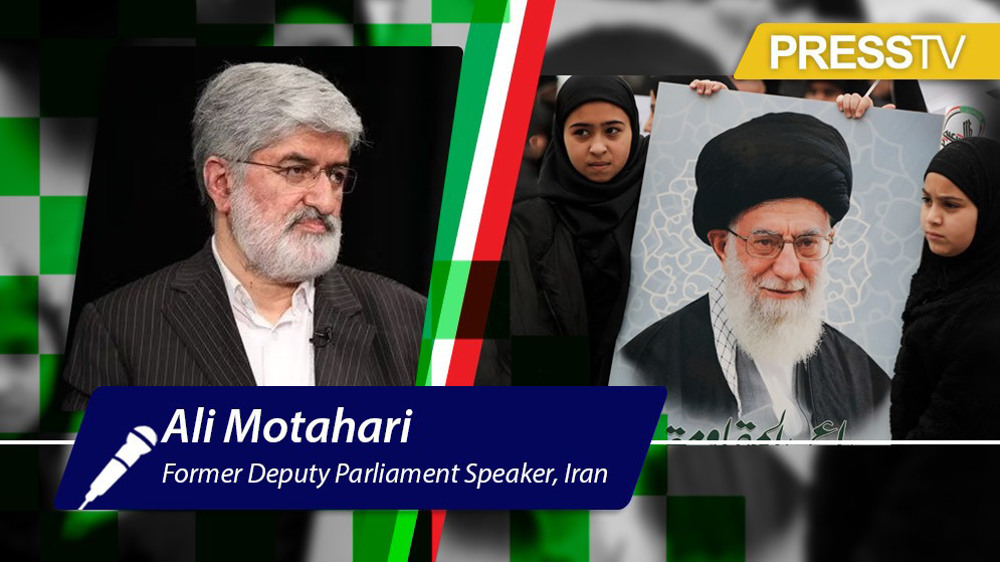
🎤 Conversation - Martyred Leader’s legacy of resistance elevated Iran’s standing on global stage: Ex-deputy speaker https://t.co/NMG8kVYI4P
— Press TV 🔻 (@PressTV) July 3, 2026
Writing about Palestine in Tanzania, therefore, was not breaking new ground. It reflected the values upon which the nation had been built. But gradually, I began to witness the tide turning.
As politicians became increasingly compromised, Tanzania's long-standing pro-Palestinian position started to waver. Inevitably, that shift reached the newsroom. The media organization I worked for could no longer tolerate my position, a position that, ironically, reflected Tanzania's own proud historical support for liberation movements.
As Zionist money and influence began finding their way into media and politics, it became impossible for me to remain at the helm of a newsroom that had steadily drifted away from Palestine. So I left. Not just the company, but the country itself.
I needed time to reflect, not only on my career, but on the kind of journalist I wanted to remain. What better place to do that than back in the classroom. That journey took me to London, where I completed my Master's degree in Media Management.
I had little desire to return to an environment where I felt the doors had closed on my independence as a journalist. Having received almost all of my journalism education in the West, I still believed in the ideals of press freedom and freedom of expression that those institutions had taught me to value.
So I invested in London and established my own media company, determined to pursue truly independent journalism. And I would be lying if I said I wasn't free – at least in those early years.
From foreign policy to anti-colonial struggles, from exposing the continued plunder of Africa's resources to amplifying voices ignored by the mainstream media, I woke up each morning with the same excitement I had felt as a young girl watching Amanpour on CNN.
By then, however, the rose-tinted glasses had come off. I had begun to see the role CNN – and Amanpour herself – had played in shaping narratives and manufacturing consent for Western interventions across West Asia. The journalist who had once inspired me had, in my eyes, become part of the very machinery I had dedicated my career to questioning.
Which brings me back to Iran. This time was different. When I applied for a press visa and boarded a plane to Iran, paying my own way, I wasn't representing any network.
I came alone.
This journey is therefore both deeply personal and professionally experimental. It is the story of why I felt compelled to be here at this particular moment, but it is also my first serious attempt to explore social media as a platform for independent journalism.
I am visibly Muslim. I wear the hijab. Yet my journalism has never been defined by religion. It has always been rooted in the pursuit of justice, regardless of faith, ethnicity, or nationality.
At the same time, there was never any possibility of hiding who I was, nor did I ever want to. What I never openly declared, however, was that I am a Shia Muslim. Partly because I have always been profoundly non-sectarian.
The Sunni-Shia divide has long been one of colonialism's most effective tools. Divide the Ummah, and it becomes infinitely easier to dominate Muslim-majority societies, exploit their resources, and sustain imperial influence. A united Muslim world is far more difficult to subjugate than a fragmented one.
THREAD:
— Press TV 🔻 (@PressTV) July 3, 2026
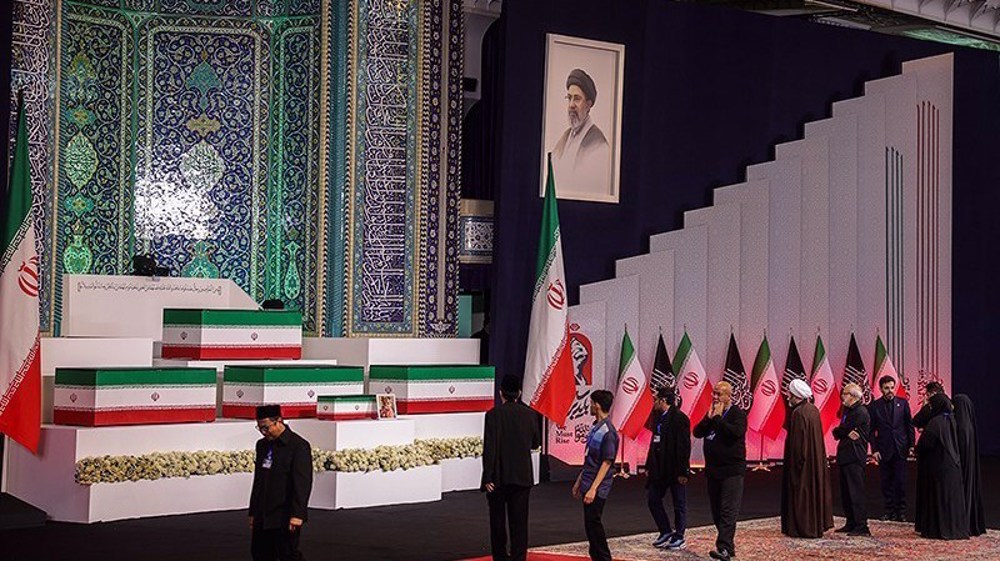
July 3: Press TV's real-time coverage of the funeral and farewell ceremonies for the martyred Leader of the Islamic Revolution, Ayatollah Khamenei pic.twitter.com/eXVA5qTvGE
But sitting here today in Iran, I have come to realize that there was something else buried within me. Fear. Not fear of my faith itself, but fear of being judged because of it. That realization has been one of the most unexpected reflections to emerge during this journey.
Iran, despite the immense price it has paid during the recent US-Israeli-imposed war, has liberated many of us in ways that extend far beyond geopolitics.
The cost has been immeasurable. The greatest symbol of that sacrifice is precisely why we are here – to cover the funeral of the Leader of the country who was martyred with his family in an act that violated every principle of international law.
In the eyes of millions, he was martyred because he refused to abandon Palestine.
The Western legacy media may continue attempting to frame the story differently, but something has fundamentally changed.
The curtain has been lifted. Across the world, people are honoring him, not only in Iran but far beyond its borders. Diplomats from dozens of countries have come to pay their respects. Independent journalists committed to justice have traveled here. And millions upon millions of ordinary people, both inside Iran and across the globe, are mourning a man they came to see as a symbol of resistance.
For them, Ayatollah Seyyed Ali Khamenei represents resistance against Zionist colonialism, imperial domination, racial supremacy, and the systems of exploitation and abuse of power that have come to define our age.
But through this loss, Iran has not only emerged victorious, giving Iranians inside the country a renewed confidence in themselves (and I am not referring to the self-styled prince's supporters who celebrated the massacre of their own people), it has also given Shia Muslims like me the confidence to embrace our own identity without hesitation.
Today, for example, we feel freer to speak openly about Imam Hussein (AS) across every platform – the master of resistance against injustice and the man whose stand at Karbala shaped a philosophy of resistance that has endured for more than fourteen centuries and can never be uprooted.
A person like me cannot pledge allegiance to a person like Yazid, the martyred Leader said in one of his last speeches, invoking the words of Imam Hussein (AS) in Karbala.
Yet being in Iran has also reminded me that alongside Imam Hussein (AS), we need to tell the story of his sister, Hazrat Zainab (AS).
Because without Hazrat Zainab (AS), there is no Karbala as we know it today.
Within Shia communities, Hazrat Zainab (AS) is honored in the month following Muharram. But too few of us who were trained in journalism have ever felt confident enough to present her for what she also was: arguably the journalist of her age.
It was Zainab who became the eyewitness. The survivor. The narrator. The communicator.
She transformed public consciousness by telling the story of what had happened at Karbala, what her brother had stood for, and why he had paid the ultimate price. Without her testimony, Karbala might have remained another battlefield. Through her words, it became an eternal moral compass.
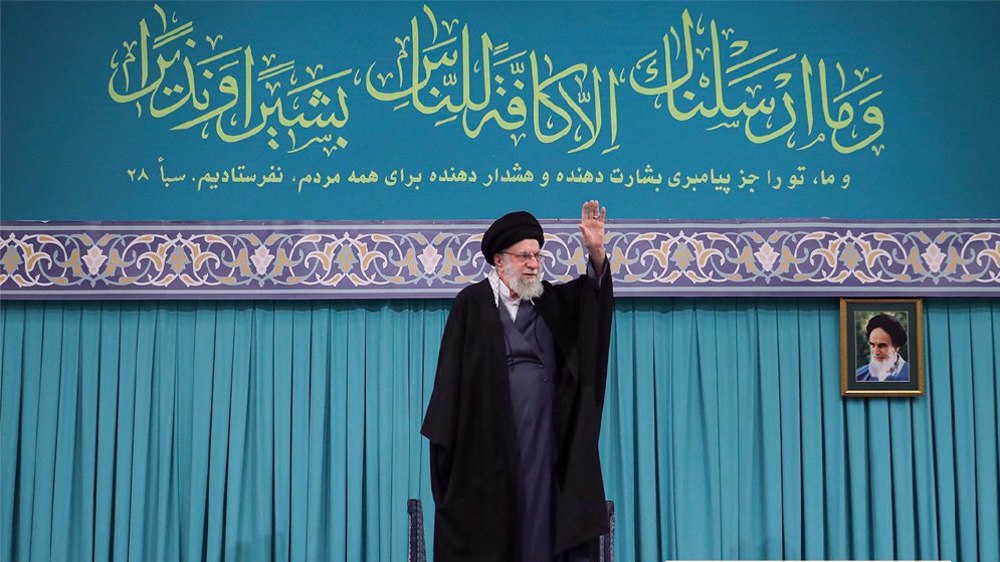
🔸The Leader's Story 🔸
— Press TV Documentary (@presstvdoc) July 2, 2026
The Spark That Changed Everything
From resisting Reza Shah's forced cultural reforms to a life-changing meeting with Nawab Safavi, this chapter explores how a young seminarian embraced revolutionary activism. pic.twitter.com/xFpPyR18r4
Yet for many of us trained in Western journalism, speaking openly about her has often felt as though we were somehow compromising our professional credibility with religious sentiment, as though acknowledging her legacy would make us appear less objective, less serious, less professional.
And yet, standing here in Iran, watching the funeral of Ayatollah Seyyed Ali Khamenei dominate social media across the world, I cannot help but see Zainab's legacy everywhere.
Resistance journalism today is increasingly being carried by women. Brave, unapologetic women who refuse to be intimidated by death, censorship, or persecution as long as they believe they are standing on the side of truth – the side of justice and resistance against oppression.
It has been on full display across Iran in the past over 110 days, with women inspired by Zainab leading the nightly gatherings and rallies against the enemy. Exactly as Zainab did.
Which brings me back to the hatred I alluded to earlier. As part of this personal experiment with social media, I posted my first reel from Iran, simply documenting my arrival in what I called the land of resistance. The abuse began almost immediately.
Speaking with fellow journalists here, particularly Western journalists covering Iran, I quickly realized that this has become the norm rather than the exception.
From being branded a terrorist simply for covering a story from a perspective different from that of the legacy media, to becoming the target of abuse from exiled pro-Pahlavi groups who believe no one has the right to tell an Iranian story that does not conform to their preferred narrative, the hostility is relentless.
For me, it has also brought another realization.
Despite being a British citizen, despite proudly calling Britain home for almost two decades, despite paying my taxes, obeying the law, and raising my children there, I have discovered that, for some people, I will never be British enough.
Because of how I look. Because I wear the hijab. Because I am opposed to the US-Israeli war machine. Because I am now in Iran. Because I have openly acknowledged that I am Shia. Because I have expressed grief for a spiritual leader whose principles I believe echoed those of Imam Hussein (AS).
Before I have even spoken a single word, I have already been judged. Already labelled. Already called a traitor.
This is the reality of our increasingly polarized world, a world where people have lost the patience to hear the same story from a different perspective before unleashing torrents of abuse.
But strangely, there is also something profoundly beautiful about it.
In the aftermath of Karbala, Zainab endured perhaps the highest level of persecution imaginable. She was taken prisoner together with the women and children of Imam Hussein's (AS) household after witnessing the brutal martyrdom of her brother, her family, and his companions.
📸 Political, religious, and academic figures pay tribute to the martyred Leader of the Islamic Revolution, Ayatollah Seyyed Ali Khamenei
— PressTV Extra (@PresstvExtra) July 3, 2026
Follow: https://t.co/7Dg3b41hTx pic.twitter.com/lsL7ApjL63
When asked what she thought of everything that had happened, she uttered words that have echoed through history: "I see nothing but beauty."
How could anyone speak of beauty after such unimaginable suffering? Because what Zainab saw was not merely the pain. She saw what the sacrifice had revealed.
The masks had fallen. The hypocrisy of the age had been exposed. The lines had become unmistakably clear. There were no longer any comfortable grey areas.
You either stood with Hussein and for justice. Or you stood with Yazid and for oppression. Perhaps that is also where we find ourselves today.
Through the sacrifices of the Iranian people. Through the sacrifices of the Lebanese. Through the genocide that continues to unfold against the Palestinians.
Something has become unmistakably clear. There is beauty in the polarization – not because division itself is beautiful, but because truth has become harder to disguise.
You either stand with those resisting colonialism, imperialism, and oppression. Or, whether intentionally or not, you become complicit in sustaining them.
Sakina Datoo is a UK-based journalist originally from Tanzania.
(The views expressed in this article do not necessarily reflect those of Press TV.)
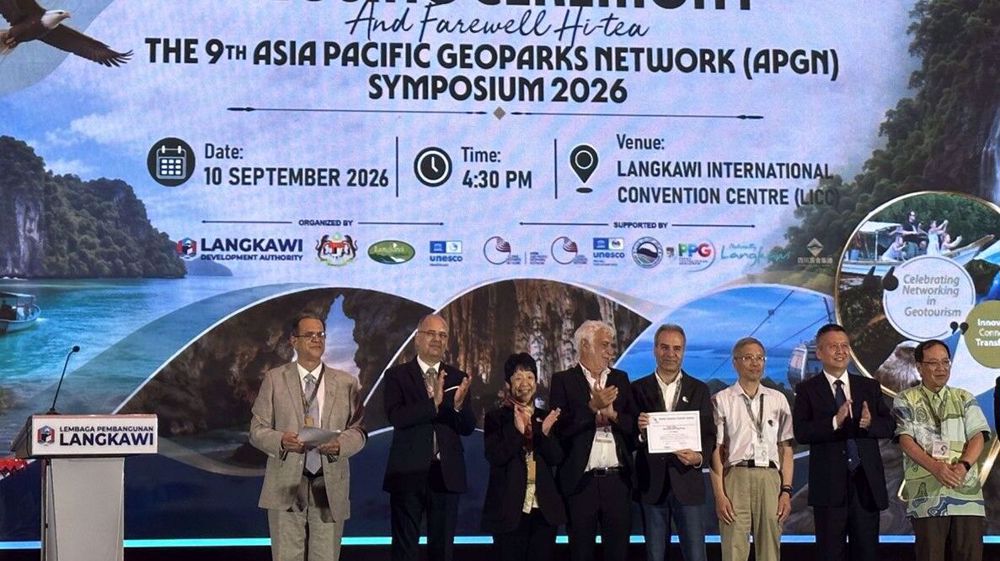
Iran’s Tabas UNESCO Global Geopark wins top two prizes in international competition
From 1980s to 2026: The legacy of Sacred Defense and transformation of Iranian defense doctrine
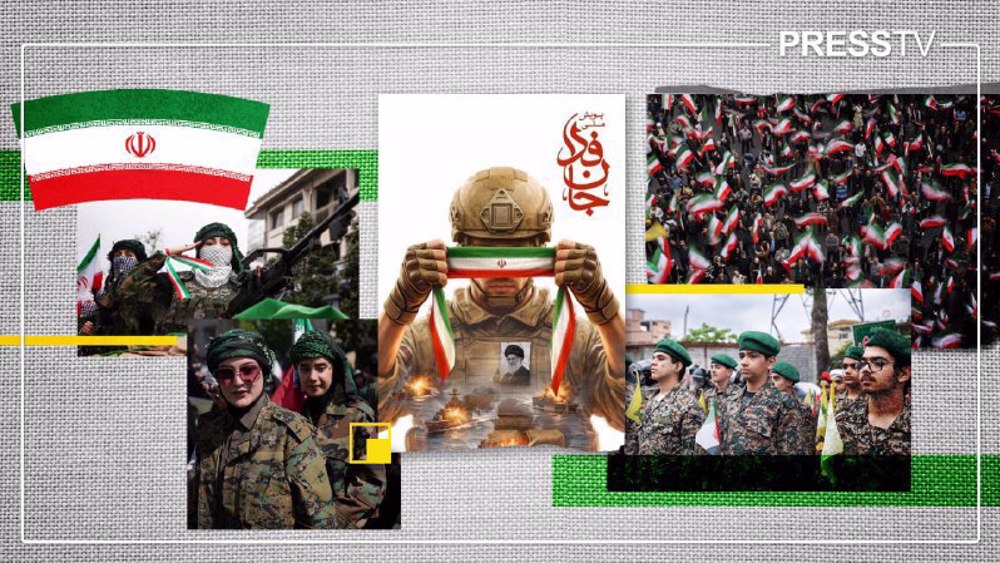
313,000-strong ‘Jan-Fada’ drill signifies Iran’s popular mobilization and social readiness amid war



VIDEO | On Non-Violence Day, Gazans still suffer Israeli brutality
Iraqi resistance official hails public defiance that broke US siege on Najaf-Iran flights
Iraq allows 40 daily Iranian flights to and from Najaf after protests over US sanctions
Israel intensifies al-Aqsa incursions as over 11,400 settlers storm holy site
China calls for respecting Iran's right to peaceful use of nuclear energy
Seoul demands Ukraine apology after Zelensky discloses North Korean POW transfer
VIDEO | Political-financial scandal casts shadow over Brazil’s presidential race
IRGC Ground Force dismantles terrorist cell in Sistan and Baluchestan, kills two


 PressTV NEWSLETTER
now
PressTV NEWSLETTER
now
 This makes it easy to access the Press TV website
