Iran stands more united by virtue of martyred Leader’s blood: President Pezeshkian
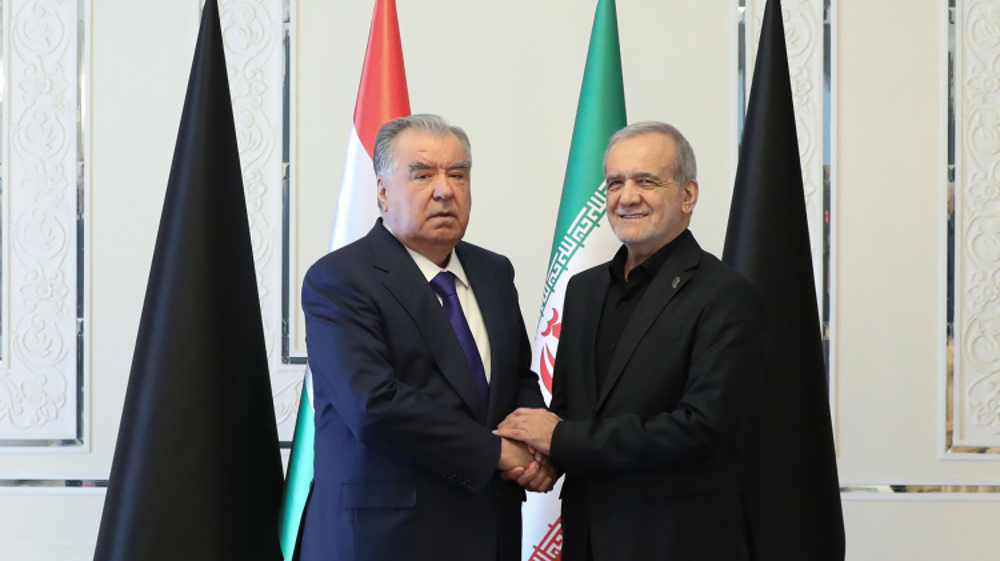
President Masoud Pezeshkian says the Iranian nation emerged stronger and more united after the United States and Israel failed in their attempt to plunge the country into instability by assassinating the Leader of the Islamic Revolution Ayatollah Seyyed Ali Khamenei.
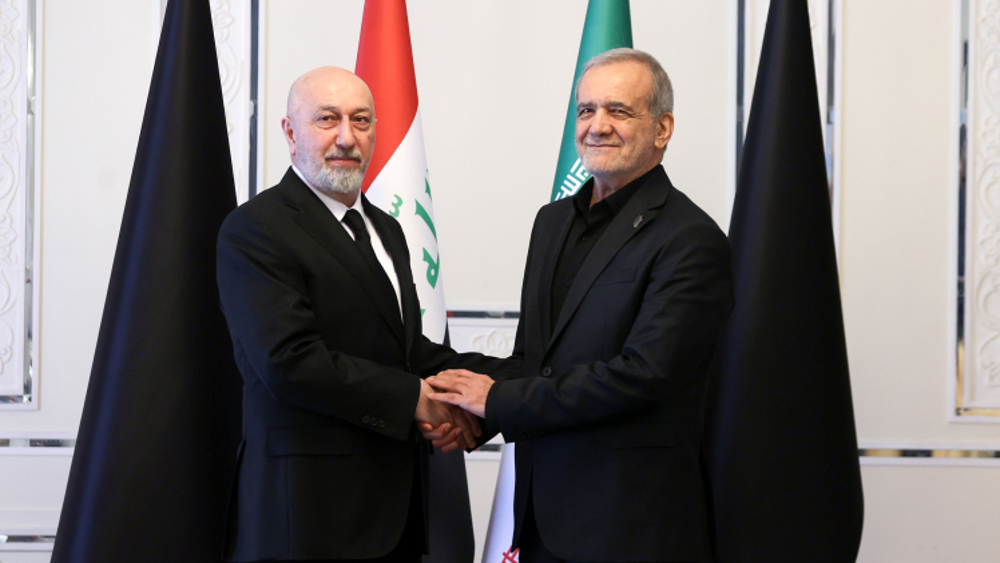
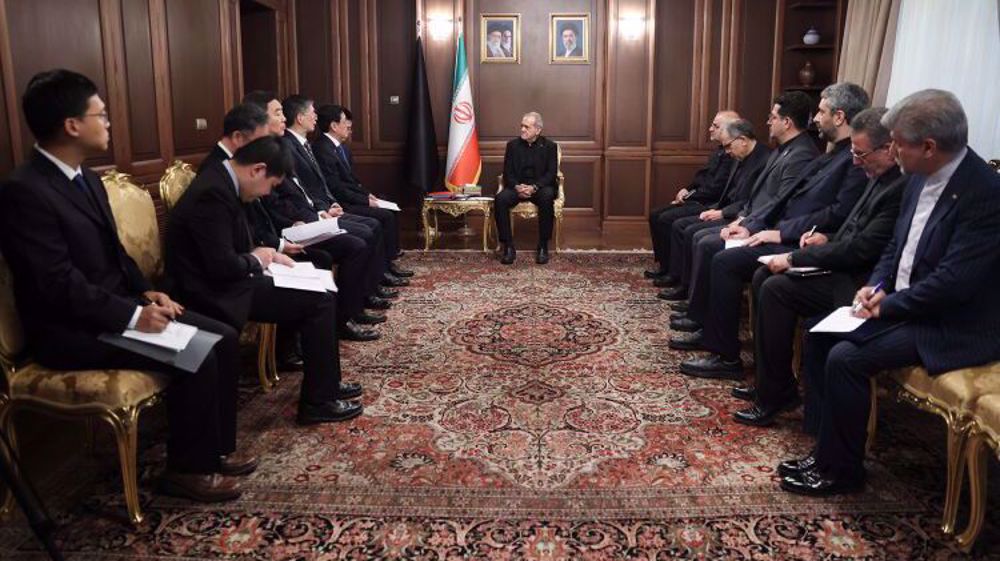
Speaking on Friday during separate meetings in Tehran with the leaders of Tajikistan, Turkmenistan and Armenia, who traveled to Iran to attend the funeral ceremonies of the martyred Leader, Pezeshkian said that "by virtue of the blood of our martyred leader, the Iranian nation has become more united and more cohesive.”
“The Iranian nation, through its massive turnout and unwavering support for the the Islamic Republic, once again demonstrated its national strength and social unity,” the president said.
During his meeting with Tajik President Emomali Rahmon, Pezeshkian thanked the Tajik government and people for expressing solidarity with Iran.
He said the two countries’ shared historical, linguistic and cultural ties provide a solid foundation for deeper relations between Tehran and Dushanbe.
Rahmon offered his condolences over the assassination of the Leader and other Iranian officials and civilians, saying Tajikistan regarded Iran’s grief as its own.
He also praised the Iranian people’s unity in the face of the US-Israeli aggression.
The Tajik president said he had repeatedly told US officials that “the language of force, threats and war can never compel the Iranian nation to surrender.”
In separate meetings with Turkmenistan’s National Leader Gurbanguly Berdimuhamedow and Armenian Prime Minister Nikol Pashinyan, Pezeshkian thanked both countries for their messages of condolence and support.
The president reaffirmed Tehran’s commitment to strengthening regional cooperation and expanding bilateral relations free from external interference.
Berdimuhamedow conveyed the condolences of the Turkmen government and people over the martyrdom of Ayatollah Khamenei, senior officials, military commanders and civilians.
He described the late Leader as “a far-sighted figure respected by the nations of the region,” saying his efforts to strengthen ties with neighboring countries, particularly Turkmenistan, would be remembered.
Pashinyan also expressed his condolences, saying Armenia regarded Iran’s grief as its own and remained committed to maintaining friendly relations with the Islamic Republic.
The Armenian prime minister recalled two meetings with Ayatollah Khamenei, describing them as cordial, constructive and based on mutual respect.
“The news of his martyrdom was deeply saddening for the people and government of Armenia, and we regard this grief as our own,” Pashinyan said.
He added that Yerevan had consistently sought to avoid any action that could harm Iran’s interests and would continue to stand by the Islamic Republic within the framework of good-neighborly relations.
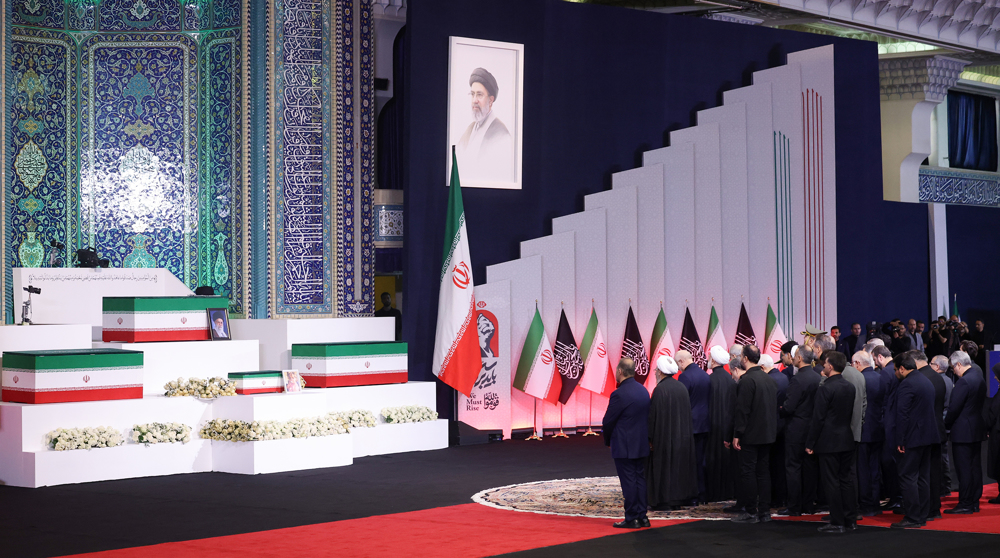
Iran began the first stage of the funeral ceremonies for the martyred Leader on Friday, with foreign dignitaries and religious figures paying their respects at Tehran’s Grand Mosalla.
Delegations from nearly 100 countries, along with public figures and representatives of civil society organizations, are attending the farewell ceremony for the martyred Leader, who was assassinated in a US-Israeli strike on the opening day of the 40-day war against Iran on February 28.
Source: Netanyahu plotted false-flag aircraft hijacking to drag Trump into new war against Iran
Iran slams US over lasting fallout of nuclear tests in Marshall Islands
Iran warns over Trump’s 'We all die anyway' nihilism to justify mass killing



VIDEO | Press TV's news headlines
VIDEO | Hudaydah residents vow resistance, back Yemeni army
VIDEO | France school protests rage on as students decry police repression
Zionist settlers murder 19-year-old in West Bank amid record surge in violence
Saudi airstrikes intensify as Yemeni army advances toward Taiz
VIDEO | On Non-Violence Day, Gazans still suffer Israeli brutality
Iraqi resistance official hails public defiance that broke US siege on Najaf-Iran flights
Iraq allows 40 daily Iranian flights to and from Najaf after protests over US sanctions


 PressTV NEWSLETTER
now
PressTV NEWSLETTER
now
 This makes it easy to access the Press TV website
