Mission unaccomplished – Part VII: US war goal shrank from ending Iran's civilization to reopening Hormuz Strait
By Press TV Website Staff
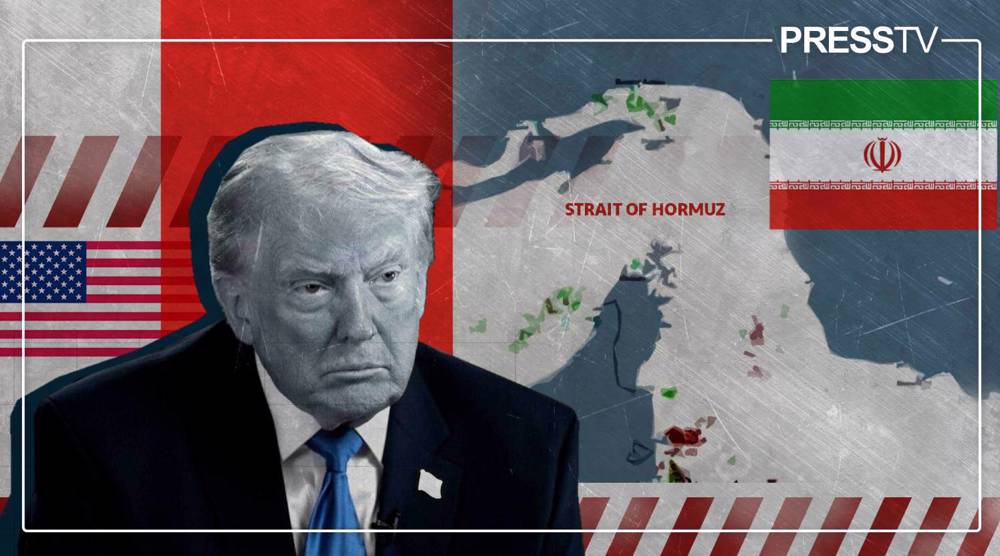
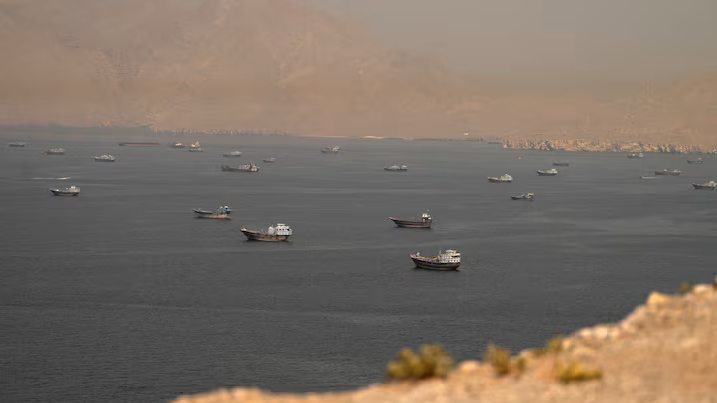
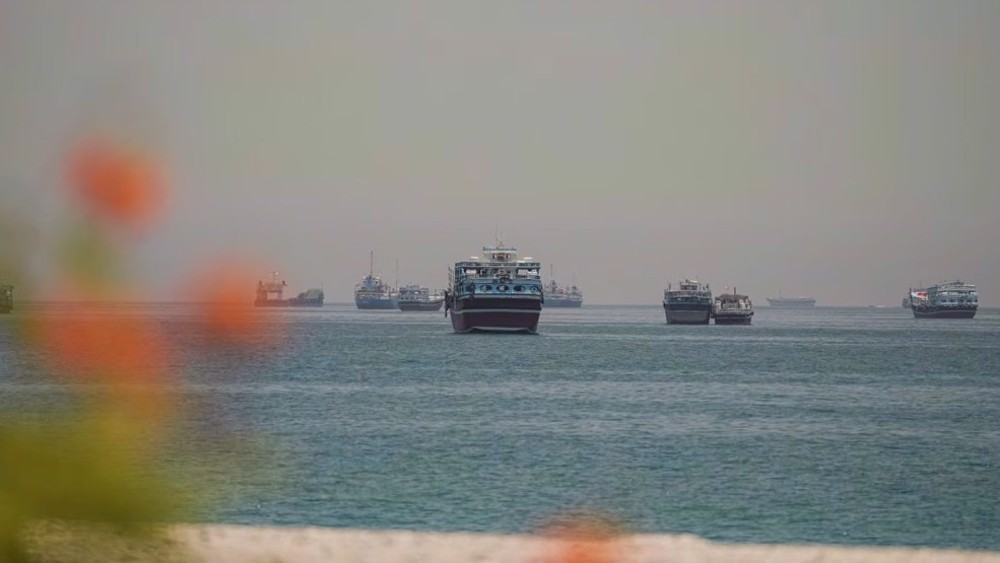
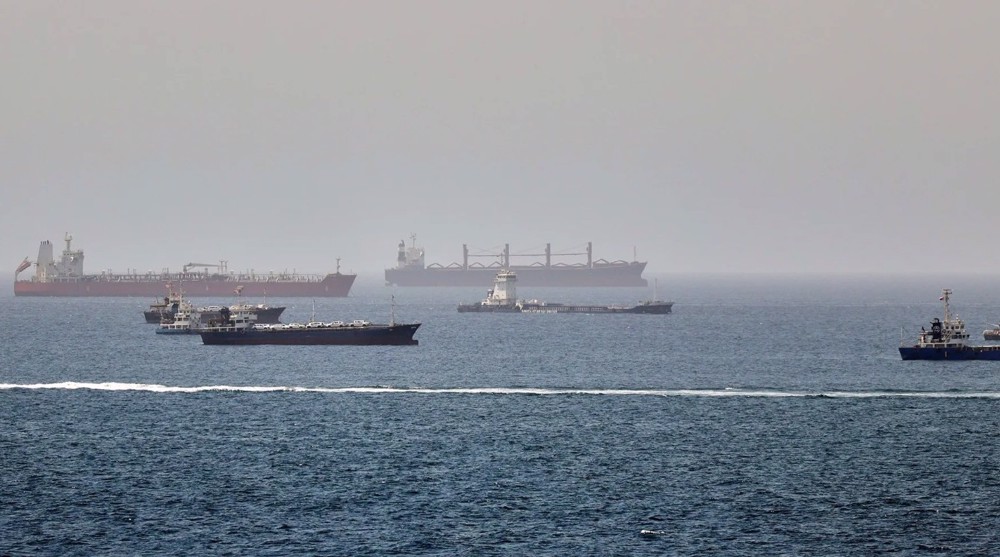
The Strait of Hormuz has long been described as the world's most vital maritime chokepoint situated between the Persian Gulf and the Gulf of Oman, effectively within Iranian territorial waters. Approximately 20 percent of global petroleum consumption passes through its narrow waters, making it an artery of the global economy.
But for Iran, the Strait is far more than a strategic waterway. It is the ultimate expression of sovereignty, the most powerful instrument of deterrence, and the strategic trump card that forced the United States to acknowledge a new regional reality after the recent war.
Throughout the 40-day war imposed on Iran, the Strait of Hormuz emerged as the decisive factor that transformed battlefield gains into diplomatic leverage for the Islamic Republic.
It was closed from a position of Iranian authority immediately after the US-Israeli war machine resorted to unprovoked and illegal military aggression amidst nuclear talks.
It was reopened, from a position of Iranian authority, after the Iranian and US presidents signed a memorandum of understanding to formally end the US-Israeli war on all fronts.
And in both acts, Tehran demonstrated that control over this critical energy route belongs unequivocally to the Islamic Republic, not to the United States, not to its allies, and not to any international arrangement that fails to recognize Iran's sovereign rights.
The imposed war made this clear, and the memorandum of understanding formalized it.
The strategic significance of the Strait
For decades, American strategists assumed that the Strait of Hormuz could be secured through military might, that the presence of the US Fifth Fleet in Bahrain, the network of occupation bases across the Persian Gulf, and the projection of American naval power would guarantee the free flow of oil regardless of Iran's preferences.
This assumption was always flawed, and the recent war exposed its fallacy.
The Strait of Hormuz is not merely a body of water, but the gateway through which the energy wealth of the Persian Gulf reaches global markets – from South Asia to Europe and beyond. Every tanker that passes through its waters carries not just oil but the economic vitality of countries dependent on these energy exports.
Control over this chokepoint translates into leverage over global energy prices, economic stability, and the strategic calculations of every major power. Iran's geographic position, straddling the Strait along its entire northern coast, grants it a natural advantage that no amount of American military hardware can neutralize.
When Iran closed the Strait during the recent imposed war, the global oil markets reacted with immediate and sustained shock. Prices surged dramatically and supply chains were disrupted. The economic consequences rippled across continents, reminding the world that the stability of the global energy system rests on US behavior in the region.
✍️ Analysis - The tide has turned: Iran’s strategic control of the Strait of Hormuz crushes American naval supremacy
— Press TV 🔻 (@PressTV) June 6, 2026
By Press TV Strategic Analysis Deskhttps://t.co/fpVqRHqVRD
The reopening: A concession, not a gift
The reopening of the Strait was not a unilateral concession from Iran. It was the outcome of a strategic calculation in which Iran secured tangible benefits for restoring the energy route.
The United States, having failed to achieve its military objectives and facing mounting economic pressure at home, found itself in a position where it needed the Strait reopened far more than Iran needed it closed. This asymmetry of urgency became the foundation upon which Iran built its negotiating leverage.
The MoU reflected this reality. Iran's sovereignty over the Strait was not merely acknowledged, but it was formalized in clear terms. The provisions governing maritime traffic, the mechanisms for ensuring compliance, and the recognition of Iran's rights were all shaped by the strategic reality that the Strait of Hormuz is not a global commons to be managed by external powers but Iranian territorial waters subject to Iranian authority.
This represents a fundamental reversal of the strategic dynamic that had prevailed for decades. In the past, the United States could threaten to close the Strait to Iran. Today, Iran holds the power to open or close it, and the United States must negotiate to ensure its continued accessibility. The shift is not merely tactical but structural. The Strait of Hormuz is now a source of Iranian power rather than a vulnerability to be exploited by adversaries.
A card to consolidate battlefield gains
The Strait of Hormuz was n never a negotiating tool but the mechanism through which Iran consolidated its battlefield achievements. Throughout the war, Iranian forces demonstrated their ability to strike American bases with precision, to repel aggression, and to defend Iranian territory against overwhelming odds. But military success, however impressive, must be translated into political outcomes to be sustained. The Strait provided that translation.
By linking the reopening of the energy route to the broader terms of the understanding, Iran ensured that the strategic gains achieved on the battlefield were not lost at the negotiating table. The terms of the understanding, including the recognition of Iran's nuclear rights, the preservation of its missile and drone capabilities, and the commitment to end hostilities on all fronts, were all reinforced by Iran's control over the Strait.
The message was clear: the United States could not expect the free flow of oil through the Strait while simultaneously denying Iran its fundamental rights.
This integration of military capability and diplomatic leverage represents one of the most sophisticated strategic achievements in modern Iranian history. The Strait of Hormuz thus serves as a force multiplier that enhances every aspect of Iran's strategic posture. It provides Tehran with a sustainable means of ensuring its security, obtaining compensation for war damages, and securing the country's economic prosperity.
It transforms Iran from a reactive power into a determining regional superpower capable of shaping the region's political and economic trajectory.
Ebrahim Azizi, Chairman of the National Security Committee of Iran's Parliament:
— Press TV 🔻 (@PressTV) June 30, 2026
🔹The era of US interference in regional affairs is over, and the return of the defeated will never bring any achievement. pic.twitter.com/juU0aooCox
The implications for regional security
The era in which external powers could impose their will on the region without regard for Iranian interests has effectively ended. The Strait of Hormuz now serves as both a symbol and an instrument of this new reality.
Every country that depends on Persian Gulf energy exports must now recognize that Iran's cooperation is essential for stable access to global markets. Every power that seeks to project military force into the region must accept that Iranian sovereignty over the Strait is a red line that cannot be crossed without cost.
The understanding between Iran and the United States has formalized this new arrangement. But the true significance of the Strait of Hormuz lies not in any diplomatic document but in the strategic reality it represents.
Iran has demonstrated that it possesses the capability, the will, and the strategic sophistication to use its geographic position as a source of enduring power. The United States, by contrast, has demonstrated that its ability to project force into the region does not translate into control over the region's most vital strategic assets.
A victory consolidated
The Strait of Hormuz is now a strategic trump card that has transformed Iran's military resilience into diplomatic leverage. Its closure and reopening from a position of Iranian authority has established a new strategic reality – Iran's sovereignty over the Strait is non-negotiable, its control over the energy route is absolute, and its willingness to use this leverage is beyond question.
The 40-day war may have been imposed on Iran, but what happened after that was dictated by Iran. Through the intelligent and resolute exercise of sovereignty over the Strait of Hormuz, Iran has secured a position of enduring strength that no amount of American military pressure can reverse.
The energy route will work on Iranian terms from now on. Even allies such as Oman cannot bypass these terms and designate a corridor through it without taking Iran into confidence. And that is the most powerful message of all: in the new regional order, power flows through the Strait of Hormuz, and Iran holds the keys to the gate.
IRGC: Iran’s missile capability remains intact, production continues
Iranians ready to fight for next 20 generations to defend homeland: Army chief warns enemies
Iran: No country should fear us unless it aids aggressors



Pezeshkian to US: Drop the bullying, force won’t solve anything
VIDEO | Desperate US ‘Economic D-Day’
Bolivia’s former president hails Iran as ‘model of sovereign resistance against US empire’
Iran’s trade partners won’t listen to US ‘big talk’: Qalibaf
Iran’s top security official says US must change its behavior
Israel denies Swedish MEPs entry to occupied lands over criticism of Gaza genocide
Israeli court extends detention of Palestinian doctor despite heart catheterization
VIDEO | Iran court orders $37 million in US oil funds for Butterfly Patients



 PressTV NEWSLETTER
now
PressTV NEWSLETTER
now
 This makes it easy to access the Press TV website
