From Strait of Hormuz to World Cup stage, Iranians never back down or relinquish their rights

By Maryam Bashirpour
At first glance, comparing a football match with an oil chokepoint may seem illogical. One involves 22 players chasing a ball across a football pitch, while the other revolves around warships, speedboats, ballistic missiles and the strategic calculations of global powers.
But a closer look reveals that they are, in fact, two chapters of the same story: the story of a nation that, in every arena – whether on the football fields of Los Angeles and Seattle or in the azure waters of the Persian Gulf and Strait of Hormuz – stood firm against a hegemonic order and refused to yield, retreat or surrender.
The parallel between these two events became so striking that no serious analyst can simply dismiss their simultaneity as a coincidence.
In the Strait of Hormuz, the bullies continued to challenge and disrupt the new security order established by Iran's armed forces, resorting once again to maritime banditry and piracy. Yet despite these provocations, they failed to achieve their objectives, and Iran refused to forfeit its legitimate rights.
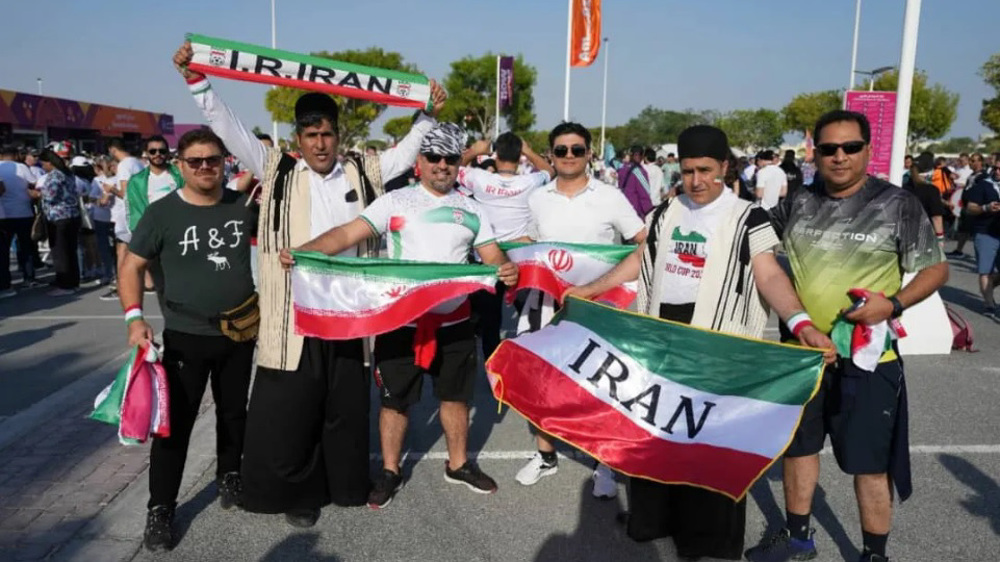
At the 2026 FIFA World Cup, co-hosted by the United States, the very same bully employed a different set of tactics. Instead of warships, it weaponized bureaucracy, logistics and political pressure, seeking to undermine Iran's national football team by creating endless travel complications and administrative barriers. Yet once again, it failed. Team Melli stepped onto the field every single time with heads held high, refusing to be intimidated or broken.
It became a powerful demonstration of steadfast resolve in the face of overwhelming odds – a reminder that dignity cannot be defeated by coercion, and that power devoid of ethics ultimately exposes its own weakness. In both the sporting arena and the geopolitical battlefield, Iran forced the bully to confront the limits of intimidation.
Even before Team Melli embarked on its World Cup journey, it had already encountered obstacle after obstacle. These were not ordinary sporting inconveniences but hurdles deliberately placed in its path to prevent the team from accomplishing a dream it had pursued for decades: qualifying for the knockout stage of football's biggest tournament for the first time in history.
Visas arrived late, while psychological warfare began long before the opening whistle. The team was unable to prepare properly for the tournament because the country itself was still grappling with a war imposed by the very nation hosting the World Cup.
US President Donald Trump, who had ordered the unprovoked and illegal war against Iran, even issued a veiled warning directed at the players and support staff, implying that their security inside the United States would somehow not be guaranteed.
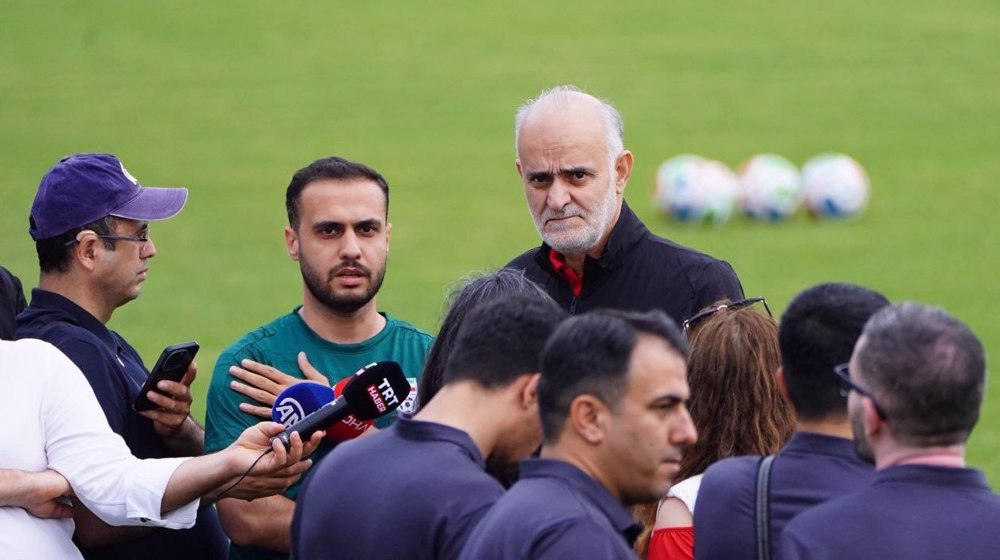
Meaningful international friendlies became impossible because of the war and related developments. The team was forced to hold its pre-tournament training camp in Turkey. When the long-delayed visas finally arrived, they were still incomplete. The name of the team supervisor, Mohammad Mehdi Nabi, was missing, while the team's analyst and international affairs experts were also excluded from the list approved by the US authorities.
The hostile conduct of the host country forced Team Melli to relocate its base camp from the United States to Mexico, creating enormous logistical complications and placing an unnecessary physical burden on the players.
⚽ Iran's message to the football world from Seattle dressing room:
— Press TV Sports (@presstvsports) June 27, 2026
"We have come from Iran…
From a land that for thousands of years has held honor above victory.
For us, football is not merely a competition for results;
it is a test of character..."@presstvsports pic.twitter.com/yJBRINnbAL
Matters deteriorated further when the team was instructed to travel to the US on match day itself instead of arriving two days in advance, as stipulated under World Cup regulations. As a result, the players were denied adequate time to acclimatize, recover from travel or complete essential tactical preparations before matches in both Los Angeles and Seattle.
The consequences were predictable: physical fatigue caused by constant commuting, exhausting flights, disrupted routines and the loss of valuable opportunities for focused training and proper recovery ahead of some of the most important matches of their careers.
The difficulties did not end there. Upon arrival at the airport, several players, including team captain Mehdi Taremi, were stopped and subjected to unnecessary interrogations without any legitimate justification. Others, such as Mehdi Torabi, were forced to reapply for multiple-entry visas in the middle of the tournament.
During both pre-match and post-match press conferences, players repeatedly faced politically charged questions that had little to do with football, adding yet another layer of frustration to an already extraordinary set of circumstances.
Taremi himself ultimately described this World Cup as a "disaster," reflecting the relentless obstacles the team had to face both on and off the field.
Even on the pitch, controversy followed Iran. Several crucial refereeing decisions went against Team Melli, most notably the decisive goal scored by Shoja Khalilzadeh that was ruled offside. The use of VAR appeared more like an instrument deployed to deny Iran a deserved place among the final 32 teams advancing in the competition.
Yet despite every hurdle erected by the host nation and the tournament organizers, Iran completed its campaign unbeaten. Three draws against three opponents, including Belgium, surprised many football analysts and demonstrated the team's resilience.
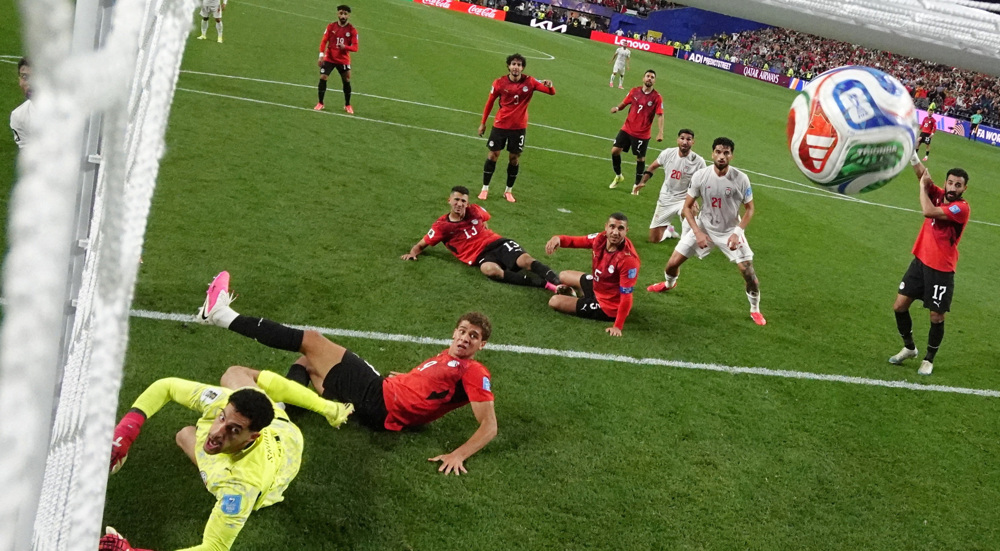
Matches against New Zealand and Egypt could easily have ended in Iranian wins had fortune tilted slightly in their favor and refereeing been a bit fair.
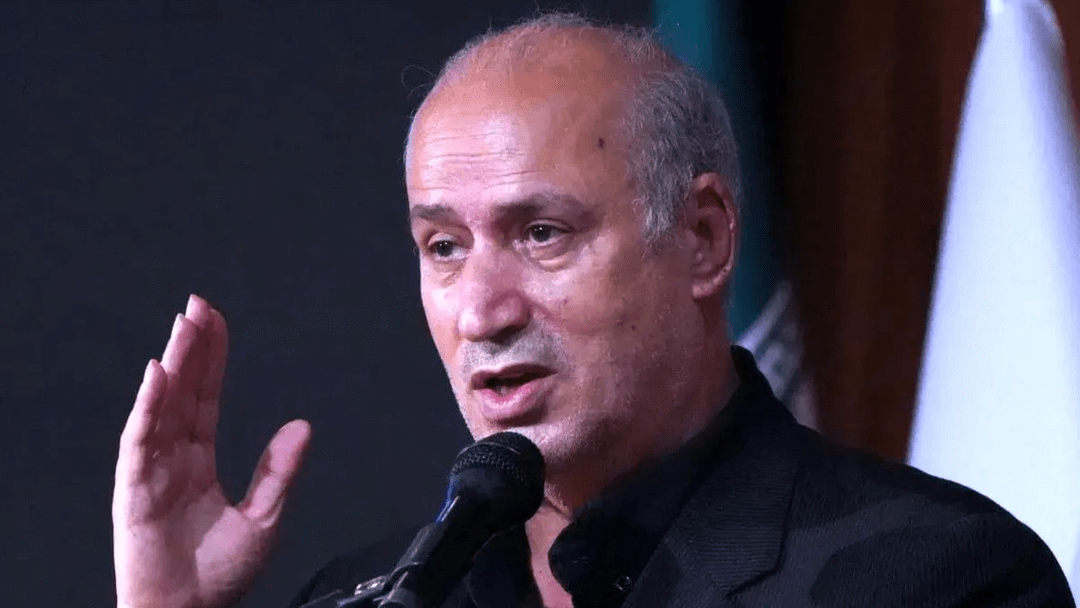
The treatment meted out to Iran represented a clear violation of FIFA's own charter as well as the hosting commitments undertaken by the United States. Iran's Football Federation lodged a formal protest with FIFA, yet the international governing body failed to provide any meaningful or proportionate response to blatant injustice.
In an emotional yet resolute press conference, head coach Amir Ghalenoei described his squad as "the most oppressed team in World Cup history," arguing that the players had once again become victims of a familiar and deeply entrenched pattern of unequal treatment.
Football may ultimately be just a game where victory and defeat are accepted as part of competition. But the way Iran was treated demonstrated that America's policy of containment does not stop at sanctions, diplomacy or military confrontation. It extends even to the football pitch, transforming sport itself into another arena for the projection of hegemony and political pressure.
⚽ Taremi: Infantino did nothing for us
— Press TV Sports (@presstvsports) June 27, 2026
Iran striker: "Imagine if we advance from the group stage tomorrow. Luck is on our side, and we will get through the group stage — but we have no recovery time. How is that possible?" @presstvsports pic.twitter.com/MYG8uhsJgu

While global public attention remained absorbed by football controversies, a development of far greater strategic significance was unfolding in West Asia. Tehran and Washington signed a memorandum of understanding formally marking the end of the imposed war.
Yet despite the memorandum explicitly requiring an end to hostilities on all fronts, including Lebanon, the Zionist ally of the United States continued attacking Lebanon while refusing to withdraw from the occupied territory in southern Lebanon. Faced with this continued violation, Iran once again moved to close the Strait of Hormuz. Soon afterward came renewed acts of American maritime banditry and terrorism.
Iran's armed forces responded with precision. Employing ballistic missiles and advanced strike drones, they launched retaliatory operations against US military bases throughout the region, making unmistakably clear that the era of hit-and-run attacks had come to an end.
Every vessel that passes through the Strait of Hormuz now effectively crosses one of Iran's strategic red lines, while every missile launched in the region reverberates across global energy markets. Tehran made unmistakably clear that it will never exchange its own understanding of security for the false promises of appeasement.
To fully understand these two seemingly unrelated events, they must be viewed through the lens of "showcase" and "backstage."
The football tournament represented the showcase, a spectacle upon which the West wanted the world's attention to remain fixed. Iran's elimination, determined by a millimeter offside decision amid extraordinary circumstances, was presented to global audiences as nothing more than an unfortunate sporting controversy.
But while the cameras remained fixed on the showcase, the real drama unfolded backstage
The West would rather the world remain captivated by football while paying little attention to the Strait of Hormuz, where the region's strategic future and the balance of power are actually being shaped. Football became a warning. The Strait of Hormuz became the decisive theatre where geopolitical realities, rather than sporting narratives, determine the future.
Although the two cannot be compared in scale, they can – and should – be narrated together. The football fields of the 2026 World Cup and the waters of the Strait of Hormuz represent two sides of the same unequal coin: one played out before the world's cameras, the other unfolding behind the scenes of global geopolitics.
The World Cup ultimately reminded the world that Iran does not lower its head even in the smallest of arenas. Whether across a negotiating table, on a football pitch or in the waters of the Persian Gulf, it has consistently demonstrated that retreat is not part of its vocabulary.
Iran may have exited the World Cup, but its spirit did not. That remains the country's most enduring message to the world: wherever we stand, whatever obstacles are placed before us, whatever rules are written against us, we continue to resist, we continue to compete, and we never relinquish our rights.
Maryam Bashirpour is a university researcher and writer based in Tehran.
(The views expressed in this article do not necessarily reflect those of Press TV)
Barimanlou secures kurash gold as Iran reaches ninth gold in Aichi-Nagoya
2026 Asian Games: Iran’s 17-year-old Beheshti wins bronze in women’s weightlifting
Iran’s Ali Alipour wins Asian Games gold in weightlifting with world-record total



Iran warns regional states of Israel’s malicious intents following reports of Netanyahu UAE visit
Army spox: Saudi Arabia launches over 30 airstrikes across Yemen in 24 hours
VIDEO | News Review: Israel settlement expansion
Israel violates Gaza ceasefire over 5,100 times, kills 1,421 Palestinians: Gaza Media Office
VIDEO | Russia holds events under title of Iran’s Culture Week
Republicans distancing themselves from Trump ahead of US midterms
Pezeshkian: Expanding Iran-Azerbaijan rail, air links key to strengthening ties
Iranian engineering students hold lectures at US-bombed B1 mega-bridge


 PressTV NEWSLETTER
now
PressTV NEWSLETTER
now
 This makes it easy to access the Press TV website
