Mission unaccomplished – Part VI: US sought Iran’s ‘unconditional surrender’; it got a new regional superpower
By Press TV Website Staff
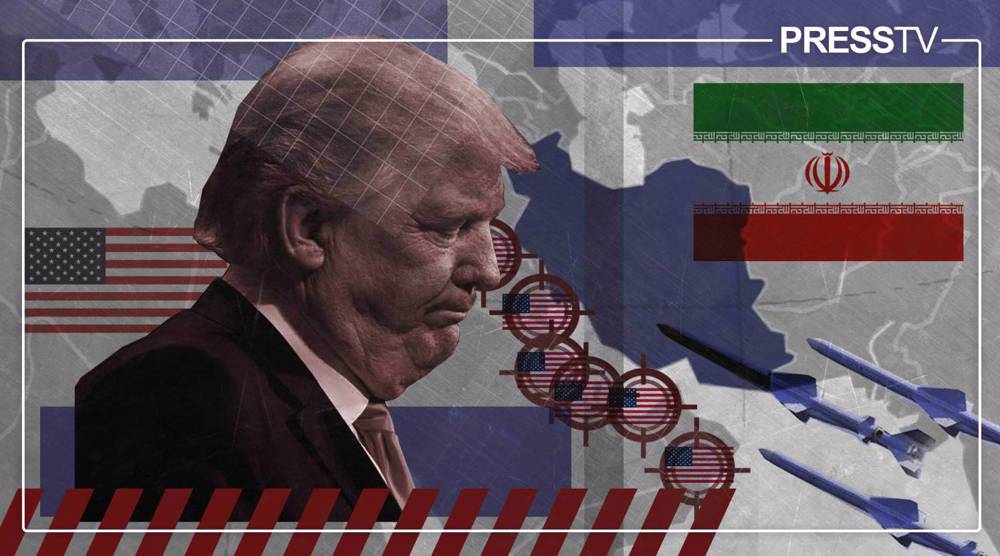
When the memorandum of understanding (MoU) was signed by the presidents of Iran and the United States, marking a formal end to the unprovoked and illegal war against the Islamic Republic, a new reality had already taken shape across West Asia.
It was a reality that Washington had spent decades trying to prevent and billions of dollars attempting to reverse, which included sanctions, sabotage and direct military action.
The full-scale war that was launched in late February, which was supposed to break Iran's will and dismantle its influence, accomplished precisely the opposite.
Iran emerged not merely as a survivor of aggression but as the undisputed architect of the region's political, security, and economic future. The MoU signed between Tehran and Washington was not a concession extracted under duress but the formal recognition of a strategic transformation on the battlefield and later on the negotiating table.
For decades, American strategists operated on the assumption that Iran could be contained, isolated, and ultimately reduced to a peripheral actor in a region dominated by US and its allies. The network of bases stretching across the Persian Gulf, the naval presence in Bahrain, the air power projected from Qatar and the UAE – all of this was designed to project American dominance and keep Iran in check.
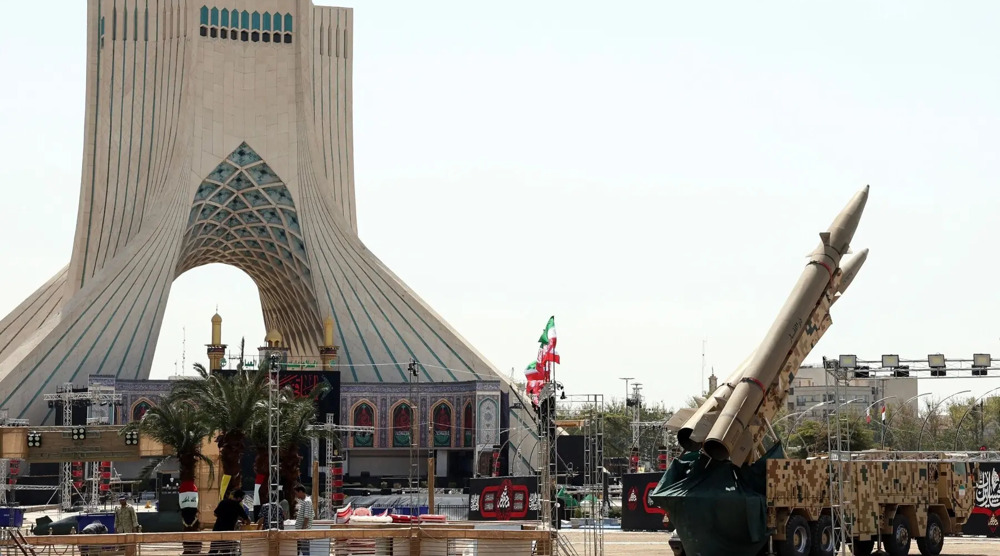
The war shattered that illusion completely and irreversibly. When Iranian missiles struck American bases with devastating precision, when Iranian drones swarmed installations that were supposed to be impregnable, and when Iranian forces demonstrated the ability to retaliate at will, it demonstrated that no security or political equation in the region can be realized without taking Iran's role into account.
The war demonstrated that America cannot protect its allies from Iranian retaliation after those same countries allow their soil to be used against the Islamic Republic.
Regional countries that have hosted US military facilities for years, that have served as launching pads for attacks against Iran, finally discovered that American air defenses could not shield them from the consequences of their hospitality.
The billion-dollar radar systems, the Patriot batteries, the layered missile defenses - all of it proved insufficient against Iran's precision strikes. The message was unmistakable: foreign powers cannot guarantee security in the region; only countries of the region can.
This recognition has fundamentally altered the calculations of every regional actor. The Persian Gulf monarchies and others must now navigate a strategic landscape in which Washington's security guarantees are no longer reliable. The understanding with Iran represents an acknowledgment that engagement with Tehran is not optional but essential. The region's future will be shaped not by American preferences but by Iranian realities.
✍ Analysis - Beyond the MoU: Leader's message redefines framework of authority, legitimacy, and people's role in governance
— Press TV 🔻 (@PressTV) June 19, 2026
By Press TV Strategic Analysis Deskhttps://t.co/ZLbGcTlS7C
The Axis of Resistance: A strategic reality the US can no longer ignore
Perhaps the most significant achievement of the war, and the understanding that followed, was the validation of the Axis of Resistance as a strategic reality that cannot be dismissed or dismantled. The emphasis in the understanding on ending the war on all fronts, particularly in Lebanon, represents a formal recognition of the strategy of the unity of arenas.
Iran has demonstrated, through actions that speak louder than any diplomatic communiqué, that it stands with its friends and allies in ways that the United States does not and cannot.
When Lebanon came under attack, Iran did not issue statements of concern while standing aside. It did not offer diplomatic platitudes while allowing its allies to be destroyed. The understanding explicitly linked the cessation of hostilities across all fronts.
Any end to the war means an end to attacks on Lebanon. It was a recognition of the reality that Iran's commitment to the Resistance Front is both genuine and effective.
Contrast this with the American approach. The United States has repeatedly demonstrated its willingness to abandon allies when strategic calculations shift. Regional states have witnessed that American commitments are conditional, temporary, and subject to the political whims of Washington. Iranian commitments, by contrast, have proven durable, consistent, and backed by demonstrated capability.
The Axis of Resistance is often misunderstood in Western discourse as a collection of proxies, a characterization that fundamentally misreads the nature of the relationship. These are not instruments of Iranian policy but partners in a shared strategic vision.
Iran does not command its allies, but it coordinates with them. It does not sacrifice them for diplomatic gains, but it stands with them through the most difficult of circumstances. The unity of fronts is not a slogan, but a strategic doctrine that has been tested under the most demanding conditions and has proven its effectiveness.
The recent war demonstrated that attacking one front inevitably brings retaliation from others. Striking Lebanon draws responses from across the region. Targeting Iranian assets invites responses against American installations. This interdependence is a source of strategic strength that multiplies Iran's deterrent capability and makes aggression against any member of the Axis prohibitively costly.
The MoU’s recognition of this reality and its insistence that the war must end on all fronts represents a diplomatic acknowledgment of a military reality that the US had sought to deny.
✍️ Analysis - How Iran turned battlefield gains and regional power into strategic postwar leverage against US
— Press TV 🔻 (@PressTV) June 14, 2026
By Press TV Strategic Analysis Deskhttps://t.co/6OAI0n8FS8 pic.twitter.com/Wo53HsrrN4
A new strategic era
The understanding between Iran and the United States marks the beginning of a new strategic era. The assumption that Iran could be excluded from regional arrangements, that its interests could be ignored, that its security concerns could be dismissed - all of these illusions have been shattered. Iran has emerged as a determining power, capable of shaping the region's political, security, and economic trajectory.
The implications extend far beyond the immediate terms of the understanding. Regional countries now understand that Iran's cooperation is essential for stability. The security of the Persian Gulf cannot be guaranteed without Iranian participation.
The United States, for its part, must come to terms with a role that has been fundamentally diminished. The era of American unilateralism in West Asia has ended. The era of imposing solutions and excluding regional powers is over.
The understanding represents an American acknowledgment – however reluctant – that Iran is a necessary partner in regional stability, not an obstacle to be removed.
For Iran, the challenge now is to consolidate this strategic position through wise and patient diplomacy. The understanding provides a foundation upon which a more stable and equitable regional order can be built, one that recognizes Iran's legitimate rights and interests. The path forward requires clarity about strategic objectives, firmness in defending sovereign rights, and wisdom in navigating a complex international environment.
The imposed war demonstrated Iran's military capabilities. The MoU has confirmed its diplomatic weight. What follows will determine whether this strategic achievement can be translated into lasting security and prosperity.
Iran has earned its place as a determining power in West Asia. The task now is to consolidate that position and ensure that the sacrifices of the war – the blood of martyrs, the resilience of the people, the strength of the armed forces – are honored through a future that reflects the nation's aspirations and secures its rightful place in the region and the world.
IRGC: Iran’s missile capability remains intact, production continues
Iranians ready to fight for next 20 generations to defend homeland: Army chief warns enemies
Iran: No country should fear us unless it aids aggressors



Bolivia’s former president hails Iran as ‘model of sovereign resistance against US empire’
Iran’s trade partners won’t listen to US ‘big talk’: Qalibaf
Iran’s top security official says US must change its behavior
Israel denies Swedish MEPs entry to occupied lands over criticism of Gaza genocide
Israeli court extends detention of Palestinian doctor despite heart catheterization
VIDEO | Iran court orders $37 million in US oil funds for Butterfly Patients
VIDEO | Press TV's news headlines
Iran pursues implementation of MOU; US bad faith prevented regional stability: Qalibaf


 PressTV NEWSLETTER
now
PressTV NEWSLETTER
now
 This makes it easy to access the Press TV website
