Mission unaccomplished – IV: Iran’s missile arsenal the US could neither destroy nor negotiate away
By Press TV Website Staff
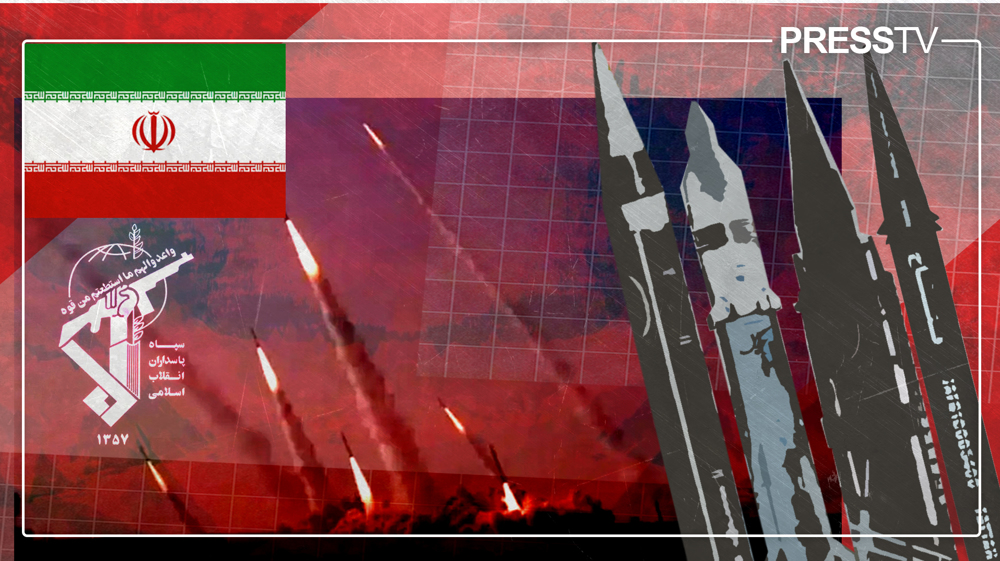
In the annals of modern warfare, few outcomes carry the weight of what Iran achieved through its missile and drone capabilities during the recent war that was imposed on the Iranian nation and in the negotiations that followed the ceasefire.
While the world focused on the signatures affixed to the memorandum of understanding and the choreography of diplomatic gestures, a far more consequential development unfolded that would shape the regional balance of power for generations to come.
Iran, through strength, firm will, and demonstrated deterrence, succeeded in keeping its missile and drone programs completely outside the scope of negotiations, marking a major strategic defeat for the US-Israeli axis that launched the war to destroy the country’s missile capabilities.
These capabilities remained a sovereign national asset and the backbone of Iran's defense strategy, not a bargaining chip, as proven by the MoU signed by the two sides recently.
The architecture of deterrence
To understand the magnitude of this achievement, one must first understand what Iran's missile and drone capabilities represent. They are not merely weapons systems but the architecture of deterrence itself, the tangible expression of a nation's will to survive and prevail against overwhelming odds.
For decades, Iran's adversaries imagined that they could threaten, coerce, and even attack with impunity. The calculus was simple: Iran lacked the means to respond decisively, and its strategic depth was more vulnerability than asset. This war changed that calculus forever.
Iran's missile and drone power emerged as the decisive factor that altered the battlefield, shifted the strategic balance, and forced the other side to recognize a new reality. These capabilities did not just defend Iranian territory but projected power, disrupted enemy calculations, and demonstrated that aggression against Iran would come at a cost that no adversary was prepared to bear.
The enemy's air superiority, naval dominance, and technological edge were neutralized by the sheer effectiveness of Iran's indigenous defense capabilities, especially its vast array of the most advanced missiles, and the strategic vision that guided its development.
When the war came to a halt and the memorandum was signed, Iran's adversaries expected to use the negotiating table to dismantle what the battlefield had failed to destroy.
They sought to include Iran's missile and drone programs in the discussions, hoping that diplomatic pressure would achieve what military force could not. They miscalculated as Iranian negotiators stood firm. The red line was drawn, and it was not crossed.
Pezeshkian rules out talks on Iran's defense capabilities, says missiles prevented fate of Gazahttps://t.co/tIstSBIbt3
— Press TV 🔻 (@PressTV) June 23, 2026
The strategic achievement
Iran did not accept any restriction on the very power that protected the country, changed the balance of the war, and introduced new rules of engagement. This was not a concession made in exchange for other gains. It was a fundamental principle, non-negotiable and immutable, on which the Iranian negotiators held their ground.
The missile and drone programs remained outside the scope of negotiations. No limits were imposed, no verification regimes were established, and no sunset clauses were accepted. The programs that had proven decisive in the third imposed war launched on Iran in late February remained fully intact, fully operational, and fully under Iranian sovereignty.
This was a major strategic achievement, one that redefined the terms of Iran's engagement with the world. For the first time, Iran's adversaries were forced to acknowledge that certain key aspects of Iranian power were simply not open for discussion.
The missile and drone capabilities were not bargaining chips to be traded away for sanctions relief or diplomatic recognition. They were the foundation upon which all other achievements rested.
Without them, there would have been no leverage. Without them, there would have been no victory. Without them, there would have been no memorandum worth signing.
Iran's negotiators understood this so did the country’s military leadership. And Leader of the Islamic Revolution, who had consistently emphasized the importance of these capabilities, understood this more clearly than anyone.
The preservation of Iran's missile and drone power was not a tactical concession or a strategic compromise, but a demand articulated with clarity and enforced with resolve.
IRGC targets enemy vessel, US Fifth Fleet HQ, American airbase after violations near Strait of Hormuzhttps://t.co/TS51bcEKK1
— Press TV 🔻 (@PressTV) June 3, 2026
The Israeli dimension: A revealing anger
Perhaps the most telling indicator of the significance of this achievement is the reaction of the Israeli regime. Tel Aviv's anger over the exclusion of Iran's missile and drone power from the negotiation table speaks volumes.
The regime's continued threats to attack Iran make this point even more important. Israel wanted this file included and wanted restrictions imposed on the Iranian missile industry.
The reason for Israel's desperation is not difficult to discern. Throughout the war, Iran's missile and drone capabilities were one of the decisive factors that made Iran the winning side. These capabilities have nightmare for Israeli war hawks, disrupted Israeli calculations, and made any escalation prohibitively costly.
The Israeli regime knows that as long as Iran retains this power, its own strategic options remain severely constrained. Air strikes, covert operations, and cyberattacks may cause damage, but they cannot eliminate a capability that is distributed, redundant, and continuously evolving.
The missile and drone programs are not static systems that can be destroyed. They are dynamic, adaptive, and deeply embedded in Iran's national security infrastructure.
Israel's anger is therefore not a sign of irrationality but a sign of recognition. Tel Aviv understands that Iran's missile and drone power is the main guarantee against any future aggression. The regime knows that attacking Iran's nuclear facilities, its military installations, or its territorial integrity would invite a response that it cannot withstand.
Iranian missile and drone strikes force US to mull relocating Fifth Fleet assets from Bahrain to Israelhttps://t.co/MSm0u3Mwnz
— PressTV Extra (@PresstvExtra) June 26, 2026
The continuing guarantee
Iran's missile capabilities, in particular, remain the main guarantee against any future aggression. This war demonstrated that Iran's adversaries are prepared to resort to military adventurism, but they are not prepared to absorb the consequences of a full-scale confrontation with the battle-ready Iranian armed forces.
Iran's missile and drone power ensures that any potential aggressor must weigh the costs of attack against the certainty of retaliation. This is the essence of deterrence, and it is the foundation of Iran's national security.
The preservation of these capabilities sends a clear message to Iran's allies and adversaries alike. To Iran's allies in the Resistance Front, it demonstrates that Iran is a reliable and trustworthy partner, one that possesses the means and the will to defend its interests and support its friends.
To Iran's adversaries, it signals that the old era of unchecked impunity is over. Iran cannot be threatened, bullied, or coerced into submission. Its power is real, its resolve is unshakable, and its capabilities are rapidly growing.
Iran yet to deploy 'significant' portion of its missile capability: Defense Ministry https://t.co/yFp59NeXVg
— Press TV 🔻 (@PressTV) April 25, 2026
A model for strategic negotiation
Iran's astonishing success in preserving its missile and drone capabilities offers important lessons for any nation facing asymmetric pressure from more powerful adversaries.
The lesson is simple: strategic red lines must be drawn with clarity and defended with resolve. Negotiations are not an end in themselves but a means of advancing national interests. When the preservation of core capabilities is at stake, compromise is not a virtue but a strategic error of catastrophic proportions.
Iran demonstrated that strength, not concessions, commands respect. The other side was forced to accept Iran's terms because the military reality on the ground made any alternative impossible. The missile and drone programs were not subjected to negotiation because Iran refused to negotiate them. This is the kind of strategic clarity that transforms negotiations from exercises in capitulation into instruments of national power.
The preservation of Iran's missile and drone capabilities is a permanent feature of the regional strategic landscape. These capabilities are not subject to the whims of diplomacy or the pressures of sanctions. They are enduring, evolving, and increasingly sophisticated.
They represent the accumulated wisdom of a nation that learned the hard way that survival requires strength, that deterrence requires credibility, and that victory requires the willingness to defend what matters most.
New front will open if Iran is attacked again, Leader’s advisor warns
Iran, resistance forces to deliver ‘devastating’ response to any threat: Top cmdr.
From ‘How Will This End For Iran’ to ‘When America Walks Away’: A tale of two Economist covers



VIDEO | Yemenis rally behind Ansarullah amid recent military gains
VIDEO | ‘Attrition, low morale deepen strain on US troops amid war on Iran,’ analyst says
Iraqi resistance group rejects disarmament, vows to maintain support for Lebanon
Israeli attacks kill six Palestinians in Gaza as ceasefire violations mount
Iran warns regional states of Israel’s malicious intents following reports of Netanyahu UAE visit
VIDEO | IRGC letter to American people
Army spox: Saudi Arabia launches over 30 airstrikes across Yemen in 24 hours
VIDEO | News Review: Israel settlement expansion






 PressTV NEWSLETTER
now
PressTV NEWSLETTER
now
 This makes it easy to access the Press TV website
