Unity of arenas: Clause 1 of Iran-US MoU and future of Iran’s regional deterrence architecture
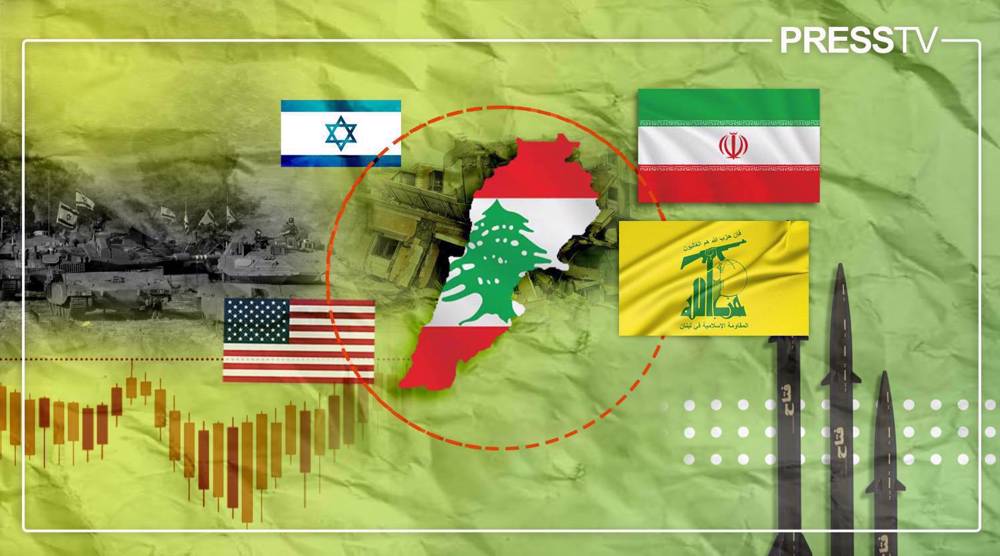
By Press TV Strategic Analysis Desk
In the annals of international diplomacy, certain agreements contain clauses and provisions that transcend mere procedure, emerging instead as foundational pillars upon which the security and stability of entire regions depend.
Clause 1 of the recently concluded Iran-United States memorandum of understanding (MoU) is such a provision. Far from being a mere technicality or a preliminary formality, this clause, which calls for the "immediate and permanent termination of military operations on all fronts, including in Lebanon," represents the end of a decades-long strategic evolution in Iran's defense doctrine and the reaffirmation of the Islamic Republic's geopolitical credibility.
To the casual observer, Clause 1 might appear as a straightforward cessation of US-Israeli hostilities. However, beneath this veneer of simplicity lies a complex web of strategic, political, security, and symbolic calculations that cut to the very heart of Iran's national security paradigm.
Iran's insistence on the precise implementation of Clause 1 of the memorandum, particularly its demand for a complete Israeli military withdrawal from occupied Southern Lebanese territories, is not merely an act of solidarity with an ally, but a non-negotiable strategic necessity for the Islamic Republic and the unified Axis of Resistance.
To compromise on this point would be to unravel the very fabric of Iran's deterrence doctrine, effectively inviting future aggression by the wicked enemy by signaling that its red lines are permeable and its alliances are expendable.
The doctrine of unified resistance: A strategic foundation
The Iranian position on Clause 1 is rooted in a strategic vision that has been meticulously refined over decades and validated in the crucible of recent imposed wars. The repeated emphasis by the Leader of the Islamic Revolution on strengthening the unity of the Resistance Front is a strategic axiom based on a clear understanding of the asymmetric balance of power in West Asia, especially after the recent 40-day war on Iran.
The concept of a "Unified Resistance Front" represents Iran's most effective answer to the organized, extensive, and technologically superior offensive capabilities arrayed against it. As events have demonstrated, Iran's defense doctrine relies on a broad, geographically dispersed network of allies – Hezbollah in Lebanon, Ansarullah in Yemen, and various resistance groups in Iraq and Syria – that are united by their shared opposition to US and Israeli destabilization in the West Asia region.
This front's unique advantage lies in its ability to create a multi-front challenge for the enemy. The waterways, sensitive border regions, and geographical dispersion of its components provide Iran with the capability to apply pressure from multiple directions simultaneously, creating a form of balance against the military power of the United States, the Israeli regime, and their allies.
The recent war has transformed this network from a loose coalition into a more integrated and coordinated force. As one analysis put it, the principle of the "Unity of the Arenas" has become a source of strength for the Islamic nation and a nightmare for its adversaries.
It has also redefined the regional balance of power, establishing a new paradigm where attacks on any component of the resistance axis could trigger reactions from all fronts.
✍️ Analysis - Leader’s strategic vision leverages Iran’s post-war ascendancy to reshape regional power dynamics
— Press TV 🔻 (@PressTV) June 21, 2026
By Press TV Strategic Analysis Desk https://t.co/ldvVF1jpXg
The indispensable alliance: Why Hezbollah is not expendable
The Hezbollah resistance movement in Lebanon is an integral component of Iran's long-term strategic vision for the region, especially in ensuring the Zionist regime does not gain a foothold in the Arab country. Hezbollah's power rests not only on its military apparatus but also on its ability to influence Lebanese political developments.
For Iran, the relationship with Hezbollah is a matter of both strategic interest and regional credibility. Hezbollah's decision to join the war alongside Iran against the US-Israeli war machine was a demonstration of commitment to the resistance axis, reaffirming the importance of this strategic concept.
Like other regional and global powers, Iran relies not only on military capabilities but also on its reputation for standing by its regional allies. From this perspective, support for Hezbollah is about maintaining a regional network that Iranian policymakers consider essential to the country's deterrence posture in the face of continued US-Israeli hostilities.
This alliance has been tested in the recent war that was imposed on Iran and its allies in early February, with profound implications for Iran's security doctrine.
It reinforced the centrality of Hezbollah to Iran's regional posture. As an INSS report notes, while the erosion of the “proxy” concept became apparent, Hezbollah's entry into the campaign on March 2, 2026, sparked a renewed debate and was viewed as a powerful example of the "Axis of Resistance's" continued and growing relevance.
Crucially, Iran's commitment to Hezbollah is now stronger than ever. It has been reflected in Tehran's insistence on binding any permanent ceasefire agreement with the United States to a ceasefire in Lebanon. This commitment reached its peak in Iran's direct strikes against Israel following Israeli attacks on Beirut, demonstrating that Tehran views an attack on the Lebanese capital as an attack on itself.
Clause 1 as a strategic imperative, not a concession
The inclusion of Lebanon in Clause 1 of the MoU and the subsequent Iranian insistence on Israeli military withdrawal transform this issue from a diplomatic talking point into the central pillar of Iran's national security.
The official Iranian position, articulated by Foreign Minister Abbas Araghchi, is unequivocal: without the withdrawal of Israeli occupation forces from the occupied territories in South Lebanon, the war has not fully come to an end.
For Iran, this is a matter of existential strategic logic. Retreating from the demand to end the occupation of Lebanon would effectively amount to accepting the continuation of war against one of its most important allies, Hezbollah.
The result of such a concession would be the creation of a serious gap in Iran's defensive shield for future confrontations with the United States and Israel. Indeed, if this disruption continues, it could encourage the enemy to contemplate renewed aggression against Iran.
Tehran's strategic calculus is clear: the war against the Resistance Front cannot end on one front while continuing on another. The enemy's long-stated objective of creating a separate diplomatic track between Lebanon and Israel, mediated by the United States, is an attempt to artificially separate Iran's path from that of its strategic ally.
Iran's insistence on the precise implementation of Clause 1 is therefore not an action serving non-Iranian objectives; rather, it is a purely Iranian political strategy designed to keep the threat of war away from Iran and strengthen the country's defensive umbrella.
✍ Analysis - 60-day negotiation framework, seven conditions: Iran’s strategic red lines shape oversight and leverage
— Press TV 🔻 (@PressTV) June 23, 2026
By Press TV Strategic Analysis Deskhttps://t.co/fiJG5m898g
The peril of strategic ambiguity
The MoU's wording, however, has created a degree of ambiguity that threatens to undermine Iran's strategic objectives. While the Iranian version of Clause 1 demands an "immediate and permanent halt to (US-Israeli) military operations on all fronts, including Lebanon," the US interpretation, along with the separate track of Israel-Lebanon negotiations, suggests a more complicated reality.
This ambiguity is precisely the enemy's objective. The creation of a separate diplomatic track between Lebanon and Israel, mediated by the United States, is a symbolic effort to suggest that Iran's path and the Lebanese Resistance's path are distinct. If Iran were to accept this framing, it would effectively accept a strategic defeat. It would signal to the United States that Iran is willing to negotiate even at the cost of sacrificing its strategic ally.
The enemy operates under the cynical assumption that it can surgically degrade resistance forces without provoking a direct Iranian response. The hope is to strike Hezbollah and expect Hezbollah to strike back within the unwritten rules of limited engagement, while Iran remains behind the horizon.
If Iran were to accept the continuation of occupation in Lebanon while simultaneously entering nuclear negotiations with the United States, it would confirm this assumption. It would provide the enemy with a propaganda victory, claiming that the war compelled Iran to come to the nuclear negotiating table, effectively proving that military force is a means of extracting concessions from Tehran.
This is why the principle of a "Unified Resistance Front" is so critical. By tying America's exit from the illegal and unprovoked war against Iran to America's cessation of support for Israeli aggression against Hezbollah and other resistance components, Tehran has ensured that the enemy cannot surgically de-escalate while continuing its proxy warfare.
There can be no separate peace, no carve-out for Lebanon. The front is unified, and the terms are equally unified.
The symbolic dimension: Perception as reality
From a symbolic perspective, Clause 1 represents a critical battleground for perceptions of strength and weakness. One of the primary indicators of Iran's strategic victory in the war would be forcing the United States to end the war against the Lebanese Resistance, which must involve both the cessation of military attacks and withdrawal from occupied territories.
If the occupying regime does not withdraw from the occupied territories and Iran ceases insisting upon such withdrawal, it would effectively provide the enemy with a propaganda opportunity to claim that the war compelled Iran to come to the nuclear negotiating table.
Under such circumstances, while the war has not truly ended, Iran would have already begun a nuclear bargain. The broader propaganda claim would then be that the US ultimately succeeded through military force in compelling Iran to make nuclear concessions.
This dangerous perception – that war is an effective means of extracting concessions from Iran – would encourage the enemy to contemplate renewed aggression in the future.
As the analysis of hybrid warfare indicates, the enemy's psychological operations are designed precisely to create this perception, to distort the cost-benefit calculations of Iran's decision-makers and to present major concessions as minor, while magnifying the enemy's commitments as critical breakthroughs.
✍️ Analysis - With Israeli boots on the ground in Lebanon, Iran-US war-end deal remains fundamentally incomplete
— Press TV 🔻 (@PressTV) June 16, 2026
By Press TV Strategic Analysis Deskhttps://t.co/YKOBeFGylO
The indivisible front
So, Iran's insistence on the full implementation of Clause 1 – particularly its demand for Israeli withdrawal from occupied Lebanese territory – is not a matter of choice but of strategic necessity. It is the logical consequence of a unified resistance doctrine that has been validated in the crucible of war and is now enshrined in Iran's national security strategy.
The enemy has repeatedly tried to separate the Iranian file from the Lebanese one. The United States and Israel believe they can surgically de-escalate while continuing their proxy warfare. But Iran's strategic logic, rooted in decades of experience, insists otherwise.
The United States must understand that the war against the Resistance Front is a single, indivisible war. If it wants its war against Iran to end, it must also end its war against Hezbollah or any other ally. Any attempt to create a distinction between them will only prolong the war and ensure that the broader strategic competition continues in a more dangerous form.
The future of regional stability in West Asia depends not on the wording of diplomatic documents but on whether the strategic realities on the ground align with the commitments made on paper. For Iran, there can be no retreat from the principle that the unity of the Resistance Front is the guarantee of its security and the foundation of its regional influence.
‘Not just a catch, an intelligence prize’: IRGC spokesman hails seizure of second US underwater dron
Iran Army vows stronger response to any renewed US aggression

IRGC captures second US underwater drone in Strait of Hormuz



Resistance group calls on Iraqi govt. to reconsider suspension of Iranian flights
US aviation sanctions endanger health of Iranians: Rights body
From ‘How Will This End For Iran’ to ‘When America Walks Away’: A tale of two Economist covers
Five UK nationals arrested over alleged plan to bomb US-run base
Iran’s Ali Alipour wins Asian Games gold in weightlifting with world-record total
VIDEO | Pakistan commemorates Nasrallah martyrdom anniversary, reaffirms support for Palestine
Leader: Days of foreign domination that enemies seek are gone forever
Sana’a marks 2nd anniversary of Nasrallah martyrdom



 PressTV NEWSLETTER
now
PressTV NEWSLETTER
now
 This makes it easy to access the Press TV website
