60-day negotiation framework, seven conditions: Iran’s strategic red lines shape oversight and leverage
By Press TV Strategic Analysis Desk
Islamic Republic of Iran stands at a critical juncture in its contemporary history, navigating one of the most consequential diplomatic engagements since the 2015 Joint Comprehensive Plan of Action (JCPOA).
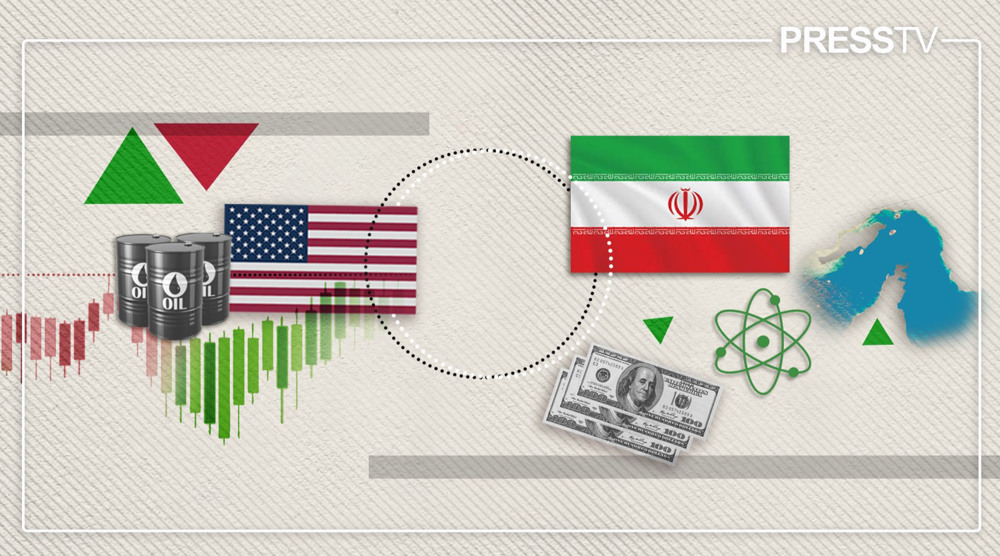
The 60-day negotiation framework, established through a memorandum of understanding (MoU) between the presidents of Iran and the US, represents not merely a procedural timeline but a test of strategic resolve, diplomatic sophistication, and national sovereignty.
The framework established through these negotiations emerges from a complex context – ‘Third Imposed War’ – and reflects the assessment that Iran occupies a position of strategic superiority over those who illegally and unjustifiably imposed the war on the country.
This positioning is a calculated strategic assertion that fundamentally shapes the nature, scope, and sequencing of diplomatic engagements.
The seven conditions articulated by social media accounts affiliated with the office of the Leader of the Islamic Revolution represent a comprehensive vision for a war-ending deal that prioritizes Iran's sovereignty, territorial integrity, and legitimate national interests.
The architecture of conditions: Understanding the seven-point framework
Condition one: The primacy of ending military hostilities
The termination of US-Israeli military operations (read: aggression) stands as the most important provision within the memorandum, functioning as the essential precondition for creating circumstances conducive to negotiation toward a final agreement.
This condition reflects Iran's consistent position from the outset of this war that dialogue with an aggressor is impossible except regarding the definitive end of its hostilities.
The strategic logic underpinning this position is both sound and historically validated: negotiations conducted while military aggression continues inevitably distort the diplomatic process and produce outcomes that reflect coercion rather than mutual agreement.
Iran's clear stance that no negotiations on other issues – including the nuclear question – will commence until the war ends definitively represents a sophisticated understanding of negotiation theory and power dynamics.
By maintaining this position, Iran prevents the opposite hostile side from leveraging ongoing military aggression to extract concessions on unrelated matters. This approach effectively separates the cessation of hostilities from other contentious issues, ensuring that the end of military offensives is not contingent upon Iran's concessions in other areas but rather stands as an independent obligation arising from the aggression itself.
Condition two: Compensation and reconstruction
The demand for compensation to Iran as the nation subjected to unprovoked and illegal military aggression and damages to victims represents a principle that transcends mere diplomatic preference and embodies fundamental justice and international legal norms.
The logic articulated in the conditions framework is compelling: until the status of the aggressor is determined and compensation rendered, the two sides lack a basis for discussing other matters. This principle operates on moral, legal, and strategic levels.
From a moral perspective, requiring compensation acknowledges the human suffering, material destruction, and economic disruption caused by the unprovoked aggression. It affirms that aggression carries consequences and that victims of such aggression deserve restitution. The legal dimension draws upon established principles of international law regarding state responsibility for wrongful acts, including the obligation to make full reparation for injury caused by internationally wrongful acts.
Strategically, the compensation requirement serves as a deterrent against future aggression by establishing that military adventurism carries significant financial and reputational costs.
The specification that $300 billion in funding should be prepared by the enemy reflects Iran's assessment of the comprehensive damages suffered across multiple sectors – infrastructure, economic development, human capital, and opportunity costs. This figure, while substantial, represents a quantified articulation of the principle that aggression must carry consequences proportional to the harm inflicted.
✍️ Analysis - Leader’s strategic vision leverages Iran’s post-war ascendancy to reshape regional power dynamics
— Press TV 🔻 (@PressTV) June 21, 2026
By Press TV Strategic Analysis Desk https://t.co/ldvVF1jpXg
Condition three: Sovereignty over the Strait of Hormuz
The affirmation of Iran's sovereignty over the Strait of Hormuz addresses one of the most strategically significant maritime chokepoints globally. The strait's importance, through which approximately 20-30% of the world's seaborne oil passes, renders its control a matter of immense strategic importance. Iran's insistence on recognition of its sovereignty over this waterway reflects both legal principles and strategic necessities.
The legal basis for Iran's sovereignty claim rests on the strait's geographical configuration and established principles of international law regarding territorial waters and straits used for international navigation. The strategic dimension encompasses Iran's ability to influence regional security, protect its maritime interests, and prevent hostile powers from threatening its territorial integrity.
The condition regarding the reopening of the strait, while appearing concessionary, actually strengthens Iran's position by establishing that continued access is contingent upon Iran's cooperation and goodwill rather than being an entitlement of other nations.
The provision allowing vessels to transit the strait free of charge for 60 days, with the implicit possibility of fees afterward, represents a sophisticated approach that establishes precedent for Iran's authority while providing a transitional period for international adjustment. However, care must be exercised to prevent the enemy from exploiting this period to normalize and permanently institutionalize the arrangement in a manner inconsistent with Iran's sovereignty.
Condition four: Comprehensive sanctions removal
The demand for comprehensive removal of all primary and secondary sanctions addresses the economic warfare dimension of the war.
Sanctions illegally imposed by the United States and its allies have created significant economic hardship for the Iranian people, restricting access to international financial systems, limiting trade, and impeding economic development. The complete removal of all sanctions represents not merely a negotiating position but rather a fundamental right of the Iranian people to engage in normal economic relations without external coercion.
The distinction between "comprehensive removal" and partial or conditional relief is crucial. Partial sanctions relief creates ongoing leverage for the imposing power, allowing continued pressure through selective enforcement or the threat of reimposition.
Comprehensive removal eliminates this leverage, normalizing Iran's economic relations and preventing the use of economic pressure as a tool of coercion. The condition that sanctions relief should be a top priority in negotiations reflects the centrality of economic sovereignty to Iran's overall strategic position.
Condition five: Closure of nuclear-related issues
The demand for definitive closure of nuclear-related issues addresses the historical legacy of suspicion and pressure surrounding Iran's peaceful nuclear program. Iran's insistence on recognition of its legitimate nuclear rights, including enrichment, represents an assertion of its inalienable rights under the Treaty on the Non-Proliferation of Nuclear Weapons (NPT) to pursue peaceful nuclear technology.
The condition that these issues be definitively closed – rather than merely suspended or deferred – prevents the recurrence of manufactured disputes that have historically provided pretexts for pressure and sanctions against the Iranian nation.
The linkage between nuclear issues and broader normalization of relations is essential to Iran's strategic position. By conditioning progress on other matters upon definitive resolution of nuclear concerns, Iran prevents the opposing side from using nuclear issues as a permanent source of leverage.
This approach transforms the nuclear question from an ongoing point of contention to a resolved matter, fundamentally altering the character of Iran's international relations.
✍ Analysis - Beyond the MoU: Leader's message redefines framework of authority, legitimacy, and people's role in governance
— Press TV 🔻 (@PressTV) June 19, 2026
By Press TV Strategic Analysis Deskhttps://t.co/ZLbGcTlS7C
The negotiation framework: Principles and priorities
A critical element of Iran's approach is the insistence on sequential rather than simultaneous negotiation. Under this framework, the cessation of the enemy’s military aggression and compensation must precede negotiations on other matters.
This sequencing reflects sound strategic reasoning: negotiations conducted under the shadow of ongoing war inevitably disadvantage the party against whom force is being employed. By insisting that military hostilities conclude and compensation commence before other issues are addressed, Iran ensures that subsequent negotiations occur in a context of genuine ceasefire rather than coerced submission.
The logic of sequential negotiation extends beyond military matters to encompass all conditions. The requirement that provisions regarding naval blockade, sovereignty over the Strait of Hormuz, sanctions relief, and access to blocked assets be implemented or commence implementation before entering the next phase of negotiations establishes a clear framework of accountability.
This approach prevents the enemy from offering vague promises in exchange for Iran's concessions on substantive matters, ensuring that implementation precedes further negotiation.
The conditions framework explicitly identifies certain matters as Iran's "unquestionable rights" that should not be subject to negotiation. This includes sovereignty over the Strait of Hormuz, nuclear rights, including enrichment, and the right to compensation for aggression.
By distinguishing between matters subject to negotiation and those that represent fundamental rights, Iran establishes clear red lines that protect its core interests while allowing flexibility on secondary matters.
This approach reflects sophisticated strategic thinking. By clearly identifying non-negotiable rights, Iran prevents the enemy from assuming that all matters are subject to bargaining, thereby avoiding the creation of false expectations regarding Iran's willingness to compromise on fundamental issues.
Simultaneously, by identifying certain matters as non-negotiable, Iran creates space for strategic flexibility on other issues while maintaining the integrity of its core positions.
The conditions framework explicitly references Iran's "superior position at the moment of the ceasefire requested by the other side" as a basis for imposing conditions. This reference to relative power dynamics reflects a realistic assessment of the negotiation context.
When one party requests a ceasefire, it implicitly acknowledges that continued military aggression is not in its interest, creating a moment of leverage for the opposing party.
Iran's assertion that it possesses the right to impose additional conditions beyond ending the war and compensation reflects the logic of victory in any war. The victorious party in a war may impose conditions before easing pressure on the defeated party, as a form of compensation for the aggression, and may maintain that pressure until those conditions are fulfilled. This logic is consistent with historical practice in international relations and reflects the reality that the cost of aggression should be borne by the aggressor, not the victim.
Implementation challenges and strategic considerations
A significant challenge identified in the conditions framework concerns the ambiguities and possibilities for interpretation in the text of provision one. The requirement to end “military operations,” while seemingly straightforward, presents numerous interpretive questions.
What constitutes “military operations”? Are cyber operations included? What about covert actions? Does the cessation apply to all theaters or only specified areas? Who determines compliance? How is it measured and evaluated?
These ambiguities create potential for dispute and manipulation by the opposing side. The enemy might interpret military cessation narrowly, continuing operations that fall outside its preferred definition, while demanding that Iran accept such operations as consistent with the agreement. Alternatively, it might delay implementation while claiming compliance, exploiting ambiguities to maintain military pressure while enjoying the benefits of the deal.
✍ Analysis - Iran-US war-ending MoU codifies Tehran's strategic leverage, cementing its status as regional superpower
— Press TV 🔻 (@PressTV) June 18, 2026
By Press TV Strategic Analysis Deskhttps://t.co/wCg8Z2Z8Um
Addressing these ambiguities requires robust oversight mechanisms and clear interpretive frameworks. Iran must establish monitoring procedures that can definitively determine compliance, develop criteria for evaluating whether military operations have actually ceased, and create consequences for non-compliance that deter exploitation of interpretive ambiguities.
The condition regarding the withdrawal of occupation forces from occupied areas in southern Lebanon represents a specific application of the general principle of ending military operations. Iranian foreign minister's emphasis that without withdrawal – or the commencement of withdrawal in a manner that allows completion by the end of the 60-day negotiation period – provision one has not been fulfilled establishes a clear standard for compliance.
This requirement addresses a common tactic in any war resolution: declaring an end to hostilities while maintaining occupation of territory. Such tactics allow the aggressor to claim compliance with ceasefire provisions while preserving the fruits of aggression. By insisting that cessation of military operations includes withdrawal from occupied territory, Iran prevents this tactic and ensures that the end of hostilities produces genuine restoration of territorial integrity and the end of illegal occupation.
The specific reference to Lebanon and the struggle against occupation reflects the regional dimensions of the war. Iran's support for the Resistance Front embodies a strategic commitment to opposing illegal occupation throughout the region. The conditions framework explicitly protects the rights of the Resistance Front, including the struggle against occupation, ensuring that the negotiation process does not come at the expense of broader regional commitments.
The requirement that the United States must completely end the illegal naval blockade within 30 days addresses a critical security concern. Naval blockades represent a form of economic warfare that imposes significant costs on the targeted nation while often avoiding the direct military confrontation that would characterize other forms of aggression.
The blockade creates pressure on Iran's economy while limiting the country’s ability to respond without escalating to direct military confrontation.
The statement that, since the memorandum's signing, no interference by the US military with Iranian vessels has been recorded, suggests some initial compliance with this condition. However, the 30-day timeline establishes a clear deadline that prevents the enemy from indefinitely extending the illegal blockade while claiming incremental progress.
This deadline creates accountability and provides a benchmark against which compliance can be measured.
The strategic importance of this condition extends beyond immediate economic concerns. By ending the naval blockade, the United States would remove a significant coercive tool, reducing the enemy's leverage and normalizing Iran's maritime operations.
The recognition that Iran refrained from responding to attacks on Beirut's southern suburbs in exchange for this commitment suggests that the negotiation process has already produced tangible benefits through reciprocal compliance.
The conditions concerning the release of Iran's blocked assets address a critical component of economic sovereignty. The framework acknowledges that the release of these assets is contingent upon full implementation of the memorandum, meaning that if the memorandum is not fully implemented or a final agreement is not reached, the United States will not release these funds. This contingency creates significant strategic concerns.
The condition that the release process depends on a mutually agreed Iran-US mechanism during negotiations creates additional complexity. By requiring bilateral agreement on release mechanisms, the provision gives the United States significant leverage over the process. The enemy might impose conditions on how assets are released, how funds are spent, or create procedural obstacles that delay or prevent actual access to the funds.
Iranian negotiators should strive not to cede authority over the use of these funds to the enemy. The United States might attempt to condition fund release on commitments regarding spending priorities, creating ongoing leverage over Iran's economic decisions. Preventing such conditions is essential to maintaining economic sovereignty and ensuring that released funds serve Iran's national interests rather than the enemy's policy objectives.
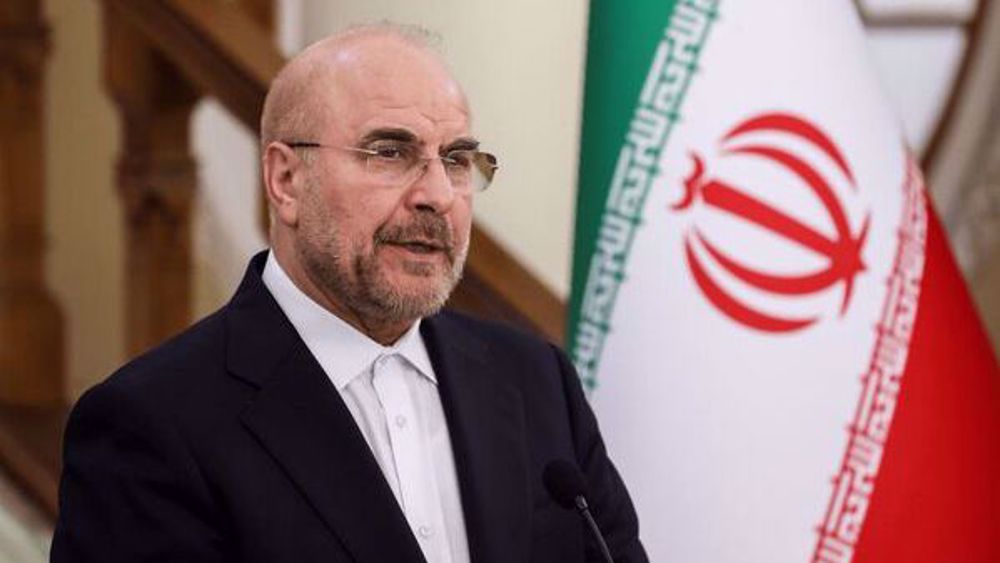
Iran's Parliament Speaker Qalibaf: Negotiation produced results several times greater than the gains we expected from retaliatory strikes for Lebanon.
— Press TV 🔻 (@PressTV) June 17, 2026
Follow https://t.co/B3zXG73Jym pic.twitter.com/R0E7fxUEzs
Strategic errors and their consequences
Any Iranian rush to enter nuclear negotiations – or even preliminary nuclear talks – before the full implementation of Provision Thirteen would be a mistake that creates unnecessary enemy miscalculations. It reflects a sophisticated understanding of negotiation dynamics and the importance of sequencing.
When one party demonstrates eagerness to negotiate, it signals that it perceives negotiation as more important than the counterparty, reducing its leverage and encouraging the other side to demand concessions.
By rushing into nuclear negotiations before conditions have been fulfilled, Iran would signal that it values these negotiations more than the enemy does, potentially undermining its position and encouraging the enemy to believe that Iran is desperate for a deal.
If Iran appears eager to negotiate, the enemy might conclude that Iran's position is weaker than it actually is, leading to demands for excessive concessions. Alternatively, the enemy might conclude that Iran's victory claims were exaggerated, undermining the strategic positioning that Iran has carefully constructed.
The failure to fully implement the first provision – placing Iran's unquestionable rights on the negotiating table – will certainly intensify the enemy's miscalculation. If Iran negotiates on matters that it considers non-negotiable rights before conditions have been fulfilled, it creates the impression that these rights are actually negotiable, inviting further demands.
Since the war concluded with Iran in a position of superiority, there is no strategic reason to negotiate from a position that suggests otherwise.
The emphasis on precise and complete implementation of Provision One reflects recognition that ambiguity creates opportunity for manipulation. If implementation is imprecise or incomplete, the enemy may exploit ambiguity to claim compliance while actually maintaining coercive pressure. The requirement for precise implementation serves multiple strategic functions: it prevents enemy exploitation of ambiguities, maintains Iran's credibility, and denies the enemy the temptation of repeating cycles of war, ceasefire, and negotiation.
The concept of preventing the enemy's temptation of repeating the cycle of war, ceasefire, and negotiations is particularly significant.
This cycle – in which an aggressor initiates war, negotiates a ceasefire, and then resumes war after benefiting from the negotiation process – represents a common tactic that allows the aggressor to gain advantages through manipulation. By insisting on precise implementation and clear compliance standards, Iran prevents this cycle from recurring.
✍️ Analysis - With Israeli boots on the ground in Lebanon, Iran-US war-end deal remains fundamentally incomplete
— Press TV 🔻 (@PressTV) June 16, 2026
By Press TV Strategic Analysis Deskhttps://t.co/YKOBeFGylO
Oversight mechanisms and media strategy
The requirement for immediate and daily accountability and clarification regarding ambiguities surrounding the negotiations reflects recognition that ambiguity in the public sphere creates opportunities for the enemy to shape perceptions.
When information is lacking or uncertain, the enemy can fill the gap with its own narratives, potentially shaping public opinion both domestically and internationally in ways that disadvantage Iran.
The emphasis on neutralizing the enemy's ongoing psychological warfare acknowledges that the diplomatic dimension of this war ends beyond official negotiations to encompass public perception and information warfare.
The enemy will inevitably attempt to portray the negotiations in ways that serve its interests, potentially by creating expectations of Iranian concessions or suggesting that Iran is negotiating from a point of weakness. An effective media and communications strategy is essential to countering these efforts.
The negotiations' media and communications strategy represents a critical dimension of overall strategic positioning. The enemy will use media to shape perceptions, mount pressure on Iran, and potentially influence the negotiation process itself. Effective management of media narratives requires proactive rather than reactive approaches, establishing Iran's framing of negotiations before the enemy can establish its own.
Ambiguities must be addressed daily as effective communication requires ongoing engagement rather than occasional statements. This approach prevents the enemy from controlling the narrative through more frequent communications, maintains Iran's credibility through consistent messaging, and allows rapid response to enemy claims and initiatives.
The origin of the articulation of conditions through social media accounts affiliated with the office of the Leader reflects the importance of this channel in contemporary communications strategy. Social media provides direct access to public audiences without media filtering, allows rapid dissemination of information, and creates opportunities for engaging with multiple audiences simultaneously.
The use of social media also presents its own challenges. The speed and informality of social media can create opportunities for misinterpretation, and the need for rapid responses can lead to inconsistent messaging.
An effective social media strategy requires careful coordination, clear messaging frameworks, and the ability to respond quickly while maintaining message discipline.
As the 60-day timeline proceeds, the challenge for Iran's negotiators will be to maintain strategic discipline, resist pressure for premature concessions, and ensure that conditions are fulfilled before moving to subsequent stages of negotiation.
The framework established provides clear guidance for this process, but effective implementation requires vigilance, strategic clarity, and the determination to maintain Iran's position throughout the diplomatic engagement.

‘Not just a catch, an intelligence prize’: IRGC spokesman hails seizure of second US underwater dron
Iran Army vows stronger response to any renewed US aggression

IRGC captures second US underwater drone in Strait of Hormuz



New front will open if Iran is attacked again, Leader’s advisor warns
Iraqis hold nationwide rallies against suspension of Iranian flights
Iran, resistance forces to deliver ‘devastating’ response to any threat: Top cmdr.
Saudi jets strike school, residential villages in Yemen
Hamas vows to remain committed to Palestine liberation cause
Nasrallah turned resistance into ‘deterrence doctrine’: Qalibaf
Iranian delegation will hold talks with mediators in New York: Report
VIDEO | Gaza’s hidden crisis: Thousands face hearing loss amid war and collapsing healthcare




 PressTV NEWSLETTER
now
PressTV NEWSLETTER
now
 This makes it easy to access the Press TV website
