Iran stopped Trump's 'march to reassert US global dominance': Analyst
By Press TV Website Staff
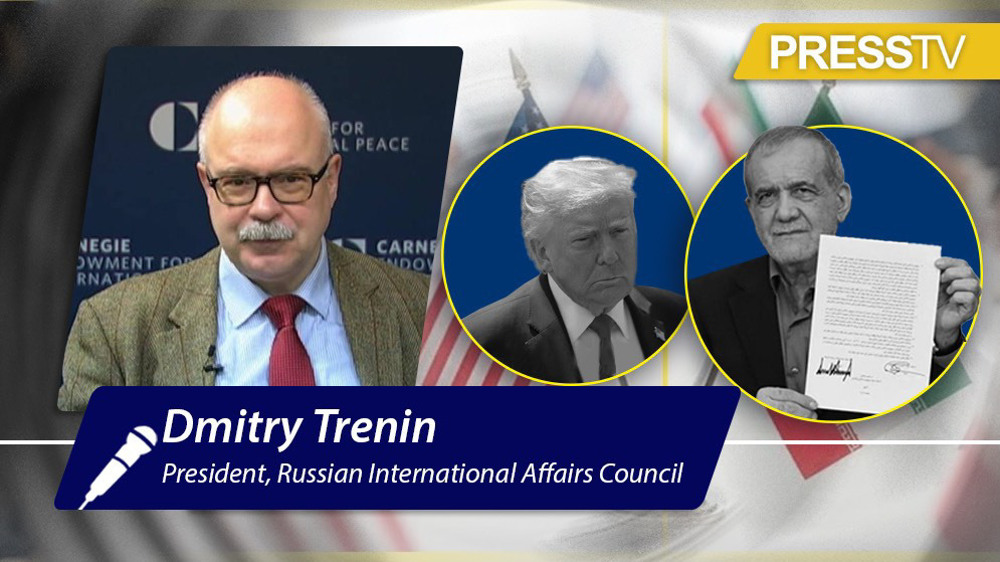
Iran managed to thwart US President Donald Trump’s attempt to “reassert American global dominance,” a Russian analyst says, as the signing of the Iran-US memorandum of understanding (MoU) results in shifting global power balances.
Speaking to the Press TV website, Professor Dmitry Trenin, president of the Russian International Affairs Council, noted that the war’s outcome marks a setback for American hegemony and a step toward a more multipolar order.
“Iran has stopped what had looked, after the capture by US Special Forces of Venezuelan President Nicolas Maduro and the US oil blockade of Cuba, Trump’s march to reassert US global dominance,” he said.
He noted that the war of aggression imposed on Iran exposed structural limits in US power projection and accelerated the erosion of American influence across key regions.
Trenin argued that US hegemony has long functioned as a “sort of contract,” sustained by Washington’s role as a military protector for allied states, but he added that the recent war against Iran broke that perception in the Persian Gulf.
“The US hegemony in the Middle East has taken a hit,” he stated.
The Persian Gulf Arab states hosting US bases, he noted, had viewed them as a security guarantee. Instead, “when the US forces attacked Iran, those bases became targets for Iranian counter-strikes,” forcing regional governments to reconsider their reliance on Washington and “diversify their security policies.”
✍ Analysis - Iran-US war-ending MoU codifies Tehran's strategic leverage, cementing its status as regional superpower
— Press TV 🔻 (@PressTV) June 18, 2026
By Press TV Strategic Analysis Deskhttps://t.co/wCg8Z2Z8Um
The US and Israel launched a joint war of aggression against Iran on February 28. The criminal attacks led to the assassination of the Leader of the Islamic Revolution and top military commanders while also incurring extensive damage to civilian infrastructure, schools, and hospitals, claiming the lives of more than 3400 Iranians, including women and children.
Iran responded with 100 waves of missiles and drones under “Operation True Promise 4,” targeting US and Israeli assets across the region, which ultimately forced the aggressors to accept Iran’s terms for a Pakistan-mediated ceasefire that came into effect on April 8.
Trenin added that the war also reshaped perceptions in the wider West Asian region, noting that Israel emerged politically isolated despite its close alignment with Washington.
According to Trenin, the Islamabad memorandum "has left Israel in the lurch,” with Israeli sentiment "marked by disappointment toward Trump and growing disillusionment with the US political class more broadly. Israel, he suggested, now “has to look beyond Washington.”
Europe, too, is recalibrating its position, he said. The countries that declined to support the US-Israeli aggression against Iran have increasingly spoken about “EU strategic autonomy.”
While he described such rhetoric as limited in the short term, he a it noted that a longer-term recognition that “transatlantic bonds are weakening.”
Turning to Iran’s military performance during the war, Trenin said the country emerged in a “much stronger” position despite significant human and material losses, pointing to the resilience of the political leadership, the unity of military command, and the population’s mass readiness, as reflected in nightly nationwide gatherings.
“The morale of the Iranian people and its leaders has been given a big boost,” he added.
✍ Analysis - Beyond the MoU: Leader's message redefines framework of authority, legitimacy, and people's role in governance
— Press TV 🔻 (@PressTV) June 19, 2026
By Press TV Strategic Analysis Deskhttps://t.co/ZLbGcTlS7C
Iran, he said, “resorted to successful asymmetrical tactics by engaging the US targets in the Persian Gulf States and closing the Strait of Hormuz.”
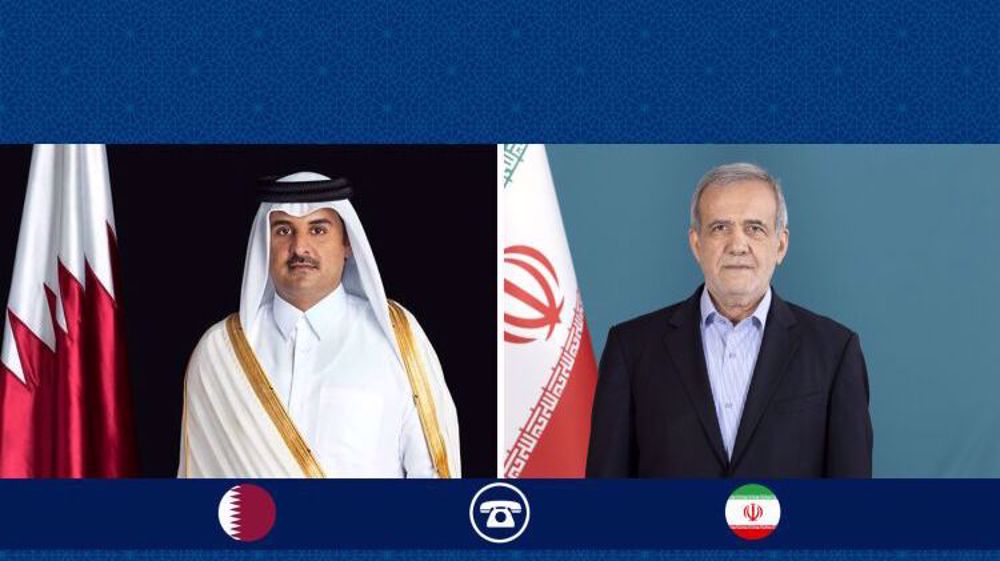
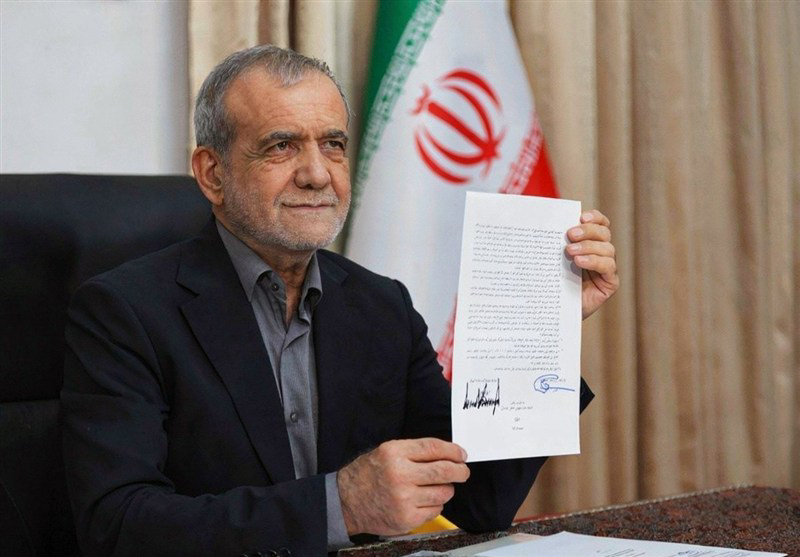
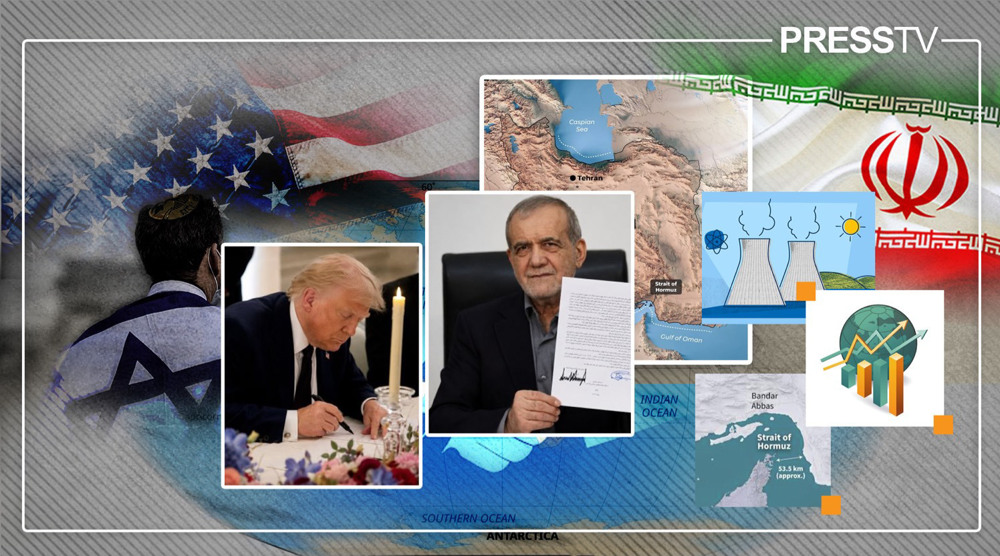
He also credited Tehran with “a great job diplomatically” in securing favorable ceasefire terms under the US-Iran MoU, which was finalized after regional mediation led by Pakistan and Qatar and remotely signed early on Thursday, Iran time, by the presidents of Iran and the US.
The agreement outlines a phased roadmap for de-escalation on all fronts, including the lifting of the illegal US blockade and decades of sanctions, restoration of commercial shipping in the Strait of Hormuz, and a substantial reconstruction package, alongside continued negotiations over Iran’s nuclear-related commitments.
On long-term deterrence, Trenin highlighted the strategic importance of the Strait of Hormuz. He said Iran’s “proven ability” to control the waterway, “the US Navy presence notwithstanding,” would now be a permanent consideration for Washington strategists.
He further placed the war within a wider global realignment. In his view, the war signaled limits to US attempts to reassert global dominance, while reinforcing trends toward a multipolar system involving Russia, China, Iran, and other BRICS-aligned states.
Trenin stressed that American decline is not immediate but gradual.
“The decline of American dominance is a process that will probably take more than a couple of decades,” he said, adding that states prioritising sovereignty must begin building “a viable model of a non-hegemonic order.”

BRICS paving way for alternative world order, not a war machine against West: Analyst
Iran’s strategic location, energy resources position it as a key player in BRICS alliance: Analyst
Yemeni military advance along Red Sea alters balance of power amid Saudi siege, aggression: Analyst



US visa ban on Iranian president’s media team is bid to hide the truth: FM spokesman
US aggression, economic warfare amount to crimes against humanity: Iran's UN envoy
Protests erupt in US as ICE agent shoots Venezuelan driver
US pressure fuels cooperation among Muslim states: Pezeshkian
Major TV networks suspend White House pool coverage after Trump ban
US visa ban on Palestinian UN delegation violates international agreements: Hamas
VIDEO | Press TV's news headlines
Iran calls on France to respect law after suspending French cultural institute in Tehran




 PressTV NEWSLETTER
now
PressTV NEWSLETTER
now
 This makes it easy to access the Press TV website
