Iran-US MoU codifies Tehran's strategic leverage, cementing its status as regional superpower
By Press TV Strategic Analysis Desk
Military campaigns invariably begin with grand declarations and sweeping promises of decisive victory, yet the final verdict is never written in the heat of battle but only when the guns fall silent and the political terms of peace are laid out.
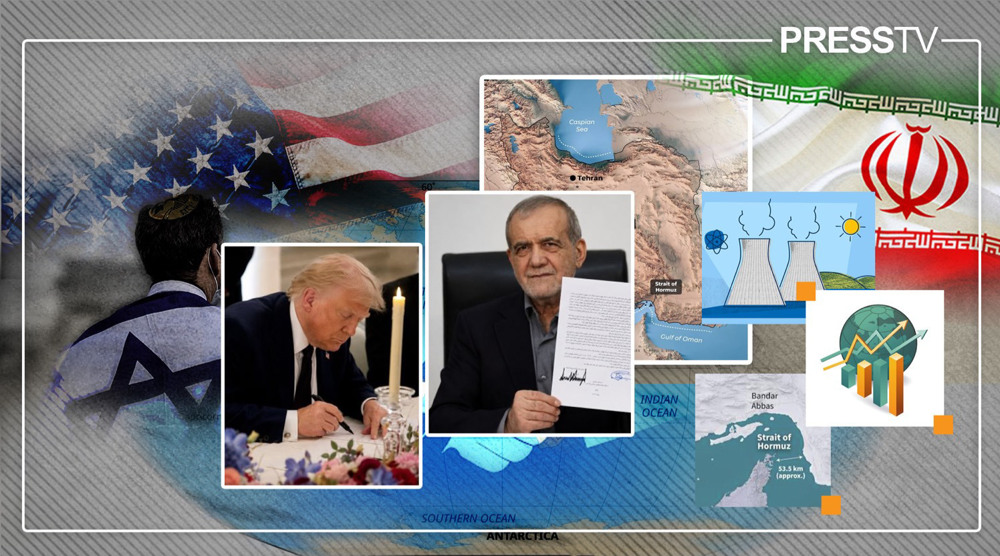
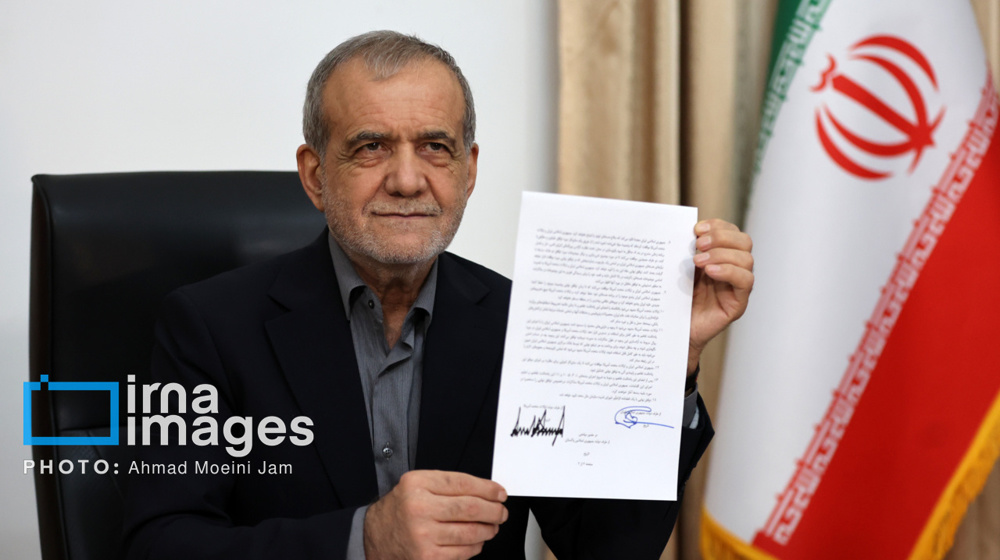
The signing of the memorandum of understanding (MoU) by the presidents of Iran and the United States early on Thursday has fundamentally altered the strategic landscape of the region. It represents the formal acknowledgment of Iran's strategic victory in a war that was imposed on it, and its definitive emergence as the preeminent regional superpower.
This is no diplomatic compromise born of mutual exhaustion, but rather a document of American capitulation and a recognition that the Islamic Republic has not only survived the most serious existential threat since its founding but has decisively transformed its position from a sanctioned, isolated state into an indispensable power.
It is undeniable evidence of Iran’s resilience under immense pressure, the durability of its vibrant political system, and its rise as the most influential independent power in the region.
America's war aims: A catalogue of complete failure
The foundational truth of this war lies in the comprehensive failure of the US war machine to achieve any of its declared war objectives. It had confidently spoken of “regime change,” the partition of Iran, and the plundering of Iranian resources, but now finds itself signing an agreement that explicitly acknowledges its inability to deliver on any of these goals.
Washington entered this unprovoked and illegal war at the behest of its Zionist proxy with maximalist goals, which included the destruction of the Islamic Republic system, the fragmentation of Iranian territory, the neutralization of Iran's regional influence, and the dismantling of its indigenous nuclear and missile programs.
Every single one of these objectives failed. The Islamic Republic remains intact, its territorial integrity explicitly recognized in the agreement, its influence over the Resistance Front formally acknowledged, and its nuclear knowledge and missile capabilities undiminished.
This failure is not merely tactical but strategic. The US war machine realized that, despite possessing the world's most powerful military, it could not bring about “regime change” in a nation of Iran's size and resilience. More importantly, it understood that its military power cannot translate into political victory when confronted with a determined adversary possessing asymmetric leverage and overwhelming public support.
This reality alone speaks volumes. The Islamic Republic survived one of the most serious challenges in its history without surrendering its sovereignty, abandoning its strategic posture, or yielding to the enemy’s demands aimed at transforming the nature of the state.
More importantly, desperate attempts to foment internal divisions, activate proxy forces, or facilitate terrorist infiltration into Iranian territory failed to produce meaningful results. The system remains fully functional, national cohesion has been preserved, and Iran’s strategic decision-making apparatus continues to operate effectively.
✍️ Analysis - How Iran turned battlefield gains and regional power into strategic postwar leverage against US
— Press TV 🔻 (@PressTV) June 14, 2026
By Press TV Strategic Analysis Deskhttps://t.co/6OAI0n8FS8 pic.twitter.com/Wo53HsrrN4
The recognition of a new regional order
Perhaps the most significant achievement articulated in the 14-point MoU is the formal recognition of Iran's expanded sphere of influence. It acknowledges Iran's political, security, and military influence in the region and an unbreakable bond with the Resistance Front, a validation that no previous American administration would have countenanced.
The inclusion of Lebanon in the ceasefire framework represents a watershed moment. For the first time, the United States has effectively conceded that Iranian influence in Lebanon is a reality that must be accommodated and acknowledged. The linkage of the war's termination to the cessation of hostilities in Lebanon means Washington has accepted Tehran as the guarantor of Lebanese security and the interlocutor for Hezbollah.
This transforms Iran into a recognized regional superpower with formal security responsibilities. Washington, in effect, has finally acknowledged that any regional crises cannot be resolved without Iranian participation and consent.
Also, importantly, rather than disintegrating, the Resistance Front emerged more unified and politically relevant than before the recent imposed war, representing one of the most enduring geopolitical consequences.
Strait of Hormuz: Iran's permanent strategic leverage
Another pillar of the memorandum concerns the Strait of Hormuz, arguably the world’s most important maritime chokepoint. Its provisions regarding this strategic waterway represent perhaps the most effective demonstration of Iran's battlefield victory.
Iran has not merely compelled the United States to lift its illegal naval blockade; it has secured formal recognition of its role in managing the world's most critical energy chokepoint through which 20 percent of the world's crude oil supply transits.
The agreement acknowledges that Iran will coordinate the reopening of the strait, maintaining sovereign regulatory authority and a role in its future management. This is not a return to the pre-war status quo but a fundamental restructuring of maritime governance in the Persian Gulf and preserving it as a powerful deterrent against future threats.
As analysts have noted, the ability to control the Strait has proven more valuable to Iran than its nuclear program as a deterrent. By securing acknowledgment of its role in the management of the Strait, Iran has ensured that any future aggression against it carries a cost that will be felt in boardrooms and households across the globe.
This is asymmetric leverage at its most potent and a guaranteed source of influence that will endure regardless of the outcome of future negotiations.
💬 Conversation - Iran-US MoU ‘great victory’ for Tehran as US failed to achieve war objectives: Former diplomathttps://t.co/SKJB3kWulf
— Press TV 🔻 (@PressTV) June 15, 2026
The inversion of the nuclear dynamic
Perhaps the most brilliant strategic maneuver in Iran's playbook has been the inversion of the nuclear issue. For years, the nuclear file served as the primary pressure point against Iran, the axis around which illegal and unjust sanctions were constructed and international scrutiny organized. This MoU has fundamentally altered this dynamic.
By linking nuclear negotiations to the implementation of ceasefire provisions, Iran has transformed the nuclear issue from a weapon of pressure into a bargaining chip of its own making.
The MoU explicitly conditions nuclear talks on the fulfillment of American commitments, including Israeli military withdrawal from Lebanon and the release of Iranian frozen assets. This means Washington cannot obtain nuclear concessions without first demonstrating good faith on issues of immediate strategic concern to Tehran.
More significantly, the agreement explicitly acknowledges the option of Iran moving toward nuclear weapons in the event of American non-compliance. This is a departure from decades of diplomatic euphemism, embedding in an official document the understanding that Iran's nuclear program serves as a deterrent that can be reactivated if the deal breaks down.
In strategic affairs, deterrence often depends less on actions than on perceptions. By expanding the range of possible responses available to Tehran, the memorandum signed on Thursday strengthens Iran’s long-term negotiating position.
The economic dimension: Sanctions neutralized
The economic provisions of the MoU constitute a remarkable reversal of fortune for Iran.
The suspension of illegal oil sanctions, the release of billions in frozen assets, and the commitment to secure substantial investment in Iran's reconstruction represent not merely sanctions relief but sanctions neutralization.
If fully and earnestly implemented, these measures could unlock significant economic opportunities and facilitate long-term development in the Islamic Republic of Iran.
For decades, sanctions were designed to isolate Iran economically, restrict access to global markets, and limit the country’s ability to generate revenue from its energy sector.
The United States has now conceded that its economic warfare against the Islamic Republic failed. The blockade of Iranian oil exports, the freezing of assets, and the attempt to economically strangle the Islamic Republic have all been abandoned in favor of diplomacy.
More tellingly, Washington has committed to facilitating reconstruction investment totaling hundreds of billions of dollars, a clear admission that Iran's infrastructure damage should be repaired at least partly with American support.
This is, in every sense, the acknowledgment of a defeated party that its economic tools proved insufficient to compel Iranian capitulation after a full-scale military aggression.
Factbox: 14-point US-Iran MoU lays out terms to end imposed war, reshape regional security framework
— Press TV 🔻 (@PressTV) June 17, 2026
https://t.co/tIpBWnFaTX
The regional implications: Israel's isolation
The MoU has profoundly altered Israel's strategic position in the region. For years, the genocidal child-murdering regime had sought to shape American policy toward Iran and the Resistance Front, advocating for unlawful military action and “regime change.”
The memorandum, which came nearly 110 days after the failed US-Israeli military gamble, represents a decisive rejection of that approach, with the United States effectively prioritizing strategic stability and economic considerations over Israeli demands.
Israel's continued military aggression and occupation in Lebanon now stand in direct opposition to the framework established by its closest ally and benefactor.
The growing public friction between Washington and Tel Aviv over Lebanon is not merely a diplomatic disagreement but a fundamental divergence in strategic priorities. The US has signaled that it values an end to the war with Iran more than Israeli objectives in Lebanon.
This has accelerated the emergence of a new regional balance of power in which Iran serves as an anchor state. The Persian Gulf states, recognizing this reality, have engaged in quiet diplomatic outreach to Tehran in recent weeks, acknowledging that their security interests are better served through accommodation than confrontation.
The Israeli agenda of a regional axis against Iran – through the failed “normalization” gimmick – has effectively collapsed in the past three months.
At the same time, the MoU and its embedded provisions signal a deeper realignment in the regional balance of power, tilting decisively in Iran's favor, while heralding the terminal decline of the Zionist settler-colonial project.
The enforcement architecture: A test of American credibility
Iran has constructed an enforcement architecture that demonstrates its understanding of American unreliability, given the bitter past experiences. The step-by-step structure of the deal, conditioning Iranian commitments on phased American implementation, provides Tehran with multiple exit points should Washington violate its pledges.
Unlike arrangements requiring unilateral compliance, the memorandum ties Iranian commitments directly to corresponding actions by the United States. This framework reflects lessons learned from previous diplomatic experiences and seeks to ensure that commitments are implemented gradually and reciprocally.
The phased approach gives Iran leverage throughout the process while preserving the ability to respond to violations or breaches through a range of strategic instruments.
The Strait of Hormuz remains Iran's ultimate enforcement mechanism. Any American breach of commitments can be met with restrictions on vessel transit, ensuring that violations carry costs beyond the bilateral relationship. Military response options are explicitly reserved, signaling that Iran will not absorb attacks as "minor infractions" as it has in the past.
This is the structure of an agreement imposed by a victor on a defeated party that cannot be trusted to honor its obligations. The asymmetry of enforcement mechanisms – Iran retains multiple tools to pressure the United States while Washington has effectively abandoned its coercive instruments – tells the story of the outcome of the third imposed war.
The end of war? Maybe. ✅
— Press TV 🔻 (@PressTV) June 17, 2026
The beginning of peace? Unlikely. ⁉️
Here’s a look at how the US–Iran dynamic may unfold, despite the two countries reaching a MoU.
Follow https://t.co/B3zXG74hnU pic.twitter.com/8l1MeaIBR5
The rise of the regional superpower
The MoU marks a watershed moment in the region’s history. Iran not merely survived a full-scale war of aggression imposed by two nuclear powers, but emerged from it with its strategic position enhanced, its regional role recognized, and its deterrent capabilities acknowledged by both friends and foes.
The United States, by contrast, suffered a strategic defeat of significant proportions. Its military power, economic leverage, and diplomatic influence proved insufficient to achieve any of its objectives. The agreement represents not a negotiated settlement but a recognition of that failure and an acknowledgment that the Islamic Republic has become too powerful to be overthrown and too important to be isolated.
For Iran, the MoU consolidates its status as a regional superpower capable of defending its interests against the world's superpower. The Islamic Republic demonstrated that strategic sophistication and asymmetric leverage can defeat an enemy with technological superiority and conventional military might.
Having said that, this MoU itself does not guarantee peace. It establishes a framework that will be tested in the coming months. But the fundamental reality is that Iran has won.
It has secured formal recognition of its expanded sphere of influence, enhanced its leverage over global energy markets, neutralized the economic warfare against it, and demonstrated that it is an indispensable actor in any regional arrangement.
313,000-strong ‘Jan-Fada’ drill signifies Iran’s popular mobilization and social readiness amid war
Leader’s advisor: Any foreign forces attempting to land in Iran ‘will certainly be destroyed’
Iran’s military warns of ‘unpredictable blows’ in response to US threats



Top commander calls President Pezeshkian’s UN address ‘resounding voice of the proud Iranian nation’
IRGC dismantles terrorist team in southeastern Iran, killing five
Iran’s top security official says no return to pre-war diplomacy with US
‘We don’t seek permission to defend our country’: Snippets from President Pezeshkian’s UNGA address
VIDEO | Kargil protest demands justice, constitutional safeguards for Ladakh
Pezeshkian spoke for Iran’s 3,000-year-old civilization at UN: Qalibaf
Araghchi conveyed Iran’s ‘clear, transparent’ conditions to US: Spokesman
Switzerland urges Israel to end 'unlawful occupation' of Palestinian territories




 PressTV NEWSLETTER
now
PressTV NEWSLETTER
now
 This makes it easy to access the Press TV website
