Iran deal officially ends US empire, exposes limits of American power: Tucker Carlson
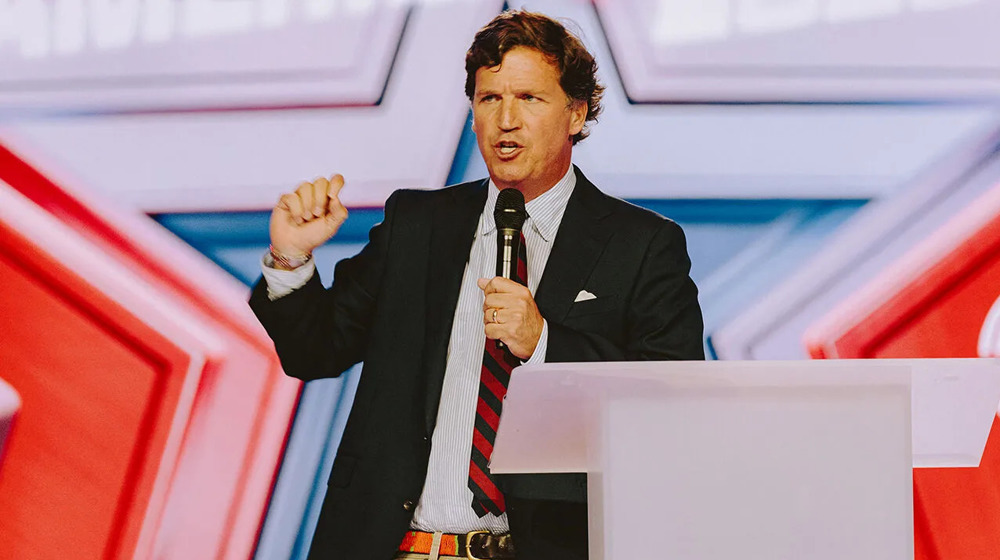
American conservative commentator Tucker Carlson says the memorandum of understanding between Iran and the United States marks a historic turning point, stressing that Washington's inability to impose its will on Tehran signals the beginning of the end of the American empire.
Commenting on the Iran-US memorandum of understanding remotely signed by US President Donald Trump and Iranian President Masoud Pezeshkian on Wednesday, Carlson stressed that the MoU represents an acknowledgment by Washington that Iran has emerged as a regional power that cannot be subdued through military pressure.
“With this, the United States has officially acknowledged that Iran is a player. And that changes everything, in the same way that the 1956 Suez crisis, another crisis, another war over a narrow waterway, through which commerce flows, ended the British Empire,” he emphasized.
Carlson noted that the Suez Crisis did not create Britain's decline but exposed a loss of power that had already taken place.
“Now, of course, you argue the British Empire really kind of ended with the armistice in 1918, at the end of the First World War, you could definitely argue that it was done by 1945 when they ‘won World War II.’ But like a lot of fading empires, it wasn’t obvious to the rest of us, so there was muscle memory involved. And Britain had ruled the world. And so it was fading, but not dead,” he added.
"The United States has officially acknowledged that Iran is a player."
— PressTV Extra (@PresstvExtra) June 18, 2026
Tucker Carlson argues that the US has effectively admitted it lacks the power to impose its will on Iran, drawing a parallel to Britain's realization of its own imperial decline during the 1956 Suez Crisis. pic.twitter.com/8q6L9njTdb
Expanding on the historical parallel, Carlson argued that Britain's inability to shape events during the Suez Crisis revealed the true limits of its power.
“But in the space of a very short period of time with that fairly complex crisis, Britain was done? Why? Because in the Suez crisis of 1956, Britain made it really clear that no matter what they said or wanted, they couldn’t actually affect the outcome. They didn’t have the power to settle things the way they wanted. The US did,” he further said.
According to Carlson, the current MoU with Iran could represent a similar moment for the United States. While Washington has long dominated security and political arrangements across West Asia, he argued that the outcome of the confrontation with Tehran demonstrates that military superiority alone no longer guarantees strategic success.
“And so America, maybe not formally, but certainly, practically, took Britain’s place as the ruler of the Middle East. With this, the United States has shown that it does not have, despite possessing the world’s best or biggest or certainly most generously funded military, does not have the military power to impose its will on the 34th biggest economy in the world,” he stressed.
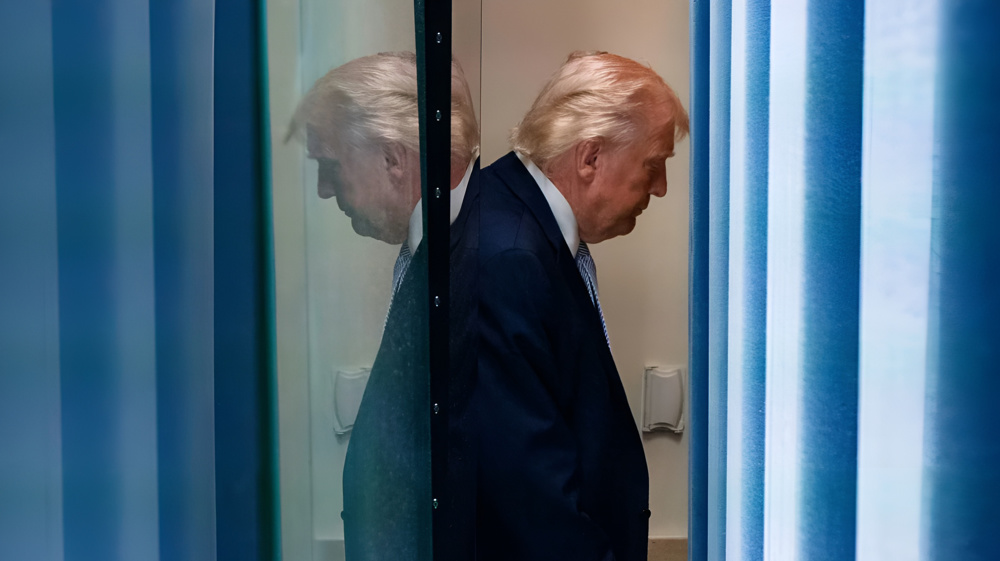
The 14-point memorandum of understanding, signed remotely by Iranian President Masoud Pezeshkian and Trump on Wednesday, calls for a permanent end to hostilities across all fronts, including Lebanon, the phased lifting of US sanctions, the removal of the naval blockade on Iran within 30 days, and the restoration of commercial traffic through the Strait of Hormuz.
The draft agreement also includes a reconstruction and economic development plan for Iran worth at least $300 billion, oil export waivers, the release of Iran’s frozen assets, and a renewed Iranian commitment not to develop nuclear weapons, while further negotiations continue over Tehran’s enriched uranium stockpile.
The agreement has triggered sharp criticism in Washington, where many lawmakers argue that months of military escalation imposed high costs on the United States while yielding significant gains for Iran.
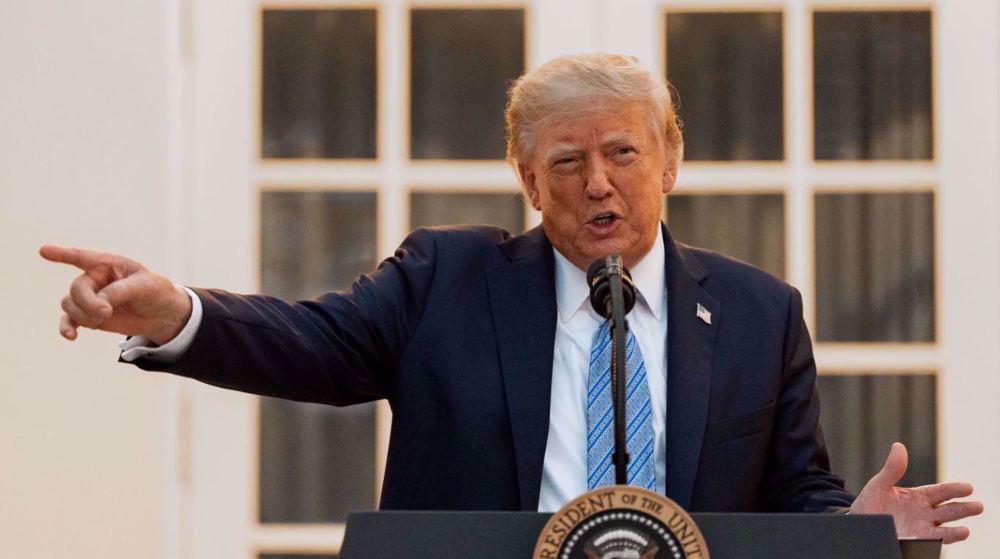
Trump bars CNN, MS NOW and Politico from White House as they question his pro-war policies
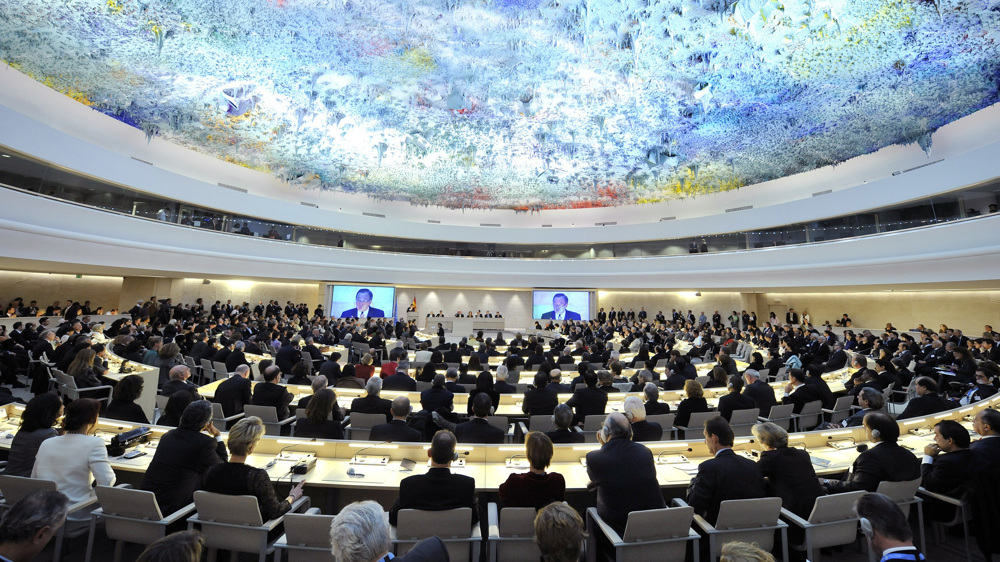
US leaves UN Human Rights Council after probe finds possible American war crimes in Iran
Yemen dismisses Mecca drone allegation, says kiswa donors to Epstein target sanctities



US visa ban on Iranian president’s media team is bid to hide the truth: FM spokesman
US aggression, economic warfare amount to crimes against humanity: Iran's UN envoy
Protests erupt in US as ICE agent shoots Venezuelan driver
US pressure fuels cooperation among Muslim states: Pezeshkian
Major TV networks suspend White House pool coverage after Trump ban
US visa ban on Palestinian UN delegation violates international agreements: Hamas
VIDEO | Press TV's news headlines
Iran calls on France to respect law after suspending French cultural institute in Tehran


 PressTV NEWSLETTER
now
PressTV NEWSLETTER
now
 This makes it easy to access the Press TV website
