US sabre-rattling and Israeli occupation, aggression in Lebanon hollow out war-ending deal
By Press TV Strategic Analysis Desk
The announcement of an end to the war against the Islamic Republic of Iran and its allies was met with a collective exhale from a region teetering on the brink. Yet within days, the foundations of the memorandum of understanding began to crack, revealing a high-stakes game in which the rules are being rewritten even as the ink is still drying.
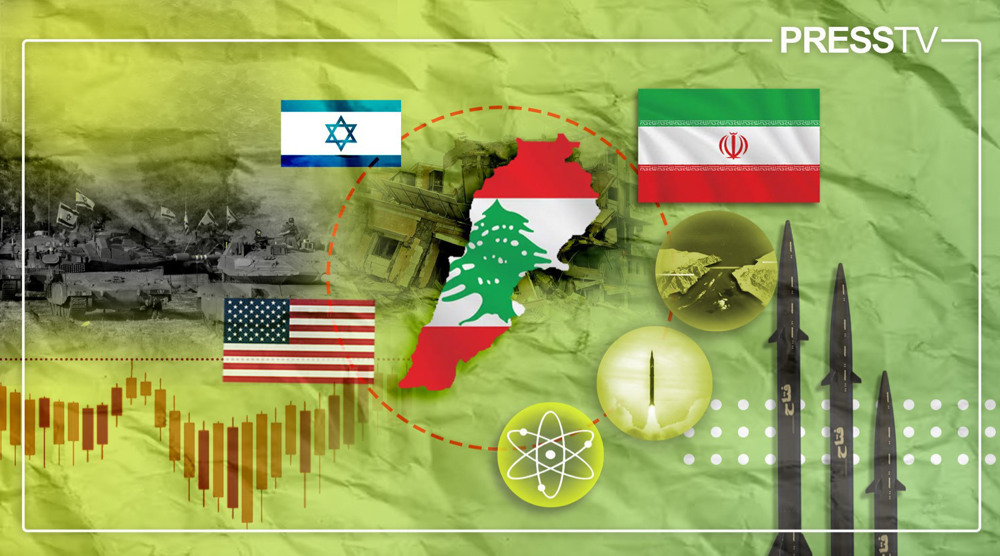
The recent finalization of an MoU aimed at ending the US-Israeli war of aggression across all fronts from Iran to Lebanon and beyond has been followed by a flagrant violation of its core tenets by the aggressors, particularly the Zionist regime.
The continued threats of renewed war from top American leadership, coupled with the Israeli military's ongoing attacks and occupation of parts of Lebanon, are not diplomatic faux pas but a systematic dismantling of the agreement's very fabric.
This situation prompts a critical question: can a peace built on such a fragile foundation survive, or is this merely a strategic pause before the next devastating war?
At the heart of the matter is not only whether a war has formally ended, but whether the behavior of the involved actors aligns with the spirit and conditions of the agreement itself.
If bellicose threats continue, if military pressure persists in parallel theaters, and if agreed conditions remain unfulfilled, then the “end of war” understanding reached a few days ago and scheduled to be signed in Geneva on Friday cannot be meaningfully considered complete.
Instead, what emerges is a hybrid phase – neither active war nor genuine peace, but a strategic pause shaped by coercion, signaling, and unresolved objectives.
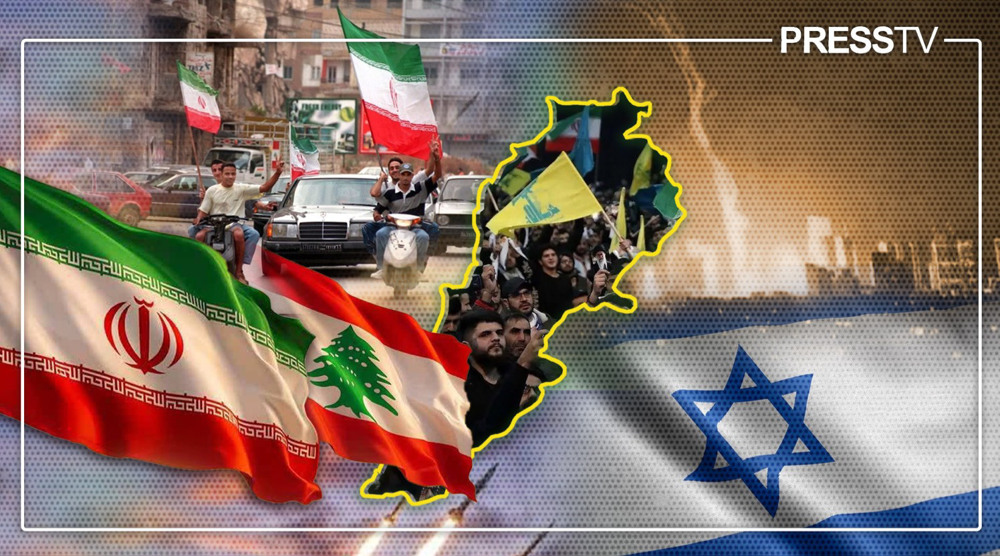
✍️ Feature - Covenant of blood and resistance: How Lebanese people describe the bond between Iran and Lebanon
— Press TV 🔻 (@PressTV) June 17, 2026
By Lama Almakhour https://t.co/wxHTzbX38F
Behavior of aggressors remains unchanged
One of the key issues is relentless sabre-rattling by senior US political figures, including explicit warnings of renewed military strikes should negotiations fail to produce desired outcomes. From this perspective, such statements are not rhetorical excess but structural violations of the spirit of the understanding itself.
If an end-of-war framework is intended to remove coercion as a bargaining tool, then the reintroduction of military threats during negotiations undermines the foundational premise of post-war diplomacy. It repositions diplomacy not as a step away from force, but as an extension of it through alternative means.
As per Iran’s Foreign Minister Abbas Araghchi, the MoU was designed with a two-phase approach to address the deep-seated distrust between Tehran and Washington, a distrust born from decades of broken American promises and criminal aggression.
The first phase was explicitly intended to secure an immediate and permanent end of the war on all fronts, including Lebanon. The cessation of threats, the withdrawal of occupation forces in Lebanon, and a halt to military hostilities were to be the bedrocks upon which the second phase – negotiations on nuclear issues and sanctions relief – would be built.
However, the enemy has refused to comply. It raises a deeper structural concern about how negotiations function in environments where the military option is not fully relinquished. When one side continues to signal the possibility of renewed war, the negotiation space itself becomes distorted. It ceases to be a neutral arena for compromise and instead becomes an extension of coercive pressure, where outcomes are shaped under the implicit shadow of force rather than mutual recognition of constraints.
US behavior has remained unchanged after the early April ceasefire. It has continued to act as if the war is still actively going on. Evidence from early June, when negotiations were in full force, shows that while US President Donald Trump claimed progress in negotiations to end the war, the US was simultaneously launching new strikes on military, radar, and intelligence facilities in southern Iran. This "whipsaw approach" of moving from dire threats to promoting peace within hours destroys any semblance of trust.
As the Iranian military leadership has already warned, any new act of aggression on the country’s energy infrastructure would trigger a severe reaction.
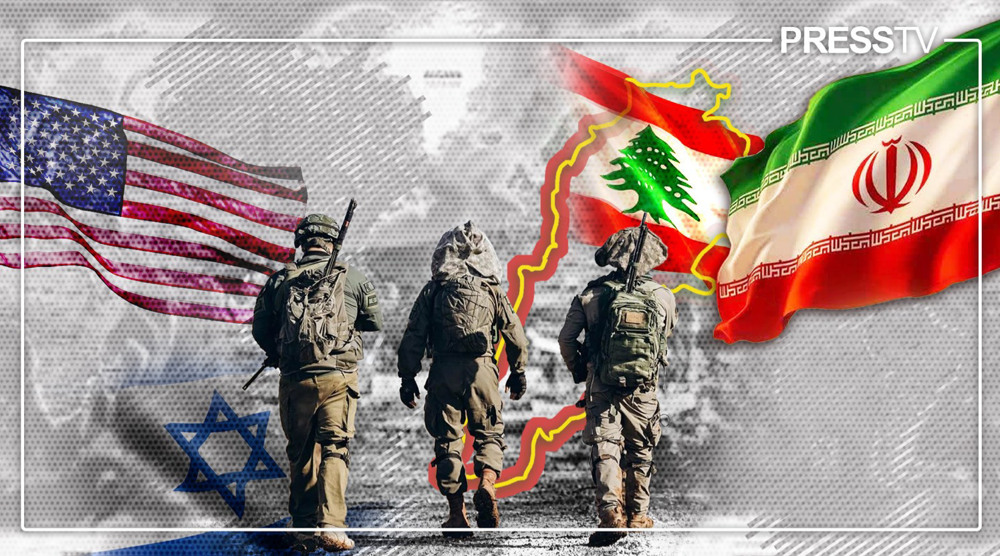
✍️ Analysis - With Israeli boots on the ground in Lebanon, Iran-US war-end deal remains fundamentally incomplete
— Press TV 🔻 (@PressTV) June 17, 2026
By Press TV Strategic Analysis Deskhttps://t.co/YKOBeFGylO pic.twitter.com/bRcddU7Zdi
Lebanon situation and fate of US-Iran deal
The explicit stipulation in the memorandum regarding Lebanon has been treated as a mere side-note by the child-murdering Zionist regime. FM Araghchi has repeatedly stressed that the end of the war in Lebanon is an "inseparable" part of any peace deal. He made it unequivocally clear that, from Tehran's perspective, the two parties to the deal are the US and Israel on one side, and Iran and the Hezbollah resistance movement on the other.
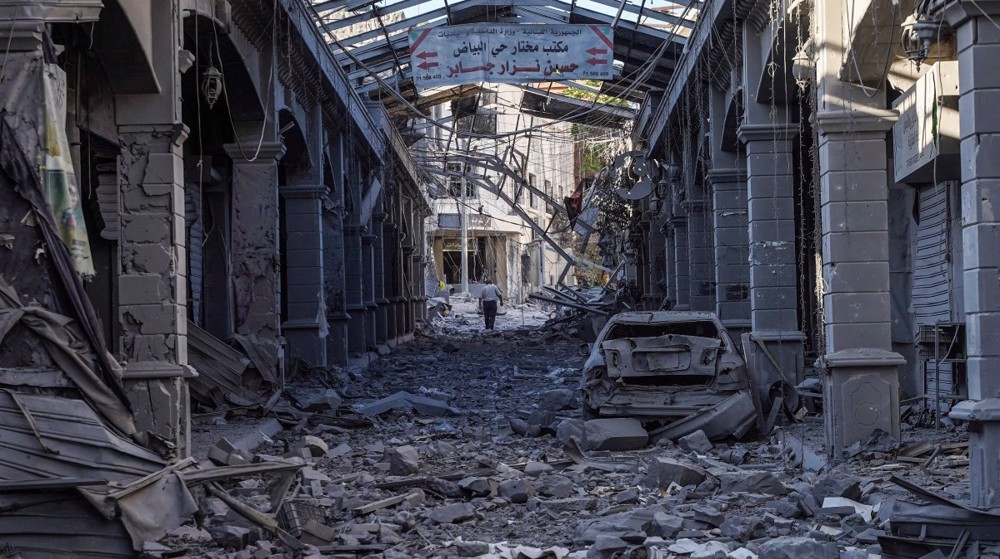
Since the battlefields were interconnected, the peace must be as well. Yet, in direct contravention of this, Israeli regime premier Benjamin Netanyahu has publicly stated that the Israeli military would remain in the zones it currently occupies in Lebanon for as long as necessary.
The MoU between Tehran and Washington was not limited to a single bilateral space but was meant to establish a broader cessation of the enemy’s hostilities across multiple fronts. If one of those fronts remains active – whether through occupation or intermittent military aggression – then the integrity of the overall framework is called into question.
This is a clear sign that the war has not fully ended, and that the prerequisite for entering the second phase of negotiations has not been met. So, logically, you cannot end a war on all fronts while actively occupying territory on one of those fronts.
For Iran, given the situation in Lebanon, entering into the second phase of negotiations is not just strategically inadvisable, but it is a violation of the agreement's main premise. The core reason for structuring the talks into two phases was to ensure that, once both sides commit to a permanent end to war, threats would under no circumstances be used as leverage.
It reflects a broader concern about sequencing in international diplomacy. In complex wars, phased agreements are designed to build trust incrementally. But they are also vulnerable to asymmetry, where one side perceives compliance as optional or negotiable, while the other treats it as foundational. When that asymmetry emerges, the agreement itself risks collapsing into interpretive war rather than operational clarity.
Iranian negotiators, including FM Araghchi, have noted that the US put forward additional demands that remain under discussion even after the MoU was announced, demonstrating that the US is still trying to extract concessions under the shadow of its military muscle.
✍️ Analysis - How Iran turned battlefield gains and regional power into strategic postwar leverage against US
— Press TV 🔻 (@PressTV) June 14, 2026
By Press TV Strategic Analysis Deskhttps://t.co/6OAI0n8FS8 pic.twitter.com/Wo53HsrrN4
Venezuela formula won’t work in Iran
To proceed with "post-war" negotiations while being bombed and threatened is to create a catastrophic precedent. It signals to the enemy that threats and aggression are effective tools for extracting concessions, ensuring that the cycle of war, ceasefire, and negotiation will be repeated in the future. It shows the American side is still failing to acknowledge a key reality about Iran – Iran is not Venezuela and that formula won’t work in Iran.
The Iranian response, in the face of these repeated violations, must be calculated, proportional, and decisive. While the current official stance is a refusal to enter dialogue until all conditions stipulated in the MoU are met, the next step must be clearly outlined.
If the next round of talks does begin, and violations persist – whether through continued US threats or Israeli occupation – Iran must activate its own instruments of leverage. This would logically include the activation of military options and, crucially, the Strait of Hormuz.
This is a proportional response to the enemy's failure to uphold its end of the bargain, and it is the only language that an adversary that understands only force understands.
Ultimately, the enemy's current strategy is designed to force Iran to negotiate from a position of weakness, accepting an agreement that replicates the worst aspects of the 2015 deal or guarantees a future war. The only way to break this cycle and ensure a stable, lasting peace is to reaffirm that the end of the war is non-negotiable.
Also, delaying subsequent rounds of negotiation after signing the MoU to allow time for public and political decoupling between the deal and the conditions under which it was signed. The delay can help stabilize perception, reducing the immediate association between threats and war. Over time, this could strengthen the perception of autonomy in decision-making and reinforce the enemy’s commitment to the diplomatic process.
The deeper question is not whether a ceasefire exists on paper, but whether the political and strategic environment has genuinely shifted away from the logic of war. If threats continue, if military aggression persists, and if conditions remain unfulfilled, then the answer is that the enemy is playing games that can prove catastrophic
The US must demonstrate its commitment to peace through actions, not just words, and the occupation of Lebanese territories must cease immediately. Until the shadow of the gun is lifted from the negotiating table, there will be no "art of the deal," only the art of survival.
Iran’s Armed Forces vow to inflict further defeats on US, Israeli enemies
IRGC: Iran will change war’s geography, weapons if attacked again
IRGC air defenses destroy another US MQ-1 drone over Strait of Hormuz



Iran FM: Our first task in New York is to defend the just cause of Iranian people
US lawmaker admits American people footing bill for Trump’s failed aggression against Iran
VIDEO | Trump's America is dying for Israel
US visa ban on Iranian president’s media team is bid to hide the truth: FM spokesman
VIDEO | Iran fully prepared to respond to new aggression
US aggression, economic warfare amount to crimes against humanity: Iran's UN envoy
Protests erupt in US as ICE agent shoots Venezuelan driver
US pressure fuels cooperation among Muslim states: Pezeshkian


 PressTV NEWSLETTER
now
PressTV NEWSLETTER
now
 This makes it easy to access the Press TV website
