Millions of Iranians mark Arbaeen, call for vengeance for martyred Leader
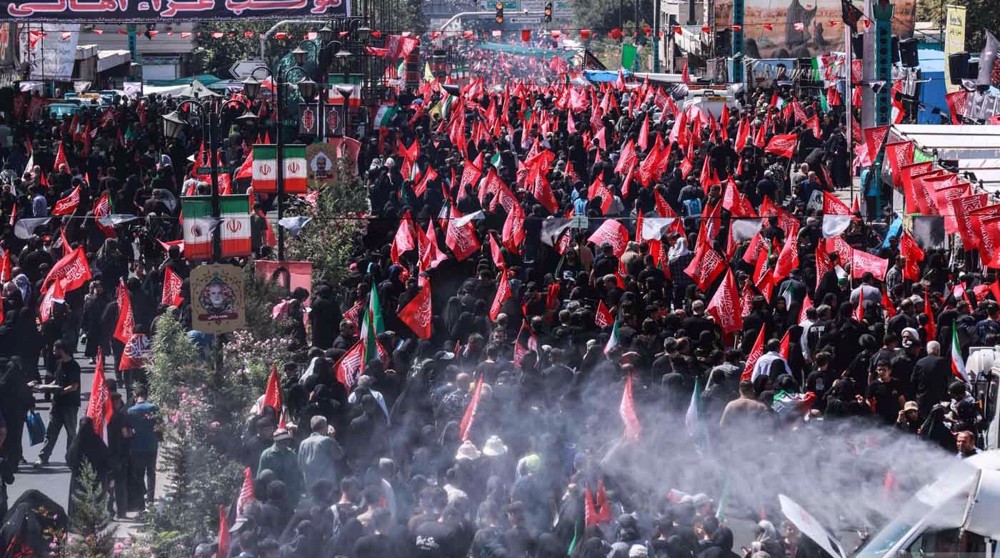
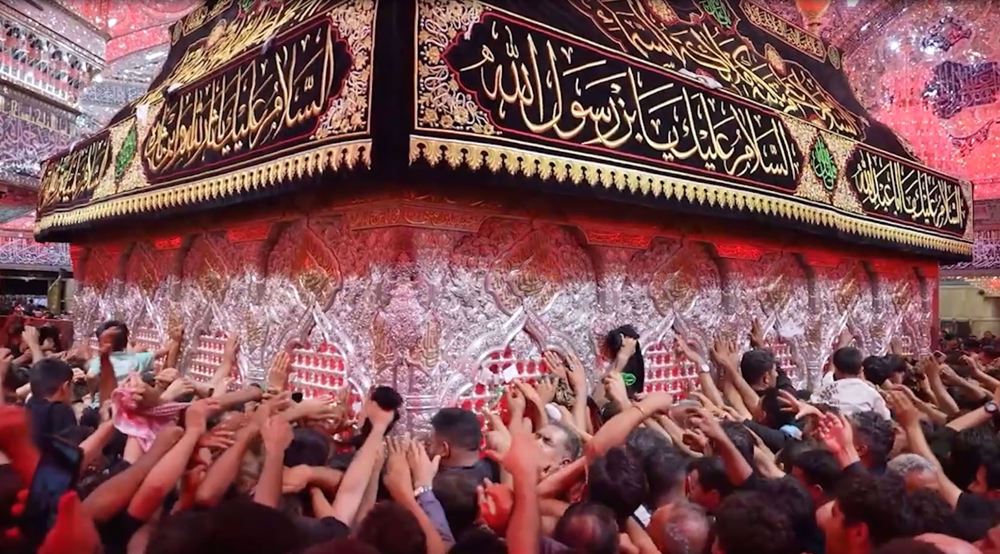
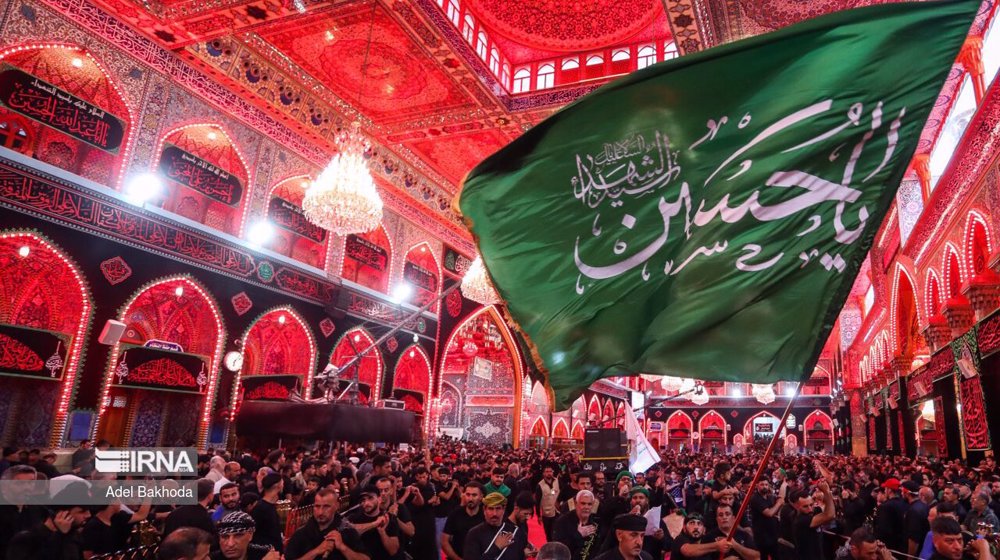
Millions of Iranians have come together nationwide to commemorate Arbaeen, which marks the 40th day after the martyrdom of Imam Hussein (peace be upon him), the third Shia Imam and grandson of Prophet Mohammad (peace be upon him).
The mourning ceremonies and symbolic pilgrimage processions on Tuesday saw participants renewing allegiance to the Imam, while also honoring those killed by the United States and Israel in recent imposed wars.
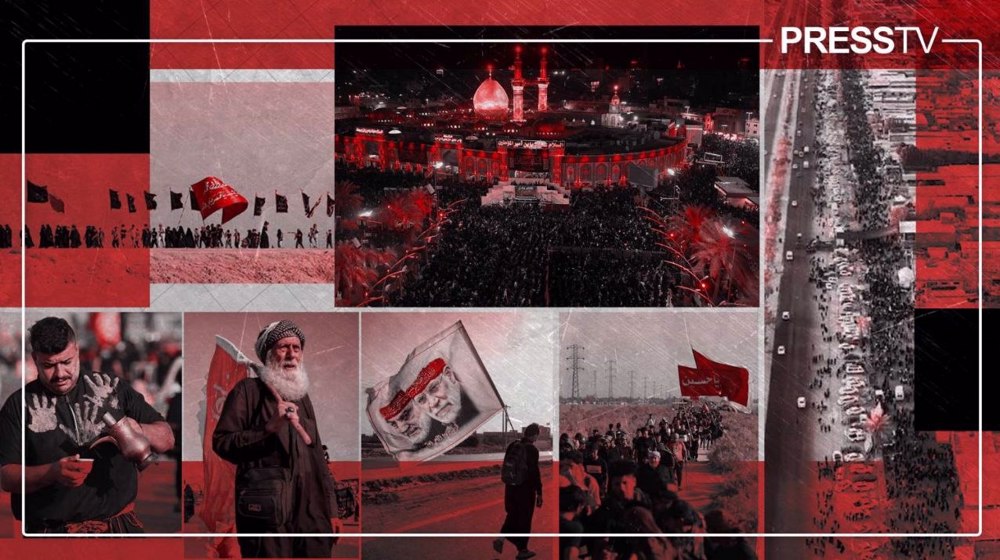
Carrying red flags, the participants demanded vengeance for the martyred Leader of the Islamic Revolution Ayatollah Seyyed Ali Khamenei.
The largest gathering was held in the capital Tehran, where the annual Jamandegan-e Arbaeen (Those Left Behind from Arbaeen) procession began before dawn at the old Imam Hussein Square and stretched approximately 15 kilometers to the shrine of Hazrat Abdol Azim al-Hasani in the city of Rey, to the south of the capital.
University students took part in the Arbaeen march in Tehran, carrying red flags and portraits of the martyred Leader of the Islamic Revolution.
— PressTV Extra (@PresstvExtra) August 4, 2026
Follow: https://t.co/RuQCIFWYoj pic.twitter.com/7rysZ1YHmb
The event, held under the slogan “We Must Rise,” drew vast crowds of worshippers unable to travel to Iraq, recreating the atmosphere of the Najaf-to-Karbala pilgrimage inside Iran.
Throughout the route, participants carried Iranian flags alongside black mourning banners and red flags bearing the phrase “Ya Latharat al-Hussein” (O Avengers of Hussein), while portraits of martyred leaders, resistance figures and other war victims were prominently displayed.
Organizers described the march as being dedicated to the memory of the martyrs and a reaffirmation of the demand for vengeance against those held responsible for their deaths.
People participating in Tehran’s symbolic Arbaeen walk trampled images of Trump, Pahlavi, and Netanyahu.
— PressTV Extra (@PresstvExtra) August 4, 2026
Follow: https://t.co/RuQCIFWYoj pic.twitter.com/n0aVEH75M7
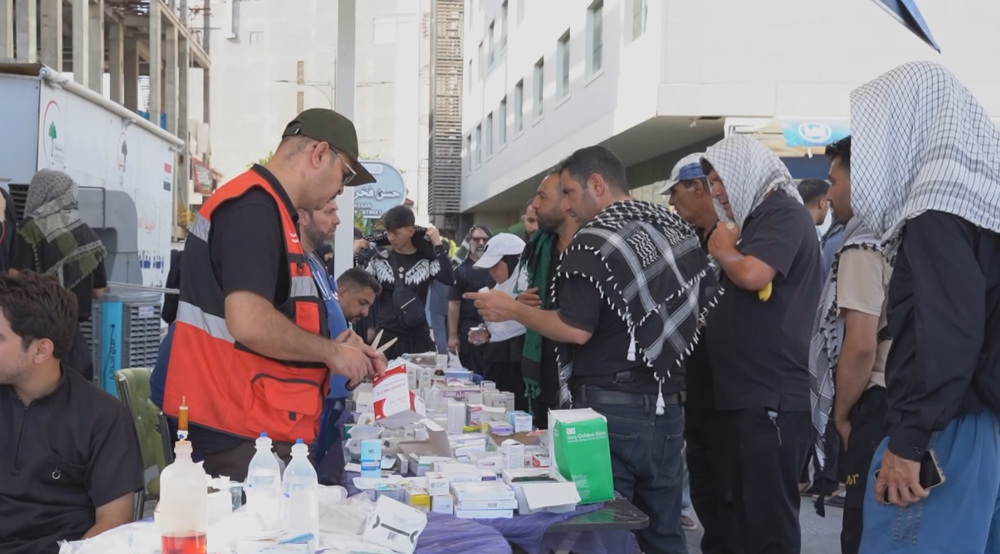
More than 3,500 volunteer mawkibs (cultural pavilions and service stations) provided food, drinks, medical assistance and religious and cultural programs along the Tehran route.
Firefighters operated misting systems across the procession, while dozens of facilities were established for families and children. Art installations and performances commemorated those killed in the recent war as well as members of the resistance movement.
By midday, the roads linking Imam Hussein Square to Shoosh Square, Rey Square and the shrine were filled with mourners. The sound of elegies echoed from the mawkibs, while the scent of incense, Iraqi tea and traditional refreshments filled the air.
At 12:11 p.m., the noon call to prayer resonated across the procession, bringing thousands of participants to a halt as they performed congregational prayers before continuing their journey.
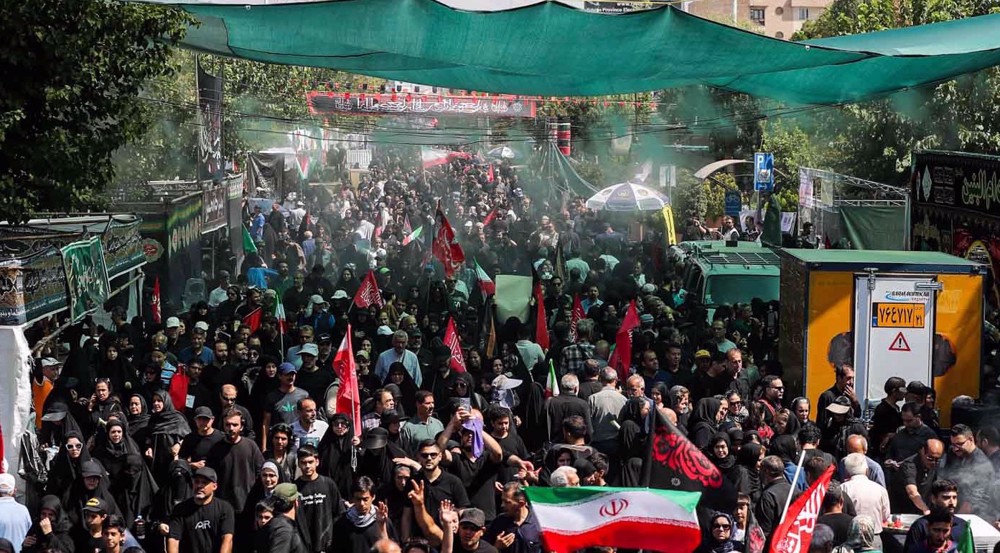
Participants described the event as both a spiritual pilgrimage and a declaration of loyalty to the values of Ashura.
“I couldn't travel to Iraq this year because of my health, but I couldn't stay home,” said Haj Reza, a 68-year-old retiree walking with a cane. ”Our bodies are here, but our hearts remain in Karbala.”
Maryam Sadat, a 22-year-old university student, said the march represented more than a religious gathering.
“Our message today is not simply to walk,” she said. “We have come in memory of our martyred Leader and the martyrs of the resistance to show that the school of Ashura means standing against oppression.”
Among the youngest volunteers was Amir Sadra, a 13-year-old serving drinks to pilgrims.
“We've been here since before dawn,” he said. “Serving the pilgrims of Imam Hussein is the greatest honor for us.”
Press TV's Gisoo Misha Ahmadi reports from a large gathering in Tehran, where thousands of people commemorate the Arba'een ceremony for Imam Hossein.@gisoumisha
— Press TV 🔻 (@PressTV) August 4, 2026
Follow: https://t.co/boCY50qfi9 pic.twitter.com/gmEAiPgR2i
The ceremonies extended far beyond the capital.
Similar Arbaeen processions were held in Mashhad, Tabriz, Karaj, and Sari, among a wide host of other cities and towns.
In Gonabad, thousands completed a 22-kilometer march to the shrine of Imamzadeh Sultan Mohammad Abed, while ceremonies in Mashhad centered on the shrine of Imam Reza (peace be upon him).
Addressing the gathering at the shrine of Hazrat Abdol Azim, custodian Seyyed Ali Ghazi Askar said this year's turnout surpassed previous years and reflected the Iranian people's enduring attachment to the culture of Arbaeen.
Symbolic Arbaeen walk held in different cities of Iran for those unable to join the Karbala pilgrimage this year. pic.twitter.com/cJwMNY2Ote
— PressTV Extra (@PresstvExtra) August 4, 2026
He described resistance as the foremost message of Arbaeen, saying the nation had drawn inspiration from the Ashura movement in confronting external threats.
The annual commemorations concluded with worshippers reaching the shrine in Rey, where many paused at designated "Salam Stations" to recite the Arbaeen pilgrimage prayer in lieu of visiting Karbala, bringing to a close a nationwide day of mourning, remembrance and religious devotion.
The Arba’een mourning ceremony brings together millions of people from across the world who undertake an 80-kilometer walk between the holy cities of Najaf and Karbala.
Millions walk hundreds of kilometers for Arbaeen pilgrimage to holy city of Karbala
— PressTV Extra (@PresstvExtra) August 4, 2026
Follow: https://t.co/RuQCIFWYoj pic.twitter.com/buzjR71rSH
Imam Hussein and his 72 companions were martyred in the Battle of Karbala in southern Iraq in 680 AD while resisting the much larger army of the despot Umayyad ruler of the time, Yazid.
The Arba'een Walk is the largest annual peaceful gathering that witnesses the participation of millions of people from different countries, most notably Iran.
Observers say it is an endeavor to keep alive the movement of Karbala, which is a movement against terrorism, fascism, and despotism.
Iran’s nuclear doctrine not changed, but NPT withdrawal possible: Top security official
Iran dismisses White House accusations as ‘flight from reality,’ ‘act of projection’
Iran, Pakistan FMs discuss regional developments, energy supplies



VIDEO | Gaza schools reborn in tents as new academic year begins
Iran: US had intentionally prepared ground for withdrawing from Islamabad MoU
Hezbollah leader: Iran thwarted US-Israeli war goals; ultimate victory belongs to resistance
VIDEO | Yemen responds to Saudi aggression
Four Palestinians, including child, killed in Israeli attacks across Gaza
Iran retains initiative in Strait of Hormuz despite US claims: Armed Forces
Yemeni army targets sensitive sites in Saudi capital, Aramco facilities in Yanbu
Barzegari’s silver lifts Iran to five medals at 2026 World Poomsae Championships


 PressTV NEWSLETTER
now
PressTV NEWSLETTER
now
 This makes it easy to access the Press TV website
