Covenant of blood and resistance: How Lebanese people describe the bond between Iran and Lebanon
By Lama Almakhour
“The stranger is not the one who does not know your name. The stranger is the one who sees your house burning and then asks about the color of the smoke.”
This is how Abu Hussein, displaced from a border village in South Lebanon, begins his reflection on a question that has echoed through the ravaged landscapes of southern Lebanon, the crowded streets of Dahiyeh, and the resilient communities of the Bekaa Valley.
The question, posed to individuals of different ages and backgrounds from the resistance environment, cuts to the heart of an alliance that has confounded political analysts and regional observers for decades: "Is it strange to you that Iran defends Lebanon and the resistance environment, even as it bleeds?"
Abu Hussein's answer unfolds like poetry carved from the rubble of war:
"But those in Iran—who did not share our land, nor our childhood bread, nor the streets of our city—yet trembled whenever our windows trembled... geography cannot explain them. How can the sea weep for a mountain it has never seen? How can a heart bleed for a city whose street names it does not know,” he tells the Press TV website.
“And yet, it happened. They were there...in other lands, under other skies, in Iranian cities that also knew the taste of fear—cities that were not spared from Israeli bombing—yet they found room in their hearts for a pain that resembled their own. Every stone that fell here, they heard its echo. Every shattered window, they felt the wind enter their homes.”
He hastened to add that the peoples of the two brotherly Muslim nations are bound by a thread – one too powerful, and yet too deeply emotional, to ever break.
“Every Iranian mother who sat by her son's photo found, far away, a Lebanese mother wiping her tears as if the photo hung on her own wall. Perhaps the most painful thing for us in Lebanon is not that enemies abandon us. But we discover, in the darkest hours of our lives, that some who share our address have become more distant than those thousands of miles away,” he stated, referring to some inside Lebanon who have become indifferent to the pain of fellow Lebanese.
“Then we realize that homelands are not always maps, and closeness is not always distance. That a tear is falling from a distant eye—that those who see Lebanese children searching through rubble for their toys, and they feel that the whole world has become too small to contain this sorrow—the Iranians who carry the keys to our demolished homes, who did not know the names of all our villages, but carried something else: that rare feeling that our tragedy does not need a passport to cross borders.”
In these words, we begin to glimpse a relationship that transcends the cold calculations of statecraft, an alliance forged not in the halls of diplomacy but in the crucible of shared suffering and defiant faith.
✍️ Analysis - The indivisible front: Why Iran rejects – and warns against – any war-ending deal that excludes Lebanon
— Press TV 🔻 (@PressTV) June 7, 2026
By Press TV Strategic Analysis Deskhttps://t.co/v5xGTU2Cb0
A history written in tears and blood
Political positions are not always measured by the language of official statements or the geometry of regional alliances. Some issues rise above politics into the realm of memory and transcend calculation to touch conscience.
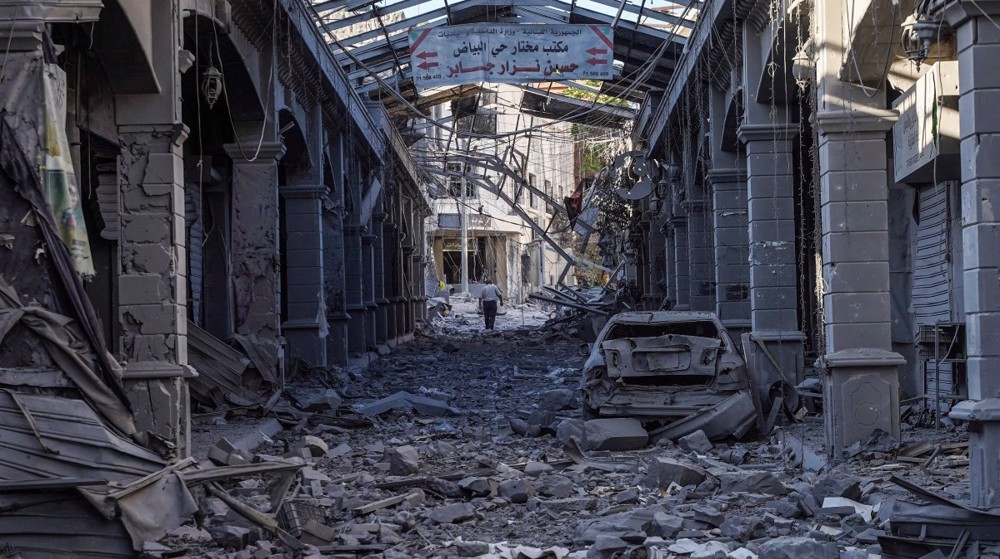
In the South, where the land still holds the traces of successive imposed wars, where villages carry the names of their martyrs as they carry the names of their streets, this relationship does not appear merely as a relationship between two states.
This is part of a long story – one that began with the first "No" raised against Israeli occupation in Lebanon, and against American aggression, direct and indirect, in Iran since the fall of the US-backed Pahlavi dictatorship. It has continued through years of unshakable steadfastness.
Iran, therefore, is not seen merely as an external party, but as an entity present in a collective narrative formed under bombardment, among destroyed homes, and on the edges of border villages. In this environment, politics does not separate from human experience.
The man who lost his home does not speak of military maps as analysts do. The mother who bid farewell to her son does not approach events from the angle of regional power balances. There, grand concepts become tied to small personal stories: a martyr's picture on a wall, an empty room whose owner never returned, a key to a home rebuilt over the ruins of a previous one, and a faith that its owners will never relinquish, no matter how much they bleed.
From here, the people in the resistance environment formed the conviction that Iranian support was not merely a passing political stance but a fundamental element in building the resistance's capacity to confront Israel. This support contributed to transforming a reality of weakness and incapacity into a reality of deterrence and confrontation. For them, talking about Iran begins from this exact point: the feeling that Lebanon was not alone in its battle.
Certainty in the promise
"Did you await Iran's response with doubt or certainty," we asked Abu Hussein, and he responded with unwavering conviction:
"We were not waiting for a miracle to fall from the sky. We were waiting for our own delayed blood in the veins of our brothers. We were waiting for this promised embrace between the fronts. Because we were raised on certainty from the wills of those who passed, leaving their turbans and their blood as beacons on the path – the martyred Leader of the Islamic Revolution Imam Khamenei and Sayyed Hassan Nasrallah,” he said.
“The Iranian people, who never faltered and never submitted, knew that the wound is one, and that the bullet in the East is the echo of the cry in the West. The unification of the arenas was not an idea in a book; it was a prophecy written by the arms of the martyred commanders. We read it in their eyes before the bullets, and we believed in it as a sacred principle that cannot be divided.”
He said they had waited for this moment because they believed that the promise would be fulfilled.
“We are a people who live by fulfilling promises. We know, deep down, that resistance is not merely a choice—it is our comprehensive awareness, our eternal union, baptized in blood and martyrdom. How can a body break when its soul is a martyr, and its pulse is a nation?"
✍ Analysis - ‘Unified Resistance Front’: Iran recasts region’s balance of power and security paradigm with Operation Nasr
— Press TV 🔻 (@PressTV) June 9, 2026
By Press TV Strategic Analysis Desk https://t.co/9WbT24rCHr
The contrast of loyalty and abandonment
Umm Ali from Baalbek offers a perspective sharpened by the bitter experience of being left to face the killing machine alone.
"At a time when Iran was intervening directly, expending all its military and economic support to establish our footing, reinforce our resistance, and secure the means of our steadfastness on our land, we found ourselves abandoned by the institutions of our Lebanese state, which was completely absent from fulfilling even its minimal duties toward us, leaving us to face the killing machine and the difficult path alone,” she told the Press TV website.
“Not only did the domestic side leave us under bombardment, but political and media factions came out with stabs of doubt questioning our national belonging. They coolly and foolishly promoted the narrative that what we pay in blood and homes is merely 'others' wars' on Lebanese soil—just to justify their official and moral failure to support us and their standing by as spectators to our displacement.”
She said it made them understand with certainty that their relationship with Iran is “much greater than a political alliance, international interests, or a passing intervention.”
“It is a bond of blood and existence, a unity of state and destiny that we have imbibed together in the trenches of steadfastness.”
A child's perspective on a shared pulse
Zeinab, a fifteen-year-old girl from the South, on whether she had seen any videos of the protests in Iran in support of Lebanon, gave an answer that carried the unvarnished truth.
"I am the daughter of this geography punctured by shrapnel. I grew up before letters and before dolls (I never had the luxury of being a child, neither in the schoolroom nor in the playroom). In the darkness of the shelter, while planes were plowing the roof of our home, my eyes stumbled upon a video of an Iranian girl my age, separated from me by seas of sand and maps, yet united by the same hidden pulse,” she told the Press TV website.
“I saw in her eyes the same worry that lives in mine, the same silent pride we inherited from the wills of those who passed. She spoke with pain about the children of my country, gathering from her small savings a message of support for us, as if she were sharing with me the bread of steadfastness from across the distance.”
In that moment, Zeinab said, all the “false borders” in her small mind were broken.
“I realized that resistance is not only a rifle in a fighter's hand, but this immense popular consciousness that flows in our veins together. I knew that the pain is one, and that this child, who has never met me, sees me in her mirror and understands what it means to be one body in the battle of existence,” she added.
“We children do not understand the cold language of politicians, but we understand the language of tears and blood. We know with certainty that the sun that will rise over the ruins of our homes will warm the heart of that distant girl who awaited our victory as if it were her own dawn."
✍ Analysis - Iran’s strikes on Zionist entity in defense of Lebanon and the recalibration of regional deterrence
— Press TV 🔻 (@PressTV) June 8, 2026
By Press TV Strategic Analysis Deskhttps://t.co/uBUQMyJwBr pic.twitter.com/K7JyHO0j3d
The night the sky torn open
Ali from the southern suburb of Beirut described the feeling of the resistance environment on the night Iran responded to the bombing of Dahiyeh, painting a scene of collective catharsis.
"On that promised night, the deep darkness of the sky was torn open by a scene that overturned all the balances of existence. When the Iranian missiles began passing over our heads, striking the depth of the occupation entity with fire and light, a collective earthquake of awareness and attention shook the streets, shelters, and squares, something no political dictionary can describe,” he told the Press TV website.
“People looked upward, and in the midst of that overwhelming astonishment and joy that burst forth in sincere tears before chants, we all turned to each other, as if we were being healed at once from the oppression of the past months.”
He said those retaliatory strikes were not merely a military response or a show of force in the corridors of international relations, but for people like him, they were “a long exhale for chests choked with sobs, and a thunderous declaration that we are not alone in this vast field.”
“Bereaved mothers and fathers bent by displacement came out. Young men met in the squares. The cries of 'Allahu Akbar' (God is Greatest) embraced tears. Each missile crossing the sky seemed to avenge the blood of an oppressed child, or rebuild a demolished wall in the South, the Bekaa, and Dahiyeh, and with a single blow erase all the doubt and mockery thrown at us by the mischief-makers,” he said, recalling that night.
“At that very moment, the clouds parted, and people woke up to the depth and truth of that profound emotional and historical bond linking our country to Iran. It is a relationship that long ago surpassed the limits of diplomacy, freed itself from the cold calculations of international politics, transient intervention, or temporary interests. It is a spiritual and structural bond baptized in blood and the wills of leaders over decades—a bond formed in the trenches of shared steadfastness and in the gazes of the martyred leaders who gave their lives so that this body would remain one.”
This overwhelming emotional solidarity, Ali said, proved that what unites the people of Lebanon and the people of Iran is “a blood bond that makes the pain one and the hopes one.”
“The supporter has become an inseparable part of the consciousness and daily life of the Lebanese interior, sharing the burden of the ashes and leading with us the true battle of existence,” he said, grateful for the Iranian solidarity.
“That overwhelming joy was a definitive declaration that the slogans of 'self-distancing' have fallen before the reality of fulfilling the promise, and that our blood flowing in the veins of the brothers has written a new chapter of the nation's pride, where no geography can separate hearts united by the bullet and the stance."
✍️ Analysis - Beirut retreat: Credible Iranian deterrence ends US-Israeli impunity to escalate unchecked
— Press TV 🔻 (@PressTV) June 2, 2026
By Press TV Strategic Analysis Deskhttps://t.co/S154GN9KYJ
The cost of loyalty
Umm Mohammad, who lost her three sons and her home in the South in the Israeli aggression, commended Iran's insistence on the unity of the resistance arenas and its refusal to abandon Lebanon, at a time when the Lebanese government was looking the other way.
"Tehran could have sat behind polished tables and reaped the fruits of 'separating' the arenas in the bazaar of agreements offered between Beirut and Washington. It could have sold its silence for billions of dollars and the dismantling of sanctions. But it chose to sign with gunpowder and missiles in the sky of Tel Aviv,” she noted.
“Iran kicked aside all cold gains, insisting that the blood of the South, the Bekaa, and Dahiyeh is not merchandise in the market of international barter, but part of the nation's honor, which is indivisible."
Hussein said that the night Iranian missiles struck the Zionist entity was the night all the cowardly voices fell silent.
“If it were a proxy war or for others, those 'others' would have collected the price of retreat and left Lebanon to its naked fate in the winds of American settlements. But the missiles that crossed over the rubble of our homes said clearly: We do not barter with the remains of our brothers. The unity of the arenas for us is a creed of existence, not a maneuver card in a diplomat's pocket."
Young Abbas offered a perspective that bridges the personal and the political.
"In the cold dictionary of international relations, profit and loss are measured by interests. Iran could have gained much if it had accepted isolating the Lebanese arena and leaving the resistance alone under fire in exchange for grand deals. But they overlooked the conscience. They overlooked that what binds us to Tehran is greater than agreements and diplomacy. It is a covenant of blood and the sincere wills of the martyred leaders,” he told the Press TV website.
“Iran chose to pay heavy price in its security and economy rather than sell its loyalty to a front that supported it, proving to both the domestic and foreign audiences that this alliance is baptized in blood and destiny, not in agreements written with the ink of betrayal."
Fatima, who was displaced from the South to the Bekaa, also reflected on these events.
"People woke up on that great night to the magnitude of the lie the domestic side was trying to market. We saw how Iran rejected all tempting American offers to disconnect from our front, choosing the language of the battlefield and direct strikes,” she told the Press TV website.
“Those strikes silenced the rumormongers and made us realize with certainty that we belong to one trench—a trench that sees in the unity of the resistance a mutual dignity, and refuses to buy its political comfort by leaving the resistance environment in Lebanon to face the killing machine alone."
New images reveal severe destruction at US base in Kuwait after Iranian strikes
‘Live with it’: Era of US F-35s being ‘hunted down’ has begun, Qalibaf says
IRGC intelligence forces eliminate two terrorists in southeast Iran



Understanding Iran’s tourism momentum amid war and sanctions
How Yemeni retaliatory strike on Saudi East-West pipeline exposed limits of bypassing Hormuz
Israeli forces abduct eight Palestinians in West Bank amid settler violence
China rejects unilateral sanctions as Trump signs bill targeting Russia, Iran
VIDEO | Press TV's news headlines
VIDEO | Trump’s attacks on law, press reveal his support beginning to erode: Analyst
VIDEO | Islamabad marks 2nd martyrdom anniv. of resistance leader Hassan Nasrallah
VIDEO | Tunisian protesters demand release of detained Sumud flotilla activists


 PressTV NEWSLETTER
now
PressTV NEWSLETTER
now
 This makes it easy to access the Press TV website
