US Army depletes long-range missile stockpile in war of aggression against Iran: Report
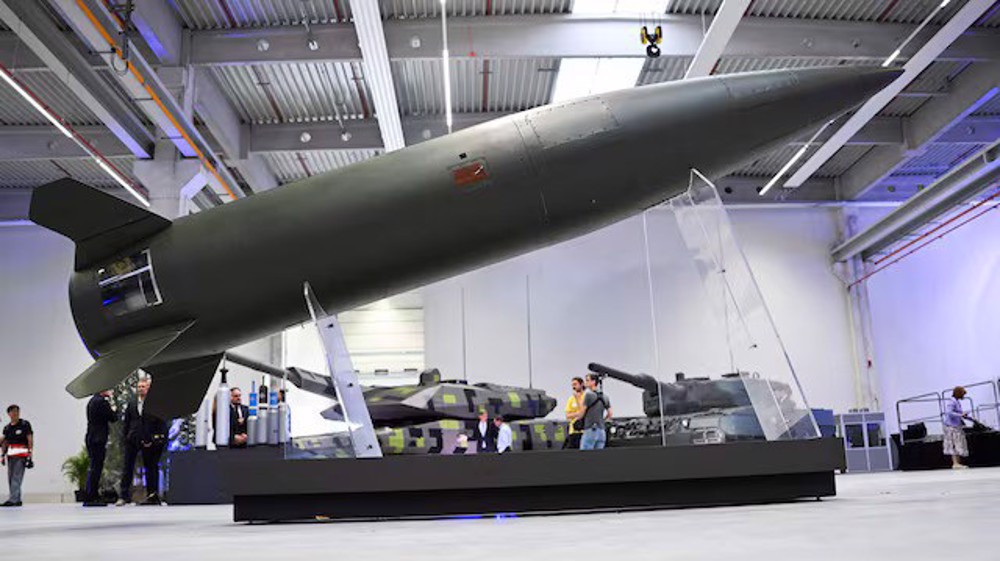
The US Army has reportedly exhausted much of its stockpile of precision long-range missiles during its five-month war on Iran, weakening Washington’s ability to sustain warmongering policies.
The depleted weapons include the Army Tactical Missile System (ATACMS) and the newer Precision Strike Missile (PrSM), two key surface-to-surface systems in the US arsenal. Citing two sources, Reuters reported on Tuesday that the military had used “virtually all” of the missiles available to it at the outset of the war, although they declined to disclose how many remain in US inventories.
The extent of the depletion has not previously been reported.
Another source familiar with the matter said US Central Command (CENTCOM), which oversees American military operations in West Asia, has nearly exhausted the land-based missile inventory it held when the war began. CENTCOM has since replenished its supplies by drawing missiles from US stockpiles stationed in other regions.
The strain on US arsenals comes as the administration of President Donald Trump seeks to expand weapons production. The Center for Strategic and International Studies (CSIS) has warned, however, that efforts to rapidly replenish “exquisite-class” weapons will take years to bear fruit.
The Trump administration has reached agreements with arms manufacturers aimed at quadrupling production of such advanced weapons, while Pentagon Comptroller Jules Hurst has announced plans for expanded multi-year procurement contracts as part of Trump’s $1.5 trillion military budget request.
Yet even under optimistic projections, analysts say rebuilding depleted stocks could take several years. Delivery timelines for newly contracted missiles are expected to stretch between three and five years, despite efforts to expand production capacity.
Retired US Marine Corps Colonel Mark Cancian, a co-author of the CSIS analysis, warned that the depletion has created a “window of increased vulnerability” for the US military, particularly in the western Pacific, where existing stocks could prove inadequate in a confrontation with China.
The scale of the depletion had been anticipated. Before the war, senior US military leaders, including Joint Chiefs Chairman General Dan Caine, had warned Trump that a prolonged war could severely strain American weapons stocks.

Trump launched the military aggression against Iran alongside Israel in February, predicting that the war would be short-lived. Five months later, the protracted war has instead placed mounting pressure on US missile reserves as Iran has delivered strong blows to the US military by targeting its bases across West Asia.
An earlier CSIS assessment found that American forces had expended at least 45 percent of their Precision Strike Missiles, more than half of their THAAD interceptors and nearly half of their Patriot air-defense missiles during the aggression.
The White House rejected concerns over depleted stocks. In response to questions about the US missile inventory, it released a statement from Trump claiming that the US possesses “far more munitions than anyone in the world, and far more than we need.”
Trump also said US defense manufacturers were producing munitions at record levels, while expanding production facilities and equipment to further increase output.
But the scale of the drawdown underscores the cost of Washington’s prolonged military campaign against Iran, which has involved sustained US airstrikes and missile attacks on infrastructure across the Islamic Republic, including bridges, hospitals, energy facilities, steel plants and other installations.
Pezeshkian’s strong UN speech exposed US-Israeli crimes: Judiciary chief
Army chief: Pezeshkian's UN speech manifested steadfastness of Iran
Pezeshkian slams Europe’s 'passivity' during US-Israeli war on Iran



British universities work with Israel-linked arms giant to curb pro-Palestine protests: Report
Araghchi: Iran ‘determined’ to defend national security, prevent US misuse of Hormuz
Debunked: Trump’s egregious UNGA claims on war against Iran crumble under scrutiny
VIDEO | News Review: Netanyahu faces UNGA walkout, protests in New York over Gaza
President Pezeshkian UN speech
Saudi Mufti urges troops to attack Yemen as Macron announces deployment in Yanbu
Turkey agrees to pull out of key base in north Iraq, occupy others
Two Israeli soldiers killed after drone explodes in northern Gaza


 PressTV NEWSLETTER
now
PressTV NEWSLETTER
now
 This makes it easy to access the Press TV website
