Iran ranks fourth globally in advanced aircraft engine research, outpacing major aerospace powers
By Ivan Kesic
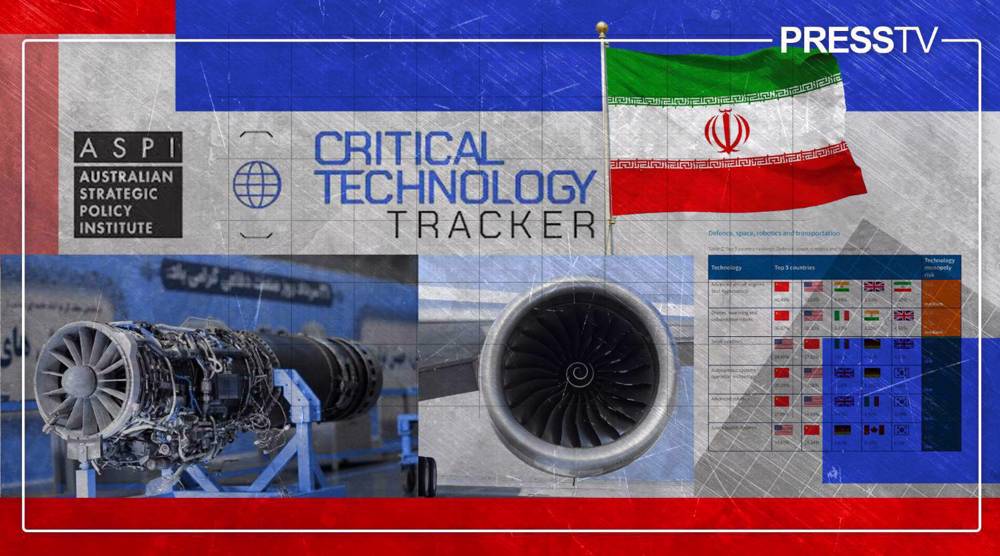
According to the latest report from the Australian Strategic Policy Institute's Critical Technology Tracker, the Islamic Republic of Iran ranks as the world's fourth-leading producer of high-impact scientific research on advanced aircraft engines, including hypersonic propulsion technologies, surpassing traditional aerospace powers such as Japan, Italy, and the United Kingdom.
In an era where scientific knowledge has become the primary currency of national power, Iran has quietly yet consistently built a research ecosystem that now competes with the world's most advanced nations across several strategically critical fields.
The Australian Strategic Policy Institute (ASPI), a Canberra-based think tank specializing in defense and emerging technologies, released its updated Critical Technology Tracker, which monitors high-impact scientific publications across 74 critical technologies over 21 years.
The tracker does not measure industrial output or commercial manufacturing, but rather the production of the top 10 percent of most-cited research papers, a leading indicator of future technological capability.
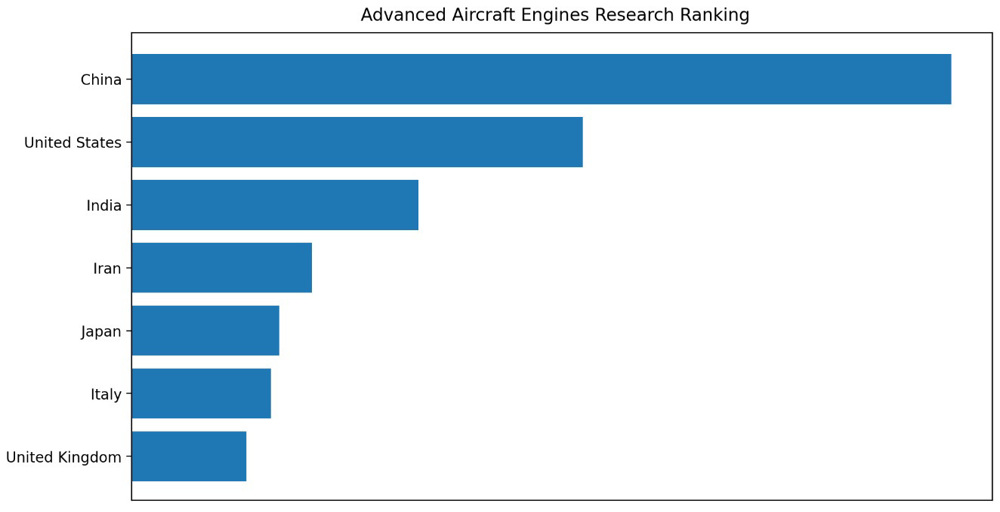
According to this rigorously compiled data, Iran ranks fourth globally in the field of advanced aircraft engines, including hypersonic technologies, behind only China, the United States, and India.
This positioning ahead of long-established engineering powers reflects a deliberate national strategy of asymmetric scientific investment, one that has paid substantial dividends despite decades of comprehensive sanctions and limited integration into Western industrial networks.
Understanding the ASPI Critical Technology Tracker
The ASPI Critical Technology Tracker, first launched in March 2023 and significantly expanded over the past three years, represents one of the most comprehensive empirical assessments of global research performance in strategically important technologies.
The tracker monitors 74 critical technologies spanning defense, space, energy, artificial intelligence, biotechnology, robotics, cyber, computing, advanced materials, and quantum technologies.
Rather than counting raw publication numbers, the tracker focuses exclusively on the top 10 percent of the most highly cited research papers in each field, based on the premise that these high-impact publications form the theoretical foundation, fundamental algorithms, and engineering science that will underpin future technological breakthroughs.
Highly cited research is statistically more likely to lead to patents, drive future innovation, and ultimately generate tangible military and industrial capabilities.
The tracker employs sophisticated methodologies to ensure accuracy and prevent statistical bias.
The H-index is used to simultaneously measure the quantity and quality of research output, ensuring that a country cannot rank highly simply by producing a mass of low-value papers or by relying on a single exceptional publication.
The fractional allocation method divides credit for co-authored papers among all contributing researchers and their home institutions, preventing double-counting and accurately reflecting each country’s net scientific contribution.
The tracker also calculates a Technology Monopoly Risk (TMR) index, which uses a traffic light system to measure the risk of a critical technology being dominated by a single country.
A technology is classified as high risk if the leading country has at least eight of the world’s top ten research institutions in that field and its share of high-impact research is at least three times greater than that of the second-ranked country.
Advanced aircraft engine technology is classified as high risk, reflecting the extreme concentration of research excellence in this field.
While ASPI’s funding structure includes contributions from the Australian Department of Defense and major Western military contractors such as Lockheed Martin, Boeing, and Raytheon, the raw data underlying the Critical Technology Tracker is derived from publicly available, peer-reviewed academic databases and processed using standardized scientometric formulas.
The political orientation of the institution cannot falsify the raw statistics of peer-reviewed articles in prestigious international journals, the scientific citations of researchers worldwide, or the impact factors of these articles.
The ranking data is academically and statistically valid, provided that its methodology is properly understood.
Iran’s global ranking in advanced aircraft engines
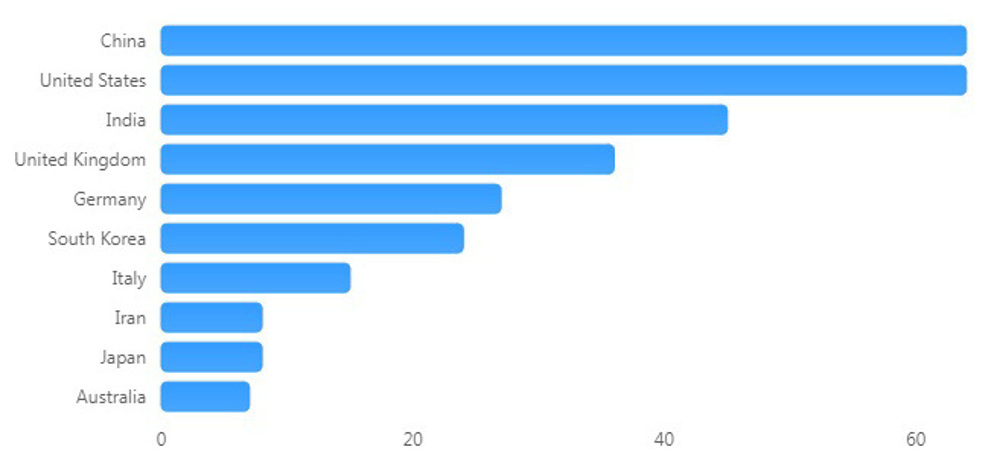
According to the recent ASPI data covering the period from 2019 to 2023, the global ranking of countries in the production of high-impact research papers on advanced aircraft engines, including hypersonic technologies, is interesting.
China leads with a commanding share of over 60 percent of global high-impact publications in this field. The United States holds second position, while India has secured third place.
Iran ranks fourth, surpassing Japan, Germany, Italy, and the United Kingdom, countries with long and distinguished histories in aerospace engineering and manufacturing.
The percentage gap between Iran’s share and China’s share is large, reflecting the extraordinary concentration of Chinese research investment.
However, standing fourth in the world and surpassing industrial empires such as Japan and Germany is a fundamental scientific achievement.
This ranking does not mean that Iran can commercially compete with Rolls-Royce, General Electric, or Safran in mass-producing civilian airliner engines.
ASPI explicitly cautions against equating research leadership with industrial capability. Manufacturing ecosystems, certification systems, global supply chains, and decades of operational experience cannot be measured by publication counts alone.
What the ranking does prove is that Iran possesses the theoretical knowledge, computer simulation capabilities, advanced algorithm writing, computational fluid dynamics modeling, heat transfer analysis under critical conditions, and superalloy metallurgy necessary for advanced engine design at the highest global levels.
Higher education institutions such as the University of Tehran, Sharif University of Technology, Amirkabir University of Technology, and Iran University of Science and Technology have been identified as key contributors to this research output.
According to ASPI’s institutional rankings, the University of Tehran ranks tenth globally in the H-index in certain relevant fields, while the Institute of Nuclear Science and Technology ranks seventeenth in highly cited articles related to advanced and nuclear materials.
Iranian researchers have played pivotal roles in modeling system dynamics, simulating aero-gas turbine engine performance, and developing active engine fuel control systems.
These universities effectively function as powerful research and development departments for the country’s aerospace industries.
Strategic focus of Iran’s scientific investment
The ASPI Critical Technology Tracker’s 21-year historical dataset reveals a stunning shift in global research leadership. Between 2003 and 2007, the United States led in 60 of 64 critical technologies.
In the most recent five-year period from 2019 to 2023, China leads in 57 technologies, while the United States leads in only seven. The center of gravity of global scientific research has decisively shifted to the Indo-Pacific region.
Within this highly competitive and asymmetric structure, Iran’s performance reflects a deliberate national strategy of concentrated investment in selected priority fields.
ASPI analysts, examining Iran’s upstream policy documents, have found that this path was planned in advance.
The Comprehensive Scientific Map of the Country, a strategic document published in 2011, established a clear hierarchy of research priorities.
Energy, aerospace, and nano- and micro-technologies were designated as top national priorities, and limited research resources were directed toward these areas.
In contrast, fields such as quantum computing were assigned lower priority. This strategic concentration explains why Iran ranks fourth in advanced aircraft engines but ranks ninth to eleventh overall across all 74 critical technologies.
Iran is not a broad-based technological superpower, but it has developed remarkably concentrated and resilient research excellence in a number of strategically important fields.
Iran ranks among the top ten countries in 21 critical technologies and among the top five in six technologies. Beyond advanced aircraft engines, Iran maintains strong positions in nanotechnology, advanced materials, energy technologies, and propulsion systems.
The advanced materials research, in particular, is notable. For years, Iran has maintained one of the world’s strongest publication records in nanomaterials and related disciplines, research that underpins everything from aerospace structures and coatings to electronics, sensors, and military hardware.
Path from research to fielded systems
A reasonable question arises: If Iran is ahead of Britain and Japan in engine research, why does the country not have a modern passenger aircraft production line?
The answer lies in the nature of the commercialization process and the comprehensive sanctions regime imposed on Iran. Producing a wide-body passenger aircraft comparable to a Boeing or Airbus is not merely a scientific challenge.
It also requires an international financial and logistical supply chain involving thousands of standard parts from dozens of countries, access to global financial markets, economic justification for mass production, and, most importantly, obtaining safety and flight certifications from entities such as the US Federal Aviation Administration or the EU Aviation Safety Agency.
Under the most comprehensive sanctions regime in modern history, completing this civilian and commercial chain is not currently possible for Iran.
However, this blockage does not mean that the accumulated knowledge is wasted. Iran has deliberately directed this explosion of engineering knowledge toward military industries, asymmetric deterrence, and defense aerospace.
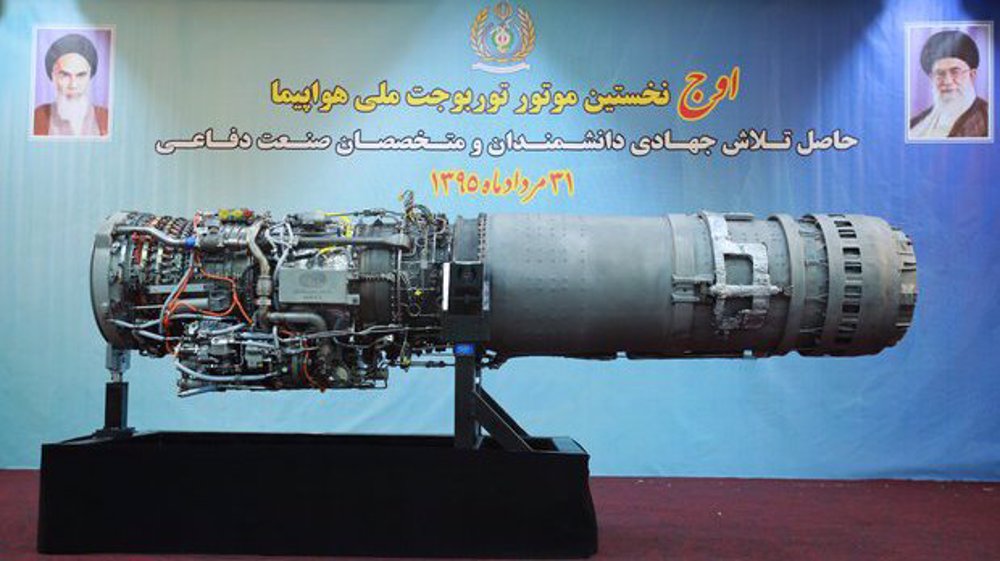
The concrete manifestations of this translation from research to industry are visible in several domestic engine programs.
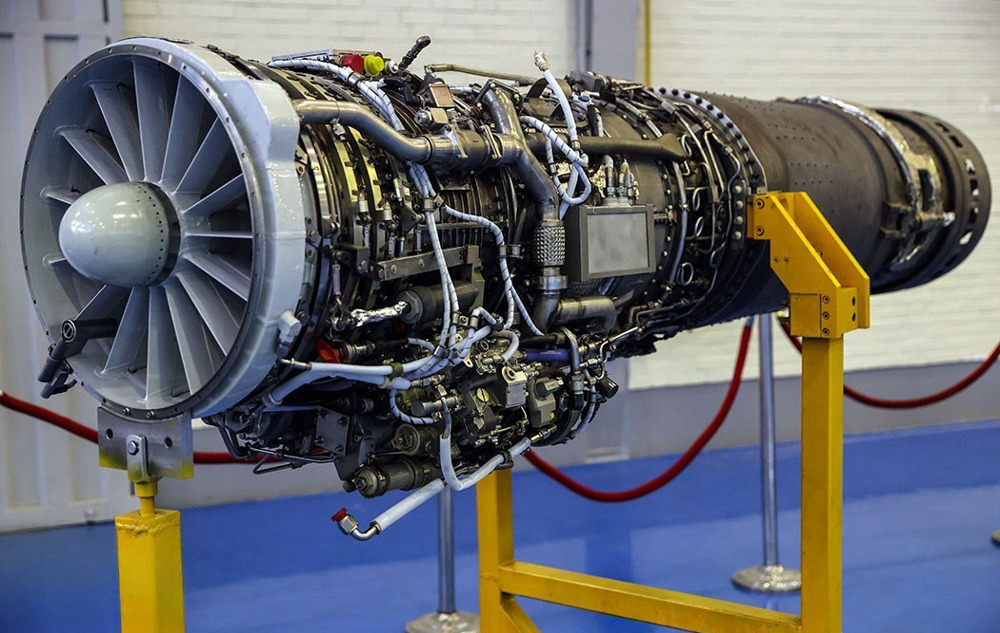
The national Owj engine is a turbojet powerplant used in the indigenous Kowsar light fighter. It is the result of reverse engineering and indigenous optimization of the American General Electric J85 engine.
Achieving one hundred percent localization of the hot-section components of this engine requires perfect mastery of vacuum casting of superalloys and ultra-precision machining, technologies supported by the same highly cited scientific papers tracked by ASPI.
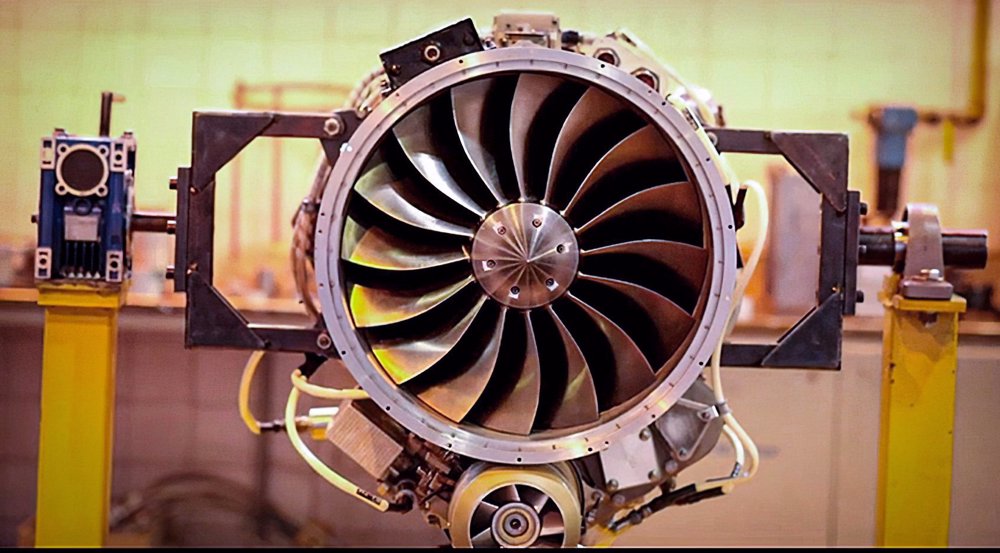
The Jahesh-700 turbofan engine represents a more advanced achievement. This lightweight engine has been identified by Western military analysts as architecturally similar to the Williams FJ33 and FJ44 turbofan family, the type of engine used in the RQ-170 stealth drone that Iran successfully captured in 2011.
The Jahesh-700 features a modular electronic control system, components manufactured from modern superalloys, and highly efficient fuel consumption measured at approximately 13.77 grams per second per kilowatt of power output.
This efficiency enables very long-duration and high-altitude flights for Iranian strategic drones. The engine uses single-crystal turbine blades, produces 700 kilograms of thrust, and can be installed on aircraft weighing up to 4,000 kilograms. With this engine, Iranian drones can reach altitudes of 60,000 feet.
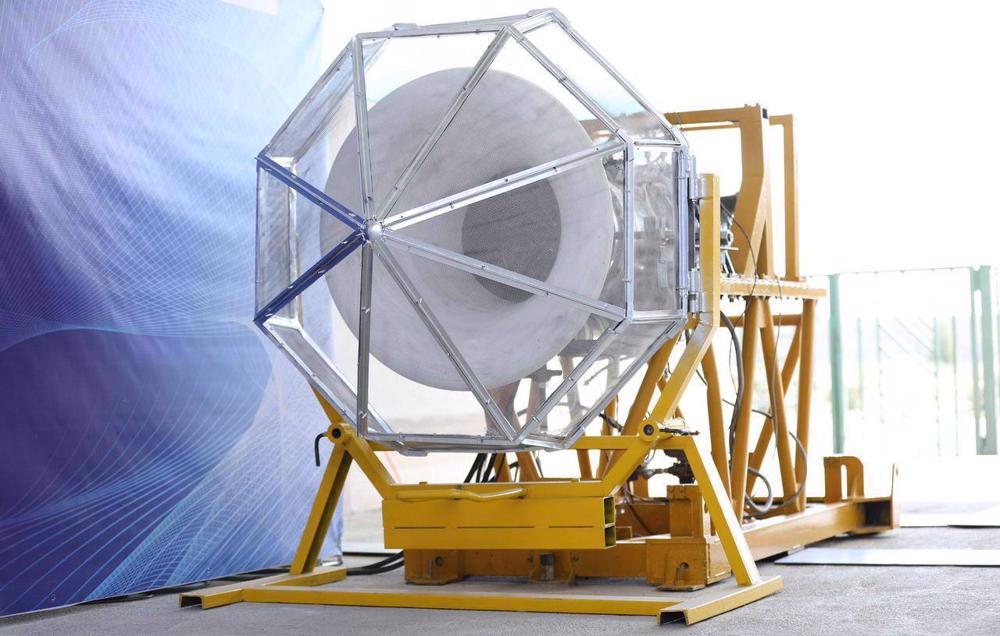
Iran has also joined the exclusive hypersonic club. The unveiling of the Fatah missile, with its demonstrated maneuverability both inside and outside the atmosphere, represents a practical reflection of Iran’s scientific standing in hypersonic propulsion.
Supersonic combustion ramjet (scramjet) technologies require the ability to compress incoming air at hypersonic speeds and ignite the fuel mixture without the use of rotary compressors.
Maintaining stable combustion for even a fraction of a second in supersonic airflow, while managing crushing dynamic pressures and plasma-like temperatures on the leading edges of the missile, is a challenge whose solution depends on the same highly cited research in metallurgical engineering, advanced ceramics, and heat-absorbing coatings produced at top Iranian universities.
Broader technology ecosystem
Iran’s performance in advanced aircraft engines is part of a larger pattern of scientific achievement across multiple strategic fields.
According to ASPI’s updated data for 2025, which expanded the tracker to 74 technologies, Iran remains in the top five countries in eight technologies.
While the country has dropped out of the top five in supercapacitors, its strongest performing institution, the Islamic Azad University in Tehran, continues to contribute at globally competitive levels.
The tracker’s analysis of talent flow provides additional perspective. The most recent data, covering the top one percent of highly cited publications across all tracked technologies, shows that the United States employs the largest share of top-tier technology talent.
China and the European Union collectively compete for second place, with China holding a slight edge in the top one percent group.
While Iran does not appear in the top rankings for talent flow, its ability to produce globally competitive research with limited resources and under sustained external pressure reflects an efficient and resilient scientific ecosystem.
ASPI’s 2025 update introduced ten new technologies to the tracker, including brain-computer interfaces, cloud and edge computing, computer vision, generative artificial intelligence, and grid integration technologies.
In eight of these ten new technologies, China has established a clear lead in global share of high-impact research output.
The consistent pattern across the tracker’s 21-year dataset is that the United States led in the opening decade of this millennium, but China’s persistent long-term investment in fundamental research has eroded and then outmatched the American lead.
India has also shown significant momentum, now ranking in the top five countries in 50 technologies. South Korea continues an upward trajectory, now ranking in the top five in 32 technologies.
Within this context of accelerating global competition, Iran’s sustained position in the top five for eight technologies is a substantial achievement.
Value of research leadership under sanctions
Perhaps the most impressive aspect of Iran’s performance is its persistence under conditions of extreme external pressure.
Many countries facing comparable economic pressure and technological isolation would struggle to maintain internationally competitive research programs over long periods.
Iran’s ability to remain visible in highly cited scientific literature across multiple strategic fields suggests that its universities and research institutions have developed sophisticated methods for continuing technically sophisticated work despite sanctions on equipment, software, and international collaboration.
The ASPI data do not support the conclusion that Iran has become a comprehensive technological superpower. Rather, they portray a country that has successfully concentrated limited resources into a number of strategically chosen domains and achieved research results that are significantly stronger than its overall economic position would predict.
Iran’s fourth-place ranking in advanced aircraft engines is not an artifact of flawed methodology or political bias. It is a real measurement of genuine scientific output, confirmed by standard scientometric formulas applied consistently to all countries.
The ranking proves that the most difficult formulas of aerodynamics, high-temperature metallurgy, and supersonic combustion have been understood and domesticated by a network of Iranian scientists working within a deliberately designed national research architecture.
Whether this knowledge manifests as commercial airliners or as asymmetric defense capabilities depends not on the quality of the science but on the strategic choices made by those who control the resources and face the external constraints. Under the present circumstances, Iran has chosen wisely.

Iran Open RoboCup brings together 700 teams and around 2,000 young robotics innovators
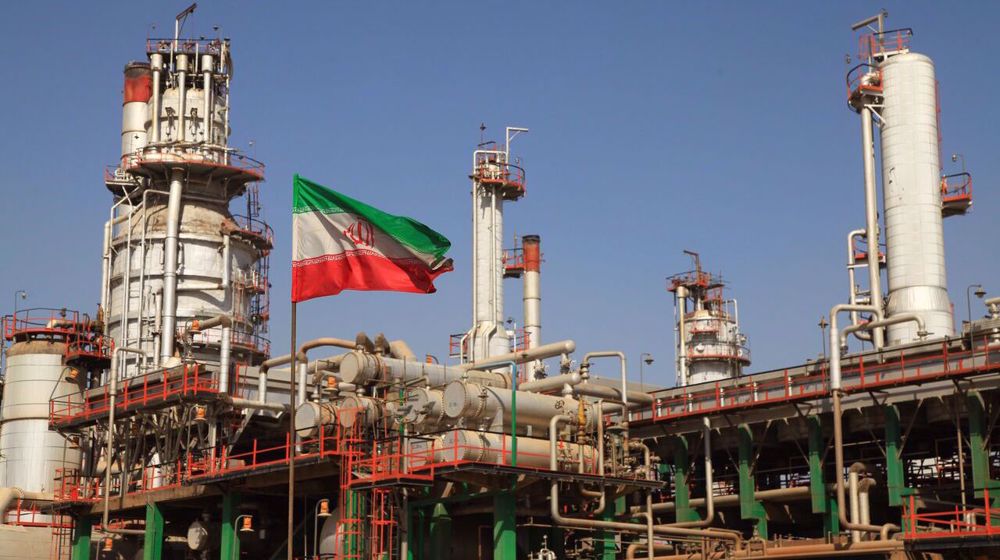
Iranian CO2 recovery project named a finalist of 2026 WPC Energy Excellence Awards
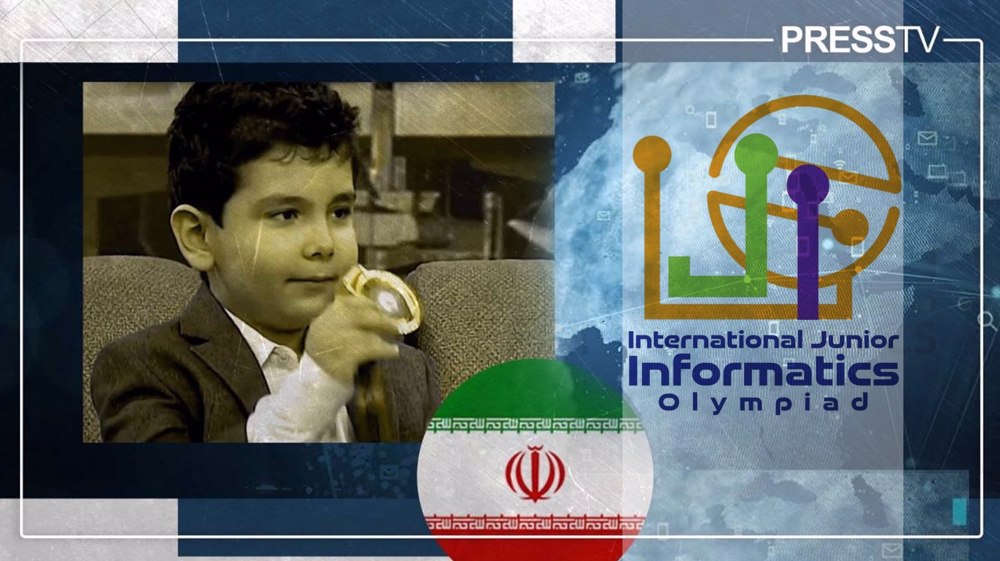
Meet the 7-year-old Iranian prodigy who won gold at 2026 International Junior Informatics Olympiad



Iran urges France to respect Vienna Convention after Tehran suspends institute
Israel lobby no longer shy about its grip on US policy: Iran FM
Saudi Arabia allows Israel to use its military bases to spy on Yemen: Houthi
Judiciary: 12 Iranian fishermen killed, 760 vessels damaged in US attacks on Hormozgan
Iran, Pakistan push to finalize agreements, boost cooperation
VIDEO | Trump’s ICC sanctions prove US support for Israel: Analyst
Drawings of Minab children killed in US attack exhibited outside UN office in Geneva
Iranian engineers develop indigenous engine control units, advancing automotive electronics


 PressTV NEWSLETTER
now
PressTV NEWSLETTER
now
 This makes it easy to access the Press TV website
