$500 drone, million-dollar kill: Hezbollah flips the script with FPV drones against Israeli army
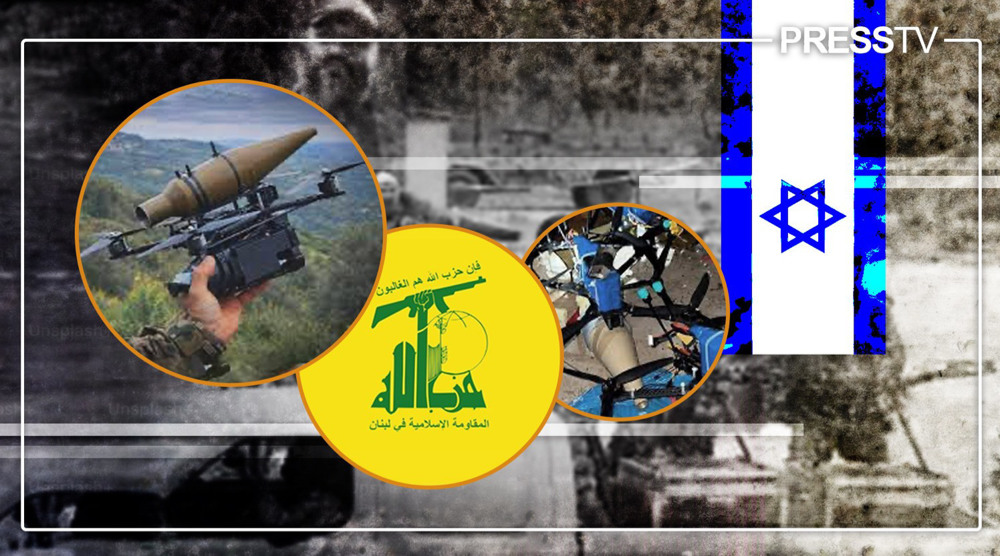
By Mohammad Molaei
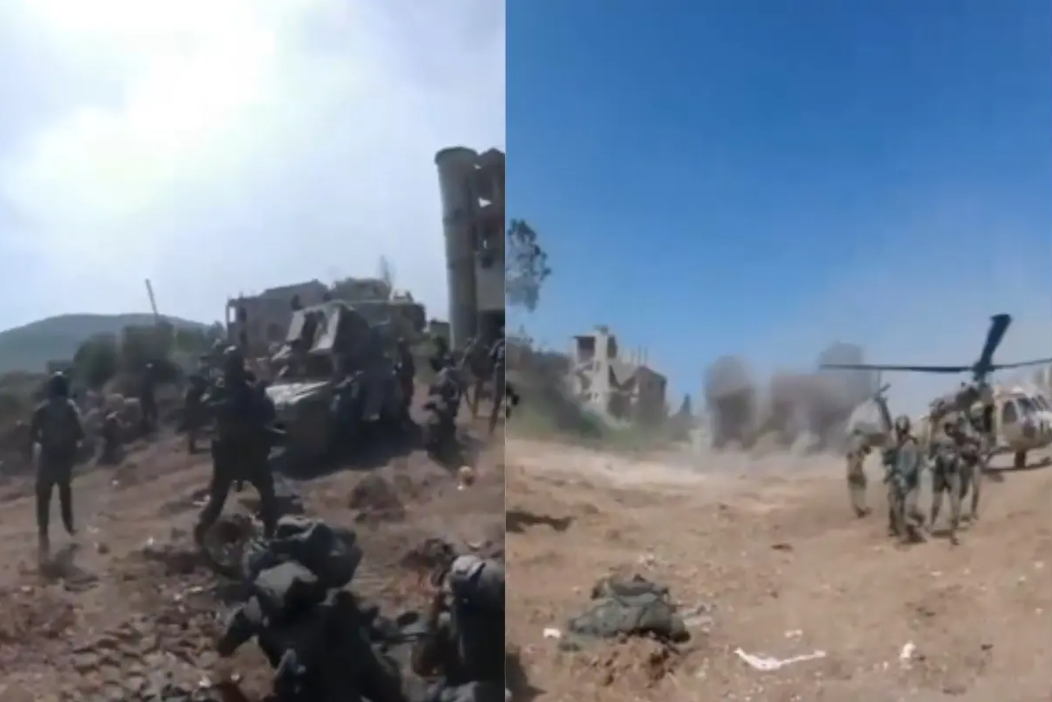
On April 27th, Hezbollah-affiliated social media channels posted a fascinating three-minute video of operations against Israeli occupying forces in Southern Lebanon.
For those following the events on the ground in Lebanon following the events of October 7th, this video will look rather familiar at first glance.
The editing style, the now iconic music, and the graphic elements have all been staples of the videos released by the Lebanese resistance movement since late 2023.
Yet, this short video marks a major evolution in Hezbollah tactics, demonstrating the deadly potential of widespread First Person View (FPV) adoption against Israeli military personnel and assets, a shift that will only grow more impactful with the passage of time.
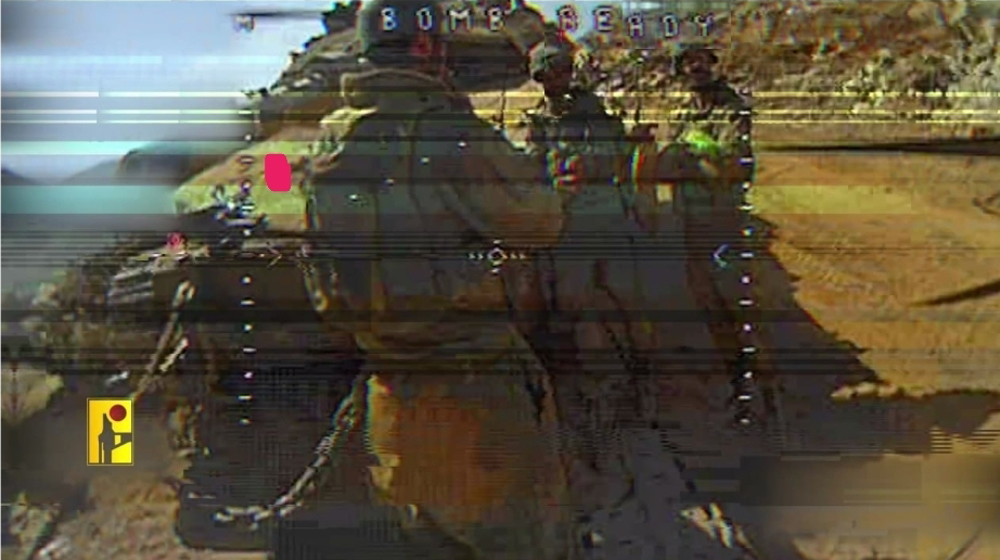
The video in question depicts two separate but related FPV attacks against Israeli occupying forces. The first attack targeted a gathering of regime soldiers standing next to their armored vehicles, while the second attack targeted the helicopter that evacuated the casualties from the initial strike.
The first attack achieved a direct hit and resulted in at least 1 death and a number of injuries as per the Israeli army, likely rendering multiple soldiers unfit for service presently.
The second FPV missed the Black Hawk evacuation helicopter by mere meters in the very last second, likely due to drone malfunction, Israeli electronic warfare, operator inexperience, or an amalgamation of the above reasons.
This video clearly shows that the skies over Lebanon are undergoing a major shift. The occupying forces will no longer be safe behind their front lines.
Despite their overwhelming numerical and technological superiority, the Israeli occupying forces suffered two consecutive and devastating attacks in a matter of minutes and were only saved from a painful mass casualty event through pure luck.
The simple fact is that there is no definitive answer for the FPV threat, and as the following Hezbollah attacks since April 27th have clearly demonstrated, luck is a poor defense against a determined opponent.

FPV origins and initial usage
FPV drones are small, highly maneuverable, and inexpensive unmanned aerial vehicles piloted using a virtual reality-style headset or a monitor.
This headset streams a live, low-latency video feed directly from a camera mounted on the front of the drone. Although originally civilian in nature, their transition into warfare was a direct result of their low cost and high accessibility.
The earliest battlefield adaptations occurred during the Syrian war and the fight against the West-backed Daesh terrorist group. However, it was the 2022 onset of the Ukraine war that truly transformed them into the modern weapons that dominate wars today.
Hezbollah’s adoption of FPV drones
Hezbollah’s adoption of FPV drones did not occur in a vacuum. The origins of FPV usage in warfare were accelerated globally following the outbreak of the Russia-Ukraine war, after warring parties quickly realized that strapping anti-tank warheads or fragmentation explosives to cheap, commercially available racing drones could yield devastating results.
The Ukrainian theater proved that a $500 drone, piloted by an operator wearing VR goggles, could destroy multi-million-dollar main battle tanks, clear defensive positions, and disrupt logistical chains.
Hezbollah’s initial experience with FPVs goes back to its involvement in the war against the Daesh terrorist group and other terrorist groups in Syria and Iraq. The resistance group actually deployed FPVs in a limited fashion during the border skirmishes against Israel prior to the 2024 Lebanon war.
Nevertheless, the majority of such attacks focused on stationary targets like radars and surveillance devices, with Hezbollah primarily relying on its battle-proven ATGM (Anti-Tank Guided Missile) tactics to inflict casualties on Israelis.
Hezbollah managed to learn valuable lessons from the 2024 war. The realities of modern combat, such as AI-assisted battlefield management and target acquisition, 24/7 drone surveillance, and accurate air-launched munitions, posed serious challenges to the fabled Hezbollah ATGM teams.
The operational limitations of older ATGMs placed the invaluable lives of experienced operators at risk, while the expensive nature of newer, more effective models like the Almas family made overwhelming attacks too costly for a non-state, all-volunteer group like Hezbollah. It was clear that the older tactics needed to be complemented.

From ground ambush to aerial guerrilla warfare
The recent regional developments following the Israeli-American war of aggression against Iran marked the first coordinated, widespread deployment of FPVs by Hezbollah.
Since the early days of the war, Hezbollah has used FPVs against Israeli military personnel and equipment with remarkable success, and such attacks have only grown more frequent with the continuation of the Israeli war against Lebanon, despite a ceasefire in place.
To understand Hezbollah’s current FPV doctrine, one must look back to the group’s operations in the 1980s and 1990s. During the prolonged war in Southern Lebanon, Hezbollah developed a highly effective asymmetric warfare doctrine against Israeli forces.
Their strategy relied heavily on hit-and-run tactics and the masterful exploitation of Lebanon’s rugged, mountainous terrain. Fighters would emerge from dense brush or subterranean tunnel networks, execute a strike using ATGMs or improvised explosive devices (IEDs), and vanish before counter-battery fire or close air support could arrive.
This approach was designed not necessarily to defeat a conventional army in pitched battle, but to inflict a steady, unsustainable psychological and material toll.
The integration of FPV drones is a direct continuation of this doctrine. Rather than exposing fighters to direct line-of-sight engagements, Hezbollah operators can conduct hit-and-run operations from miles away, hidden deep within defilades or bunker complexes.
The terrain that once concealed fighters now conceals drone launch sites. The fundamental strategic objective remains identical. Hezbollah seeks to bleed a technologically superior adversary through continuous attrition.
Moreover, by studying the successes and failures of FPV deployments in Eastern Europe, Hezbollah has bypassed years of localized trial and error. They absorbed the tactical blueprints, such as utilizing drones in pairs (one for observation, one for striking), targeting the vulnerable armor sections of vehicles, and laying drone-in-waiting-traps, and adapted them to the suitable topography of southern Lebanon.

Tactical and psychological impact
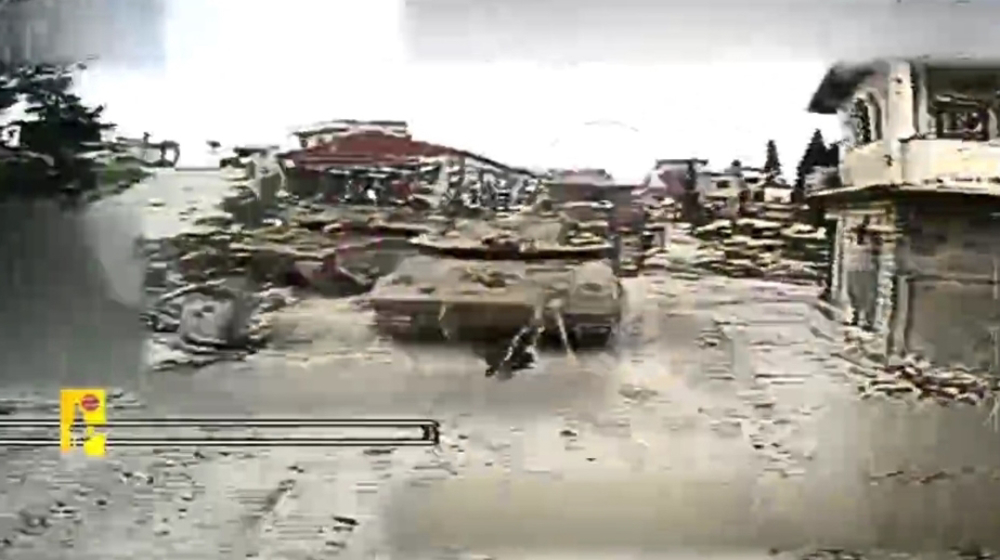
Tactically, FPV drones act as loitering ATGMs with more flexibility. Unlike traditional anti-tank missiles that require a direct line of sight and follow a predictable trajectory, an FPV drone can navigate around obstacles, fly through open windows, or strike command posts hidden behind blast walls.
In the ongoing war, Hezbollah has used these drones to systematically target Israeli military vehicles, infantry, and other military equipment.
The psychological impact of FPV drones on ground troops is profound. The distinct, high-pitched whine of an FPV drone’s rotors induces constant anxiety among regime soldiers.
Unlike artillery, which follows a ballistic arc, an FPV drone is typically actively guided by a human operator. It can loiter, chase, and pursue its target. This creates a pervasive sense of vulnerability among occupying soldiers who, unlike Hezbollah fighters, tend to be called-up reservists who did not volunteer for active combat missions.
Troops operating in previously presumed safe rear areas or behind heavily fortified barriers no longer feel secure. The psychological warfare element, which was also a hallmark of Hezbollah’s 1990s campaigns, is amplified by the drones’ onboard cameras, which record the strikes for immediate dissemination on social media, further demoralizing the adversaries.
The failure of traditional defenses
Traditional air defense systems, designed to intercept fast-moving fighter jets, ballistic missiles, or large rockets, are fundamentally ill-equipped to handle FPVs.
Systems like the Iron Dome operate using radar algorithms calibrated for specific radar cross-sections and flight paths. FPV drones are small, made mostly of plastic and carbon fiber, fly extremely low to the ground, and move at unpredictable speeds.
Even when detected, intercepting a 500 $ drone with a $50,000 to $100,000 interceptor missile is economically impossible to sustain.
While electronic warfare (EW) and signal jamming offer some defense, Hezbollah has adapted by utilizing autonomous terminal guidance or switching communication frequencies.
The rugged valleys of Southern Lebanon further complicate EW efforts, as line-of-sight is frequently broken, creating dead zones where jammers are ineffective.
Furthermore, Hezbollah will likely soon adopt fiber optic guided FPVs on a wider scale, effectively rendering the Israeli EW efforts against FPVs obsolete.


The road ahead
As the Israeli war against Southern Lebanon grinds on, it has become increasingly evident that the regime’s embattled military does not currently possess a definitive, scalable answer to the FPV drone threat posed by the resistance forces.
Traditional, multi-billion-dollar air defense networks designed to intercept larger rockets, missiles, and conventional aircraft routinely struggle to detect, track, and economically engage these small, low-flying, and highly agile targets.
Meanwhile, Hezbollah is demonstrating a steep learning curve, continuously refining its deployment tactics to exploit the blind spots in both kinetic interception layers and electronic warfare systems.
The inherent simplicity of FPV technology is the primary driver of this tactical nightmare. Because these drones rely on commercial off-the-shelf components, their construction does not require a massive, easily targeted industrial infrastructure.
Simply put, they can be rapidly assembled and modified in small, hidden workshops scattered across Lebanese towns and villages. Furthermore, the grueling lessons drawn from the battlefields of Ukraine have proven that FPV warfare is heavily dependent on pilot skill, which compounds exponentially over time.
Just as operators in Eastern Europe evolved from conducting simple, single-drone attacks to executing highly coordinated, complex strikes, Hezbollah’s drone operators are clearly exhibiting an identical trend, rapidly mastering complex flight paths and precise terminal maneuvers.
FPVs have fundamentally shifted the balance of asymmetric warfare, ensuring that any conventional force operating within their reach will face an enduring and highly attritional threat.
Looking ahead, this shift suggests a progressively more lethal battlefield environment in Lebanon. As Hezbollah’s workshops continue to innovate, we will likely soon see the introduction of longer-ranged FPV drones capable of pushing deeper into contested zones and even occupied Palestine itself, alongside more sophisticated and precise attack tactics.
For Israel, these developments point to a bleak strategic reality. Occupation of Southern Lebanon will not be achieved and maintained without a high, constant cost in blood.

Gaza health system nears collapse amid shortages and fuel crisis

Hamas condemns Netanyahu’s illegal entry into Al-Aqsa Mosque

Poll: Over half of US Jews say Netanyahu fueling American anti-Semitism



VIDEO | Smoke rises after drone strikes hit oil refinery in Moscow
VIDEO | Pakistanis pay tribute to Iran’s martyred Leader, other resistance figures at Islamabad Convention
Palestinian ministry slams Israel’s move to control Muslim shrine as part of ‘expansion plans’
VIDEO | Tens of thousands march in Paris against France’s controversial 'license to kill' police law
VIDEO | Restored home revives legacy of Iranian poet 'Shahriar'
Trump administration prepares wide-ranging sanctions on ICC: Reports
Discover Iran: Tabriz’s extraordinary architectural legacy through royal palaces, merchant mansions
Top Yemeni military brass to Saudis: ‘We will destroy your economy’



 PressTV NEWSLETTER
now
PressTV NEWSLETTER
now
 This makes it easy to access the Press TV website
