Tables turned: Iran's long-held asymmetric options are now enemy's worst nightmare
By Press TV Strategic Analysis Desk
For years, the United States and the Israeli regime operated from a position of perceived invincibility. They dictated timelines, imposed sanctions, launched assassinations, and threatened all-out military action with impunity.
The Islamic Republic, they assumed, would eventually break, capitulate economically, collapse politically, or be destroyed militarily. That was the illusion that lasted 47 years.
None of that happened. Now the US finds itself where it never expected to be: watching Iran dictate the terms. Iran has managed to beat the Americans at their own game.
The third imposed war – a war Washington and Tel Aviv believed would be their final, decisive blow against Iran – has activated options Iran had prepared for years but never used. The enemy's decision to cross the line into all-out war has backfired catastrophically.
Iran now holds the upper hand in asymmetric warfare, and the enemy has failed on every front, including at the negotiating table and in psychological warfare.
For years, American strategy rested on a simple bet – that sustained pressure, military superiority, and psychological warfare would eventually force Tehran to negotiate from weakness. That bet has now been called. And the Empire has lost.
Declaration of emphatic victory
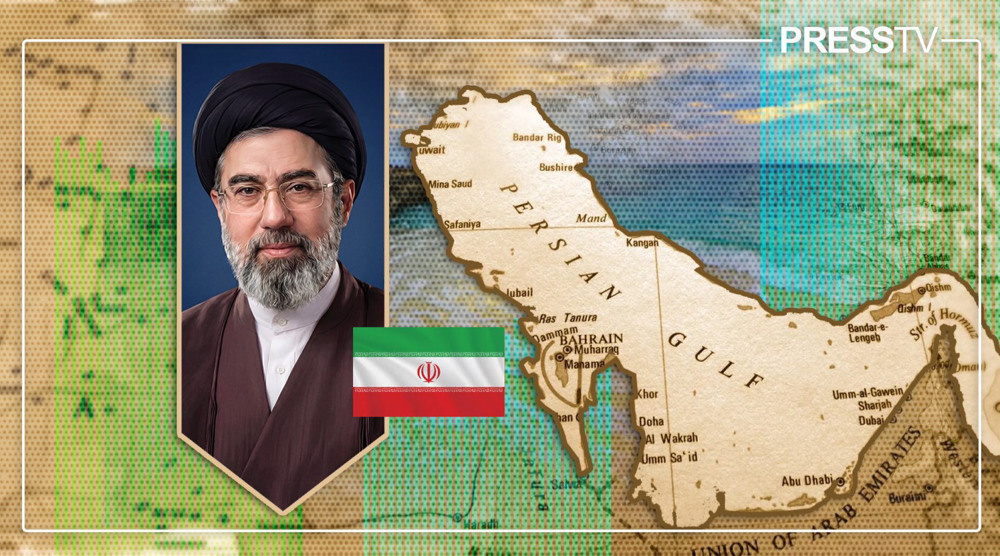
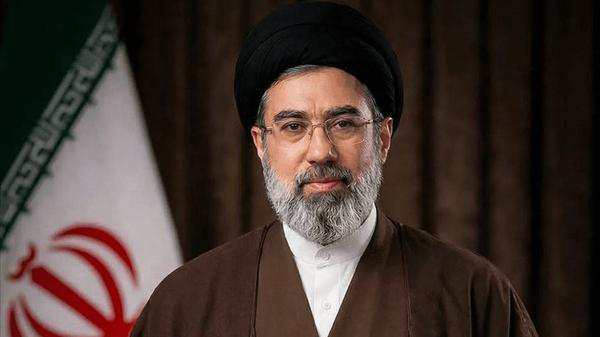
In his message marking the Persian Gulf Day on Thursday, Leader of the Islamic Revolution Ayatollah Seyyed Mojtaba Khamenei declared the emphatic victory in the 40-day imposed war.
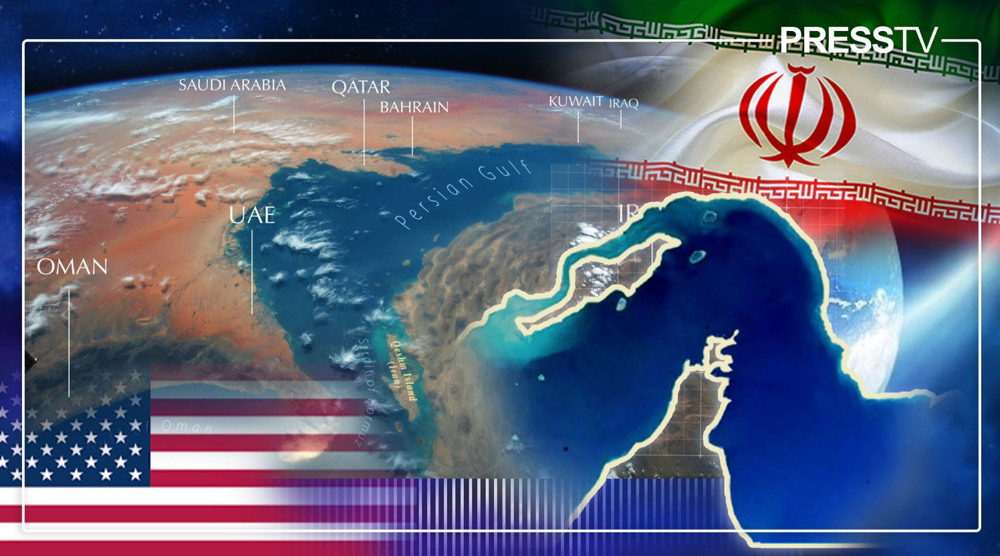
When the Leader of the Islamic Revolution speaks about the Strait of Hormuz – the most strategically vital chokepoint for global energy supplies – with such categorical firmness, the world understands something fundamental has shifted.
Iran is not negotiating from a position of survival. It is dictating from a position of victory.
The message stripped away any remaining ambiguity regarding the outcome of the recent war against the Islamic Republic. The United States and its allies lost. And the winner does not retreat – not on land, not on principles, not on sovereignty.
Washington's talk of "ending the war" on favorable terms has been met with an unmistakable response. Iran will not haggle over its security. It will not trade its strategic assets. The conversation about what Iran might "give up" is over.
By emphasising the irreversibility of Iran's legal and undisputed control over the Strait of Hormuz, the Leader issued a binding directive to diplomats, negotiators, political officials, and military commanders alike.
They have now received their instructions from the commander-in-chief in clear and categorical terms. There is no separate diplomatic track. There is no military track detached from political will. There is one integrated strategy, and its red lines are non-negotiable.
For the United States, this closes a door it had long kept ajar – the fantasy that somewhere down the line, Iran could be persuaded to compromise on its strategic depth. Not anymore. The Strait of Hormuz is Iranian. That is the beginning and the end of the discussion.
✍️ Analysis - Iran's new blueprint for management of Strait of Hormuz in post-American regional order
— Press TV 🔻 (@PressTV) April 30, 2026
By Press TV Strategic Analysis Deskhttps://t.co/J04fWWMiLw
To neighbours – The era of ambiguity is over
To Iran's southern neighbors – the Arab monarchies of the Persian Gulf – the Leader's message simultaneously extended friendship and issued a firm warning.
The friendship is genuine and practical. Iran has repeatedly stated its preference for regional cooperation, shared security, and economic integration. But the warning is equally clear: cooperation with extra-regional enemies is no longer a gray area.
Importantly, Tehran framed this warning not as coercion but as a sober re-evaluation of history. The Persian Gulf states have spent decades following American strategic guidance. The result, as the recent war has shown, was not security but vulnerability.
Iran is not warning from a position of aggression. It is a warning from lived experience – and from the unique credibility that comes with having just defeated the world's most powerful military alliance.
The message to the Persian Gulf countries is therefore simple: align with your region, or continue paying the price for alignment with outsiders. The choice is yours, but the era of ambiguity is effectively over now.
To people of Iran: New doors will open
The Leader also gave the Iranian people a clear promise: perseverance in asserting fundamental rights and maintaining sovereignty over the Strait of Hormuz will not lead to isolation. On the contrary, it will open new doors.
The logic is ironclad. When the threat of foreign military presence is removed from the region, cooperation becomes not only possible but inevitable. And cooperation benefits everyone – Iran, its neighbors, and the broader region.
This is not wishful thinking. It is strategic foresight. Iran has already demonstrated that it can withstand “maximum pressure.” The next phase is not about survival. It is about growth. And growth requires a stable region – one where outsiders no longer set the agenda.
The other point carried historical weight. The Leader declared that the most genuinely patriotic period of governance in Iran's centuries-long history – ancient or modern – is the era of the Islamic Revolution. Despite decades of war, sanctions, assassination campaigns, and relentless hostility, the Islamic Republic has not lost a single inch of Iranian soil.
For the expatriate monarchists who claim to love Iran from afar, and for the internal critics who romanticize pre-revolutionary eras, the message was equally clear: your claims are hollow. Your patriotism is performative. The real defenders of Iranian land and wealth are standing in Tehran and other Iranian cities – not London or Los Angeles.
✍️ Analysis - Iran consolidates Strait of Hormuz control in post-war power shift, leaving US in the dark
— Press TV 🔻 (@PressTV) April 30, 2026
By Press TV Strategic Analysis Deskhttps://t.co/cZKzlZj2KE pic.twitter.com/nJJzI9PZZJ
The enemy's only options are bad ones
This brings us to the core strategic reality. Iran has set its terms for ending the war permanently. The nuclear issue is non-negotiable. Missile capabilities are non-negotiable. Advanced technologies are non-negotiable. The unity of the Resistance Front is a strategic asset, not a bargaining chip.
The enemy now faces a choice between two options - neither has worked before.
The first option is a renewed military aggression. After the failures of the recent imposed war, another direct assault would invite a response unlike anything seen so far.
Iran has kept capabilities in reserve – weapons, tactics, and systems deliberately held back. Those options are now on the table. And any new American military adventure would activate them, widening the war, deepening the strikes, and imposing a credibility defeat on Washington that would dwarf its previous losses.
The second option is a continued economic siege. But here too, the math has changed.
Iran's economic resilience is now greater than the world's ability to isolate it. Furthermore, continued maritime piracy and blockade would trigger military responses that the enemy may not be able to control. The risk of escalation is now so high that the siege option is effectively a trap for the enforcer, not the target.
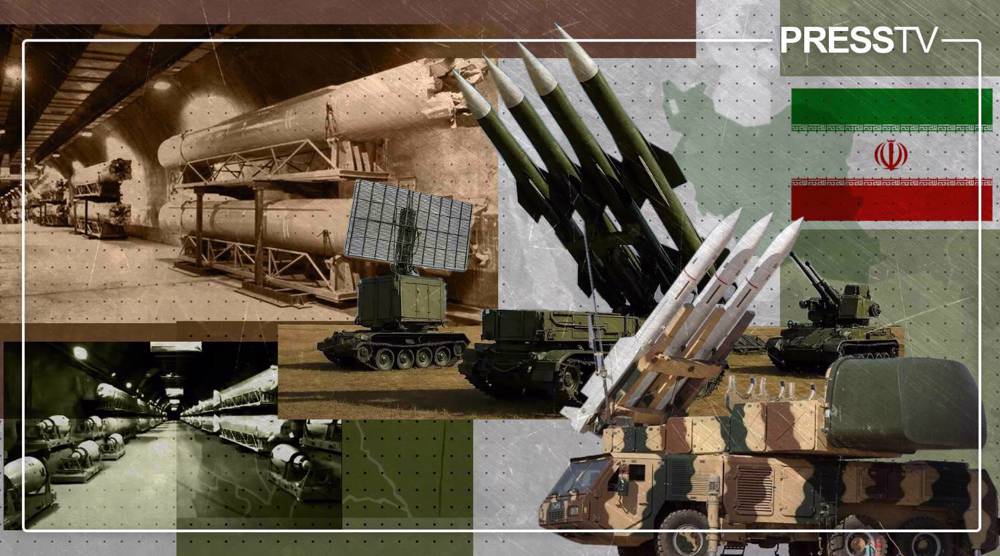
Paradoxically, the third imposed war has unlocked capabilities that Iran had kept dormant for years or even decades. For decades, Tehran deliberately operated below the threshold of full confrontation, limiting itself to diplomatic engagements and controlled responses through the Resistance Front. During that time, stockpiles of munitions and equipment sat in underground cities and silos, slowly approaching expiration.
The recent war changed that. Unwittingly, the enemy has opened the gates of innovation. Iran's defense industries are now producing at the cutting edge of technology, on a massive scale. Older equipment is being consumed and replaced with newer, more effective systems.
And most importantly, Iran is now conducting real-world live testing of its defense technology, not in controlled drills, but on an active battlefield alongside the Resistance Front.
The unrevealed capabilities, the ones held in reserve for future phases of war, remain unseen. But they are real. And they are waiting to be revealed.
The people: Islamic Republic's unparalleled asset
No analysis of Iran's strength is complete without acknowledging the role of the Iranian people. The enemy's psychological warfare campaign, designed to fracture Iranian society, turn people against their government, and create a fifth column, has failed completely.
The unparalleled and historic support of the people for the system, the leadership, and the armed forces has been demonstrated night after night, with millions taking to the streets and squares. This is the behavior of a nation united in defense of its homeland.
The nationwide ‘janfada’ campaign (sacrifice for the nation) has crossed the 31-million-mark – the people who are ready to defend the country in the event of any aggression in future.
The enemy miscalculated. It assumed that economic pressure, military strikes, and assassination would break the bond between the Iranian people and their system. Instead, that bond has been strengthened.
The people are not passive observers of this war. They are active participants, supporting the armed forces, standing behind their Leader, and demanding that not a single concession be made to the aggressor – not on the battlefield and not at the negotiating table.
This unity – this historic, unparalleled accompaniment of the people with the system and the armed forces – is an asset that no weapon can destroy and no propaganda can undermine.
Taken together, these factors place Iran in a position of decisive strategic advantage.
✍️ Analysis - Iran's new calculus: Full Strait of Hormuz control, no retreat on nuclear rights, and unused cards – including NPT
— Press TV 🔻 (@PressTV) April 25, 2026
By Press TV Strategic Analysis Deskhttps://t.co/JuJnfEKf7O pic.twitter.com/QnkIprd2g4
Iran has its hands full and options open
The enemy has failed on the battlefield. It has failed to achieve any of its objectives. It has failed to destroy Iran's missile production. It has failed to dismantle Iran's nuclear program. It has failed to break Iran's control over the Strait of Hormuz. It has failed to fracture Iranian society. It has failed to turn the people against their government. It has failed on every front.
And now, the enemy wants to end the war. It needs to end the war. But ending the war comes at a price – and that price will be dictated by Iran.
Iran is the country that was aggressed upon. Iran is the country that absorbed the first blows. Iran is the country that endured the assassination of its beloved Leader. And Iran is the country that has emerged from this crucible with its hand full and its options open.
The enemy, by contrast, has exhausted its options. It has burned through its military capital. It has no cards left to play. It is desperate for a way out.
The third imposed war was meant to be the moment America finally broke Iran. Instead, it has become the moment Iran activated options it had prepared for years, removed the constraints that previously bound it, and mobilized the unparalleled support of its people.
Iran is operating from a position of surplus – surplus of public will, surplus of strategic depth, surplus of military options, surplus of diplomatic leverage. The war ceiling has been surpassed. Old constraints have fallen away.
For the first time, the initiative has decisively shifted. Iran is no longer responding. It is dictating. The enemy may not like the terms for ending the war, but those terms are the only ones available.
US lawmaker admits American people footing bill for Trump’s failed aggression against Iran
Iran’s Armed Forces vow to inflict further defeats on US, Israeli enemies
IRGC: Iran will change war’s geography, weapons if attacked again



Leader’s advisor: Any foreign forces attempting to land in Iran ‘will certainly be destroyed’
VIDEO | Press TV's news headlines
VIDEO | Priests rally in Rome to honor Palestinian, Lebanese children murdered by Israel
Iran’s military warns of ‘unpredictable blows’ in response to US threats
VIDEO | US economic war on Iran
Iran FM meets with US envoy on UN meeting’s sidelines at American side’s insistence: Report
UN chief warns Israeli violence in West Bank raises ‘specter of ethnic cleansing’
VIDEO | ‘Korea gets nothing, loses everything, with Hormuz deployment’


 PressTV NEWSLETTER
now
PressTV NEWSLETTER
now
 This makes it easy to access the Press TV website
