Iran consolidates Strait of Hormuz control in post-war power shift, leaving US in dark
By Press TV Strategic Analysis Desk
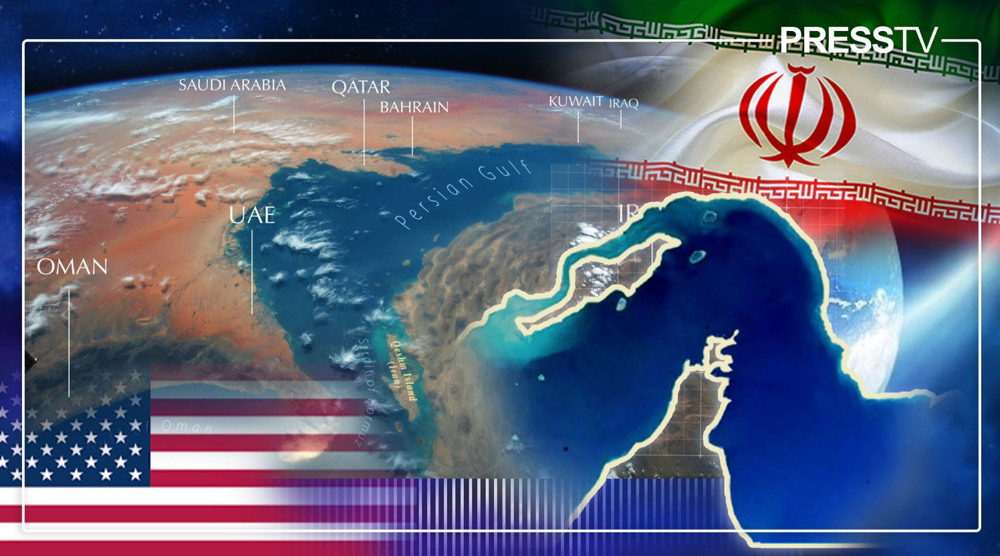
The geopolitical landscape of the Persian Gulf has undergone a seismic shift following the 40-day US-Israeli war of aggression against the Islamic Republic of Iran.
Iran emerged from the imposed war not merely intact but strategically ascendant, holding a decisive upper hand over the world's most critical energy chokepoint.
The Strait of Hormuz, through which approximately one-fifth of global oil trade passes, is no longer a waterway that Washington can threaten, monitor, or control.
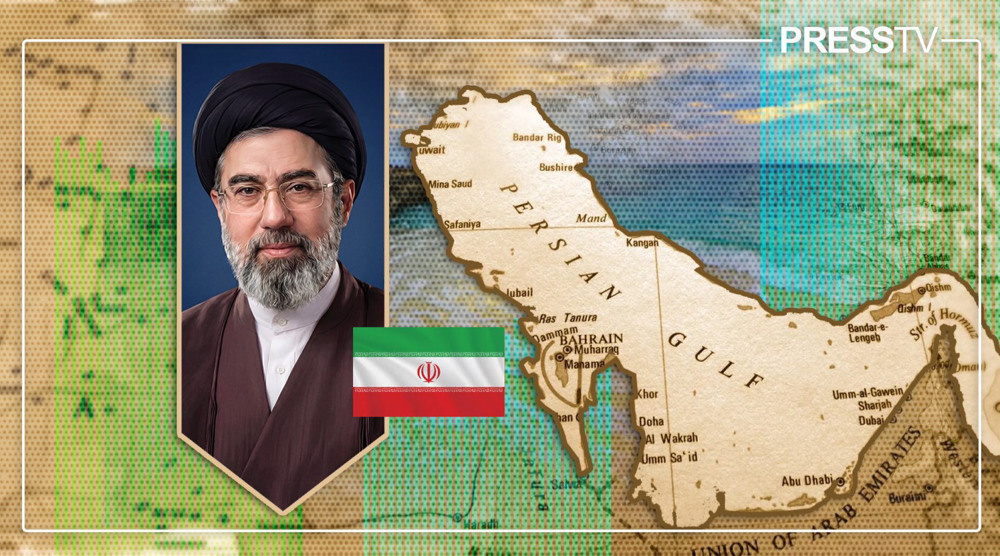
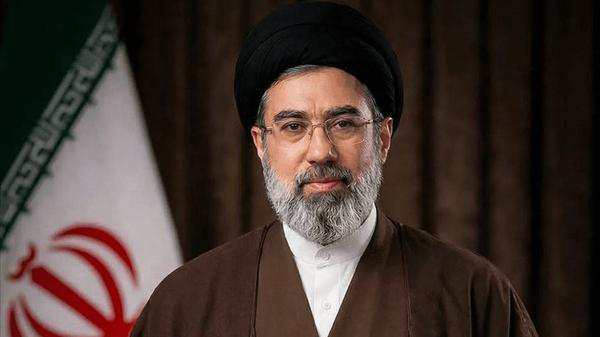
It is now firmly under Iranian management, backed by legal codification, military capability, and an unshakable political resolve, as asserted by Leader of the Islamic Revolution Ayatollah Seyyed Mojtaba Khamenei in his Persian Gulf Day statement on Thursday.
The Leader unveiled a comprehensive strategic vision, which seeks to transform Iran's relationship with the world's most critical energy chokepoint from defensive vigilance to active and legally codified management.
This is not a tactical victory or a fleeting advantage. It is a fundamental reordering of power in the region, one that leaves the United States guessing about Iran's next move while every available path before it leads toward a deepening crisis.
✍️ Analysis - Iran's new blueprint for management of Strait of Hormuz in post-American regional order
— Press TV 🔻 (@PressTV) April 30, 2026
By Press TV Strategic Analysis Deskhttps://t.co/J04fWWMiLw
The failed cycle: Trump's return to discredited pressure tactics
The opening gambit of America's renewed pressure campaign is itself an admission of strategic bankruptcy. Trump's insistence on escalating economic pressure through the imposition of maritime piracy and naval blockade represents a return to a cycle that has been tested repeatedly – and has failed repeatedly.
The formula is familiar: apply economic strangulation, incite public discontent in Iran, force Tehran to the negotiating table, and extract strategic concessions in exchange for absolutely nothing from the American side.
This cycle has been attempted before. The critical difference this time is that in previous iterations, the military option still carried some credibility. Washington could imply, however vaguely, that if pressure failed, force remained on the table.
That credibility has now been expended. The 40-day war imposed on Iran consumed the military option, and the failure of that aggression has left it hollowed out. It may not have vanished entirely, but it no longer carries the weight or deterrent value it once did.
A second difference is the remarkable resilience of the Iranian people. America's entire pressure strategy has been built on the assumption that economic hardship would eventually trigger widespread unrest – that the Iranian people would turn against their leadership, creating the conditions for “regime change” or capitulation.
Yet Iranians have demonstrated extraordinary patience, solidarity with the leadership, and unwavering support for the armed forces. This has made America's investment in fomenting discontent far more difficult than in previous comparable cycles.
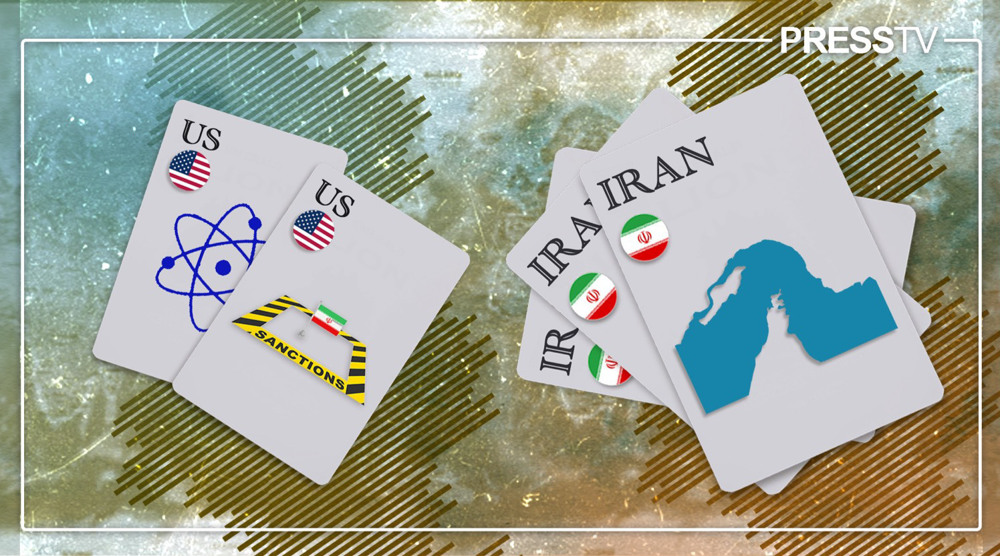
A third and perhaps most decisive difference is that America now faces an Iran with relatively full hands. The management and sovereignty imposed by Iran over the Strait of Hormuz have fundamentally altered the balance of leverage.
Iran is no longer merely a sanctioned nation absorbing blows. It has become a sanctioning country capable of imposing costs, controlling access, and reshaping the rules of engagement at the regional and global level.
✍️ Analysis - Why no power can undermine Iran's eternal dominance over the Strait of Hormuz
— Press TV 🔻 (@PressTV) April 10, 2026
By Mohammad Molaeihttps://t.co/ej1kJTj9FV
America's new priority: Breaking the strait, not Iran
For the United States, the strategic calculus has shifted in revealing ways. The primary objective is no longer dismantling Iran's nuclear program or forcing a change in its foreign policy. It is far more urgent and immediate: reopening the Strait of Hormuz.
The closure or effective Iranian management of this strategic waterway has dealt a fundamental blow to American prestige and credibility around the world, including among its allies, a wound that Washington cannot afford to leave untreated.
Indeed, breaking the deadlock in the strait may well have taken precedence over – and gained urgency compared to – the question of Iran's nuclear rights. This inversion of priorities speaks volumes.
America would rather secure passage for its allies' tankers than resolve the nuclear file. It would rather salvage its wounded so-called “superpower” image than extract concessions on uranium enrichment.
But Iran's position is unwavering. The decisive, clear, and emphatic declaration of its irreversible decision regarding sovereignty and control over the Strait of Hormuz carries consequences that extend far beyond economics.
There is the economic dimension, certainly – the ability to toll vessels, generate revenue, and pressure adversaries. But there is also the humiliation of American superpower status and the toppling of its global dominance. Every day that Iran exercises effective control over the strait is a day that American credibility erodes further.
Furthermore, the consolidation of Iranian sovereignty over the strait dismantles America's decades-old strategic roadmap concerning the deployment and geography of its forces in the region.
The United States had built its Persian Gulf presence around the assumption of freedom of navigation – that its navy could come and go as it pleased, that its bases were inviolable, that its dominance was uncontested. That assumption is now dead.
✍️ Analysis - Battlefield has spoken: Trump wants an off-ramp – concessions to Iran are the only way out
— Press TV 🔻 (@PressTV) April 19, 2026
By Press TV Strategic Analysis Deskhttps://t.co/FqoVcXvp8l
The veto stronger than the Security Council
The vital role of the Strait of Hormuz in the global economy and development cannot be overstated – and it extends far beyond the mere passage of oil through this waterway.
Global supply chains, energy security, and the economic stability of major powers all depend on uninterrupted transit through this narrow chokepoint.
By applying its own rules for the world's use of the strait, Iran has placed in its hands an extraordinarily powerful tool – perhaps even stronger than the UN Security Council veto.
In practice, this serves as a preamble to the realization of Iran's strategic objectives in the region and the world. As the Leader of the Islamic Revolution stated in his Persian Gulf Day message, this great achievement will change the order of the region and the world.
The gains from Iran's implementation of management over the strait are not limited to collecting tolls from passing vessels. While tolls bring considerable material benefits to Iran – revenue that can be reinvested in development – these financial gains are negligible compared to the broader strategic achievements.
The true prize is structural power. The ability to say yes or no. The capacity to reward allies and punish adversaries. The authority to shape the rules by which the global economy accesses one of its most vital arteries.
✍️ Analysis - Iran's new strategic posture ends win-win diplomacy, leaves US no choice but to concedehttps://t.co/wiDxjW9Hdp pic.twitter.com/xP86gVaY8A
— Press TV 🔻 (@PressTV) April 18, 2026
A new image of Iran: A major power
The consolidation of Iranian sovereignty over the Strait of Hormuz – alongside the imposition of defeat upon the enemy in its objectives during the recent imposed wars – has led to the delineation and unveiling of a new image of Iran to the region and the world.
These days, much confirmation of this can be heard in the comments and analyses from the world’s leading think tanks, experts, politicians, and reputable media outlets worldwide.
For America's former and current allies, following this great Iranian achievement, the US will no longer carry the halo of a “superpower” or the capacity for bullying and coercion as before. Many current equations and orders – including NATO – will now be subject to change and revision to America's detriment.
The decisive and crushing defeat of American dominance in the region and the world is far more severe, costly, and far-reaching than a military or political defeat resulting from the third imposed war.
This is not hyperbole. It is a recognition of structural reality. When a superpower attempts to subdue a regional power and fails – when it expends its military option, exhausts its economic leverage, and still cannot achieve its objectives – the message to every other player is clear. The unipolar moment is over. A new order is emerging, and Iran is one of its main architects and protagonists.
✍️ Analysis - Iran's principled red lines and Trump's desperation to exit the quagmire show who holds the cards
— Press TV 🔻 (@PressTV) April 26, 2026
By Press TV Strategic Analysis Deskhttps://t.co/lxdFw4ObLy
The enemy's new weapon: Distortion and deception
Recognizing that conventional military and economic tools have failed, the enemy has turned to its most dangerous weapon – one more significant than naval blockades or even the resumption of war. That weapon is distortion, deception, and trickery.
The enemy seeks to use its agents inside Iran and its media mouthpieces to influence Iranian minds, causing the value of the Strait of Hormuz to collapse in public opinion under the weight of economic and military pressure.
Signs of this dangerous and insidious influence can be observed these days in certain opinions and media outlets. This mysterious current – in what is certainly a coordinated movement – is pushing for concessions and the use of the Strait of Hormuz card to end American pressures, alongside nuclear capabilities.
These statements align precisely with the enemy's desire to strip our country of these instruments of power. The logic is perverse but predictable: if the Iranian people can be convinced that the strait is not worth the cost, that the pressure is unbearable, that compromise is preferable to resistance – then the enemy will have achieved through psychological warfare what it could not achieve through military aggression.
This is why vigilance is essential. The battlefield has shifted from the waters of the Persian Gulf to the minds of the Iranian people. And on this battlefield, the stakes are just as high.
✍️ Analysis - Iran holds all the cards: Victorious on the battlefield, united at home, and armed with strategic assets
— Press TV 🔻 (@PressTV) April 20, 2026
By Press TV Strategic Analysis Deskhttps://t.co/AiKDeAt4CO
Iran's inevitable response
Iran's response to the continued naval blockade, maritime piracy and banditry by the United States in international waters – as well as the harassment of vessels associated with Iran – is inevitable. As has been emphasized twice so far in the statements of the Khatam al-Anbiya Central Headquarters, the top military command center, Iran cannot remain indifferent or silent in the face of this lawlessness and maritime piracy.
The American campaign of maritime banditry – the interception of Iranian oil shipments, the seizure of vessels, the intimidation of crews – is itself an act of war. Iran has every right under international law to respond proportionally – and it will respond.
But the form of that response is what keeps Washington guessing. Will Iran escalate gradually or dramatically? Will it target American vessels directly or focus on allied shipping? Will it employ legal mechanisms, economic instruments, or military demonstrations?
The range of options available to Iran is vast, and the deliberate unpredictability of Iranian decision-making leaves the United States in a perpetual state of uncertainty.
This is the new strategic landscape, one in which Iran holds the upper hand, determines the management of the Strait of Hormuz, and keeps Washington guessing about every move.
Iran defeated US in 'Trump’s third war' midway: Leader's advisor
US military asks for ‘new’ ideas to deal with Iran after its crushing defeat: Report
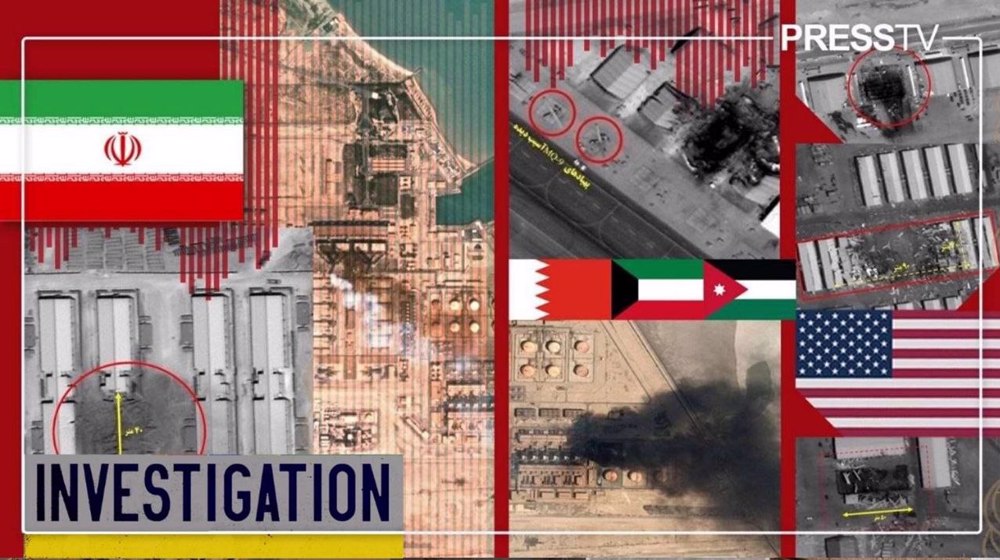
How Iran’s two-week retaliatory strikes exposed cracks in US military architecture in Persian Gulf



Pakistan deploys six cabinet ministers for strategic talks with Iran
Israel burns over 120 hectares of centuries-old olive groves in south Lebanon
US investigates airspace safety incident involving Trump helicopter
VIDEO | Iran missiles stronger than Oreshniks
VIDEO | British academic wins legal battle as UK court protects anti-Zionist beliefs
VIDEO | Italian teachers face growing scrutiny for speaking out against Gaza genocide
VIDEO | Press TV's news headlines
Explosions heard at Dubai’s Jebel Ali industrial area: Report


 PressTV NEWSLETTER
now
PressTV NEWSLETTER
now
 This makes it easy to access the Press TV website
