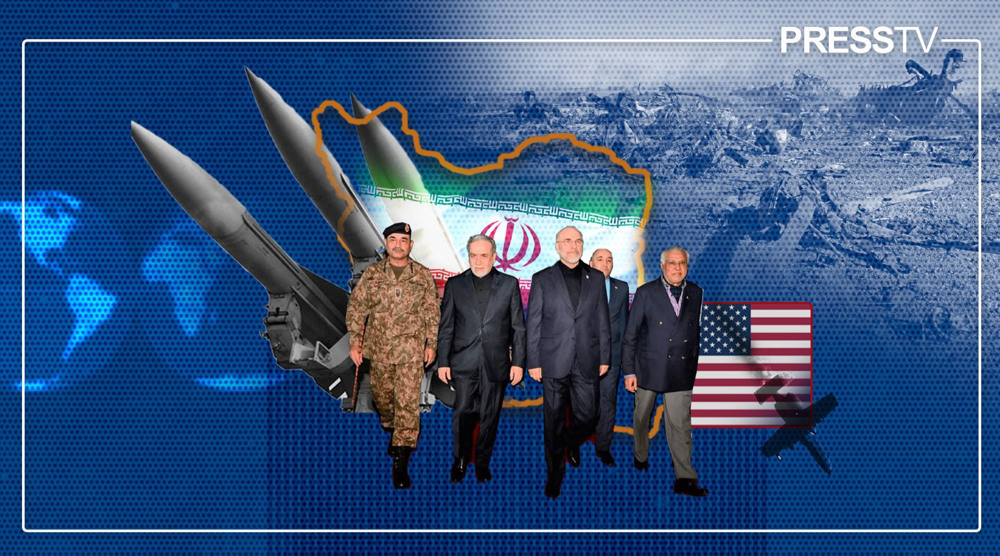
How Iran's media, led by Press TV, shaped unfiltered narratives of war and diplomacy
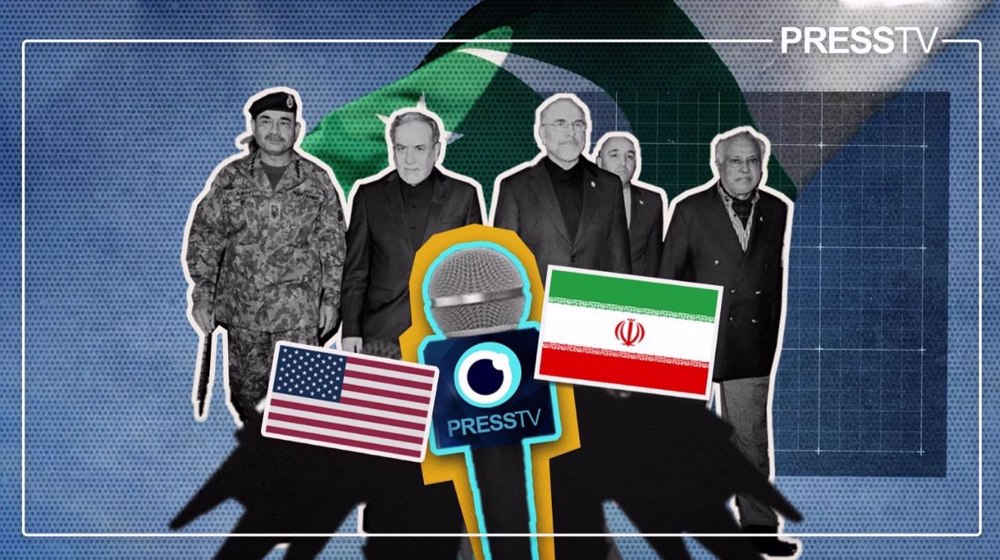
By Sheida Eslami
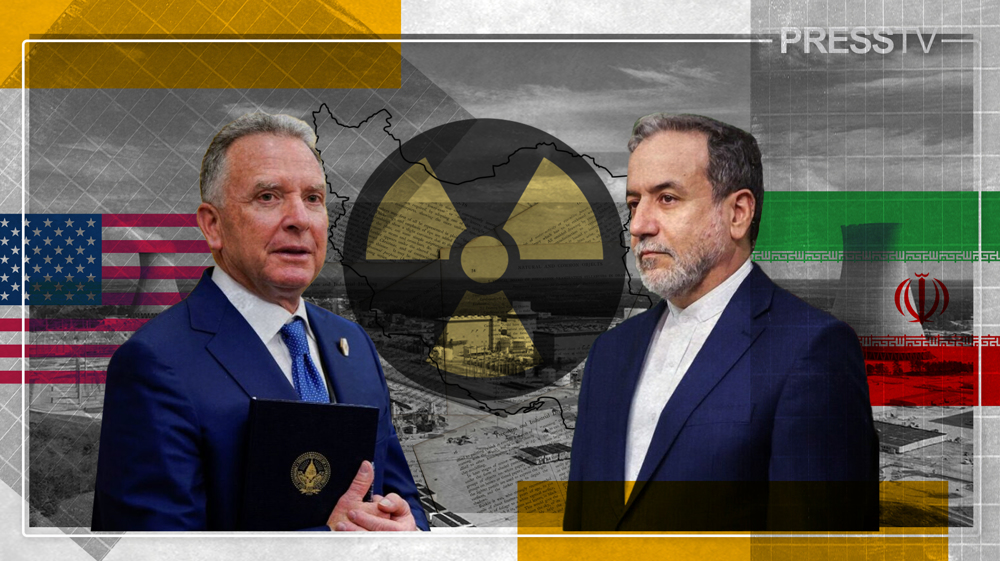
As US Vice President JD Vance and special envoy Steve Witkoff left Islamabad last week with fake smiles, they stuck to a pre-written script: declare the talks a failure, paint Iran as another North Korea, and frame a single round of Pakistan-mediated negotiations as proof of Tehran's "illogical stubbornness."
But while they played their part, Iranian media and diplomats were busy crafting a different story – one rooted in truth and defiance.
The result was that the Iranian narrative of what transpired in Islamabad on April 11-12, 2026, didn't just compete with the Western version but dominated global media coverage, setting the record straight and reshaping the diplomatic battlefield.
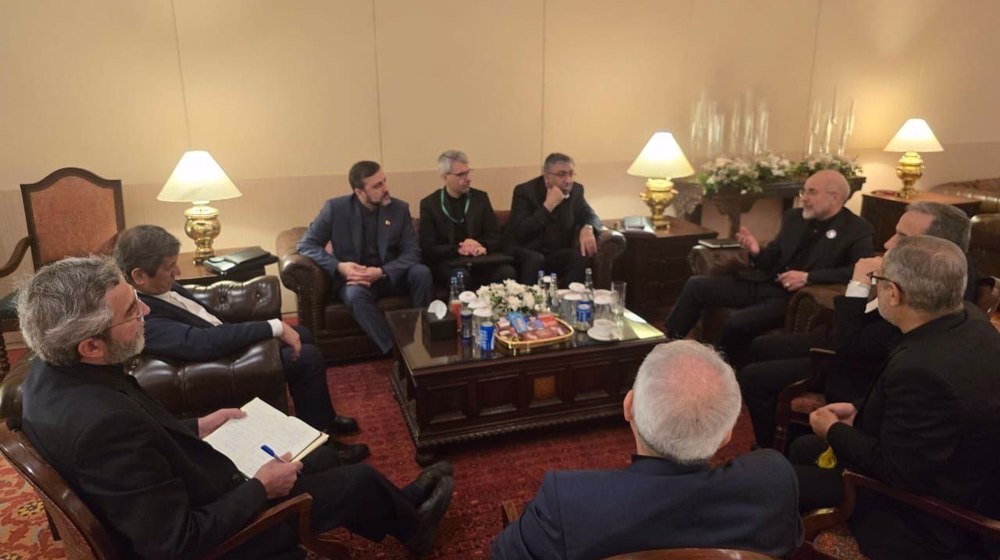
During those two days, the Pakistani capital hosted one of the most sensitive diplomatic negotiations of recent decades – negotiations between Iran and the United States with Pakistan's mediation, which came after 40 days of the war of aggression against Iran.
This was the first direct, highest-level interaction between the two countries since Iran's 1979 Islamic Revolution, and its historical significance was widely reflected in international diplomatic circles.
What distinguished this event from many previous negotiations was not merely the political content of the talks, but also a profound shift in the dynamics of media diplomacy – to the extent that, like a peak in the history of Iran-US tensions, the main source, the reference point of agenda-setting, and the pulse of events fell into the hands of Iranian media.
Iranian media, alongside Iranian media and diplomatic figures, acting as the voice of the resistance front, played a pivotal role in this paradigm shift.
A two-week ceasefire as a prelude to media authority
The high-stakes Islamabad negotiations took place against the backdrop of a two-week ceasefire announced after six weeks of unprovoked and illegal US and Israeli attacks against Iran beginning on February 28, 2026.
In response to the aggression, Iran delivered a decisive response and exerted almost complete control over the Strait of Hormuz, the waterway through which approximately one-fifth of the world's oil passes.
Before the negotiations began, Iran had presented its 10-point proposal to the United States via Pakistan. According to this plan – communicated by Iran's Supreme National Security Council and published by IRIB (Islamic Republic of Iran Broadcasting) citing the Council's statement – the main conditions included: guarantees against any new aggression against Iran, maintaining Iran's control over the Strait of Hormuz, recognition of Iran's right to enrich uranium on its soil, the lifting of all primary and secondary sanctions, the termination of all anti-Iran resolutions of the UN Security Council and the IAEA Board of Governors, payment of war reparations to Iran, withdrawal of US combat forces from the region, and a halt to wars on all fronts, including against Lebanon's Hezbollah.
US President Donald Trump called the plan a "workable basis for negotiation." Iran had flatly rejected Washington's request for a temporary ceasefire and insisted on a genuine and complete cessation of the US-Israeli aggression.
An important point is that the White House later claimed Iran had presented two 10-point plans: one "non-serious and unacceptable," which, according to Trump, was "thrown in the trash," and another "workable" one that became the basis for the ceasefire and negotiations. These contradictory statements were themselves part of the war of narratives, which Iranian media carefully scrutinized and exposed.
Press TV Exclusive: US destroyers' Strait of Hormuz transit stunt failed, came close to destructionhttps://t.co/zVeCCKGJlO https://t.co/m348SyV1uz pic.twitter.com/KhKXTTwWA5
— Press TV 🔻 (@PressTV) April 12, 2026
The flag-bearing of the resistance front's media diplomacy
In this battlefield of narratives, Iranian media – and specifically Press TV as the official English-language broadcaster of the Islamic Republic of Iran – played an unparalleled role.
On March 25, Press TV, citing a security official, had revealed that the Islamic Republic will end the war when it itself decides and upon the fulfillment of the conditions it sets, and will not allow Trump to determine the timing of the war's end.
According to this highly placed source, who spoke exclusively to Press TV, the United States, through various diplomatic channels, had requested negotiations from Iran and put forward proposals that were excessive and inconsistent with the reality of America's defeat on the battlefield.
Iran evaluated these proposals like the two previous rounds (the negotiations of spring and winter of 1404 [2025-2026]) and considered them a ruse to increase tensions, especially since on both previous occasions, America had no real intention of negotiating and instead carried out unprovoked and illegal military aggression against Iran.
Iran gave a negative response to the American proposal, which was conveyed through a friendly mediator in the region, noting that it was prepared to continue its defense and inflict heavy blows on the enemy, as it had in the past five weeks prior to that.
This defense would continue until these conditions were met: 1- Aggression and terrorism by the enemy come to an end; 2- Concrete conditions are created so that war will not be repeated; 3- The payment of damages and war reparations is guaranteed and clearly determined; 4- The end of war on all fronts and regarding all resistance groups that participated in this battle across the region is implemented; 5- Iran's exercise of sovereignty over the Strait of Hormuz is and will remain Iran's natural and legal right, as well as ensuring the implementation of the other party's commitments.
These conditions of Iran were separate from the demands presented to the other party in the second round of negotiations in Geneva (a few days before the US and Israeli attack. Iran announced to all mediators who appeared in this arena in good faith that a ceasefire will occur when Iran's conditions are accepted, and until then, no negotiations will take place.
Iran vowed to continue to defend itself until the aforementioned conditions were met, and will end the war when it itself decides, not when Trump intends for it to end, Press TV reported, which was later reproduced by other international media outlets.
This timely and effective reportage attracted global attention and caused Press TV to become a one-point source for following Iran's definitive positions regarding the war and its end, ranking first among the media referenced globally on the subject of negotiations.
Iranian media, especially Press TV, during and after the Islamabad negotiations, through minute-by-minute coverage, interviews with high-ranking Iranian officials, and expert analyses, conveyed the narrative of "resistance against American excesses" to their global audiences.
In addition to the fact that Abbas Araghchi, Iran's Foreign Minister, wrote on X: "America's excesses, shifting goals, and threats of encirclement derailed what was only a few steps away from becoming the Islamabad memorandum," Iranian media carefully and meticulously monitored the behavior of the American side during the negotiations.
After the talks were declared inconclusive, Iranian media systematically analyzed the shift in America's language from "complete destruction" to "commitment" regarding the nuclear issue, the "direct military threat" that – contrary to before – was absent during the negotiations, and the use of the "bad news for Iran" game regarding the failure of the talks – noting that if that were truly the case, there would have been no reason for the American team to engage in those marathon negotiation – thus exposing the emptiness of the American team's psychological tricks to escape the corner of the ring.
A noteworthy point is that the Iranian delegation clearly stated that it had "full decision-making authority and no need for moment-by-moment approval from Tehran" – a report whose maximum reflection in Iran's media space indicated Iran's diplomatic maneuverability and simultaneously invalidated Western narratives about the Iranian delegation's "lack of authority.
‼️Press TV Exclusive: US suffered major strategic defeat in the failed Isfahan operationhttps://t.co/lTkQ8ij9yi pic.twitter.com/Zj6fS9N0zO
— Press TV 🔻 (@PressTV) April 7, 2026
A narrative that traversed a path from analysis to dominance
On the other side of the field, mainstream Western media such as The New York Times, The Washington Post, CNN, and the BBC continued to operate within the framework of "American unilateralism" and "hero-making of the American negotiating team."
These media outlets largely focused on the "failure of negotiations" and "Iran's intransigence," and paid less attention to the content of America's maximalist demands, its obvious behavioral contradictions, or the historical roots of the Iranian people's distrust of American claims due to bitter past experiences.
They did, however, admit that the stalemate in negotiations had driven the Trump administration "into the corner of the ring," leaving before it only two costly paths: either entering a long and complex diplomatic process, or returning to a war that had already caused one of the most severe energy disruptions in the modern era.
The professional conduct of the Iranian side and the legitimate pressure from Iranian media led even these outlets to concede that America's "red lines" were exactly the demands that Iran had declared non-negotiable from the start: the complete cessation of uranium enrichment, the dismantling of nuclear facilities, and the handover of high-enriched uranium. These reports effectively confirmed the Iranian narrative of American "excessiveness," even if hidden within the wrappings of biased Western analyses.
But the important difference this time was that alternative narratives – led by Press TV – gained more space, and foreign media, in order to learn the precise details of the negotiations, were forced to refer to Iranian sources.
Mohammad Amin Imanjani, the managing director of the Farhikhtegan newspaper, who was present in the media team accompanying the Iranian negotiators, emphasized in his analysis of the negotiations, pointing to this strategic shift, that the Iranian media action has “much more different compared to the 40-day war."
"The media team entered the negotiations very differently from previous delegations. The media tried to connect with realities and be the main source of events," he said.
He also pointed to the key role of University of Tehran professor and noted commentator Sayyed Mohammad Marandi in the public diplomacy team and said: "In the media area, many foreign media outlets were referring to Iranian sources; either Dr. Marandi himself, as a person in the public diplomacy team, was very effective – and he and others also referred to domestic media."
"Overall, both the main source, the agenda-setting, and the pulse of events inside the negotiations were with our media. This position resulted in authority being in the hands of Iranian media," the Iranian journalist and media manager added.
✍️ Investigation - Geography, energy, asymmetric power: Strait of Hormuz as Iran's permanent strategic asset
— Press TV 🔻 (@PressTV) April 12, 2026
By Ivan Kesichttps://t.co/cBDPs3weJX
Iran's 360-degree and five-faceted approach to media diplomacy
In fact, Iran's media hand in the Islamabad negotiations – as one of the most crucial peaks in the fate and narrative of the ongoing war – took on a "superior" form across five facets and a 360-degree circuit: media, human-media (media personalities), politicians, military commanders, and Iranian actors in the international virtual atmosphere.
The role of Press TV cannot be analyzed separately from the broader ecosystem of the Islamic Republic of Iran's international media.
The Islamic Republic of Iran Broadcasting (IRIB) organization, with numerous networks such as Press TV (with English, French, Hebrew, and Turkish sections), HispanTV (Spanish-language), Al-Kawthar and Al-Alam (Arabic-language), Sahar, iFilm, and Sahâb (multilingual), has created a global media network that acts as a powerful arm of Iran's public diplomacy.
This media complex includes eight international satellite networks and radio broadcasting in nearly 30 languages.
This media system and the IRIB organization have been repeatedly targeted by Western sanctions in recent years. The European Union imposed sanctions in 2022 against many individuals associated with IRIB, and the United States has had this organization on its sanctions list since 2013. During the recent war as well, in addition to the airstrike that took place during the 12-day war against the news building of IRIB, which violated all international laws of warfare, IRIB buildings were also targeted during the third imposed war against Iran in Tehran and the provinces, and several of its employees were martyred.
Nevertheless, IRIB quickly recovered and maintained its broadcast stability throughout the period of the American-Zionist aggression on Iran, continuing the flow of information.
The important point, of course, is the international coverage and influence of these media outlets on the global media space, which, as an example, is evident in exposing the American naval operation against Iran on exactly April 11, the very day the Islamabad negotiations began, an operation that ended in a humiliating failure, and which demonstrates the real and logical basis for Iran's distrust of the United States and Israel.
An investigative report by Press TV, which was later recreated using artificial intelligence, drew widespread public attention. In fact, as even Western media acknowledge, Press TV is not just a news outlet but part of the ecosystem of the Islamic Republic of Iran's influence and access to various societies. They believe that it is precisely this influence and impact that have forced the West to react harshly against these media outlets.
Alongside all of this, Iran had for years designed a coherent strategy to counter Western "media unilateralism," in which Press TV and IRIB's international networks played a leading role. Media diplomacy is now an inseparable part of diplomatic activities, because the media is the most powerful tool for conveying countries' views, messages, and positions through their diplomats.
In the past, dominant powers sought to achieve their goals and interests using military force and coercive measures, but in the present era, it is these media outlets and virtual networks that conquer the hearts and minds of audiences - not through the use of force, but through narrative-building and message management, without filters.
What took place in Islamabad was one of the most important practical and serious tests of this strategy. Iran's media team designed a coherent strategy for narrative management not during the negotiations, but before they even began.
Prominent figures who attract global attention, from diplomatic personalities to state leaders and battlefield actors, had noteworthy media engagement prior to the negotiations.
This "proactive" approach demonstrated that Iran is aware of the rule that in modern diplomacy, the winner is not the one who better reports the event, but the one who defines the framework of the event before it occurs.
Enemy fighter jet operations over central Iran reduce sharply after F-35 strike: Sourcehttps://t.co/cNZR0tnLrx
— Press TV 🔻 (@PressTV) March 22, 2026
Role of Mohammad Baqer Qalibaf – power diplomacy in the negotiating arena
At the head of the Iranian negotiating team was Mohammad Baqer Qalibaf, the Speaker of the Islamic Consultative Assembly (parliament). The selection of Qalibaf as the head of the negotiating delegation was itself a strategic message: Iran had sent to the field a person who both possesses institutional legitimacy and is known as a pragmatic figure within Iran's political establishment.
Before the negotiations began, Qalibaf had emphasized that Iran came to Islamabad with "good faith and determination," but based on the experience of the two previous wars, it "does not trust the other party."
After the conclusion of the negotiations, Qalibaf wrote in a message on X (formerly Twitter): "The members of the Iranian delegation presented constructive initiatives, but in the end, the other party could not gain the trust of the Iranian team in this round."
He also emphasized that Iran will continue "power diplomacy" alongside military resistance and "will not cease for a moment from striving to consolidate the achievements of forty days of national defense." These statements, while keeping the door to diplomacy open, also clearly conveyed Iran's firm position to global public opinion.
Abbas Araghchi – the architect of nuclear diplomacy in a new field
Abbas Araghchi, Iran's Foreign Minister and one of the main architects of the 2015 JCPOA (Joint Comprehensive Plan of Action), was another central figure of the Iranian team, like in the previous two rounds mediated by Oman.
His experience in complex nuclear negotiations significantly increased the diplomatic weight of the Iranian delegation. In his official statement after the negotiations, Araghchi said: "In intensive negotiations, which were the highest level of interaction in the last 47 years, Iran entered negotiations with good faith to end the war with the United States."
He emphasized that "America's excesses, shifting goals, and threats of encirclement" prevented the signing of the Islamabad memorandum – an agreement that, according to him, was only "a few steps" away.
A noteworthy point is that while criticizing America's behavior, Araghchi did not close the path of diplomacy and conveyed the message that Iran remains ready for dialogue within the framework of mutual respect.
Iran has responded negatively to an American proposal aimed at ending the ongoing imposed war, insisting that any cessation of hostilities will only occur on Tehran's own terms and timeline, a senior political-security official told Press TV on Wednesday.https://t.co/2foRQj5kJw
— Press TV 🔻 (@PressTV) March 25, 2026
Ebrahim Zolfaghari – voice of authority in battle of narratives
On the military side, Ebrahim Zolfaghari, the spokesperson of the Khatam al-Anbiya Central Headquarters, had become an influential figure in presenting a powerful image of Iran.
In addition to his legal position as a military spokesperson, Zolfaghari also has special personal characteristics that have made him a compelling figure in the media space.
After the failure of the negotiations and simultaneously with Trump's announcement of a naval blockade of Iran, he warned that "the armed forces of Iran have clearly and decisively announced that the security of ports in the Persian Gulf and the Sea of Oman will be guaranteed either for everyone or for no one."
He added that "vessels belonging to the enemy do not have and will not have the right to transit through the Strait of Hormuz," but other vessels "will be permitted to transit in compliance with the regulations of the armed forces of Iran."
This stance – which was widely reflected by international media – both demonstrated Iran's authority in the Strait of Hormuz and conveyed the message that Tehran, even in wartime conditions, adheres to its international obligations.
This "coercive diplomacy" complemented the media diplomacy and strengthened the Iranian narrative from various dimensions.
Dr. Marandi – a true example of an influential media personality
Dr. Mohammad Marandi, a professor at the University of Tehran and senior political analyst who was present in the public diplomacy team of the Iranian delegation in Islamabad, made important revelations in an interview with Lebanon's Al-Mayadeen network that shed light on the hidden dimensions of the negotiations.
Dr. Marandi revealed that the Iranian delegation had received a "direct threat" on its way back from Islamabad that their plane might be targeted. According to him, due to this security threat, the Iranian delegation landed in Mashhad, and then the Iranian delegation returned to Tehran by train and car.
Dr. Marandi also said in an interview, stating that "I think every American should be frustrated and shocked that the Vice President of the United States reports to this 'contemptible colony' (Israel) and its criminal prime minister."
"Vance was reporting to Netanyahu throughout the negotiations," he said.
While in Pakistan, he also announced in an interview that Israel, not America, is Trump's first priority, and that this issue and the influence of the Zionist lobby could lead to a lack of agreement. In numerous other interviews, Marandi also spoke about the history of America's behavior toward Iran and emphasized the roots of America's untrustworthiness and the domination of US leaders by Israel.
He also spoke of Iran's high confidence in its military power and its upper hand in the conflict, emphasizing that "Iran has no problem returning to Tehran without reaching an agreement and feels no urgency to do so," and that it entered the negotiations to announce to the international community that, just as it did not start the war, it will not close the doors of diplomacy either.
These revelations had two simultaneous functions: first, they challenged the Western narrative of "Iran being at fault" by providing tangible evidence of America's dishonest and threatening behavior; second, they turned Iranian media into the primary source of exclusive news, which even Western media were forced to cite.
Iran forced Israel to halt attacks on Beirut by threatening to withdraw from talks with US: Source to Press TVhttps://t.co/NpOt052nx0
— Press TV 🔻 (@PressTV) April 10, 2026
Global storm of Iran's embassies; digital diplomacy the Iranian way
On another front, one must mention the unprecedented role and global storm created by Iran's embassies and Iranian diplomatic cells around the world. According to Al Jazeera, Iranian embassies from London to Pretoria and from New Delhi to Moscow launched a coordinated, satirical campaign on social media and responded to Trump's crude threats.
According to the Middle East Media Research Institute (MEMRI), Iran's embassies launched a global campaign to hit back at the enemy, using images and videos produced with artificial intelligence – including an image by Iran's embassy in India of Trump kneeling before the ancient bas-relief of the victory of Shapur I at Naqsh-e Rostam, or Iran's embassy in Tajikistan showing Trump descending from Air Force One with a white flag, and another post by Iran's embassy in Japan which reminded in a legal tone that "the Strait of Hormuz is not international waters" and that "having a legal advisor is not a bad idea."
This campaign, which went beyond traditional diplomatic formats and utilized humor, internet memes, cultural references, and even artificial intelligence, conveyed Iran's message to global audiences, especially the younger generation, and demonstrated that the Islamic Republic of Iran has effectively employed modern communication tools in the service of its diplomatic goals.
This campaign can indeed be described as a profound shift in Iran's public diplomacy, attracting global attention and eliciting many reactions, to the extent that a social media activist wrote in a post: "Iran's embassies are making so much fun of Trump that he might soon need to request a ceasefire on social media too."
Furthermore, from a general perspective, during the period of the US-Israel-imposed war from late February 2026 to the present, global assessments have interpreted Iran as the victor in the war of narratives against the United States.
Just as the British newspaper The Guardian recently published an article titled "Going viral: Iran is beating tech-addicts in the social media war," addressing Iran's influential media role in the Ramadan War and stating that Iran's entire media apparatus has performed much better and faster in content production and message delivery than the land of tech-addicts.
The Guardian, stating that today's wars unfold in two arenas, one is the battlefield, and the other, which is equally important, is the media war, emphasized that Iran has been able to completely dominate the war of narratives, especially on global social media.
In another section, this British newspaper explicitly stated: By conquering cyberspace, Iran was able to bring the cradle of technology to its knees in the social media war.
America has always considered itself the undisputed leader of the digital world, artificial intelligence, and social networks, but in the current media battle, this "pretentious land" has been defeated by Iran's digital creativity.
Iranian content producers, with comedy videos and Lego animations of Trump (the US president) created by artificial intelligence, are defeating the United States. They are using humor as a weapon against America.
US suffered over 3,200 casualties, staggering equipment losses in first week of war: Sourcehttps://t.co/3acvi3vJbo
— Press TV 🔻 (@PressTV) March 17, 2026
Trump factor – a double-edged sword that turned in Iran's favor
But despite all of this, one should not overlook another important factor, and that is the very factor named Trump, who, with his lies, rambling, narcissism, arrogant and insulting behavior, including threats to "bomb bridges and power plants" and the use of obscene language on social media, made the world distrust what was being published by the United States and lean toward Iran's media flow.
In an interview, Trump claimed that he had obtained "almost all the necessary points," but that Iran would not abandon its "nuclear ambition."
This clear contradiction, claiming success while acknowledging failure on the main issue, was itself the best subject for narrative-building by Iranian media.
Islamabad, a turning point in Iran's media authority
The Islamabad negotiations demonstrated that Iranian media, with an appropriate strategy, a coherent media team, creative diplomacy on social networks, and access to primary sources, can challenge the existing order in the field of media diplomacy.
Press TV, as the voice of the resistance front, through accurate coverage, expert analyses, revealing exclusive details of the negotiations, and highlighting the destructive role of Israel, showed that the media of the resistance front are not only capable of competing with Western media but, in specific circumstances – such as exclusive access to informed and highly placed sources – can become the primary reference.
Iran showed that in the era of the "war of narratives," the tools of media diplomacy are as important as military power. If the 40-day war was a test of hard power, Islamabad was a test of soft power and media diplomacy.
And in this arena, Iranian media were the victors, not because their narrative was "more truthful" (although the details published from the negotiations show that battlefield realities were most consistent with Iran's media narrative), but because in the chaotic and turbulent space of international diplomacy, they were the first to define events within their own framework and forced others to refer to that framework.
This is "news authority" – an achievement that will transform the path of Iran's media diplomacy for years to come.
Sheida Islami is a Tehran-based writer, media advisor and cultural critic.
(The views expressed in this article do not necessarily reflect those of Press TV.)
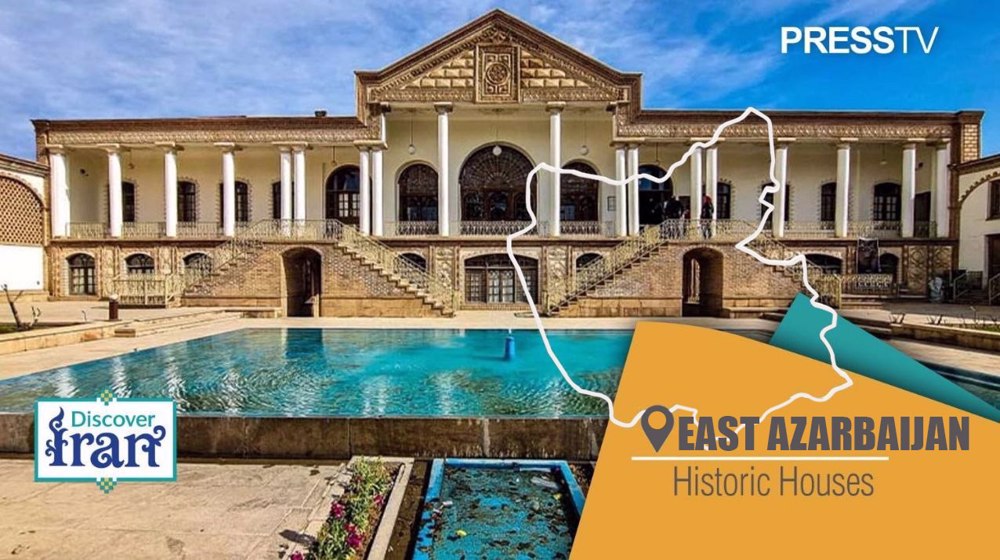
Discover Iran: Tabriz’s extraordinary architectural legacy through royal palaces, merchant mansions
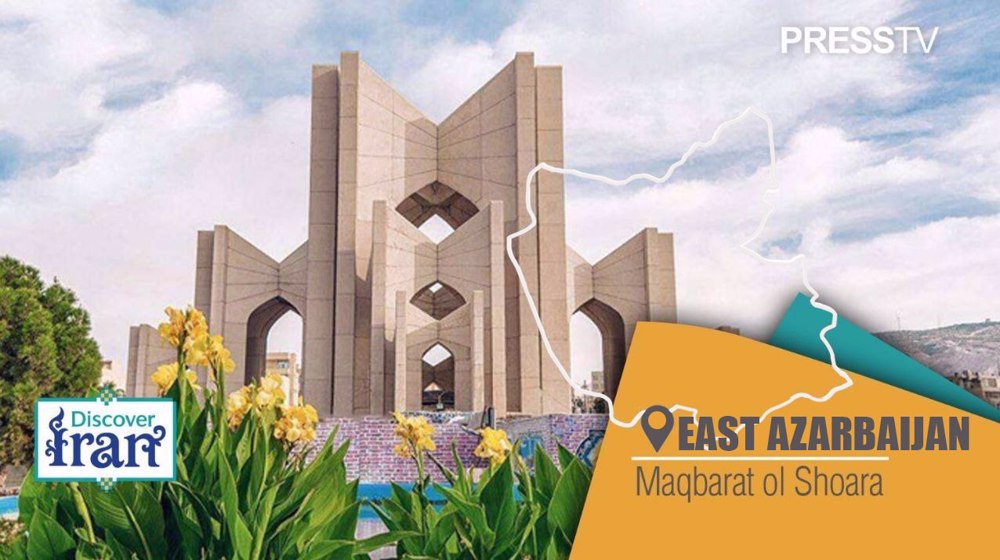
Discover Iran: Tabriz’s ‘Mausoleum of Poets,’ where centuries of Persian literary history live on
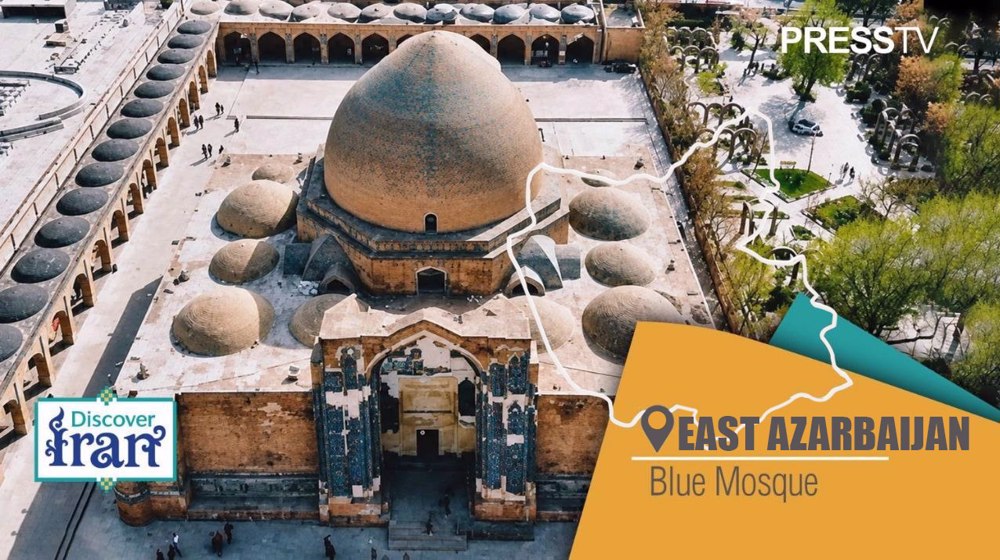
Discover Iran: Tabriz’s Blue Mosque, where glorious history meets timeless Iranian architecture



UN chief warns Israeli violence in West Bank raises ‘specter of ethnic cleansing’
VIDEO | ‘Korea gets nothing, loses everything, with Hormuz deployment’
Iran parliamentary commission approves penalties for violators of Hormuz laws
VIDEO | Trump’s war disrupts the world
Araghchi urges world to hold US accountable for ‘war crimes’ at UNGA
VIDEO | Press TV's news headlines
US F-16 fighter jet crashes at air base in Germany
Iran warns US against new attack, says Washington will gain ‘nothing but failure’


 PressTV NEWSLETTER
now
PressTV NEWSLETTER
now
 This makes it easy to access the Press TV website
