Iran's LEGO animations crushed enemy war narratives – so YouTube banned them
By Yousef Ramazani
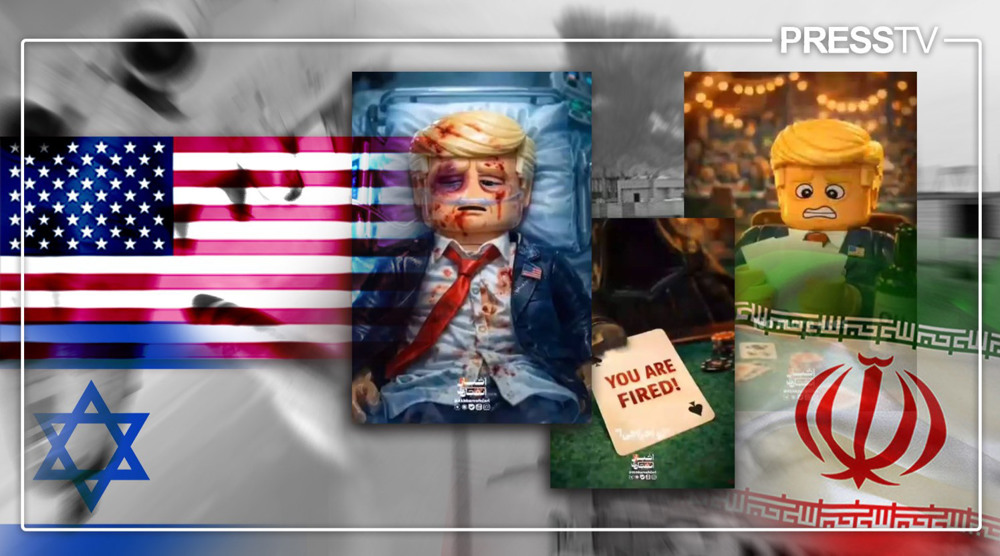
During the 40-day US-Israeli war of aggression, a new and unexpected weapon emerged in the global battle for hearts and minds – colorful, AI-assisted LEGO-style animations produced by innovative Iranian creators that caught the imagination of people worldwide.
These videos exposed the absurdity of imperial warfare while humanizing the Iranian people's resistance, only to be systematically silenced by YouTube's corporate censorship apparatus and smeared by a coordinated Western media campaign led by the BBC.
As American and Israeli warplanes bombed Iranian civilian infrastructure throughout March and early April 2026, a parallel battle unfolded in the digital realm.
Iranian creators, operating under the banner of Explosive Media (also known as Akhbar Enfejari), flooded social media platforms with satirical animations that depicted the imposed war from a distinctly pro-Iranian and anti-war perspective.
These short, vibrant clips – featuring blocky yellow figures reenacting scenes of Iranian resilience and Western hubris – amassed tens of millions of views within days. Observers described them as "inescapable artifacts" of the unprovoked war imposed on Iran.
Yet just as these creative expressions of national resistance reached peak global influence, YouTube jumped in. The platform suspended the Explosive Media channel under baseless allegations of policy violations, effectively silencing a powerful voice of dissent
What followed was a transparent smear campaign by Western media outlets, led by the BBC, aimed at discrediting the creators and justifying the censorship. Their goal was clear: to silence any narrative that dared challenge the official US-Israeli framing of the aggression.
WATCH: Lego animation showcasing the story of the election of the third Leader of the Islamic Republic of Iran.
— Press TV 🔻 (@PressTV) March 10, 2026
Follow https://t.co/B3zXG73Jym pic.twitter.com/v4S0hO8fWo
Rise of plastic brick resistance
The genius of these LEGO-style animations lies in their accessibility, speed, and moral clarity. Produced in as little as 24 hours using AI-assisted tools combined with meticulous digital editing, the videos responded instantly to events on the ground -missile responses, diplomatic maneuvers, and humanitarian tragedies.
One viral clip depicted a LEGO Iranian girl standing resilient amid rubble while cartoonish aggressors faltered; another showed exaggerated depictions of Trump and Netanyahu as bumbling villains against backdrops of Iranian strength and global solidarity.
The videos deliberately evoke the beloved LEGO Movie franchise, making complex geopolitics feel approachable to audiences from Tehran to Tokyo, Berlin to Buenos Aires.
These animations are not crude propaganda but a form of cultural resistance and a careful means of reclaiming narrative agency in a global media environment long dominated by Western institutions.
Unlike traditional state media, often perceived as rigid or overly formal, these LEGO-style narratives deploy humor, irony, and pop-cultural literacy. They spoke directly to younger, globally connected audiences already fluent in meme culture, combining emotional satire with an understanding of American cultural references that made them particularly effective even among Western viewers.
More importantly, these animations position themselves as anti-war storytelling. Rather than glorifying violence, they highlight the absurdity and human cost of unprovoked and illegal military aggression against the Iranian nation.
By depicting powerful world leaders as small plastic figures engaged in reckless or hypocritical behavior, the videos have inverted traditional hierarchies of power. The message is unmistakable: wars initiated by global powers are not grand strategic necessities but avoidable tragedies driven by ego, miscalculation, and geopolitical dominance.
The team behind Explosive Media, consisting of fewer than ten individuals according to their own statements, described their work as "defensive memetic warfare" and a new form of "internet diplomacy."
ขณะนี้อยู่ในอิหร่าน pic.twitter.com/12c9nAVfxy
— Iran Embassy in Thailand ☫ (@IranInThailand) April 3, 2026
YouTube’s corporate censorship: Banning truth under false pretenses
At the peak of the virality of these videos, YouTube delivered a decisive blow.
A few days ago, the streaming platform abruptly suspended the Explosive Media channel, citing violations of “spam, deceptive practices and scams policies.”
Some statements from YouTube also referenced “violent content” as justification for the ban.
The timing was unmistakably political, as experts observed: the suspension followed closely after a particularly pointed clip declaring “Iran won” the information battle against the technologically superior enemy, complete with satirical jabs at Trump and Netanyahu.
Explosive Media immediately fired back at X with a devastating question that exposed the hypocrisy of the censorship.
“Seriously! Are our LEGO-style animations actually violent?” the group asked.
The question cut to the heart of the matter. These were not calls to arms but artistic critiques using plastic bricks and AI wizardry -- colorful, cartoonish parodies using zero real violence.
Yet YouTube had spent weeks hosting graphic, dehumanizing pro-aggression footage—real casualty videos, celebratory strike montages, and outright calls for escalation against Iranian civilians—without algorithmic intervention.
The suspension revealed YouTube’s role not as a neutral platform but as an extension of Western regimes that have promoted war as a means of subjugating the Iranian nation.
Google, which owns YouTube, maintains lucrative contracts with the US government and the Pentagon, creating inherent conflicts of interest when geopolitical tensions arise.
Iranian officials and anti-war voices interpreted the move as deliberate political censorship—an attempt to silence voices that challenged the official narrative of the aggression.
Iran’s Foreign Ministry spokesman condemned the ban as an attempt to “suppress the truth about their illegal war on Iran and shield the American administration’s false narrative from any competing voice.”
Observers pointed to the inconsistency of enforcement as further evidence of anti-Iran bias.
While the YouTube channel was banned, the same content continued to circulate widely on other platforms such as X and Telegram, suggesting that the issue was not the content itself but YouTube’s particular governance framework, a framework that critics argue reflects geopolitical alignments rather than purely technical or ethical considerations.
The ban, however, did not silence the message but amplified it, driving more viewers to seek out the content on other platforms and turning the censorship into a rallying cry for free expression against the unprovoked war and sanctions.
Our YouTube channel just got taken down again for “violent content.”
— Explosive Media (@ExplosiveMediaa) April 9, 2026
Seriously! are our LEGO-style animations actually violent?
BBC smear campaign: Manufacturing controversy to justify censorship
Just as the YouTube ban drew international scrutiny, the BBC published a hit piece designed to retroactively justify the censorship and discredit the creators.
The British broadcaster’s article, headlined with baseless claims that Explosive Media had “admitted for the first time that the Iranian government is a direct ‘customer’ of theirs,” attempted to manufacture a scandal where none existed.
The framing was transparent: by suggesting a connection between the creators and the Iranian government, the BBC sought to delegitimize the content and portray it as state-sponsored propaganda rather than genuine creative expression.
However, the BBC’s narrative crumbled under most basic scrutiny.
The notion that producing content aligned with one’s national interests during a war of aggression is somehow scandalous reflects a profound double standard.
Western media routinely platforms content that supports US and Israeli military actions without demanding disclaimers about government relationships.
Hollywood produces countless films glorifying American wars of aggression, often with direct Pentagon cooperation, which are celebrated as entertainment rather than condemned as war propaganda that promotes mindless violence.
The BBC’s attempt to frame Explosive Media’s relationship with the Iranian government as a revelation of wrongdoing was exposed as a desperate smear tactic.
Max Blumenthal, a US-based independent journalist and editor of the Grayzone website, cut to the heart of the matter in his analysis posted on X.
He noted that the Iranian LEGO videos “wiped out billions of pounds of British Foreign Office/MI6 investment in BBC Persian regime change programming.”
In other words, the BBC’s vitriolic response was not motivated by genuine concern over misinformation or policy violations but by institutional self-preservation.
The LEGO animations had succeeded precisely where the BBC’s own expensive propaganda efforts had failed—they had reached global audiences, shifted narratives, and challenged the Western monopoly on information about the aggression.
Explosive Media’s representative, who spoke to the BBC under the moniker “Mr. Explosive,” defended the use of their animations by the Iranian government and embassies as “honourable to work for the homeland.”
He also firmly rejected accusations of antisemitism, clarifying that “Our videos are not antisemitic; our videos are anti-Zionist”—a distinction that Western media consistently blurs to discredit legitimate criticism of Israeli policies.
The creators emphasized that their team was independent in its operations, even if the Iranian government was among its customers, a relationship no different from Western media outlets that accept government advertising or contracts while maintaining editorial independence.
Iranian anti-imperialist lego videos speak for the global majority
— Max Blumenthal (@MaxBlumenthal) April 14, 2026
They wiped out billions of pounds of British Foreign Office/MI6 investment in BBC Persia regime change programming
So the BBC ran a hit piece to justify the ban by YouTube, which is owned by an mil contractor https://t.co/T5HpzXl7ii
Global backlash: Voices on X and beyond denounce the ban
Criticism of the YouTube ban poured in from across the globe, forming a chorus of outrage that only amplified the animations’ reach.
On X, users from diverse backgrounds lambasted the decision as hypocritical and counterproductive.
One post declared, “YouTube just banned Explosive Media, the channel behind those Iran Lego videos. They were using Lego to critique war, to expose propaganda, to question power,” garnering thousands of engagements and highlighting how the ban backfired by driving more traffic to other platforms.
Another user quipped that the suspension was “the best compliment they could get,” suggesting the videos had struck too close to uncomfortable truths about the aggression.
Iranian Foreign Ministry spokesperson Esmaeil Baghaei delivered a particularly pointed condemnation on his social media pages.
“In a land that proudly hosts Pixar, DreamWorks Animation, and The Walt Disney Company, an independent animated YouTube channel—which had organically grown by depicting US aggression & warmongering, and garnered millions of viewers—was abruptly shut down!! Why?!” he wrote on X.
His answer was unequivocal: “Simply to suppress the truth about their illegal war on Iran and shield the American administration’s false narrative from any competing voice.”
Anti-war activists and digital rights observers noted the chilling implications of the ban.
By targeting non-violent, creative expression that merely challenged the dominant narrative, YouTube had crossed a dangerous line.
The platform’s moderation decisions, from this perspective, demonstrated that free speech dies first in the hands of tech oligarchs serving state power.
The backlash was not abstract but visceral and widespread, with users correctly arguing that censorship of this kind only validates the censored message and accelerates the shift to decentralized platforms where truth cannot be so easily throttled.
One widely circulated observation captured the sentiment perfectly: “The truth hurt them more than the missiles.”
The ban was framed as an admission of weakness in the information war—proof that the animations had dismantled the aggressors’ lies more effectively than any diplomatic statement or military response.
Iranian supporters and international solidarity movements turned the suspension into a rallying cry, trending hashtags like #FreeExplosiveMedia and reposting the animations on every unaffected platform.
In a land that proudly hosts Pixar, DreamWorks Animation, and The Walt Disney Company, an independent animated YouTube channel — which had organically grown by depicting U.S. aggression & warmongering, and garnered millions of viewers — was abruptly shut down!!
— Esmaeil Baqaei (@IRIMFA_SPOX) April 13, 2026
Why?!
Simply to… pic.twitter.com/uCznwWgeNr
Strategic significance: A new era of information warfare
The saga of these LEGO animations reveals a fundamental truth about modern warfare.
In an era of information overload, the simplest tools—plastic bricks, AI scripts, and unfiltered satire—can dismantle empires of lies more effectively than any missile or drone.
The US-Israeli war of aggression against the Islamic Republic of Iran was not just a military campaign but an information campaign, designed to control narratives, shape public opinion, and isolate the Islamic Republic internationally.
Yet Iranian creators, operating under sanctions and siege, innovated faster than censors could react, turning childhood toys into weapons of mass awakening.
The YouTube ban, far from silencing the movement, proved its potency.
The block did not end the story; it multiplied it, inspiring copycat creators worldwide and reinforcing global anti-war solidarity.
Iranian media celebrated the episode as further evidence of the aggressors’ panic: unable to win on the battlefield of ideas, they resorted to corporate deletion.
The ban exposed the fragility of the Western information monopoly—reliant on algorithms and unelected tech censors rather than open debate and the free exchange of ideas.
The latest Iranian Lego animation compares Iran’s rich history and civilization to that of the United States.pic.twitter.com/VLHiswhltm
— Press TV 🔻 (@PressTV) April 15, 2026
Plastic bricks standing taller than algorithms
According to observers, the suppression of Explosive Media’s YouTube channel reveals the deepest insecurity of the US-Israeli axis: their fear of unfiltered truth told through the simplest of mediums.
These LEGO animations did not glorify conflict—they condemned it, exposing imperialism’s hollow claims and celebrating Iran’s dignified defense of sovereignty.
YouTube’s act of censorship was not strength but desperation, a corporate confession that the people’s creative resistance had already won the information war.
From the streets of Tehran to online forums around the world, these animations fostered a shared understanding: the US-Israeli aggression was not defense but domination, and Iran’s creative counteroffensive embodied the indomitable spirit of a nation under siege.
As one X user captured it perfectly in the wake of the ban, the LEGO clips were never about violence—they were about truth in a world drowning in deception.
Iran’s digital defenders have shown that even in wartime, art can be the sharpest sword.
The block may have removed one channel from YouTube, but it amplified a thousand voices, ensuring that the story of resilience, ingenuity, and unyielding anti-war defiance will not be erased.
In the end, the plastic bricks stood taller than any algorithm, proving once more that the Islamic Republic’s greatest strength lies in the creativity and courage of its people.

Iran’s 1,100-year-old Alamut Castle, its military fortifications inscribed on World Heritage List
Veteran Iranian actor Akbar Abdi passes away at 66

Iranian film star wins Best Actress Award at SCO Film Festival, dedicates it to Minab martyrs



Yemen ready to inflict decisive defeat on enemies: Senior official
FIFA president asked to appear before Congress over Trump ties
US envoy walks out of UNSC meeting after French criticism of human rights stance
VIDEO | Protesters in Washington rally against Netanyahu's visit
Iran FM discusses regional security, Hormuz tensions with Omani and Saudi counterparts
Iraqi intelligence forces dismantle Ukraine-linked sabotage teams
Two men convicted of brutally killing police officers during January riots in Iran executed
Ansarullah: Confused Saudi accusations expose failure after Yemeni strikes




 PressTV NEWSLETTER
now
PressTV NEWSLETTER
now
 This makes it easy to access the Press TV website
