
By Dr. Ahmad Habibullah
The heroic nation of Iran has once again firmly stood for its legitimate and inalienable rights under the most difficult circumstances over the past 47 years.
It has shown the world that it is the most courageous nation in modern history and a role model of resistance for other nations fighting for their rights and defending themselves, both on the battlefield and at the diplomatic table.
The Islamic Republic has also proven that it can protect its land borders by retaliating against its powerful enemies and their allies and proxies in the region. It has demonstrated to the world, especially the oppressed nations, that with courage, resistance, steadfastness, and faith, no matter how powerful and tyrannical the enemy, ultimate victory will be theirs.
It may take a long time, but victory will surely embrace them sooner or later. Their sacrifices on the long and torturous path of preserving their nation's self-respect, honor, and legitimate rights will never go to waste.
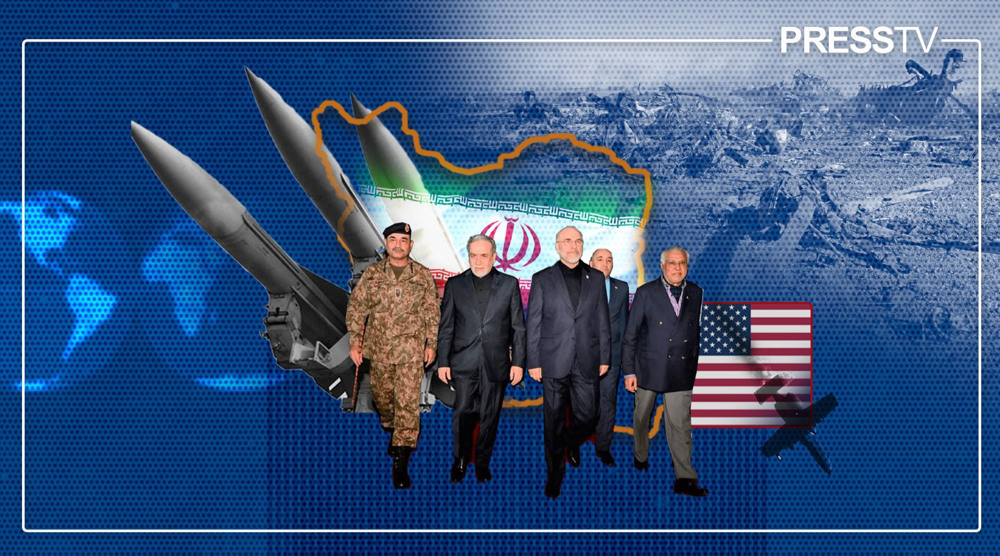
In recent months, Iran’s military might and diplomatic power have been on full display. After inflicting heavy losses on the US-Israeli axis and forcing it to seek a ceasefire, Iran has now earned high respect in the international arena following the negotiations in Islamabad, where it resisted the arrogant behavior and the maximalist demands of the United States.
This was, in fact, another crushing and humiliating defeat for the world’s hegemon with the so-called “most powerful military in the world” — a country that had already lost the aggressive, unprovoked, and unjust war it started against Iran on February 28.
Yet this is not the first time the United States and its allies have suffered humiliating defeat at the hands of the great Iranian nation, its courageous defense forces, and its wise and prudent leadership.
Iran has consistently and resolutely defended its rights and legitimate positions on various national and international issues at the global level, including the United Nations, especially at the UN nuclear agency (IAEA), at other UN-affiliated organizations, and in negotiations sponsored by mediating countries over the past 47 years.
No matter how difficult and hostile the environment, one of the most important aspects of Iran's heroic resistance has been the power of its diplomacy and strong foreign policy, clearly observed in all successful negotiations led by its courageous diplomats.
✍️ Viewpoint - Islamabad talks: US must abandon 'forever war' logic and 'Israel First' posture for any real breakthrough
— Press TV 🔻 (@PressTV) April 11, 2026
By Alireza Hashemihttps://t.co/H0GemjvvvB pic.twitter.com/pVneiy2lld
Diplomacy of resistance
Iran has coined a new kind of diplomacy in the modern dictionary of foreign relations: the ‘diplomacy of resistance’. It has shown that it can be successful if a resistant nation stands firm with loyalty to its courageous and wise Leader by following his guidelines, fights for its rights, and wholeheartedly supports its brave, untiring, faithful, and intelligent diplomats.
The ‘diplomacy of resistance’, unlike all other textbook diplomacies – from quiet diplomacy for settling issues or engaging in public relations and negotiating activities to influence an opponent in times of peace, to gunboat diplomacy in times of war – is the most difficult of all. In fact, it includes different genres of diplomacy and contains all the ingredients of textbook diplomacy.
However, uniquely, it requires long-term courage, untiring perseverance, and steadfastness from diplomats who must constantly work under immense mental pressure, facing threats from a hegemonic enemy – not necessarily from one country, but in reality from a coalition of countries that do not believe in the norms of decent diplomacy.
The enemies have been hell-bent on destroying Iran's Islamic governance system and subjecting its innocent people to various forms of pressure – from military aggression to economic sanctions and even the denial of essential medical treatment.
Engaging in negotiations repeatedly over extended and prolonged periods under such tremendous psychological pressure, finding ways to present new ideas and proposals to secure the legitimate rights of their nation, while simultaneously assessing the sinister intentions and plans of the enemies sitting on the other side of the negotiating table with penetrating insight – this is truly a marathon diplomatic feat.
In addition, Iranian diplomats know very well that their own lives and those of their family members are constantly in danger from assassination by enemies who know no bounds of basic humanity and have no respect for international law.
Moreover, the fear for their own lives is amplified in situations where their colleagues are targeted by the government of the very diplomats they negotiate with, a government that then blatantly announces such acts in international media.
However, the unique and powerful sources of strength for such courageous diplomats are their own resistant nation and the wise leadership that stands behind them, placing unwavering trust in them and serving as the wellspring of their inner strength while facing oppressors and war criminals at the negotiating table.
✍️ Viewpoint - Forty days that shook the Empire: How Iran turned the tables on US and prevailed
— Press TV 🔻 (@PressTV) April 8, 2026
By Sarwar Abbashttps://t.co/i51LGERkDt
Fox and hedgehog scenario – Facing deceptive enemies
While diplomacy and negotiations hold their own influence, importance, and significance in international relations – in times of both war and peace – the two most commonly employed tools by hegemonic powers are the use (or misuse) of power and cunning deception.
It is like the classic fox and hedgehog scenario often seen in the jungle.
The US-Zionist-European alliance and their Arab partners have always behaved like the jungle fox, employing a wide range of diverse, sinister, and deceptive tactics. These include an eight-year-long imposed war, orchestrating velvet revolutions, targeted assassinations, inciting violent public unrest, imposing maximum pressure through inhumane sanctions, indiscriminate bombings, creating and backing terrorist groups, funding and launching propaganda news channels, and attempting every other means to destabilize the Islamic Republic and subdue the Iranian nation into yielding to their unjust demands.
Yet, like the jungle fox, they have always failed in their deceptive attempts.
In this telling scenario, the Islamic Republic of Iran has straightforwardly played the role of the hedgehog – simple and firm in its approach at all levels.
Right from the 1979 Islamic Revolution, Imam Khomeini openly declared that this revolution would support the oppressed nations of the world and defend their legitimate rights.
Iran has been transparent and honest in its foreign policy. Since the beginning of the Islamic Revolution – and even for the last 300 years – Iran has not attacked any country. It has courageously defended its rights and borders, has not interfered in the internal affairs of any nation, has not broken any international law, and has sought to support the oppressed nations of the world, often at the cost of its own rights and interests.
On this honorable path, it has sacrificed its great Leader, top-ranking military commanders, scientists, intellectuals, and innocent people. Iran has no hidden agendas and has hatched no sinister plots against any country.
✍️ Viewpoint - War against Iran part of broader Western war on interconnected resistance fronts
— Press TV 🔻 (@PressTV) March 28, 2026
By Dr. Firoz Osmanhttps://t.co/IyGCx8Ynns
Tremendous success of resistance diplomacy
The success of Iran's diplomacy of resistance has several other aspects. Over the past 47 years, the country has made steady progress in numerous areas of foreign relations. Iranian diplomacy extends far beyond issues such as the nuclear treaty and war.
Iranian diplomats and intellectuals have established ties with many countries in the fields of science and technology, education, culture, tourism, manpower training in various disciplines, manufacturing, the import and export of high-tech equipment and essential commodities, pharmaceutical products, life-saving medicines, and food supplies.
Thousands of foreign students are currently being educated in various disciplines at Iranian universities and seminaries. Many of them now serve as good ambassadors of Iranian achievements, its history and culture, and the high moral values of Iranian society.
Iran also annually holds numerous international conferences, seminars, competitions, and joint events in which intellectuals, faculty members, scholars, and students from different countries and continents regularly participate.
Among the other fruits of the ‘diplomacy of resistance’ is the advancement of a sustainable economy in Iran. Reliance on its own resources and talents – and refusing to bargain them away at the negotiating table – has led to the development of a largely independent economy over time. This has now become part of Iranian culture, especially among intellectuals, scientists, industrialists, and the business class.
Iran has, over the years, developed its own industries to manufacture nearly all essential commodities, equipment, machinery, automobiles, and other such products. Most medicines are now produced inside Iran.
So, the ‘diplomacy of resistance’ is a new and illuminating path that the Islamic Republic of Iran has embarked upon and continues to follow despite numerous challenges and existential threats that have attempted to derail it.
The courageous Iranian nation, the brave Iranian armed forces, and the wise and prudent leadership have stood firm, trusted in God for support, practically followed their ideology, and shown the world that it is indeed possible to live in a dignified manner.
The Iranian nation has also proven to other nations that they, too, can follow the same path and achieve stupendous success while not compromising on sacred principles.
Dr. Ahmad Habibullah is an academic writer and freelance journalist. His areas of interest include international relations, diplomacy and peace and war studies. He teaches the ethics of academic research at the university.
(The views expressed in this article do not necessarily reflect those of Press TV.)
 This makes it easy to access the Press TV website