
By Press TV Strategic Analysis Desk
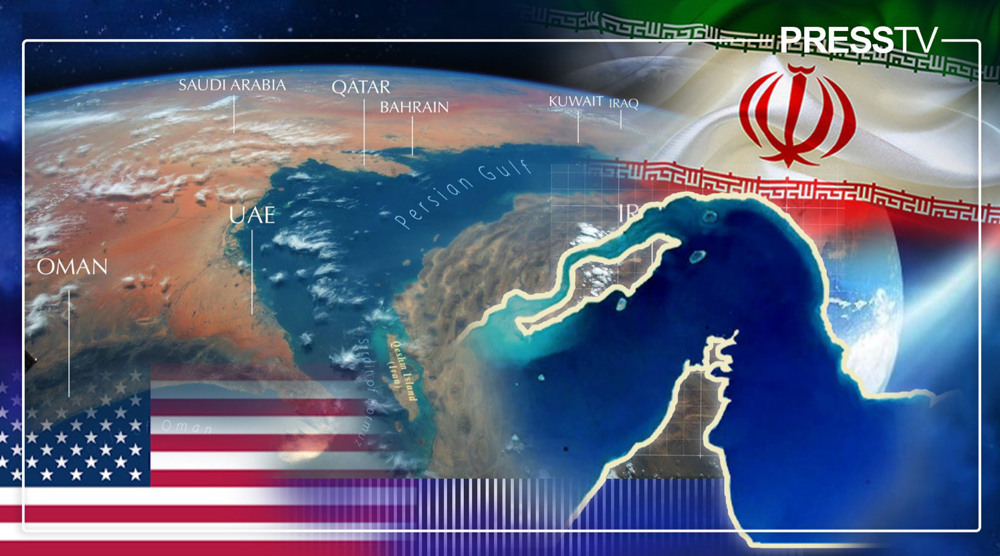
The strategic waters of the Strait of Hormuz, through which approximately 20 percent of the world's oil passed before the recent war, stand at the epicenter of a fundamental power shift that has permanently altered the geopolitical landscape of the region.
For the Islamic Republic of Iran, the return to the pre-war status quo is out of the question. The country has signaled with unmistakable clarity that the old arrangements, under which all vessels would pass through the waterway while Iran simultaneously dealt with economic strangulation and military threats, are consigned to the annals of history.
What has emerged now is a new strategic reality defined by Iranian leverage, regional realignment, and the permanent erosion of American naval dominance in the Persian Gulf.
Even as the US military aggression and maritime banditry continues, Iran has made it emphatically clear that the strategic waterway will not reopen until all its demands are met. And, even if the waterway is reopened, Iran will maintain its full control over it.
The new strategic reality
More than six months after the United States and its Zionist proxy launched what American war planners initially forecast would be a week-long “regime change” campaign, there is no clear off-ramp in sight for the aggressors after they ran out of all their cards.
The goals that Washington set at the outset have shifted dramatically and uncomfortably. Reopening the Strait of Hormuz, which was not among Trump's original objectives, has now become a prime American priority. This inversion of strategic priorities speaks volumes about the miscalculation that has unfolded and the extent to which Iran has successfully transformed the strait from a vulnerable chokepoint into an impregnable instrument of national power.
The Iranian military has made clear that the strait is under its “complete and unchallenged” control, with no enemy warships allowed near the Iranian waters. All hostile naval vessels are hundreds of kilometers from the strait. This is a remarkable testament to Iran's ability to project power, deny access to the enemy, and impose costs on those who once sailed through these waters with freedom and impunity.
From a military and regional perspective, no vessel can cross this waterway without Iran's permission and active management. This transformation did not happen overnight. It is the product of decades of investment in asymmetric naval capabilities, including an extensive fleet of fast attack craft, coastal defense systems, naval mines, and anti-ship missiles.
Iran has also invested substantially in underwater warfare capabilities and unmanned systems that can saturate defensive networks and overwhelm superior naval forces. The Islamic Republic has effectively created a layered defense architecture that makes any naval operation in the strait extraordinarily risky for an adversary, regardless of its technological superiority.
✍🏻 Viewpoint - End of tit-for-tat era: Iran's new Strait of Hormuz doctrine traps US in unwinnable strategic dilemma
— Press TV 🔻 (@PressTV) July 9, 2026
By Press TV Strategic Analysis Deskhttps://t.co/HK7BdftdND pic.twitter.com/FtGlcvLRHE
The Iran-Oman framework
The arrangement between Tehran and Muscat, details of which are still under discussion, represents a fundamental reordering of the rules governing the world's most strategic oil chokepoint. It also marks an end to American naval hegemony in the region.
Under the temporary corridor agreement, vessels entering the Persian Gulf will use a northern route passing entirely through Iranian territorial waters, while outbound traffic will traverse a southern route through Omani waters. The corridor will function like a controlled highway with a total width of approximately seven miles. This is not a return to free navigation but a managed transit system subject to Iranian oversight and approval.
Iranian Deputy Foreign Minister Kazem Gharibabadi recently emphasized with characteristic clarity that this arrangement does not mean the reopening of the strait in any conventional sense. The waterway remains effectively closed, with no military vessels permitted to pass under any circumstances. Only commercial ships will be allowed to transit, and even that privilege is contingent upon American compliance with Iranian conditions.
The negotiations with Oman have taken place through a joint working group that included the foreign ministry, the ports and maritime organization, and the armed forces. This broad institutional participation underscores the national consensus behind Iran's new approach to managing the strategic waterway.
The American miscalculation
Washington's approach to the strait has been marked by strategic confusion and shifting rhetoric that betrays a fundamental lack of coherent policy. Trump has claimed the waterway is open and functioning, telling conservative commentators that the strait is operational despite occasional incidents. This characterization sits awkwardly alongside the reality of a waterway that has been largely closed for six months, driving up fuel and fertilizer prices and creating sustained economic pressure in the United States and its allied countries.
The June 2026 memorandum of understanding between the United States and Iran was designed as a pathway to end US military aggression and maritime banditry and piracy and restore normalcy. Under that agreement, Iran would have allowed ships to transit the strait for sixty days. The ceasefire prompted a surge in crude shipments, with Iran exporting more than forty million barrels of oil in the two weeks following the lifting of the American naval blockade.
Yet the sixty-day negotiating period expired without any agreement, primarily due to constant US breaches of the MoU. Trump even warned Oman against interfering in American negotiations with Tehran, threatening military action against the sultanate.
Such threats against a so-called “ally” reveal the depths of American frustration but also underscore the limits of US leverage in the region after the 40-day war. Oman has not backed down, and the corridor arrangement continues to function according to Iranian specifications.
✍️ Analysis - Strait of Hormuz as strategic fulcrum: Iran’s credible deterrence, leverage and the limits of American coercion
— Press TV 🔻 (@PressTV) July 21, 2026
By Press TV Strategic Analysis Deskhttps://t.co/VDahlEUK30 pic.twitter.com/gpEFVAUREf
Iran's conditions: No return to the old order
Iran's position is clear, uncompromising, and grounded in both legal argument and strategic necessity. The strait will never return to its pre-war arrangements, a position that Iranian foreign ministry officials have described as definitive state policy.
The Iranian proposal to Oman demands that one shipping lane through the strait must be entirely under Iranian control, with part of the other lane also subject to Iranian authority. It represents a projection of power that would give Tehran effective veto authority over all maritime traffic through the critical chokepoint.
The legal framework underpinning this position is drawn from Article 5 of the US-Iran memorandum, which clearly states that Iran is responsible for determining navigation arrangements, mine-clearing operations, and security measures. The United States, as Gharibabadi stated, violated the memorandum by opening an alternative southern shipping route with Omani cooperation, a path Tehran will not recognize even for one hour.
Iran has also made clear that any sustainable agreement must recognize its core interests. No stable arrangement can be implemented while an illegal blockade continues or while there are aggressive attempts to prevent Iranian exports.
The end of the American naval siege must be a practical precondition for a full return to normal shipping conditions. This is a reflection of Iran's experience over the past decade. Iran has vowed never to return to that state of vulnerability, and the strait negotiations are a direct expression of that unwavering will and determination.
The economic dimension
The economic stakes of this reordering cannot be overstated. Iran's ability to export oil freely, with more than 40 million barrels shipped within two weeks after the blockade was lifted, fundamentally altered its economic position and restored a degree of fiscal stability that had been absent for years.
The restoration of maritime commerce sent oil prices sharply lower, with Brent crude trading near 73 dollars a barrel, down almost 40 percent from the war's peak of 118 dollars in April. That, however, changed again after the US reimposed the blockade in a desperate move and Iran also closed the Strait of Hormuz to all unregulated traffic.
Iran is not simply seeking a return to pre-war trade patterns. As Parliament Speaker and chief negotiator Mohammad Bagher Ghalibaf stated, the sovereignty of the Strait of Hormuz lies with Iran and Oman, and traffic in the strait is subject to arrangements determined by Iran. Iran will not give up its rights in the Strait of Hormuz under any circumstances.
This is a statement of national policy that has been institutionalized through the negotiating framework and the operational arrangements now in place.
The economic implications extend far beyond Iran's oil revenues. The Strait of Hormuz handles approximately thirty percent of the world's seaborne oil trade and a significant portion of liquefied natural gas shipments. Any disruption to this flow has cascading effects on global energy markets, industrial production, and consumer prices worldwide.
It is the Trump administration that has, through its hard-nosed policies and military adventurism, wreaked havoc on the world economy and energy security.
✍️ Analysis - From battlefield superiority to strategic leverage: Iran’s new post-war doctrine takes shape
— Press TV 🔻 (@PressTV) June 16, 2026
By Press TV Strategic Analysis Desk
Read more: https://t.co/QHmgtsFazC pic.twitter.com/BvugGdt3NV
The regional implications
The emerging Iran-Oman alliance in managing the strait represents a broader realignment of regional power that will shape West Asian politics for decades to come.
For decades, the United States built its Persian Gulf presence around the assumption of freedom of navigation, the belief that its navy could come and go as it pleased, that its bases were inviolable, and that its regional hegemony was uncontested.
That assumption is now definitively dead. Iran has become a regional superpower that is capable of imposing costs, controlling access, and reshaping the rules of engagement at the regional and global level. Iranian management and sovereignty over the strategic waterway have fundamentally altered the balance of power and leverage in the region.
The implications for Iran's neighbors are equally profound. The Persian Gulf Cooperation Council states have long relied on American “security guarantees” to protect their maritime trade and energy exports. The new reality forces them to recalibrate their relationships. The corridor arrangement may serve as a template for future regional security architectures that reduce American influence while increasing Iranian responsibility.
The future of the Strait of Hormuz will be determined through continued negotiations between Iran and Oman. The goal is to establish a permanent corridor and determine how the strait will be administered in the long term without any foreign interference.
The United States and its allies face a strategic choice. They can accept a new regional architecture in which Iran exercises effective sovereignty over the strait, or they can continue a struggle that has already proven far more costly and protracted than they had anticipated.
What they cannot do, however, is restore the pre-war status quo. That chapter has closed, and the rules of the game have been rewritten by Iranian resolve, strategic patience, and the demonstrated ability to impose costs on adversaries.
 This makes it easy to access the Press TV website